
Navigating the complexities of tax obligations for estates and trusts can be a daunting task for fiduciaries. Among these responsibilities is the often-overlooked requirement to pay estimated taxes using Form 1041-ES. Unlike individual income taxes where withholding is common, estates and certain trusts are typically required to make quarterly estimated payments if they expect to owe taxes of $500 or more. Failing to do so can result in penalties, making timely and accurate payments critical for compliance and sound financial management.
Fortunately, the digital age has simplified this process significantly. The days of mailing paper checks and worrying about postal delays are largely behind us. Paying your 1041-ES estimated taxes online offers unparalleled convenience, speed, and traceability. This comprehensive guide will walk fiduciaries through the essential steps, various online payment methods, and best practices to ensure a smooth and compliant payment process, allowing you to focus on the prudent management of the estate or trust assets.

Demystifying Form 1041-ES: Estimated Taxes for Estates and Trusts
Before diving into the “how-to” of online payments, it’s crucial to understand the “why” behind Form 1041-ES. This form is specifically designed for fiduciaries—executors, administrators, or trustees—who manage an estate or a trust and are responsible for its income tax obligations. The IRS operates on a “pay-as-you-go” system, meaning income tax should be paid throughout the year as income is earned, rather than in one lump sum at year-end. For estates and trusts, this typically translates into quarterly estimated payments.
Who Needs to Pay 1041-ES Taxes?
Generally, an estate or trust is required to make estimated tax payments if it expects to owe $500 or more in tax for the tax year. This applies to both domestic and foreign estates and trusts. However, there are a few important nuances. For instance, an estate is exempt from making estimated tax payments for its first two tax years. Certain grantor trusts may also have specific rules. It’s the fiduciary’s responsibility to determine if the estate or trust meets the criteria for estimated payments, which typically involves projecting income and deductions for the year. This assessment is vital because underpayment penalties can significantly erode the estate or trust’s financial health.
What Income is Subject to 1041-ES?
The income subject to 1041-ES estimated taxes is essentially any taxable income earned by the estate or trust during the year. This can include a wide range of income sources such as interest, dividends, capital gains from the sale of assets, rental income, business income, and even certain types of passive income. The key is to distinguish between income distributed to beneficiaries (which is generally taxed to the beneficiaries) and undistributed income retained by the estate or trust. Only the undistributed income, along with certain capital gains, typically falls under the estate or trust’s direct tax liability and thus requires estimated payments. Careful accounting and understanding of distributable net income (DNI) rules are essential here.
The Rationale Behind Estimated Payments
The requirement for estimated payments is fundamentally about ensuring a steady flow of tax revenue to the government and preventing a large, unmanageable tax bill at the end of the year. For the estate or trust, it provides a structured way to manage its tax liabilities proactively. Ignoring this requirement can lead to significant underpayment penalties, which are calculated based on the amount of underpayment and the period it remains unpaid. These penalties can add an unnecessary financial burden to an already complex fiduciary responsibility, underscoring the importance of timely and accurate estimated payments.
Essential Preparations Before You Pay Online
Successful online tax payment for your 1041-ES requires more than just knowing where to click; it demands thorough preparation. Gathering the correct information and understanding critical deadlines are paramount to avoid errors, delays, and potential penalties. A few minutes spent in preparation can save hours of frustration later.
Gathering Critical Information
Before you even log into an IRS payment portal, ensure you have all necessary details at hand. This includes:
- The Employer Identification Number (EIN) for the estate or trust. This is the primary identification number for tax purposes.
- The correct tax year for which the payment is being made.
- The exact payment amount for the current quarter. This should be calculated carefully, potentially with the help of a tax professional or using the 1041-ES worksheet.
- Your bank account information (routing and account number) if you plan to pay directly from a checking or savings account. Ensure these are current and accurate.
- A valid email address for confirmation receipts and communications.
- The name and contact information of the fiduciary making the payment.
Having these details readily available minimizes the risk of input errors and streamlines the payment process.
Understanding Payment Due Dates
Estimated tax payments for estates and trusts generally follow the same quarterly schedule as individuals, though the first payment for a new estate can be deferred. The standard due dates are:
- April 15 for income earned January 1 to March 31.
- June 15 for income earned April 1 to May 31.
- September 15 for income earned June 1 to August 31.
- January 15 of next year for income earned September 1 to December 31.
If any of these dates fall on a weekend or holiday, the deadline shifts to the next business day. It’s crucial to mark these dates in your calendar and plan to submit payments well in advance. Special rules may apply in the first year of an estate, where estimated payments are not required for the first two tax years. Always consult the official IRS guidelines or a tax advisor for the most current and specific due dates relevant to your situation.
Calculating Your Estimated Tax Liability
Accurately calculating the estimated tax liability is perhaps the most challenging aspect of 1041-ES compliance. The IRS provides Form 1041-ES, Estimated Income Tax for Estates and Trusts, which includes a worksheet to help fiduciaries estimate their tax. This involves projecting the estate or trust’s income, deductions, and credits for the entire tax year.
Factors to consider include:
- Anticipated income from interest, dividends, rents, royalties, and capital gains.
- Allowable deductions such as fiduciary fees, administration expenses, and distributions to beneficiaries.
- Any applicable tax credits.
It’s important to remember that this is an estimate. If the estate or trust’s income changes significantly during the year, you may need to refigure your estimate and adjust subsequent payments to avoid underpayment penalties or overpayment. For complex estates or trusts, or if you’re uncertain about the calculations, engaging a qualified tax professional is highly recommended to ensure accuracy and compliance.
Navigating the Online Payment Landscape: IRS-Approved Methods
The IRS offers several secure and convenient online methods for fiduciaries to make their 1041-ES estimated tax payments. Each method has its own advantages and may be more suitable depending on your preferences and the nature of the estate or trust. Familiarizing yourself with these options is key to choosing the most efficient path.
Direct Pay: The IRS’s Free and Direct Option
IRS Direct Pay is a free, secure web application that allows you to pay your taxes directly from your checking or savings account. It’s a straightforward method that doesn’t require any prior enrollment.
How it works:
- Visit the IRS Direct Pay website.
- Select “Estimated Tax” as the reason for payment and “Form 1041-ES” as the form series.
- Enter the tax year and your EIN.
- Input your payment amount and bank account details.
- Confirm your identity using information from a previous tax return.
Advantages: It’s free, simple, and provides instant confirmation. You can schedule payments up to 365 days in advance.
Limitations: It can only be used for a limited number of payment types and requires specific information from a prior tax return for identity verification, which might be an issue for new estates/trusts or new fiduciaries.
The Electronic Federal Tax Payment System (EFTPS)
EFTPS is a robust electronic payment system provided by the U.S. Department of the Treasury. It’s a reliable option for businesses and individuals, including fiduciaries, to make all federal tax payments. While it requires enrollment, it offers greater flexibility for scheduling and managing payments.
Enrollment: You must enroll at www.eftps.gov and receive an EIN, a Personal Identification Number (PIN), and an Internet password. This process can take 5-7 business days, so plan ahead.
Scheduling Payments: Once enrolled, you can schedule payments up to 365 days in advance and review your payment history for up to 15 months.
Benefits: Ideal for fiduciaries who will be making recurring estimated payments over several years. Offers more comprehensive tracking and payment management features compared to Direct Pay. It’s also free.

Paying Via Credit or Debit Card
For those who prefer the flexibility or rewards benefits of using a credit or debit card, the IRS partners with several third-party payment processors.
Process: You select a processor from the IRS website, navigate to their site, and make your payment. The processor then relays the payment to the IRS.
Fees: Be aware that these third-party processors charge a convenience fee, which varies depending on the card type and the processor. These fees are typically a percentage of the payment amount, plus a small flat fee for debit cards.
Considerations: While convenient, especially for last-minute payments or if cash flow is temporarily tight, the fees can add up. Fiduciaries should weigh the convenience against the cost, especially for large payment amounts.
Other Digital Payment Alternatives
Beyond the primary methods, there are a couple of other digital avenues for making 1041-ES payments:
- Tax Software Integration: Many professional tax software packages (e.g., TurboTax Business, H&R Block Tax Software) allow you to prepare your 1041-ES and then submit the estimated payment directly through the software. This can be highly efficient for fiduciaries already using such software for their annual Form 1041 filing.
- Treasury Tax and Loan (TT&L) Program: This is generally for financial institutions acting as depositaries for federal tax payments. While not a direct option for most fiduciaries, it underscores the varied mechanisms available within the broader tax ecosystem.
Best Practices and Avoiding Common Pitfalls
Even with the convenience of online payment, errors can occur, leading to unnecessary stress and potential penalties. Adhering to best practices can significantly reduce the risk of issues and ensure a smooth, compliant process.
Double-Checking Your Information
This cannot be stressed enough. Before hitting “submit,” meticulously review every piece of information you’ve entered:
- EIN: Ensure the correct Employer Identification Number for the estate or trust is entered. An incorrect EIN can lead to payments being misapplied.
- Payment Amount: Verify the dollar amount matches your calculation for the quarterly payment.
- Tax Year: Confirm the payment is designated for the correct tax year.
- Bank Account Details: If using Direct Pay or EFTPS, double-check the routing and account numbers. A single digit error can cause a payment to fail or be sent to the wrong account.
A quick review can prevent significant headaches down the line.
Scheduling Payments Strategically
Don’t wait until the last minute. While online payments are fast, unforeseen technical glitches, internet issues, or bank processing delays can occur.
- Schedule Early: Aim to schedule your payment at least a few business days before the due date, especially if using EFTPS, which requires payments to be initiated one business day prior to the due date.
- Automate (if possible): If you are comfortable with EFTPS, consider scheduling all four quarterly payments at the beginning of the tax year. This proactive approach minimizes the risk of forgetting a payment.
The Importance of Confirmation and Record-Keeping
Every online payment method will provide a confirmation.
- Confirmation Number/ID: Immediately save or print the confirmation number/ID provided after a successful payment. This is your proof of payment.
- Email Confirmations: Many systems will also send an email confirmation. Keep these emails in an organized digital folder.
- Bank Statements: Regularly check your bank statements to ensure the payment has successfully cleared your account.
These records are invaluable if there’s ever a discrepancy or an inquiry from the IRS.
Addressing Payment Errors and Underpayments
Mistakes happen. If you discover an error or realize you’ve underpaid your estimated taxes:
- Correcting Errors: If you made a payment to the wrong tax year or with an incorrect EIN, contact the IRS immediately. For EFTPS, you might be able to cancel a scheduled payment if it hasn’t been processed yet.
- Adjusting Future Payments: If you realize you’ve underpaid a prior quarter, you cannot simply increase the next quarter’s payment to cover the shortfall without potentially incurring a penalty for the original underpayment. However, you can make an additional payment to the IRS to mitigate further penalties, and adjust future quarterly payments to ensure the full year’s liability is met.
- Professional Advice: For complex errors or significant underpayments, consult a tax professional. They can advise on the best course of action to minimize penalties and ensure compliance.
Ensuring Compliance: Record Keeping and Verification
The fiduciary’s responsibility extends beyond simply making the payment. Meticulous record-keeping and a systematic approach to verifying payments are crucial for demonstrating compliance and for the accurate preparation of the annual Form 1041.
Maintaining Digital and Physical Records
A robust record-keeping system is your best defense against potential IRS inquiries.
- Digital Files: Create a dedicated digital folder for all tax-related documents for the estate or trust. Save all payment confirmation emails, screenshots of successful transactions, and any correspondence related to your 1041-ES payments.
- Physical Copies: While digital is convenient, also consider printing and filing physical copies of key payment confirmations, especially for larger amounts. Store these securely with other estate or trust financial documents.
- Payment Log: Maintain a simple log detailing the date, amount, and confirmation number for each estimated tax payment made. This provides a quick overview and cross-reference.
Consistency in record-keeping ensures that all information is readily available when it comes time to file the annual income tax return for the estate or trust (Form 1041).
Reconciling Payments with Your Annual Return
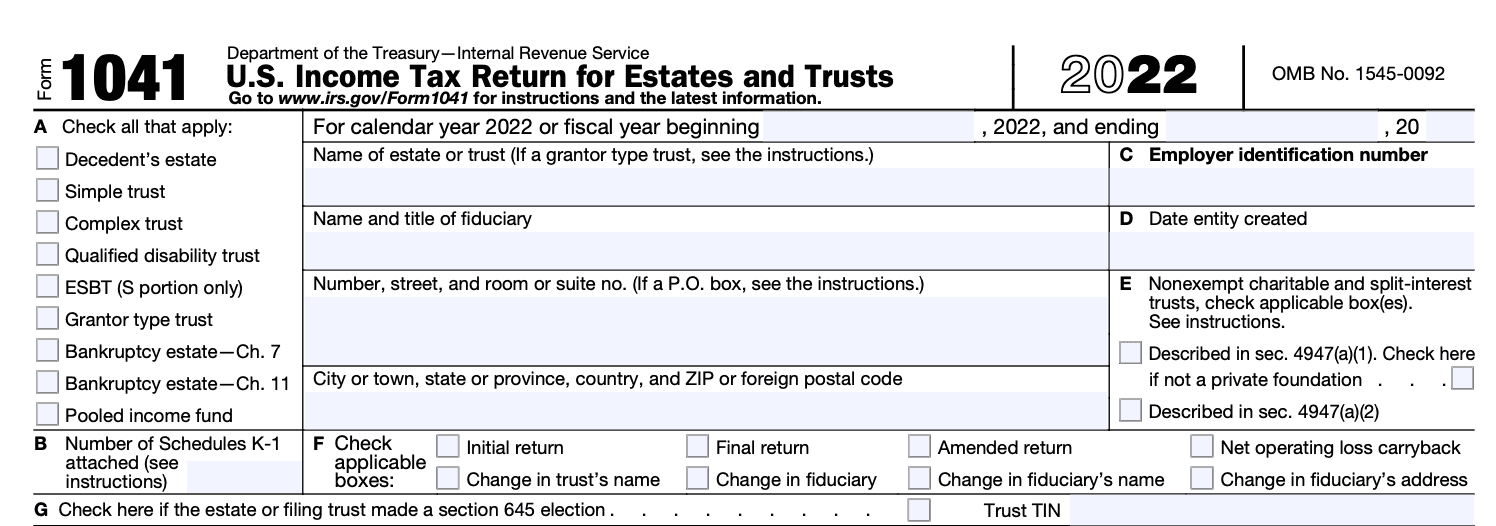
When preparing the annual Form 1041, you will need to report all estimated tax payments made during the year.
- Cross-Referencing: Use your payment records to accurately fill in the total estimated tax payments made on Form 1041.
- Avoiding Discrepancies: Ensure the total reported on your Form 1041 matches the IRS’s records. Any discrepancies could trigger a notice from the IRS, requiring you to provide proof of payment. Your detailed records will be invaluable in resolving such issues quickly and efficiently.
- Refunds and Balances Due: If your estimated payments exceeded the actual tax liability, the estate or trust will be due a refund. Conversely, if there was an underpayment, a balance will be due, potentially with penalties. Accurate reconciliation is key to determining the final financial outcome.
When to Seek Professional Assistance
While paying 1041-ES taxes online is straightforward, the underlying tax law for estates and trusts can be highly complex. There are several situations where engaging a qualified tax professional is not just helpful, but often essential:
- Complex Estate/Trust Structures: Estates or trusts with diverse income sources, significant capital gains, or intricate distribution rules.
- Changes in Income: If the estate or trust’s income or expenses fluctuate dramatically during the year, making it difficult to accurately estimate tax liability.
- Fiduciary Unfamiliarity: If the fiduciary is new to managing an estate or trust, or unfamiliar with specific tax laws pertaining to these entities.
- Dealing with Penalties: If the estate or trust has received an underpayment penalty notice, a professional can help assess its validity and explore options for abatement.
A tax professional specializing in estate and trust taxation can provide invaluable guidance, ensure accurate calculations, and help navigate potential pitfalls, ultimately safeguarding the financial integrity of the estate or trust.
Paying 1041-ES estimated taxes online is an efficient and secure way for fiduciaries to meet their tax obligations. By understanding the requirements, preparing thoroughly, utilizing the appropriate online payment methods, and maintaining meticulous records, you can ensure compliance, avoid penalties, and effectively manage the financial responsibilities of the estate or trust. Embrace these digital tools to streamline your fiduciary duties and ensure peace of mind.
aViewFromTheCave is a participant in the Amazon Services LLC Associates Program, an affiliate advertising program designed to provide a means for sites to earn advertising fees by advertising and linking to Amazon.com. Amazon, the Amazon logo, AmazonSupply, and the AmazonSupply logo are trademarks of Amazon.com, Inc. or its affiliates. As an Amazon Associate we earn affiliate commissions from qualifying purchases.