
Facing a tax bill you can’t afford to pay in full can be a source of significant stress and anxiety. The Internal Revenue Service (IRS), while robust in its collection efforts, understands that taxpayers sometimes encounter financial difficulties that prevent immediate payment. Rather than ignoring the problem, which only exacerbates penalties and interest, the most prudent approach is to proactively communicate with the IRS and explore available payment options. Setting up a payment plan with the IRS can provide a structured path to resolve your tax debt, alleviate immediate financial pressure, and help you avoid more severe collection actions.

This comprehensive guide will demystify the process of establishing an IRS payment plan, outlining the various options available, the steps involved in applying, and crucial considerations to ensure you navigate your tax obligations effectively and responsibly.
Understanding Your IRS Payment Options
The IRS offers several avenues for taxpayers who cannot pay their tax liability in full by the due date. The specific plan that is best for you will depend on the amount you owe, your financial situation, and whether you meet certain eligibility criteria. It’s essential to understand these options to choose the most suitable path for your circumstances.
Short-Term Payment Plan
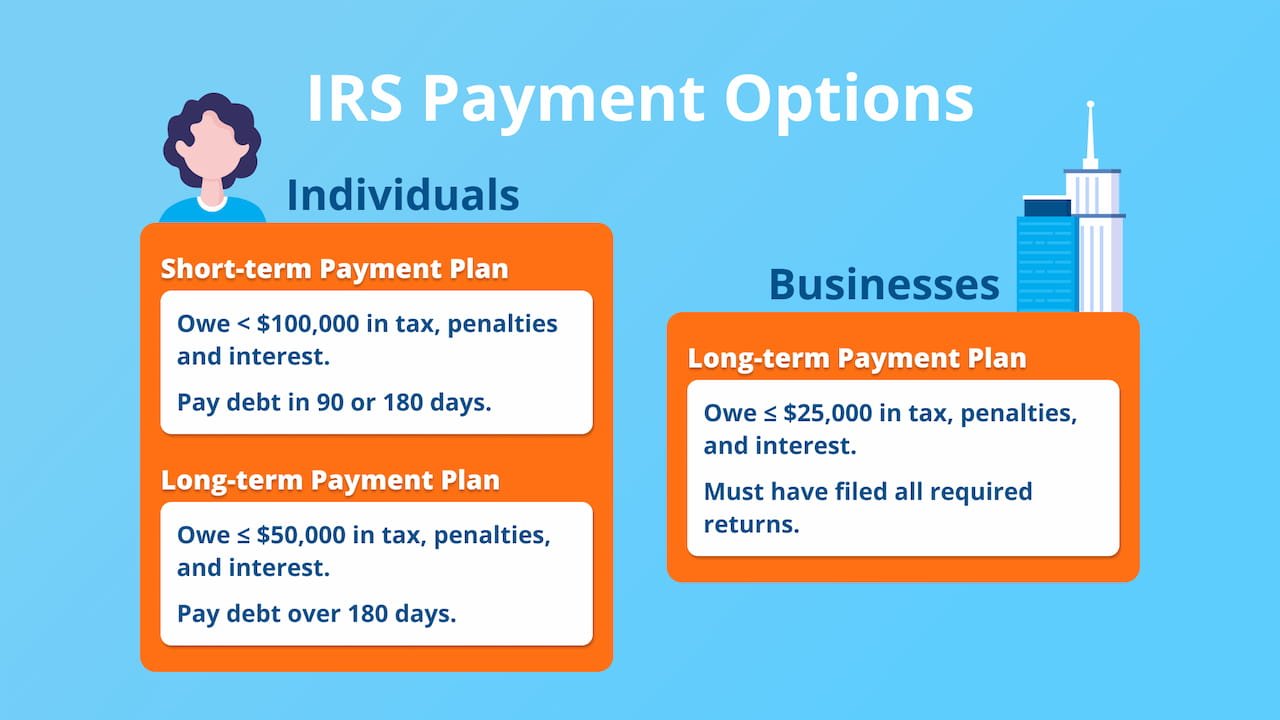
If you believe you can pay your full tax liability within 180 days (approximately six months), a short-term payment plan might be your best option. This arrangement allows you to temporarily defer payment, giving you a bit more time to gather funds.
- Eligibility: Generally available to taxpayers who owe a combined total of under $100,000 (for individuals) or $50,000 (for businesses) in tax, penalties, and interest.
- Duration: Up to 180 days.
- Interest and Penalties: While this plan grants an extension for payment, interest and penalties will continue to accrue on the unpaid balance until it is paid in full. There is usually no fee to set up a short-term payment plan, but the ongoing charges can add up.
Offer in Compromise (OIC)
An Offer in Compromise (OIC) allows certain taxpayers to resolve their tax liability with the IRS for a lower amount than what they originally owe. The IRS will generally agree to an OIC when there is “doubt as to collectibility,” meaning they believe you cannot pay the full amount due, or “effective tax administration,” where collecting the full amount would create economic hardship or be unfair due to special circumstances.
- Eligibility: This is not for everyone. The IRS evaluates your ability to pay, income, expenses, and asset equity. They consider whether your tax debt can be paid through an installment agreement or other means. You must have filed all required tax returns and made all estimated tax payments (if applicable) for the current year.
- Application Process: Requires extensive documentation of your financial situation, typically using Form 656, Offer in Compromise. The application process can be complex and time-consuming, and there is an application fee (though it may be waived for low-income taxpayers).
- Potential Outcomes: If accepted, you resolve your tax debt for a lesser amount. If rejected, you can appeal the decision or explore other options. An OIC is a serious undertaking and often benefits from professional tax assistance.
Installment Agreement (IA)
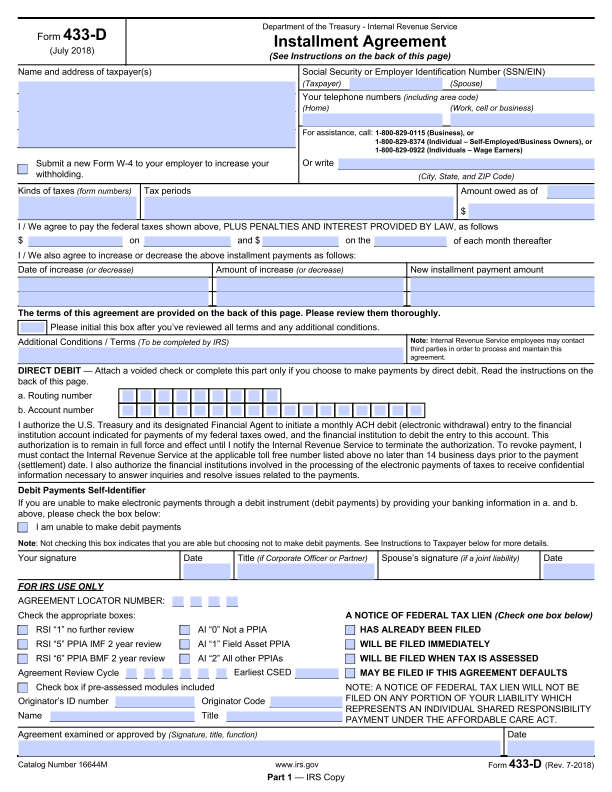
The most common and widely accessible payment plan is the Installment Agreement (IA). This allows you to make monthly payments for up to 72 months (six years). It’s an excellent option for taxpayers who can eventually pay their full tax liability but need more time than a short-term plan allows.
- Eligibility: Generally available if you owe a combined total of under $50,000 (for individuals, including tax, penalties, and interest) or $25,000 (for businesses, including tax, penalties, and interest). You must be current on all required tax filings.
- Types of Installment Agreements:
- Guaranteed Installment Agreement: Available if you owe $10,000 or less, can pay within three years, have a clean tax compliance history for the past five years, and are compliant with all filing and payment requirements.
- Streamlined Installment Agreement: For individuals owing up to $50,000 and businesses owing up to $25,000. These are generally easier to obtain as they don’t require extensive financial disclosure.
- Non-Streamlined Installment Agreement: For those who don’t qualify for streamlined or guaranteed options, requiring the IRS to review detailed financial information to determine your ability to pay.
- Benefits and Drawbacks: An IA prevents further collection actions (like liens or levies) and provides a clear repayment schedule. However, interest and penalties continue to accrue, and there is a setup fee (though it’s lower if you agree to direct debit payments).
The Step-by-Step Process for Setting Up an Installment Agreement
For most taxpayers needing extended time to pay, an Installment Agreement is the go-to solution. Here’s how to set one up:
Step 1: Determine Your Eligibility and Prepare
Before applying, ensure you’ve filed all required tax returns. The IRS will not approve a payment plan if you have outstanding tax returns. Calculate your total tax liability, including any penalties and interest that have already accrued.
Step 2: Choose Your Application Method
The IRS provides several convenient ways to apply for an Installment Agreement:
- Online Payment Agreement (OPA) Tool: This is the quickest and easiest method for most individuals and businesses who qualify for a streamlined IA. You can apply online via IRS.gov, get immediate approval, and even set up direct debit payments. You’ll need to verify your identity.
- Form 9465, Installment Agreement Request: If you don’t qualify for online application or prefer a paper form, you can submit Form 9465. Attach it to your tax return if you’re filing, or mail it separately if you’ve already filed.
- Calling the IRS Directly: You can call the IRS using the number on your tax notice or 1-800-829-1040 (for individuals) or 1-800-829-4933 (for businesses) to discuss payment options and potentially set up an agreement over the phone.
- Working with a Tax Professional: An Enrolled Agent (EA), Certified Public Accountant (CPA), or tax attorney can apply for an Installment Agreement on your behalf, often leveraging their expertise to negotiate favorable terms, especially in complex cases.
Step 3: Provide Financial Information (If Required)
If you don’t qualify for a streamlined or guaranteed IA (e.g., your debt is higher than the streamlined limits), the IRS will likely require detailed financial information to assess your ability to pay. This typically involves submitting Form 433-F (Collection Information Statement) for individuals or Form 433-B (Collection Information Statement for Businesses). You’ll need to provide details about your income, expenses, assets, and liabilities. The IRS uses this information to determine an equitable monthly payment amount.
Step 4: Understand the Terms and Conditions
Once your Installment Agreement is approved, you’ll receive a confirmation letter outlining the terms. This will specify:
- Monthly Payment Amount: The agreed-upon sum you must pay each month.
- Due Dates: The specific date your payment is due monthly.
- Setup Fees: The one-time fee for establishing the agreement (reduced if using direct debit).
- Interest and Penalties: A reminder that these will continue to accrue until the debt is paid in full.
- Direct Debit Option: The IRS strongly encourages setting up direct debit payments from your bank account to ensure timely payments and often offers a reduced setup fee for doing so.
Step 5: Receive Confirmation and Maintain Compliance
After applying, you will receive a notification of approval or rejection. If approved, it’s crucial to adhere strictly to the payment schedule. Make all payments on time, and ensure you file all future tax returns and pay any current taxes when due. Failure to comply can result in the default of your agreement, leading to the IRS resuming collection activities.
Key Considerations Before Entering an IRS Payment Plan
While an IRS payment plan offers a lifeline, it’s important to understand the broader implications before committing.
Interest and Penalties
Even with a payment plan, interest and penalties continue to accrue on your unpaid balance. The IRS interest rate is adjusted quarterly and is generally the federal short-term rate plus 3 percentage points. Penalties for failure to pay typically accrue at 0.5% per month or part of a month, up to a maximum of 25% of the unpaid tax. While an IA can stop additional “failure to pay” penalties from accruing during the plan, previously assessed penalties and interest continue to apply to the outstanding balance. In some cases, the IRS may abate certain penalties if there was reasonable cause.
Financial Disclosure Requirements
For non-streamlined Installment Agreements or Offers in Compromise, the IRS requires a thorough review of your financial situation. This means providing detailed information about your income, assets (bank accounts, real estate, vehicles), and expenses. Be prepared to provide supporting documentation. Honesty and accuracy are paramount; misrepresenting your financial status can lead to severe consequences.
Statute of Limitations
The IRS generally has 10 years from the date of assessment to collect tax debt. This is known as the Collection Statute Expiration Date (CSED). Entering into an Installment Agreement, however, can suspend the CSED for the duration of the agreement, effectively extending the time the IRS has to collect the debt. This is an important factor to consider, especially for older tax debts.
Impact on Credit Score
Directly, the IRS does not report tax debt to credit bureaus. However, if the IRS files a Notice of Federal Tax Lien, this public record will appear on your credit report and can significantly impact your credit score and ability to obtain loans, mortgages, or other credit. Entering into an Installment Agreement can prevent the IRS from filing a lien, or in some cases, lead to its withdrawal or release once certain conditions are met.
Professional Assistance
For complex tax situations, high debt amounts, or if you believe you qualify for an Offer in Compromise, consulting with a qualified tax professional (such as an Enrolled Agent, CPA, or tax attorney) is highly recommended. They can help you understand your options, negotiate with the IRS on your behalf, and ensure you pursue the most advantageous path while maintaining compliance.
What Happens If You Can’t Meet Your Payment Plan?
Life happens, and sometimes even the best-laid plans go awry. If you find yourself unable to meet the terms of your IRS payment plan, do not ignore the situation.
Modifications and Revisions
If your financial situation changes (e.g., job loss, significant medical expenses), you may be able to request a modification to your existing Installment Agreement. Contact the IRS as soon as possible to explain your circumstances. They may be willing to adjust your monthly payment amount or explore other solutions. It’s much better to be proactive than to default.
Financial Hardship & Currently Not Collectible (CNC) Status
If you truly cannot afford to make any payments due to extreme financial hardship, the IRS may place your account in “Currently Not Collectible” (CNC) status. This means the IRS temporarily stops collection efforts, but interest and penalties continue to accrue. To qualify for CNC status, you must provide extensive financial documentation proving that paying would leave you unable to meet basic living expenses. The IRS reviews CNC accounts periodically, and collection efforts can resume if your financial situation improves.
Consequences of Default
Defaulting on an Installment Agreement can lead to severe consequences. The IRS can:
- Terminate the Agreement: Your Installment Agreement will be canceled.
- Resume Collection Actions: This includes filing a Notice of Federal Tax Lien (if one hasn’t been filed already) against your property or issuing a Notice of Levy to garnish wages, seize bank accounts, or take other assets.
- Increase Penalties: New penalties may be assessed.
- Offset Future Refunds: Any future tax refunds you are owed will likely be applied to your outstanding tax debt.
Conclusion
Setting up a payment plan with the IRS is a responsible and often necessary step for taxpayers who face difficulty paying their tax obligations in full. Whether it’s a short-term plan, an Offer in Compromise, or an Installment Agreement, the IRS provides various mechanisms to help you resolve your tax debt. The key is to act promptly, understand your options, and maintain open communication with the IRS. By proactively addressing your tax debt, you can mitigate penalties, avoid harsh collection actions, and achieve peace of mind, ultimately securing a more stable financial future. Always remember that while challenging, tax debt is manageable with the right strategy and, when necessary, professional guidance.
aViewFromTheCave is a participant in the Amazon Services LLC Associates Program, an affiliate advertising program designed to provide a means for sites to earn advertising fees by advertising and linking to Amazon.com. Amazon, the Amazon logo, AmazonSupply, and the AmazonSupply logo are trademarks of Amazon.com, Inc. or its affiliates. As an Amazon Associate we earn affiliate commissions from qualifying purchases.