
In an increasingly digitized world, managing personal and business finances has become remarkably streamlined, and federal tax payments are no exception. The days of frantically searching for stamps, mailing paper checks, and hoping they arrive on time are largely behind us. Today, the Internal Revenue Service (IRS) offers a robust suite of online payment options designed for convenience, security, and efficiency. Understanding these methods is not just about leveraging technology; it’s about optimizing your financial management, ensuring compliance, and avoiding unnecessary penalties. This guide delves into the various ways you can fulfill your federal tax obligations from the comfort of your home or office, offering insights into each method’s benefits and considerations.

The Evolution of Online Tax Payments
The journey from traditional, paper-based tax interactions to today’s digital landscape has been a transformative one, driven by both technological advancements and a concerted effort by tax authorities to modernize processes. The ability to pay federal taxes online represents a significant leap, offering taxpayers unparalleled ease and control.
From Paper Checks to Digital Transactions
For generations, the default method for paying taxes involved writing a physical check and mailing it to the IRS. This process was fraught with potential delays, postal errors, and the inherent insecurity of sending sensitive financial documents through the mail. The advent of the internet and the widespread adoption of secure online banking opened the door for a more efficient paradigm. Early digital payment systems, while rudimentary, paved the way for the sophisticated platforms we use today, gradually eroding the reliance on physical mail. This shift wasn’t merely about convenience; it significantly reduced administrative burdens for both taxpayers and the IRS, cutting down on processing times and reducing the risk of lost payments. The digital revolution has fundamentally altered how we perceive and interact with our financial responsibilities, making once complex tasks simple clicks away.
The IRS’s Push for Digital Adoption
Recognizing the immense benefits of digital transactions, the IRS has actively championed the adoption of online payment methods. Their strategy has involved not only developing secure platforms but also educating taxpayers on their existence and benefits. This push is part of a broader modernization effort aimed at enhancing taxpayer service, improving accuracy, and bolstering the security of financial data. The agency understands that a seamless digital experience encourages timely payments and reduces the overall cost of tax administration. By investing in user-friendly interfaces and robust cybersecurity measures, the IRS has built confidence in its online systems, transforming what was once a chore into a routine digital transaction. This commitment to digital transformation underscores the federal government’s dedication to keeping pace with technological changes for the benefit of all taxpayers.
Key Online Payment Methods for Federal Taxes
The IRS provides several distinct online avenues for paying your federal taxes, each with its own features and ideal use cases. Understanding these options empowers you to choose the method that best suits your financial situation and preferences.
Direct Pay (IRS.gov)
IRS Direct Pay is arguably the most straightforward and widely used online payment method directly offered by the IRS. It allows individuals and businesses to pay their income tax (Form 1040, 1040-ES), estimated taxes, and various other tax liabilities directly from a checking or savings account. There are no fees associated with this service, making it an attractive option for many. The process is simple: you visit the IRS website, select “Direct Pay,” verify your identity using past tax information, and then input your bank account details and payment amount. It’s a quick, secure, and free way to ensure your payment reaches the IRS on time. This method is particularly popular for one-off payments and those who prefer to deal directly with the tax agency without intermediaries.
Electronic Federal Tax Payment System (EFTPS)
EFTPS is a robust, secure, and free online service designed primarily for businesses and individuals who need to make federal tax payments frequently, such as employers paying payroll taxes or self-employed individuals making estimated tax payments throughout the year. Unlike Direct Pay, EFTPS requires enrollment and a verification process that can take a few days. Once enrolled, users gain access to a comprehensive platform where they can schedule payments up to 365 days in advance, view payment history, and receive email confirmations. This foresight and detailed record-keeping capability make EFTPS an invaluable tool for organized financial planning and compliance, especially for entities with recurring tax obligations. It provides a level of control and historical insight that is crucial for effective business finance management.
Payment Processors (Credit/Debit Card, Digital Wallet)
For those who prefer the flexibility of paying with a credit card, debit card, or a digital wallet (like PayPal or Click to Pay), the IRS partners with several third-party payment processors. While these methods offer convenience and the potential to earn rewards points on credit card payments, they typically come with a processing fee charged by the third-party provider. The fees usually range from 1.87% for credit card payments to a flat fee for debit cards, and vary by processor. This option can be appealing for taxpayers who need to pay quickly, want to consolidate payments on a single card, or are facing an immediate payment deadline and need to bridge a temporary cash flow gap. It’s essential to compare processor fees and understand the full cost before choosing this method.
Online Tax Software Integration
Many popular tax preparation software programs, such as TurboTax, H&R Block, and TaxAct, integrate seamlessly with the IRS’s payment systems. When you prepare your federal tax return using one of these platforms, the software will often prompt you with the option to pay any owed taxes directly through its interface. This typically involves selecting your preferred payment method (e.g., direct debit from your bank account, credit/debit card via a processor, or scheduling through EFTPS if already enrolled). The convenience here lies in submitting your return and payment in a single, integrated workflow, minimizing the chances of errors or missed deadlines. For many, this combined approach offers the ultimate in simplicity and efficiency, especially during the peak tax season.
Step-by-Step Guide to Using IRS Direct Pay
Given its popularity and fee-free nature, a closer look at IRS Direct Pay is warranted. It’s an excellent choice for most individual taxpayers and small businesses making one-time payments.
Eligibility and Information Required
To use IRS Direct Pay, you’ll need to meet a few basic eligibility criteria and have specific information on hand. This service is available for payments related to Form 1040 (individual income tax), Form 1040-ES (estimated taxes), and various other business forms. You must have a checking or savings account with a U.S. financial institution. Before starting, gather the following:
- Your Social Security Number (SSN) or Individual Taxpayer Identification Number (ITIN).
- Your date of birth.
- Your current street address.
- Your filing status (e.g., single, married filing jointly).
- Your adjusted gross income (AGI) from your prior year’s tax return (this is a key security measure).
- Your bank account number and routing number.
Having these details ready will ensure a smooth and quick transaction.
Navigating the Direct Pay Portal

- Access the Service: Go to IRS.gov and search for “Direct Pay” or navigate directly to the Direct Pay section.
- Verify Your Identity: The system will prompt you to enter your SSN/ITIN, date of birth, filing status, and prior year’s AGI. This step is crucial for security.
- Enter Payment Details:
- Reason for Payment: Select the tax form you are paying for (e.g., Income Tax, Estimated Tax).
- Apply Payment To: Specify the tax year the payment applies to.
- Payment Type: Choose whether it’s an estimated tax payment, a balance due payment, or another type.
- Enter Bank Account Information: Input your bank routing number and account number from your checking or savings account. Double-check these numbers carefully to avoid errors.
- Review and Authorize: Before submitting, review all the information you’ve entered. Ensure the payment amount, tax year, and bank details are accurate. Once confirmed, authorize the payment.
- Confirmation: You will receive an immediate confirmation number. It is crucial to save or print this number for your records. An email confirmation will also be sent if you provide an email address.
Confirmation and Record Keeping
Upon successful submission via Direct Pay, you’ll receive a unique confirmation number. This number is your proof of payment and should be retained alongside your other tax records. While the IRS sends an email confirmation, having the confirmation number readily accessible allows you to verify the payment’s status online if needed. Good record-keeping is a cornerstone of sound financial management, especially concerning tax obligations, providing peace of mind and essential documentation in case of any future inquiries.
Advantages and Considerations of Online Tax Payments
Embracing online payment methods for federal taxes comes with a host of advantages, but also a few points to consider to ensure a smooth and secure experience.
Convenience, Accuracy, and Security
The primary advantage of online tax payments is unparalleled convenience. Taxpayers can make payments 24/7, from any location with internet access, eliminating the need for trips to the post office or manual check writing. This flexibility is invaluable, especially for those with busy schedules or last-minute payment needs. Furthermore, digital payment systems significantly reduce the risk of human error associated with manual data entry or postal delays. When integrated with tax software, the payment amount is often pre-filled, enhancing accuracy. Security is another major benefit; IRS-approved online platforms use advanced encryption and security protocols to protect sensitive financial information, often exceeding the security of traditional mail.
Potential Fees and Payment Deadlines
While methods like IRS Direct Pay and EFTPS are free, using third-party payment processors for credit/debit card payments incurs a fee. These fees, though often small percentages, can add up, particularly for large tax bills. It’s crucial to factor these costs into your decision-making. Regardless of the payment method, adherence to payment deadlines remains paramount. Online payments must be initiated by the deadline (usually April 15th, or the next business day if it falls on a weekend or holiday) to be considered timely. It’s wise to make payments a few days in advance to account for any unforeseen technical glitches or bank processing times.
What to Do If You Can’t Pay On Time
Even with the ease of online payments, some taxpayers may find themselves unable to pay their full tax liability by the deadline. It’s critical to remember that filing your return on time and paying your taxes are separate obligations. If you cannot pay, you should still file your return or an extension (Form 4868) by the deadline to avoid the failure-to-file penalty, which is often much steeper than the failure-to-pay penalty.
The IRS offers several options for taxpayers facing payment difficulties:
- Short-Term Payment Plan (up to 180 days): Allows a brief extension to pay, though interest and penalties still apply.
- Offer in Compromise (OIC): Allows certain taxpayers to resolve their tax liability with the IRS for a lower amount than what they originally owed, under specific financial hardship conditions.
- Installment Agreement: Allows taxpayers to make monthly payments for up to 72 months. This can be requested online through the IRS website.
Exploring these options online or with the assistance of a financial professional can help mitigate penalties and manage your financial burden responsibly.
Beyond Payment: Managing Your Tax Obligations Digitally
Online payment is just one facet of the broader digital transformation in tax administration. Leveraging other digital tools can provide a comprehensive approach to managing your entire tax lifecycle.
Electronic Filing (e-file) and Estimated Taxes
Combining online payment with electronic filing (e-file) offers the most seamless tax experience. E-filing reduces errors, speeds up processing, and allows for quicker refunds. For individuals with income not subject to withholding (e.g., self-employed, investors), managing estimated taxes electronically through EFTPS or Direct Pay is essential. This proactive approach helps avoid underpayment penalties by ensuring taxes are paid throughout the year as income is earned, rather than in a single lump sum at year-end. Utilizing digital reminders and scheduling features within these platforms can greatly enhance compliance and financial predictability.
Accessing Your IRS Account Online
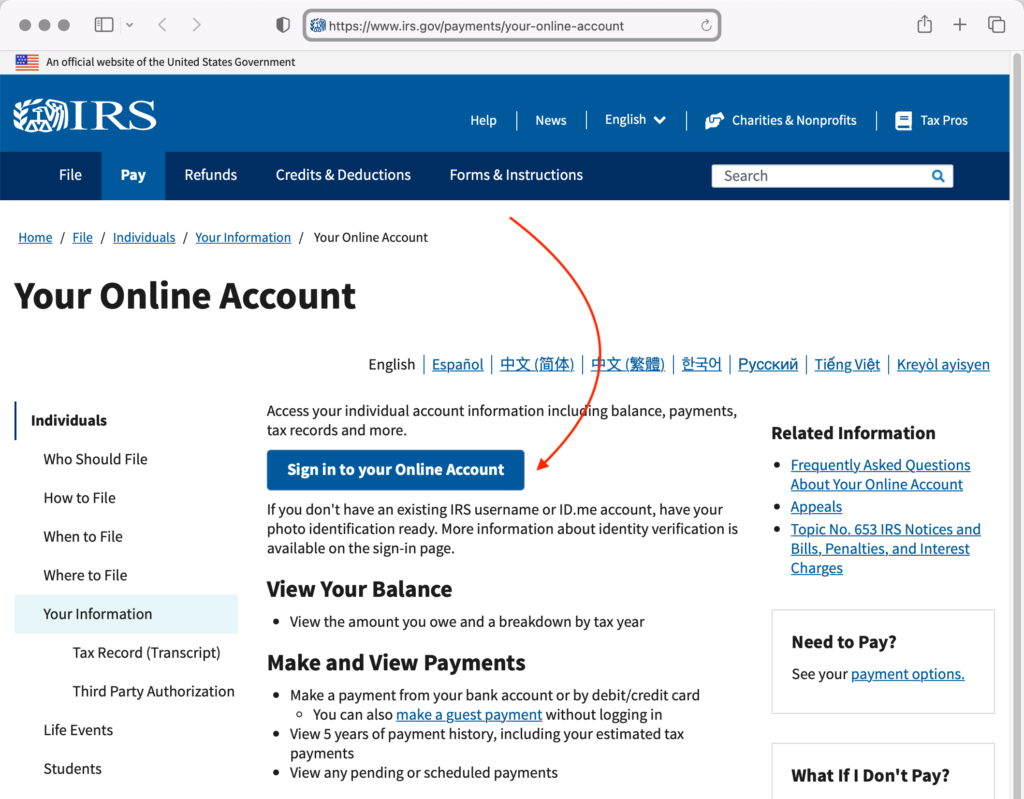
The IRS provides an “Online Account” feature on its website, a valuable resource for taxpayers. Through this secure portal, you can:
- View your tax payment history.
- Access tax records and transcripts.
- Review key data from your most recently filed tax return.
- View notices from the IRS.
- Set up a payment plan.
- View your economic impact payment information.
This centralized digital hub empowers taxpayers to monitor their tax affairs proactively, verify information, and manage various interactions with the IRS without the need for phone calls or mailed correspondence. It’s a fundamental tool for comprehensive financial oversight in the digital age.
Seeking Professional Help in the Digital Age
While online tools simplify many aspects of tax management, complex financial situations or significant life changes often warrant professional advice. Tax professionals, including CPAs and enrolled agents, are increasingly leveraging digital tools to serve their clients. They can prepare and e-file returns, advise on optimal online payment strategies, and even represent clients before the IRS, often communicating securely online. Engaging a qualified professional, even when using online payment methods, can ensure compliance, identify potential savings, and provide peace of mind in navigating the intricacies of federal tax law.
In conclusion, paying your federal taxes online is no longer just an option; it’s the preferred, most efficient, and secure method available to taxpayers. By understanding and utilizing the various online platforms and resources provided by the IRS, individuals and businesses can streamline their financial management, ensure timely compliance, and embrace a more modern approach to their tax obligations.
aViewFromTheCave is a participant in the Amazon Services LLC Associates Program, an affiliate advertising program designed to provide a means for sites to earn advertising fees by advertising and linking to Amazon.com. Amazon, the Amazon logo, AmazonSupply, and the AmazonSupply logo are trademarks of Amazon.com, Inc. or its affiliates. As an Amazon Associate we earn affiliate commissions from qualifying purchases.