
Navigating the complexities of tax season can be daunting for individuals and businesses alike, but one question consistently arises: “How do I make a payment to the IRS?” This seemingly simple query unlocks a world of options, each with its own benefits and considerations. Understanding these methods is crucial not only for fulfilling your civic duty but also for ensuring accuracy, avoiding penalties, and maintaining financial peace of mind.
The Internal Revenue Service (IRS) offers a variety of payment channels, catering to different preferences for convenience, speed, and security. From streamlined digital solutions that leverage the power of online banking to traditional methods like mailing a check, the choice often comes down to what best suits your individual circumstances and financial management style. This comprehensive guide will dissect each primary method, providing insights into their mechanics, advantages, and specific scenarios where they prove most effective, all within the purview of prudent financial management.
Understanding Your IRS Payment Obligations
Before diving into the “how,” it’s essential to grasp the “what” and “when” of your IRS payment responsibilities. A clear understanding of your tax liability and deadlines forms the bedrock of timely and accurate payments, preventing unnecessary stress and potential penalties.
Types of Payments You Might Owe
The IRS isn’t just interested in your annual income tax. Various financial activities throughout the year can trigger different payment obligations:
- Income Tax: This is the most common type, typically paid with your annual tax return (Form 1040). It covers federal income tax, social security, and Medicare taxes.
- Estimated Tax: If you are self-employed, own a business, or have significant income not subject to withholding (e.g., interest, dividends, rent, alimony), you likely need to pay estimated taxes quarterly. This ensures you pay tax as you earn or receive income throughout the year, rather than a large lump sum at tax time.
- Penalties: The IRS may levy penalties for various reasons, including failing to file on time, failing to pay on time, or underpaying estimated tax. These penalties come with their own payment instructions.
- Extensions to File, Not to Pay: While you can get an extension to file your tax return, this does not extend the time to pay any taxes you owe. If you anticipate owing tax, you should estimate and pay it by the original deadline to avoid late payment penalties.
Key Payment Deadlines
Staying abreast of IRS deadlines is paramount. While Tax Day for most individual filers is typically April 15th (or the next business day if April 15th falls on a weekend or holiday), other crucial dates exist:
- Estimated Tax Due Dates: These are typically January 15, April 15, June 15, and September 15 for income earned in the preceding quarter. Missing these can result in underpayment penalties, even if you pay your full tax by April 15 of the following year.
- Extension Payments: If you file an extension, any estimated tax owed must still be paid by the original April 15 deadline.
- Quarterly Payroll Tax Deadlines: Businesses with employees have specific quarterly deadlines for payroll tax deposits, which are distinct from personal income tax.
Understanding these obligations and deadlines empowers you to plan your finances effectively, ensuring that funds are available when payments are due. Ignoring them can lead to compounding interest and penalties, making a manageable tax bill much larger.
Digital Payment Methods: Convenience and Speed
In the digital age, the IRS has embraced technology to offer taxpayers secure, efficient, and often instant ways to fulfill their payment obligations. These methods are generally preferred for their convenience, immediate confirmation, and reduced risk of errors compared to traditional paper-based approaches.
IRS Direct Pay
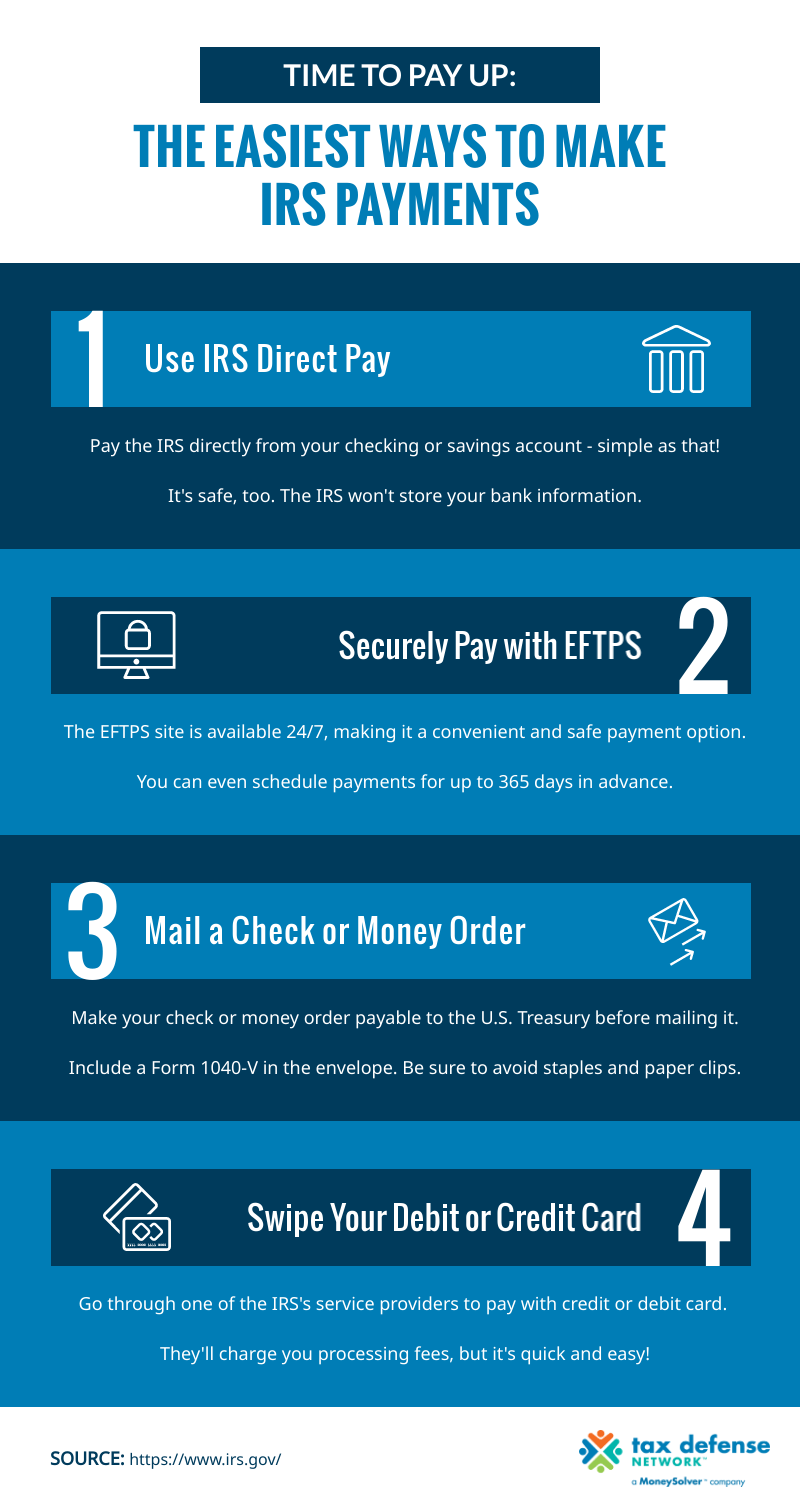
One of the most straightforward and free digital options is IRS Direct Pay. This service allows individuals to pay their federal taxes directly from their checking or savings account, without any registration required.
- How it works: You simply visit the IRS website, select “Direct Pay,” choose the reason for payment (e.g., income tax, estimated tax), the tax year, and then enter your bank account information and the amount. You’ll need to verify your identity using information from a previous tax return or an IRS notice.
- Benefits: It’s free, secure, and provides immediate confirmation via email. Payments can be scheduled up to 365 days in advance.
- Considerations: It’s exclusively for individual taxpayers and cannot be used by businesses for most tax types. You can only make two payments within a 24-hour period.
Electronic Federal Tax Payment System (EFTPS)
For both individuals and businesses, the Electronic Federal Tax Payment System (EFTPS) is a robust, free service that allows for the payment of all types of federal taxes. While it requires an enrollment process, it offers greater flexibility and control for ongoing tax payments.
- How it works: After enrolling online or by mail, you receive a Personal Identification Number (PIN). You can then log in to the EFTPS website or use their voice response system to schedule payments from your checking or savings account.
- Benefits: Highly secure, offers a comprehensive payment history, and allows payments to be scheduled up to 365 days in advance. It’s ideal for businesses needing to make frequent payroll tax deposits and for individuals making quarterly estimated tax payments. Payments can be tracked directly within the system.
- Considerations: The enrollment process takes a few days, as the IRS mails your PIN. It’s crucial to plan ahead, especially for first-time users, to ensure you can meet deadlines.
Debit Card, Credit Card, or Digital Wallet
For those who prefer the flexibility and potential rewards of card payments, the IRS allows payments via debit card, credit card, or digital wallet through third-party payment processors.
- How it works: You select a payment processor approved by the IRS (e.g., ACI Payments, Inc., PayUSAtax, Official Payments), provide your tax information and card details, and the processor remits the payment to the IRS.
- Benefits: Offers convenience, allows you to earn credit card rewards (if applicable), and provides proof of payment. It’s an excellent option for last-minute payments or if you need to bridge a temporary cash flow gap.
- Considerations: A processing fee is charged by the third-party processor. This fee varies based on the processor and payment method (typically a flat fee for debit cards and a percentage for credit cards). While the convenience is high, the cost should be factored into your financial decision-making. Paying a substantial tax bill with a high-interest credit card without a plan to pay it off quickly can lead to more debt than the fees.
Online Payment Agreements
If you owe the IRS but cannot pay in full immediately, Online Payment Agreements (OPOAs) offer a lifeline. This allows eligible taxpayers to set up short-term payment plans or long-term installment agreements.
- How it works: You can apply online through the IRS website. Based on the amount owed and your financial situation, you might be approved for a short-term plan (up to 180 days to pay in full) or a long-term installment agreement (monthly payments for up to 72 months).
- Benefits: Avoids enforced collection actions like liens or levies, provides a structured path to pay off your tax debt, and reduces stress.
- Considerations: Interest and penalties continue to accrue on the unpaid balance, though the failure-to-pay penalty rate may be reduced. There may be a setup fee for installment agreements. This option should be explored if immediate full payment isn’t feasible, to proactively manage your financial obligations with the IRS.
Traditional Payment Methods: Still Relevant
While digital payments are increasingly popular, the IRS still provides traditional payment channels that many taxpayers find familiar and reliable. These methods remain essential for those without ready access to online banking or who simply prefer physical transactions.

Payment by Mail (Check or Money Order)
One of the oldest and most trusted methods is mailing a payment directly to the IRS. This option is suitable for those who prefer physical documentation and are not in a rush.
- How it works: Make a check or money order payable to the “U.S. Treasury.” On the memo line, include your name, address, daytime phone number, Social Security Number (SSN) or Employer Identification Number (EIN), the tax year, and the related tax form or notice number.
- Key Forms:
- Form 1040-V (Payment Voucher): If you are paying tax due with your Form 1040, enclose this voucher.
- Form 4868 (Application for Automatic Extension of Time To File U.S. Individual Income Tax Return): If paying with an extension.
- Form 1040-ES (Estimated Tax for Individuals): For estimated tax payments.
- Where to Send: The mailing address depends on your location and the type of form you are filing. Always refer to the specific form instructions or the IRS website for the correct mailing address to avoid delays.
- Benefits: Simple, no processing fees (beyond postage), and a cancelled check provides clear proof of payment.
- Considerations: Slower processing time compared to digital methods. Mail must be postmarked by the due date to be considered timely. There’s a risk of mail getting lost or delayed, making tracking crucial. Always send payments via certified mail with return receipt requested for high-value payments to ensure proof of delivery.
Cash Payments
For individuals who primarily deal in cash, the IRS offers an option to make cash payments through retail partners. This method addresses the needs of the unbanked or those who prefer not to use electronic transactions.
- How it works: The IRS has partnered with various retail stores, often through services like PayNearMe or MoneyGram, to accept cash payments on their behalf. You first need to obtain a payment code (often a QR code or barcode) from the IRS website or through your tax software. You then take this code to a participating retail location, pay the exact amount in cash, and receive a receipt.
- Benefits: Provides a secure way to pay cash to the IRS without needing a bank account.
- Considerations: Limits apply (e.g., often a maximum of $500 per payment). There may be a small fee charged by the retail partner for the service. It’s crucial to keep your receipt as proof of payment. This method requires a bit more legwork and is not as universally available as other options. Always confirm participating locations and payment limits beforehand.
Payment Through Your Tax Preparer or Tax Software
Many taxpayers rely on professional tax preparers or sophisticated tax software to manage their annual filings. Both often integrate payment services directly into their platforms.
- How it works: When filing electronically through a tax preparer or tax software (like TurboTax or H&R Block), you are typically given the option to authorize a direct debit from your bank account for the amount owed. The software or preparer acts as an intermediary, submitting your payment information along with your return.
- Benefits: Streamlines the entire tax filing and payment process. Eliminates the need for separate steps to make payments, reducing the chance of errors or missed deadlines.
- Considerations: Ensure you understand any additional fees charged by the software provider or preparer for this service. Always double-check the bank account information and payment amount before authorizing. While convenient, the ultimate responsibility for the accuracy and timeliness of the payment remains with the taxpayer.
Important Considerations Before Making a Payment
Regardless of the method chosen, certain best practices and preventative measures are essential to ensure a smooth and error-free payment process. Prudent financial management extends beyond merely sending money; it involves meticulous verification and strategic planning.
Verify Information Meticulously
Accuracy is paramount when dealing with the IRS. A small error can lead to significant headaches, including misapplied payments, penalties, or collection notices.
- Tax ID: Always double-check your Social Security Number (SSN) or Employer Identification Number (EIN). This is your primary identifier with the IRS.
- Tax Year: Confirm that the payment is being applied to the correct tax year. Payments mistakenly applied to the wrong year can cause issues with your account balance.
- Payment Amount: Verify the exact amount you intend to pay. Rounding errors or miscalculations can lead to underpayment.
- Bank Account Information: If using direct debit methods (IRS Direct Pay, EFTPS, tax software), ensure your bank routing number and account number are correct. An incorrect number could result in a failed payment and potential penalties.
Keep Meticulous Records
Documenting your payment is crucial for your financial records and for resolving any potential discrepancies with the IRS.
- Confirmation Numbers: For all digital payments, save or print the confirmation number. This is your immediate proof that the transaction was initiated successfully.
- Bank Statements: Monitor your bank or credit card statements to confirm that the payment has been successfully debited/charged.
- Cancelled Checks/Money Order Receipts: For payments by mail, keep a copy of the check or money order and, if applicable, the certified mail receipt.
- Communication Records: If you communicate with the IRS regarding your payment, keep records of dates, times, names of representatives, and summaries of discussions.
These records serve as your defense in case the IRS claims not to have received your payment or applies it incorrectly.
Avoiding Common Pitfalls
Being aware of potential issues can help you sidestep common problems.
- IRS Scams: Be vigilant against phishing attempts and fraudulent calls claiming to be from the IRS demanding immediate payment via unusual methods (e.g., gift cards, wire transfers). The IRS will never demand immediate payment without giving you an opportunity to question or appeal the amount. They typically initiate contact by mail.
- Late Payments: Missing a deadline, even by a day, can trigger penalties and interest. If you know you cannot pay on time, explore payment agreements proactively.
- Underpayment Penalties: If you owe a significant amount at the end of the year because you didn’t pay enough tax throughout the year (e.g., through withholding or estimated payments), you might face an underpayment penalty. Review your withholding or estimated tax payments periodically, especially after significant life changes or income fluctuations.
What If You Can’t Pay?
Financial difficulties can make meeting tax obligations challenging. The IRS offers several programs for taxpayers who cannot pay their taxes in full:
- Installment Agreement: Allows you to make monthly payments for up to 72 months.
- Offer in Compromise (OIC): Allows certain taxpayers to resolve their tax liability with the IRS for a lower amount than what they originally owe. This is typically an option when paying the full amount would cause significant financial hardship.
- Temporary Delay of Collection: In severe financial hardship cases, the IRS may temporarily delay collection until your financial condition improves.
It’s crucial to contact the IRS as soon as possible if you foresee difficulty in paying. Ignoring the problem will only exacerbate it through accruing penalties and interest.
Conclusion
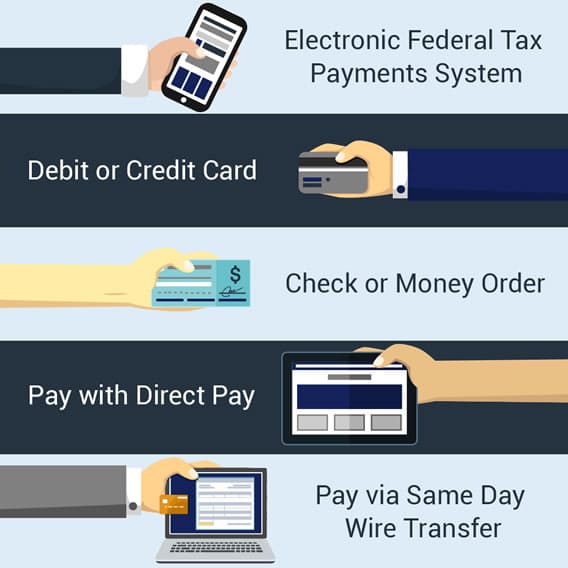
Making a payment to the IRS doesn’t have to be a source of anxiety. With a clear understanding of your obligations and the diverse array of payment methods available, you can choose the option that best suits your financial situation and preferences. Whether you opt for the speed and convenience of IRS Direct Pay or EFTPS, the flexibility of card payments, or the reliability of traditional mail, careful planning and meticulous record-keeping are your best allies.
Always prioritize accuracy in your information, be mindful of deadlines, and proactively address any financial challenges that might hinder your ability to pay. By embracing these best practices, you can ensure your tax payments are handled efficiently, securely, and without unnecessary stress, allowing you to maintain sound financial health and compliance. When in doubt, consulting with a qualified tax professional can provide personalized guidance and peace of mind.
aViewFromTheCave is a participant in the Amazon Services LLC Associates Program, an affiliate advertising program designed to provide a means for sites to earn advertising fees by advertising and linking to Amazon.com. Amazon, the Amazon logo, AmazonSupply, and the AmazonSupply logo are trademarks of Amazon.com, Inc. or its affiliates. As an Amazon Associate we earn affiliate commissions from qualifying purchases.