
Embarking on the journey of stock trading can seem daunting, a complex world filled with jargon, charts, and rapid decisions. Yet, for many, it represents a powerful avenue for wealth creation and financial independence. Trading stocks isn’t about getting rich quick; it’s a skill developed through education, discipline, and a thorough understanding of market dynamics. This guide aims to demystify the process, providing a structured approach for anyone looking to understand the fundamentals and navigate the practicalities of stock trading. Whether your goal is to generate supplementary income, grow your retirement savings, or simply understand how financial markets work, a solid foundation is essential.
Understanding the Fundamentals of Stock Trading
Before you place your first order, it’s crucial to grasp the basic building blocks of the stock market. Knowing what you’re buying, why it exists, and the environment in which it operates is paramount to making informed decisions.
What is a Stock?
At its core, a stock (also known as equity) represents a fractional ownership interest in a company. When you buy a stock, you’re essentially buying a tiny piece of that company. This ownership comes with certain rights, most commonly the right to a share of the company’s profits (dividends) and the right to vote on certain company matters. Stocks are categorized primarily into common stocks, which carry voting rights and fluctuate with the company’s performance, and preferred stocks, which typically don’t have voting rights but offer a fixed dividend payout and often have priority claims on assets in case of liquidation.
Why Do Companies Issue Stocks?
Companies issue stocks primarily to raise capital. This capital can be used for various purposes, such as funding new projects, expanding operations, paying off debt, or researching and developing new products. When a company first offers its shares to the public, it’s called an Initial Public Offering (IPO). After the IPO, these shares are traded among investors in the secondary market. By offering ownership, companies gain access to a broad base of investors, allowing them to fuel growth without taking on additional debt.
The Stock Market Explained
The “stock market” isn’t a single physical location but rather a network of exchanges and brokers where stocks are bought and sold. The primary market is where new stocks are issued (IPOs). The secondary market, comprising exchanges like the New York Stock Exchange (NYSE) and NASDAQ, is where most trading occurs among investors. These exchanges provide a regulated and centralized platform, ensuring price transparency and efficient execution of trades. The prices of stocks on these exchanges are influenced by supply and demand, company performance, economic news, industry trends, and investor sentiment.
Key Stock Market Terminology
Navigating the stock market requires understanding its unique language. Here are a few essential terms:
- Bulls and Bears: A “bull market” signifies rising prices and investor optimism, while a “bear market” indicates falling prices and pessimism. Investors who believe prices will rise are “bulls,” and those who expect them to fall are “bears.”
- IPO (Initial Public Offering): The first time a company sells shares of its stock to the public.
- Dividend: A portion of a company’s profits distributed to its shareholders, usually quarterly.
- Volatility: The degree of variation of a trading price series over time. High volatility means prices can change dramatically.
- Liquidity: The ease with which an asset can be converted into cash without affecting its market price. Highly liquid stocks can be bought or sold quickly without significant price impact.
- Market Capitalization (Market Cap): The total value of a company’s outstanding shares, calculated by multiplying the current share price by the number of shares outstanding.
Essential Steps Before You Start Trading
Jumping into stock trading without preparation is akin to sailing into a storm without a map. A structured approach focusing on self-assessment, education, and practical setup is crucial for long-term success.
Define Your Financial Goals and Risk Tolerance
Before anything else, clarify why you want to trade stocks. Are you aiming for long-term growth for retirement, generating short-term income, or saving for a specific goal like a down payment? Your goals will dictate your trading style. Equally important is understanding your risk tolerance – how much financial risk you are comfortable taking. Can you handle significant fluctuations in your portfolio value, or do you prefer a more conservative approach? Be honest with yourself about how much capital you can afford to lose without impacting your financial well-being. This self-assessment forms the bedrock of your investment strategy.
Educate Yourself Continuously
The stock market is a dynamic environment, and continuous learning is non-negotiable. Immerse yourself in financial education. Read reputable books on investing and trading, follow established financial news outlets, and consider online courses or webinars. Learn about fundamental analysis (evaluating a company’s financial health) and technical analysis (studying price charts and patterns). Understand economic indicators, industry trends, and how global events can impact markets. The more you know, the better equipped you’ll be to make informed decisions and adapt to changing conditions.
Start with a Brokerage Account
To trade stocks, you’ll need a brokerage account. An online brokerage firm acts as an intermediary, executing buy and sell orders on your behalf. There are various types:
- Discount Brokers: Offer lower commissions and fewer services, ideal for self-directed traders.
- Full-Service Brokers: Provide extensive research, personalized advice, and wealth management, typically at a higher cost.
Most individual investors opt for online discount brokers due to their user-friendly platforms and competitive fees. When choosing a broker, consider factors like fees, available tools and research, customer service, and the range of investment products offered. Opening an account typically involves providing personal information, funding the account, and agreeing to terms and conditions.
Fund Your Account Wisely
When you’re ready to fund your brokerage account, exercise prudence. Only invest money that you can afford to lose without disrupting your financial security. This is often referred to as “risk capital” or “discretionary capital.” Avoid using funds earmarked for essential expenses like rent, utilities, or emergency savings. Many new traders start with a smaller amount to gain experience and gradually increase their investment as they become more confident and knowledgeable. This approach minimizes potential losses while you’re still in the learning phase.
Developing a Trading Strategy
A trading strategy is your roadmap, outlining how you’ll identify opportunities, manage risk, and execute trades. Without one, your trading will be driven by emotion and speculation rather than analysis.
Fundamental Analysis vs. Technical Analysis
These are the two primary approaches to analyzing stocks:
- Fundamental Analysis: This involves evaluating a company’s intrinsic value by examining its financial statements (balance sheet, income statement, cash flow statement), management, industry, and overall economic conditions. Fundamental analysts look for undervalued companies with strong growth potential. Key metrics include earnings per share (EPS), price-to-earnings (P/E) ratio, debt-to-equity ratio, and revenue growth.
- Technical Analysis: This approach involves studying past market data, primarily price and volume, to predict future price movements. Technical analysts use charts, patterns (e.g., head and shoulders, double tops), and indicators (e.g., moving averages, Relative Strength Index (RSI), Moving Average Convergence Divergence (MACD)) to identify trends, support, and resistance levels. They believe that all relevant information is already reflected in the stock’s price.
Many successful traders use a combination of both analyses, employing fundamental analysis to select strong companies and technical analysis to determine optimal entry and exit points.
Common Trading Styles
Your financial goals, risk tolerance, and time commitment will influence your preferred trading style:
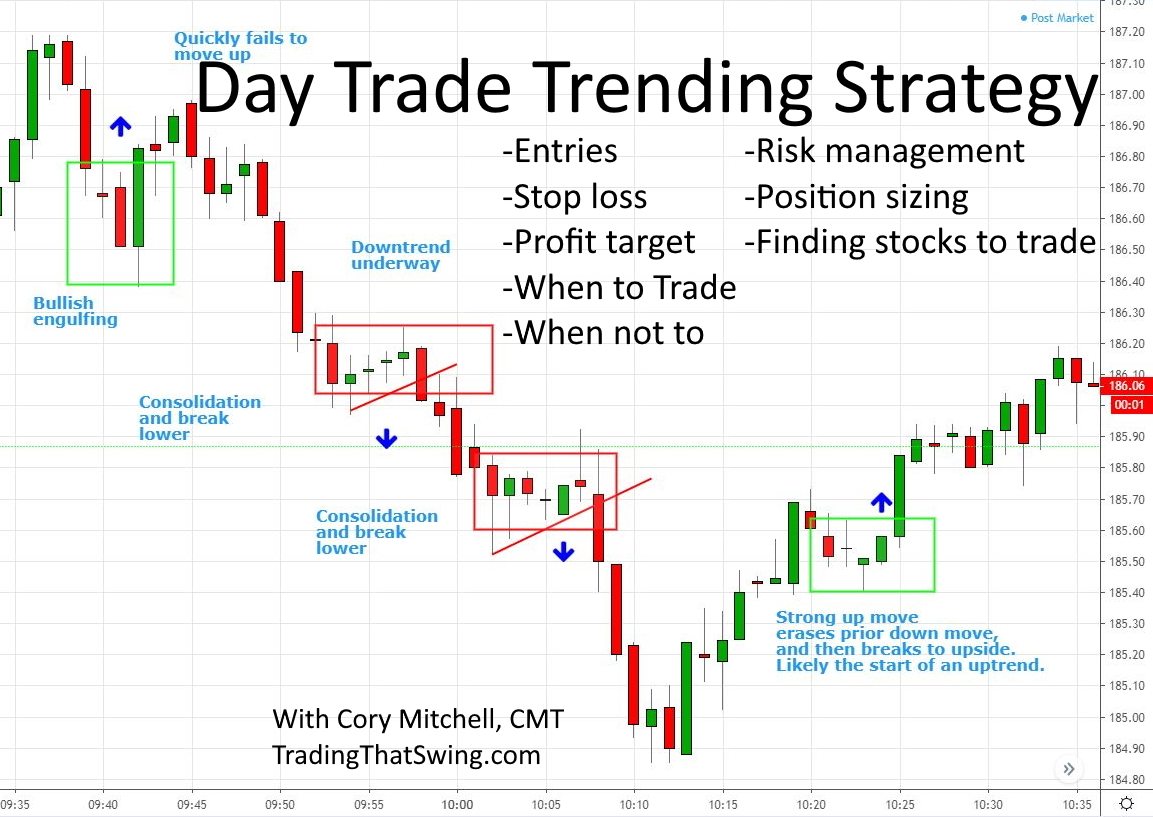
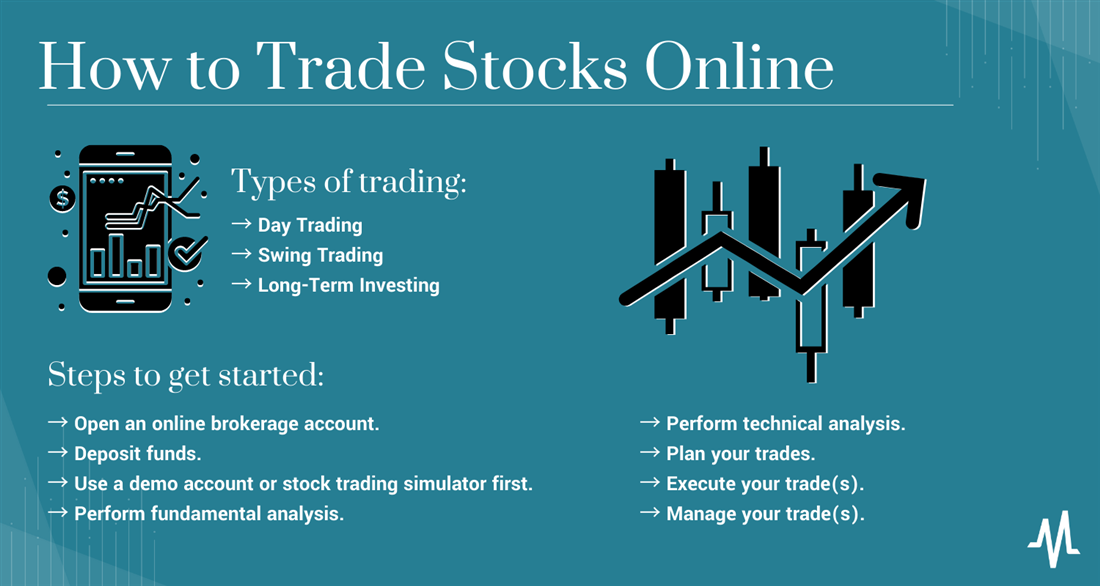
- Day Trading: Involves buying and selling stocks within the same trading day, closing all positions before the market closes. Day traders aim to profit from small price fluctuations and require intense focus, quick decision-making, and significant capital. It is highly risky and not recommended for beginners.
- Swing Trading: Traders hold positions for a few days to several weeks, aiming to capture short-to-medium-term price swings or trends. This style typically involves less frequent trading than day trading but still requires active monitoring and technical analysis skills.
- Position Trading: A longer-term approach where traders hold positions for several weeks, months, or even years, based on long-term trends and fundamental analysis. It requires patience and a belief in the underlying strength of the company or sector.
- Long-Term Investing (Buy and Hold): Often considered more “investing” than “trading,” this strategy involves buying stocks of fundamentally strong companies and holding them for many years, allowing the power of compounding to work. This approach minimizes transaction costs and stress, focusing on overall market appreciation.
Risk Management is Paramount
No trading strategy guarantees profits, and losses are an inherent part of the game. Effective risk management is therefore non-negotiable.
- Position Sizing: Determine how much capital you will allocate to each trade. A common rule of thumb is to risk only a small percentage (e.g., 1-2%) of your total trading capital on any single trade.
- Stop-Loss Orders: These are pre-set instructions to sell a stock if it falls to a certain price, thereby limiting your potential loss on a position. Using stop-losses helps automate risk control and prevents emotional decision-making during market downturns.
- Diversification: While this article focuses on stock trading, within your stock portfolio, avoid putting all your capital into a single stock or even a single industry. Spreading your investments across different sectors or types of companies can help mitigate the impact of a poor performance by any one holding.
Executing Your Trades and Managing Your Portfolio
Once you have a strategy, the next step is to put it into action. This involves understanding how to place orders, monitor your investments, and continually refine your approach.
Placing Orders
Brokerage platforms offer various order types to execute your trades:
- Market Order: Buys or sells a stock immediately at the best available current price. While quick, the execution price might differ slightly from what you saw moments before, especially in volatile markets.
- Limit Order: Buys or sells a stock at a specified price or better. For a buy limit order, the order will only execute at your specified price or lower. For a sell limit order, it will execute at your specified price or higher. This gives you more control over the execution price but doesn’t guarantee execution.
- Stop-Loss Order: As discussed under risk management, this is an order to sell a stock if it drops to a certain price, designed to limit losses.
- Stop-Limit Order: A combination of a stop order and a limit order. Once the stop price is triggered, it becomes a limit order to buy or sell at the specified limit price or better.
Monitoring Your Investments
Active trading requires regular monitoring of your portfolio. Utilize the tracking tools provided by your brokerage platform to view your holdings, their performance, and market data. Stay updated on news affecting the companies you own or are considering trading. Economic announcements, company earnings reports, and industry news can significantly impact stock prices. Set up alerts for price movements or news relevant to your holdings.
Reviewing and Adjusting Your Strategy
The market is constantly evolving, and so too should your strategy. Regularly review your trades:
- Analyze Wins and Losses: What factors contributed to successful trades? What went wrong with losing trades? Document your thought process.
- Evaluate Your Strategy: Is your strategy consistently meeting your goals? Does it align with current market conditions?
- Adapt and Evolve: Don’t be afraid to adjust your strategy based on new information, changing market trends, or insights gained from your trading experience. The goal is continuous improvement, not rigid adherence to a flawed plan.
The Importance of Discipline and Emotional Control
Perhaps the most challenging aspect of trading is managing your emotions. Fear and greed can lead to impulsive decisions that deviate from your well-researched strategy.
- Stick to Your Plan: Once you’ve established your strategy and risk management rules, adhere to them. Avoid chasing “hot tips” or making snap decisions based on fear of missing out (FOMO).
- Avoid Overtrading: Excessive trading can lead to increased commissions and poor decision-making. Focus on quality over quantity.
- Manage Expectations: Not every trade will be a winner. Accept losses as part of the process and move on without letting them derail your confidence or lead to revenge trading.
Navigating the Psychological Landscape of Trading
Beyond charts and financials, the human element profoundly impacts trading success. Mastering your mindset is as crucial as mastering market analysis.
Overcoming Fear and Greed
Fear and greed are the twin pillars of emotional trading. Fear can cause investors to sell winning positions too early, panic during minor dips, or avoid entering promising trades. Greed, conversely, can lead to holding onto losing positions too long in hopes of a rebound, over-leveraging, or taking on excessive risk after a string of successes. Recognizing these emotions and having a disciplined strategy (like using stop-loss orders) can help neutralize their destructive power. Stick to your risk parameters and trade plan regardless of market sentiment.
Learning from Losses
Every trader, even the most seasoned, experiences losses. The key is not to avoid them, but to learn from them. View losses as tuition in the school of trading. Analyze what went wrong: Was it poor analysis, a flawed strategy, emotional decision-making, or an unforeseen market event? Document your mistakes and implement safeguards to prevent repeating them. Resilience and the ability to adapt after setbacks are hallmarks of successful traders.
Maintaining a Healthy Perspective
Trading should be a component of your financial life, not the entirety of it. Avoid letting market fluctuations dictate your mood or well-being. Maintain balance by pursuing other interests, spending time with loved ones, and ensuring you get adequate rest. A clear mind, free from obsessive market checking, is better equipped to make rational decisions. Remember that financial goals are long-term pursuits, and a single day’s trading results do not define your overall financial trajectory.

Conclusion
Trading stocks is a dynamic and potentially rewarding endeavor, offering a path to financial growth for those willing to commit to continuous learning and disciplined execution. It begins with a fundamental understanding of what stocks are and how the market operates, followed by a careful assessment of your financial goals and risk tolerance. Building a robust trading strategy, whether through fundamental or technical analysis, and strictly adhering to risk management principles are non-negotiable components of success.
The journey of stock trading is less about finding a secret formula and more about developing a systematic approach, managing your emotions, and constantly adapting to the ever-changing market landscape. With dedicated effort, a commitment to education, and unwavering discipline, you can navigate the complexities of the stock market and work towards achieving your financial aspirations. Remember, successful trading is a marathon, not a sprint, demanding patience, resilience, and a perpetual student’s mindset.
aViewFromTheCave is a participant in the Amazon Services LLC Associates Program, an affiliate advertising program designed to provide a means for sites to earn advertising fees by advertising and linking to Amazon.com. Amazon, the Amazon logo, AmazonSupply, and the AmazonSupply logo are trademarks of Amazon.com, Inc. or its affiliates. As an Amazon Associate we earn affiliate commissions from qualifying purchases.