
In the intricate world of finance, where transactions range from simple everyday purchases to complex multi-million dollar investments, clarity, trust, and legal enforceability are paramount. Amidst this complexity, one document stands out for its straightforward yet powerful ability to formalize a debt: the promissory agreement. Far from being an obscure legal relic, the promissory agreement—more commonly known as a promissory note—is a cornerstone of both personal and business finance, serving as a legally binding promise by one party to pay a specific sum of money to another party under defined terms.
At its heart, a promissory agreement is a written commitment. It acknowledges a debt and outlines the conditions under which that debt will be repaid. While banks and large financial institutions frequently utilize such agreements for mortgages, car loans, and business lines of credit, promissory notes are equally valuable in less formal settings, such as loans between family members, private investors funding a startup, or even seller-financed property deals. Its fundamental purpose is to transform a verbal understanding or a casual “I owe you” into a structured, enforceable legal document, safeguarding the interests of both the borrower and the lender. Understanding its nuances is crucial for anyone engaging in lending or borrowing, ensuring financial transactions are transparent, secure, and legally sound.
The Core Elements of a Promissory Agreement
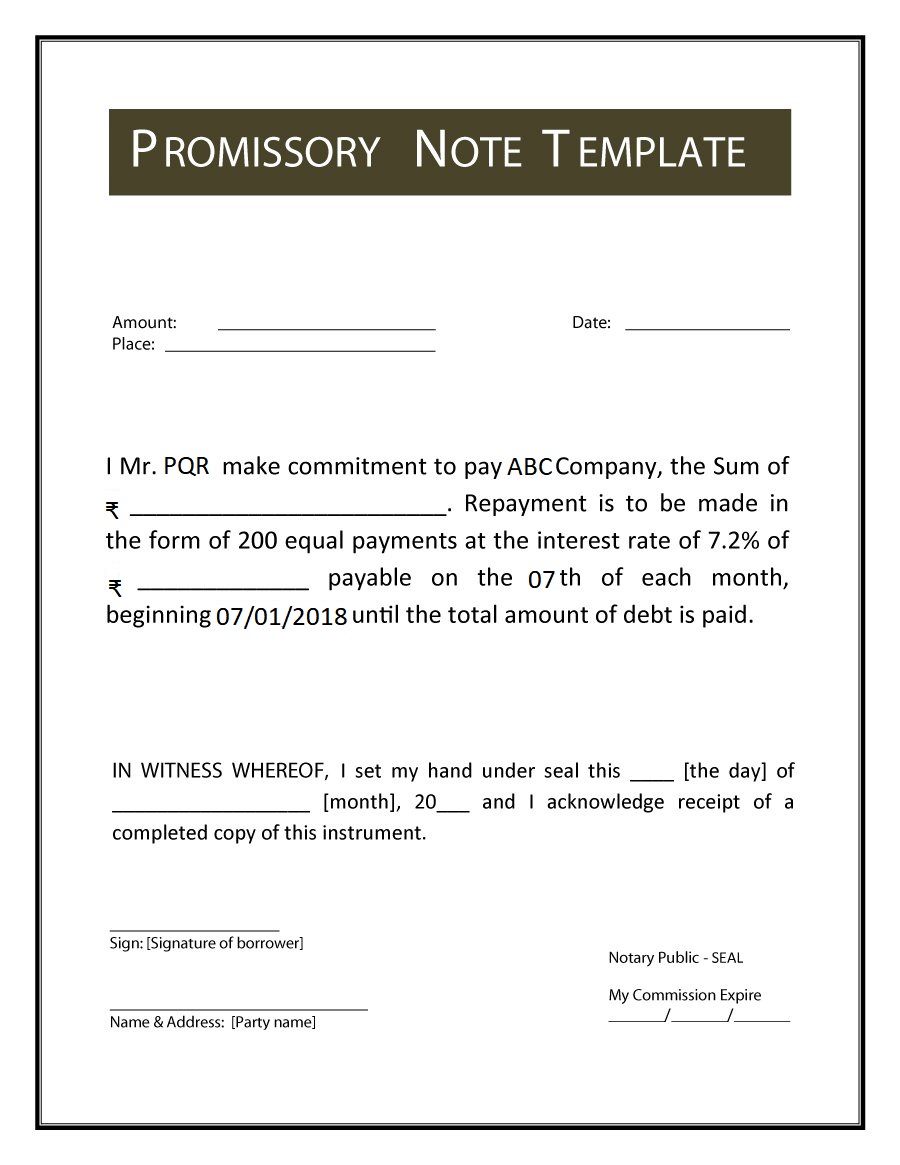
A promissory agreement derives its legal strength and utility from a set of essential components that must be clearly articulated within the document. Omitting any of these key elements can weaken its enforceability or lead to ambiguity, potentially resulting in disputes.
Parties Involved
Every promissory agreement involves at least two primary parties: the promisor (or maker/borrower) and the payee (or lender/holder). The promisor is the individual or entity promising to pay the money, while the payee is the individual or entity to whom the money is owed. Their full legal names and contact information should be precisely recorded.
Principal Amount
This is arguably the most critical element: the exact, unambiguous sum of money that is being borrowed. It should be stated both numerically and in words to prevent any misinterpretation or alteration. This principal amount forms the basis upon which interest, if any, will be calculated.
Interest Rate
If the loan includes interest, the promissory agreement must specify the interest rate. This could be a fixed rate that remains constant throughout the loan term, or a variable rate that fluctuates based on a benchmark index. The document should also detail how interest is calculated (e.g., annually, monthly, simple vs. compound interest) and when it accrues. Legal limits on interest rates (usury laws) must be observed, which vary by jurisdiction.
Payment Schedule
Clarity on repayment is vital. The agreement must outline how and when the principal and interest will be repaid. This can take several forms:
- Installment Payments: Regular, fixed payments over a period (e.g., monthly).
- Lump Sum Payment: The entire amount is paid back in one go on a specific date.
- Interest-Only Payments: The borrower pays only the interest for a period, with the principal due later.
- Balloon Payment: A series of smaller payments followed by a single, much larger final payment.
The schedule should include the due dates and the amount of each payment.
Maturity Date
This is the specific date by which the entire principal amount and all accrued interest must be fully repaid. For demand notes, there isn’t a fixed maturity date, but rather payment is due upon the lender’s request.
Terms of Default
While no one enters an agreement expecting default, it’s crucial to define what constitutes a default (e.g., missing a payment, failing to maintain collateral) and the consequences. These may include acceleration clauses (making the entire outstanding balance immediately due), late fees, increased interest rates, or the right to seize collateral.
Collateral (Optional but Important)
Some promissory notes are “secured,” meaning the borrower pledges specific assets (like real estate, vehicles, or equipment) as collateral. If the borrower defaults, the lender has the legal right to seize and sell this collateral to recoup their losses. If collateral is involved, the agreement must clearly describe the assets and the terms under which they can be claimed. An “unsecured” note, conversely, relies solely on the borrower’s promise and creditworthiness.
Types of Promissory Agreements
While the core purpose remains consistent, promissory agreements come in various forms, each suited for different financial scenarios and levels of risk. Understanding these distinctions is crucial for both lenders and borrowers to choose the appropriate instrument.
Simple Promissory Note
This is the most basic form, typically used for straightforward, often unsecured loans between individuals or for small sums. It includes the essential elements like the principal, interest (if any), payment schedule, and maturity date, without complex clauses or collateral requirements.
Demand Promissory Note
Unlike notes with a fixed maturity date, a demand note does not specify a repayment schedule or a final due date. Instead, the borrower promises to repay the loan “on demand” by the lender. This provides flexibility for the lender but can create uncertainty for the borrower.
Secured Promissory Note
As mentioned, this type of note is backed by collateral. It offers greater security for the lender, as they have a tangible asset to claim if the borrower defaults. Common examples include mortgages (where the property serves as collateral) and auto loans (where the vehicle is collateral). The agreement will detail the collateral and the lender’s rights to it.
Unsecured Promissory Note
This note is not backed by any specific asset. The lender’s ability to recover funds in case of default relies solely on the borrower’s creditworthiness and legal action. These are common for personal loans, student loans, or small business loans from private individuals where the borrower has a strong financial history or personal relationship with the lender.
Convertible Promissory Note
Primarily used in startup financing, a convertible promissory note starts as a debt instrument but includes a provision that allows it to be converted into equity (shares in the company) at a later date, typically during a future equity funding round. This provides a simpler, faster way for startups to raise initial capital while deferring valuation discussions.
Commercial Promissory Note
Used extensively in business-to-business transactions or for larger business loans, these notes often have more sophisticated terms, potentially including covenants, guarantees, and specific default provisions tailored to corporate finance.
Real Estate Promissory Note
Often used in conjunction with a mortgage or deed of trust, this note specifically outlines the terms of repayment for a loan used to purchase real estate. While the mortgage secures the loan with the property, the promissory note details the borrower’s personal promise to repay.
The Legal Weight and Importance in Financial Transactions
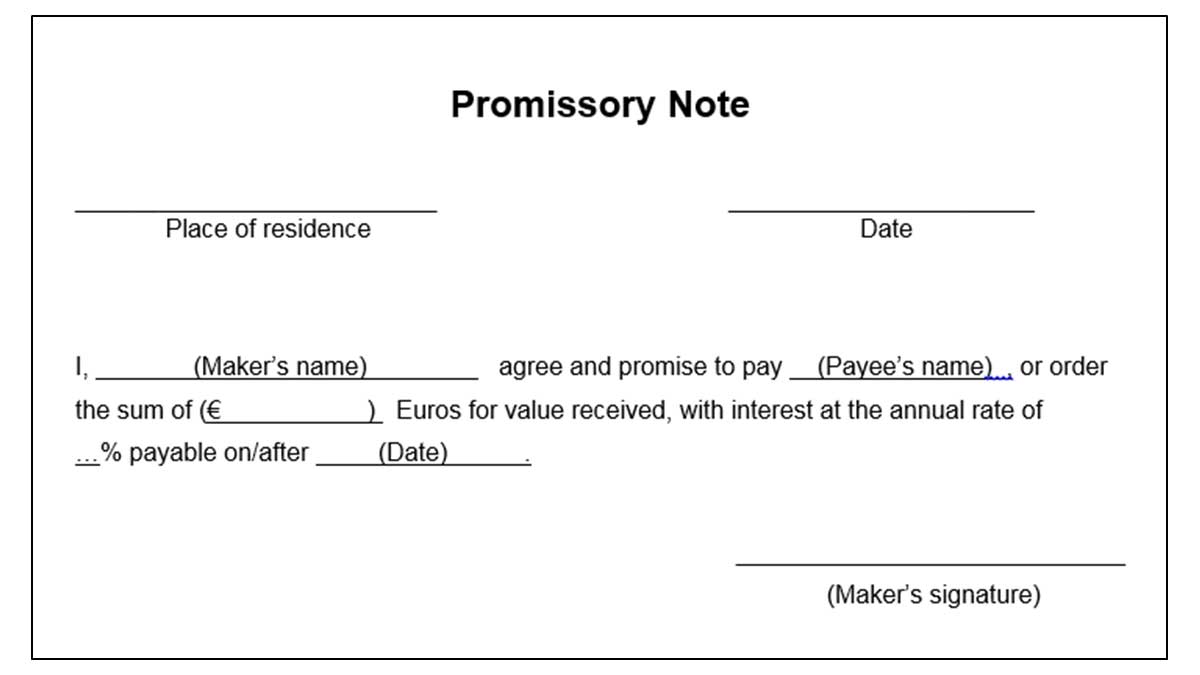
The power of a promissory agreement lies in its legal enforceability. It transforms a verbal promise into a documented, actionable obligation, providing a framework for stability and trust in financial dealings.
Enforceability
A properly drafted and executed promissory agreement is a legally binding contract. This means that if either party fails to uphold their end of the bargain (e.g., the borrower defaults on payments, or the lender misrepresents terms), legal recourse is available through the courts. This enforceability is what gives the document its true value, protecting both parties.
Documentation of Debt
For both borrower and lender, the promissory agreement serves as clear, undeniable proof of the debt’s existence and its specific terms. It leaves no room for ambiguity regarding the amount owed, the interest rate, the payment schedule, or the maturity date. This documentation is crucial for financial record-keeping, auditing, and tax purposes.
Dispute Resolution
In the unfortunate event of a disagreement or dispute, the promissory agreement acts as the primary piece of evidence. It clearly lays out the agreed-upon terms, making it easier for courts or arbitrators to determine who is in compliance and who is in breach. Without such a document, proving the terms of a loan can be challenging, often reducing it to a “he said, she said” scenario.
Asset for Lenders
For lenders, a promissory note can be more than just a piece of paper; it can be an asset. Depending on its terms, a promissory note can be sold to another party, allowing the original lender to recoup funds quickly. In some cases, especially with larger notes, it can even be used as collateral by the lender to secure their own financing.
Borrower Protection
While often seen as a tool for the lender, a promissory agreement also protects the borrower. It prevents the lender from arbitrarily changing the terms of the loan, demanding earlier repayment than agreed, or altering interest rates without proper provisions. The borrower has a clear record of their obligations, preventing misunderstandings or unfair demands.
When and Why You Might Use a Promissory Agreement
Promissory agreements are versatile financial tools, finding application in a broad spectrum of situations beyond traditional bank loans. Their utility stems from their ability to formalize debt, ensuring clarity and legal backing where informal arrangements might fail.
Personal Loans Between Individuals
One of the most common applications is for loans between family members or friends. While intentions are often good, money can strain relationships. A promissory agreement clearly defines the terms, preventing future disputes and ensuring that both parties understand their rights and responsibilities. It adds a layer of professionalism and seriousness to what might otherwise be a casual arrangement.
Small Business Funding
Startups and small businesses often seek funding from angel investors or private individuals who may not be traditional financial institutions. A promissory note provides a simple, legally sound way to structure these loans, detailing repayment schedules, interest, and sometimes, conversion into equity (convertible notes). This is particularly useful in early-stage funding rounds where complex equity agreements might be premature.
Real Estate Transactions
Beyond traditional mortgages, promissory notes are crucial in various real estate scenarios. They are used in seller financing, where the property seller acts as the lender, or for second mortgages and property equity loans. The note outlines the financial obligation, while a separate deed of trust or mortgage document secures the loan against the property.
Formalizing IOUs
Any situation where one party owes another a significant sum of money, and a simple verbal agreement isn’t sufficient, can benefit from a promissory agreement. This elevates a casual “I Owe You” to a legally enforceable document, providing security and clarity for both parties. Whether it’s for purchasing a large asset like a boat or for a significant personal expenditure, a promissory note ensures all parties are on the same page.
Student Loans
While many student loans are through federal programs or large banks, private student loans or those from personal trusts might utilize promissory notes to formalize the debt. These notes detail the repayment terms, grace periods, and deferment options.
Best Practices for Drafting and Managing Promissory Agreements
Creating and managing a promissory agreement effectively is just as important as understanding its purpose. Adhering to best practices ensures the document serves its intended function without pitfalls.
Clarity and Specificity
Every clause in the promissory agreement should be clear, concise, and unambiguous. Avoid vague language or open-ended terms. The principal amount, interest rate, payment schedule, and default terms must be specified down to the smallest detail to prevent misinterpretation.
Legal Review
While templates are available, it is always advisable to have a legal professional review or draft the promissory agreement, especially for significant sums or complex terms. An attorney can ensure the document complies with local, state, and federal laws (such as usury laws, consumer protection laws, and statutes of limitations) and adequately protects both parties’ interests.
Proper Execution
The agreement must be signed by all relevant parties (the promisor and any co-signers or guarantors). Depending on the jurisdiction and the nature of the loan, notarization by a public notary or witnessing by independent parties may be required or highly recommended to further validate the signatures and prevent claims of forgery.
Record Keeping
Once executed, both the promisor and the payee should receive an original signed copy of the promissory agreement. These documents should be stored securely, ideally in a fireproof safe or safety deposit box, and digital copies should also be made and backed up. Proper record-keeping is critical for tracking payments, calculating interest, and referencing terms in case of dispute.

Understanding Implications
Before signing, both borrower and lender must fully understand all the terms and their implications. This includes understanding the total cost of the loan (principal + interest), the consequences of default, and any clauses related to prepayment penalties or late fees. Open communication and full disclosure are key to a successful agreement.
In conclusion, the promissory agreement is far more than just a piece of paper; it is a fundamental pillar of financial integrity. By clearly documenting the terms of a debt, it provides security, reduces risk, and fosters trust between parties. Whether facilitating a personal loan or a complex business transaction, understanding and properly utilizing a promissory agreement is an indispensable skill for navigating the financial landscape with confidence and clarity. Its enduring relevance underscores the timeless need for formal, legally binding commitments in the world of money.
aViewFromTheCave is a participant in the Amazon Services LLC Associates Program, an affiliate advertising program designed to provide a means for sites to earn advertising fees by advertising and linking to Amazon.com. Amazon, the Amazon logo, AmazonSupply, and the AmazonSupply logo are trademarks of Amazon.com, Inc. or its affiliates. As an Amazon Associate we earn affiliate commissions from qualifying purchases.