
In the realm of personal finance, car insurance is often viewed as a “grudge purchase”—a necessary expense that offers no immediate gratification. However, viewed through a professional financial lens, insurance is a critical tool for risk management and asset protection. For the average household, auto insurance premiums represent a significant portion of the annual budget, often rivaling utility costs or even modest investment contributions.
Achieving the “cheapest” car insurance is not merely about finding the lowest number on a quote; it is about optimizing the intersection of coverage, cost, and risk. It requires a tactical approach to market navigation, an understanding of the actuarial variables that dictate pricing, and the discipline to maintain a financial profile that insurers find attractive. This guide outlines the strategic steps required to minimize your premiums while maximizing your financial security.
1. Understanding the Financial Mechanics of Insurance Pricing
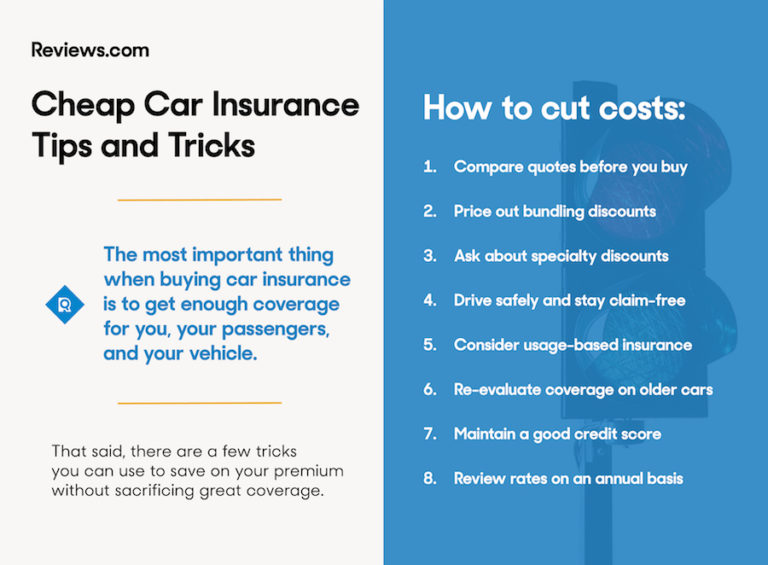
To lower your insurance costs, you must first understand how insurance companies calculate risk. From a financial perspective, an insurer is a professional risk-bearer. They use complex algorithms to determine the likelihood that you will cost them money. By influencing these variables, you can lower your “risk price.”
How Risk Profiles Affect Your Bottom Line
Insurers categorize drivers into risk pools. High-risk pools pay more to offset the statistical probability of claims. Factors such as age, location, and vehicle type are foundational, but your personal “financial behavior” also plays a role. If you reside in a zip code with high litigation rates or frequent vehicle thefts, your baseline cost will be higher. To combat this, you must emphasize the variables you can control, such as your annual mileage and the primary use of the vehicle (commuting vs. pleasure).
The Impact of Credit Scores on Premiums
In many jurisdictions, insurance companies use a “Credit-Based Insurance Score” (CBIS). Actuarial data suggests a strong correlation between financial responsibility and driving safety. From a money-management perspective, maintaining a high credit score is one of the most effective ways to lower insurance premiums. If your credit is poor, you are statistically more likely to file a claim, and insurers will charge a premium for that perceived risk. Improving your debt-to-income ratio and ensuring timely payments can lead to a significant reduction in your semi-annual insurance bills.
The Math of Deductibles and Monthly Cash Flow
One of the most immediate ways to lower your premium is to adjust your deductible—the amount you pay out of pocket before insurance kicks in. Increasing your deductible from $500 to $1,000 can reduce your comprehensive and collision premiums by 15% to 30%. However, this is a calculated financial risk. You should only opt for a higher deductible if you have an emergency fund capable of covering that cost instantly. This strategy effectively shifts a portion of the risk back to you, which the insurer rewards with a lower monthly price.
2. Strategic Comparison Shopping: Mastering the Market
The insurance market is highly fragmented and competitive. Prices for the exact same coverage can vary by hundreds of dollars between different providers. Strategic shopping is not just about looking at a few websites; it is a systematic market analysis.
The Three-Quote Rule for Financial Diligence
Financial experts recommend obtaining at least three distinct quotes every 12 to 18 months. The insurance industry often relies on “price optimization,” a practice where they slightly increase rates for loyal customers who are unlikely to shop around. By re-entering the market regularly, you signal to providers that you are a price-sensitive consumer. Ensure you are comparing “apples to apples”—the same liability limits, uninsured motorist coverage, and deductibles—to get an accurate financial comparison.
Exploring Independent Agents vs. Direct Captives
There are two primary ways to buy insurance: through direct writers (like Geico or Progressive) or through independent agents who represent multiple carriers. While direct writers often have lower overhead, independent agents have access to regional players and niche insurers that may offer more competitive rates for your specific demographic. A diversified shopping strategy involves checking both the “big box” insurers and the smaller, specialized firms that might value your specific risk profile more highly.

Timing Your Search for Maximum Savings
Timing can influence the quotes you receive. It is statistically proven that shopping for insurance at least 10 to 14 days before your current policy expires can result in “early shopper” discounts. Insurers view proactive shoppers as more responsible and less likely to be “high-risk” individuals who wait until the last minute. Furthermore, avoid any lapse in coverage; even a one-day gap can categorize you as a high-risk driver for years, significantly inflating your future premiums.
3. Optimizing Your Policy for Long-Term Wealth Preservation
Once you have found a competitive base rate, the next step is to refine the policy to ensure you aren’t paying for unnecessary financial protection. This is the “lean manufacturing” phase of your personal finance strategy.
Cutting Unnecessary Riders and Add-ons
Insurance policies are often loaded with “riders” or “endorsements” that may not provide high value relative to their cost. For example, if you have a secondary vehicle or a robust emergency fund, “Rental Reimbursement” coverage may be an unnecessary expense. Similarly, “Roadside Assistance” is often a redundant cost if you already have a membership with an auto club or if it’s provided by your vehicle’s manufacturer. Reviewing your policy line-by-line allows you to trim these financial leaks.
Leveraging Multi-Policy and Loyalty Discounts
The concept of “bundling” is a cornerstone of personal finance optimization. By placing your homeowners, renters, or life insurance with the same carrier as your auto insurance, you can unlock “multi-line” discounts. From the insurer’s perspective, a client with multiple policies is less likely to churn, justifying a lower acquisition cost which is passed down to you. Additionally, look for “affinity” discounts related to your profession (e.g., teachers, engineers, or military personnel) or memberships in alumni associations.
Usage-Based Insurance (UBI) and Telematics
If you are a low-mileage driver or a safe driver, you can leverage technology to prove your low-risk status. Usage-based insurance programs use telematics—via a smartphone app or a plug-in device—to monitor your braking, acceleration, and mileage. For the financially disciplined driver, this can result in discounts of up to 40%. This is essentially a “pay-as-you-drive” model, ensuring that you aren’t subsidizing the risk of high-mileage, aggressive drivers.
4. Maintaining the “Low-Rate” Status: Financial Habits
Securing a cheap rate is one thing; keeping it is another. Your ongoing behavior and financial habits dictate your long-term insurance trajectory.
The Fiscal Benefit of a Clean Driving Record
In the world of insurance, a single moving violation or an at-fault accident is a financial liability. A speeding ticket can increase your premiums by 20-30% for three years or more. When you calculate the “true cost” of a $150 ticket, it often includes an additional $1,500 in insurance premiums over several years. Adopting a defensive driving mindset is not just about safety; it is an essential strategy for preserving your capital. If you do receive a citation, investigate if attending a defensive driving school can mitigate the point-impact on your license and prevent an insurance hike.
Periodic Policy Audits and Asset Valuation
As your vehicle ages, its market value (Actual Cash Value) decreases. From a financial standpoint, there comes a point where carrying “Collision” or “Comprehensive” coverage on an old vehicle no longer makes sense. A common rule of thumb is that if the annual cost of the coverage exceeds 10% of the vehicle’s book value, you should consider dropping it. By self-insuring the replacement of an older car, you can drastically reduce your insurance overhead.
Conclusion: Insurance as a Pillar of Financial Health
The quest for the cheapest car insurance should not be a race to the bottom in terms of quality. Instead, it should be a sophisticated exercise in financial management. By understanding how risk is priced, shopping the market with clinical precision, and optimizing your policy to remove redundancies, you can reclaim hundreds—if not thousands—of dollars for your investment portfolio.
Cheap car insurance is the result of a disciplined financial lifestyle. It is the reward for maintaining a strong credit score, a clean record, and a vigilant eye on the market. In the grand scheme of personal finance, saving on insurance is an “easy win” that provides immediate cash flow benefits without requiring a lifestyle change, making it one of the most effective ways to optimize your monthly budget.
aViewFromTheCave is a participant in the Amazon Services LLC Associates Program, an affiliate advertising program designed to provide a means for sites to earn advertising fees by advertising and linking to Amazon.com. Amazon, the Amazon logo, AmazonSupply, and the AmazonSupply logo are trademarks of Amazon.com, Inc. or its affiliates. As an Amazon Associate we earn affiliate commissions from qualifying purchases.