
The Nasdaq Stock Market, an electronic global marketplace for buying and selling securities, has become synonymous with innovation, growth, and the future of technology. From established giants like Apple and Microsoft to burgeoning biotech firms and disruptive AI startups, Nasdaq is home to some of the world’s most dynamic companies. For investors seeking exposure to high-growth sectors, particularly technology, understanding how to invest in Nasdaq-listed entities is not just advantageous—it’s essential. This comprehensive guide will demystify the process, exploring various avenues for investment, outlining critical considerations, and providing practical steps to integrate Nasdaq into your investment portfolio.
Understanding the Nasdaq Exchange and Its Indexes
Before diving into investment strategies, it’s crucial to grasp what Nasdaq represents and how its various indexes function as benchmarks for performance.
What is Nasdaq?
Nasdaq, originally an acronym for the National Association of Securities Dealers Automated Quotations, was founded in 1971 as the world’s first electronic stock market. Unlike traditional exchanges with physical trading floors, Nasdaq operates entirely through computer networks. This digital-first approach fostered a market environment conducive to listing younger, often tech-focused, companies that prioritized growth and innovation over traditional profitability metrics. Today, Nasdaq lists over 3,000 companies, making it the second-largest stock exchange globally by market capitalization. It’s a hub for technology, biotechnology, telecommunications, and other high-growth industries.
The Nasdaq Composite Index
The Nasdaq Composite Index is arguably the most comprehensive measure of the exchange’s performance. It is a market-capitalization-weighted index of all common stocks and similar securities listed on the Nasdaq Stock Market. This means that companies with larger market caps have a greater influence on the index’s movement. While it covers a wide array of sectors, the Composite is heavily skewed towards technology and growth-oriented companies due to the nature of Nasdaq listings. Tracking the Composite provides a broad overview of how the overall Nasdaq market is performing.
The Nasdaq 100 Index
While the Composite tracks all Nasdaq-listed stocks, the Nasdaq 100 Index is a more specialized and often more frequently cited benchmark. It comprises the 100 largest non-financial companies listed on the Nasdaq Stock Market, based on market capitalization. This focus narrows the scope, making the Nasdaq 100 an even purer proxy for large-cap growth and technology stocks. Iconic names like Apple, Microsoft, Amazon, Google (Alphabet), Tesla, and Nvidia are consistent components of the Nasdaq 100. Due to its concentrated exposure to leading innovators, the Nasdaq 100 is often considered a bellwether for the global technology sector and a popular choice for investors seeking exposure to these industry titans.
Why Invest in Nasdaq-Listed Companies?
Investing in Nasdaq-listed companies primarily offers exposure to growth potential. These companies are often at the forefront of technological advancement, disruptive innovation, and market expansion. They frequently reinvest heavily in research and development, aiming to capture new markets or redefine existing ones. For investors with a long-term horizon and a higher risk tolerance, the potential for significant capital appreciation in these dynamic businesses can be very appealing. Furthermore, Nasdaq provides an avenue for diversification within a growth-oriented portfolio, offering a broad spectrum of companies from various high-potential sectors.
Direct Investment Strategies in Nasdaq-Listed Stocks
For investors who prefer a hands-on approach and wish to pick individual stocks, direct investment offers the potential for higher returns (and higher risk) than broad index investing.
Researching Individual Stocks
Successful direct investing begins with thorough research. This involves both fundamental and technical analysis. Fundamental analysis focuses on a company’s intrinsic value by examining financial statements (revenue, earnings, debt), management quality, competitive landscape, industry trends, and future growth prospects. Technical analysis, on the other hand, studies price charts and trading volumes to identify patterns and predict future price movements.
Key metrics to consider include:
- Revenue Growth: Is the company consistently expanding its top line?
- Earnings Per Share (EPS): How profitable is the company, and is its profitability improving?
- Price-to-Earnings (P/E) Ratio: How expensive is the stock relative to its earnings? Growth stocks often have higher P/E ratios.
- Debt-to-Equity Ratio: Is the company taking on too much debt?
- Cash Flow: Does the company generate sufficient cash from its operations?
Beyond numbers, understanding a company’s business model, competitive advantages (moats), and market position is paramount.
Brokerage Accounts
To buy individual stocks, you’ll need a brokerage account. There are several types of brokers:
- Full-Service Brokers: Offer comprehensive services including investment advice, financial planning, and managed portfolios. They typically charge higher fees or commissions.
- Discount Brokers: Provide a platform for self-directed trading, usually with lower commissions or even commission-free trades for stocks and ETFs. They offer less personalized advice.
- Robo-Advisors: Automate investment management based on algorithms and your risk profile. While they mostly focus on ETFs and diversified portfolios, some offer limited access to individual stocks.
For most self-directed investors, a reputable discount broker like Fidelity, Charles Schwab, E*TRADE, or Robinhood (for commission-free trades) will suffice. When choosing a broker, consider fees, available investment products, research tools, customer service, and ease of use.
Placing Orders
Once your account is set up and funded, you can place orders to buy stocks. Common order types include:
- Market Order: An instruction to buy or sell a security immediately at the best available current price. While simple, the execution price can vary slightly in volatile markets.
- Limit Order: An instruction to buy or sell a security at a specified price or better. For example, a buy limit order at $100 means you won’t pay more than $100 per share. This gives you more control over the execution price.
- Stop-Loss Order: An instruction to buy or sell a security once its price reaches a specified point, designed to limit an investor’s loss on a security position. A stop-loss order becomes a market order once the stop price is triggered.
Building a Diversified Portfolio
Even when investing directly in individual Nasdaq stocks, diversification is key. Avoid putting all your capital into one or two companies, no matter how promising they seem. Instead, spread your investments across several companies within different sub-sectors of Nasdaq (e.g., software, semiconductors, biotech, e-commerce, cloud computing). This strategy mitigates company-specific risks and ensures that a single poor performer doesn’t decimate your entire portfolio. Diversification doesn’t eliminate risk, but it manages it effectively.
Indirect Investment Strategies: Leveraging ETFs and Mutual Funds
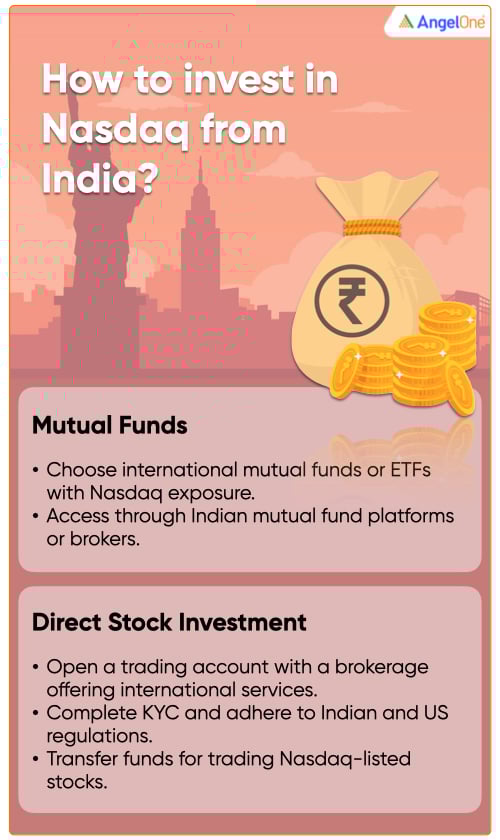
For many investors, especially those new to the market or those who prefer a less hands-on approach, indirect investment vehicles like Exchange Traded Funds (ETFs) and mutual funds offer a simpler, more diversified way to gain exposure to Nasdaq.
Nasdaq-Focused ETFs
ETFs are investment funds that hold a collection of assets (like stocks, bonds, or commodities) and trade on stock exchanges like individual stocks. Nasdaq-focused ETFs are immensely popular for their ability to provide instant diversification across a basket of Nasdaq-listed companies with a single purchase.
The most prominent example is the Invesco QQQ Trust (QQQ), which tracks the Nasdaq 100 Index. Investing in QQQ means you own a proportionate slice of the 100 largest non-financial companies on Nasdaq, effectively mirroring the index’s performance.
Advantages of Nasdaq-focused ETFs include:
- Diversification: Instant exposure to dozens or hundreds of companies, reducing individual stock risk.
- Liquidity: ETFs can be bought and sold throughout the trading day, just like stocks.
- Lower Costs: Generally have lower expense ratios (annual fees) compared to actively managed mutual funds.
- Transparency: Holdings are typically disclosed daily.
Beyond QQQ, there are other ETFs that track different Nasdaq indexes or focus on specific sectors dominant on Nasdaq, such as technology-specific ETFs (e.g., XLK) or internet ETFs (e.g., FDN).
Nasdaq Mutual Funds
Mutual funds are professionally managed investment funds that pool money from multiple investors to purchase securities. While ETFs are generally passively managed and track an index, many mutual funds are actively managed, meaning a fund manager makes buy and sell decisions aiming to outperform a benchmark.
You can find mutual funds that specifically invest in Nasdaq-listed companies, often with a focus on growth stocks, technology, or specific industry sub-sectors.
While they offer professional management and diversification, mutual funds often come with higher expense ratios and can be less tax-efficient than ETFs due to frequent trading within the fund. They are also typically priced only once a day (after market close), unlike ETFs which trade continuously.
Sector-Specific ETFs and Thematic Funds
Beyond broad Nasdaq index trackers, many ETFs and mutual funds focus on specific sectors or themes that are heavily represented on Nasdaq. Examples include:
- Technology ETFs: These funds concentrate solely on technology companies, which often form the largest component of Nasdaq.
- Biotechnology ETFs: Provide exposure to the innovative and often high-growth biotech industry.
- Cloud Computing ETFs, Cybersecurity ETFs, Artificial Intelligence ETFs: These thematic funds offer targeted exposure to cutting-edge areas, many of which house companies listed on Nasdaq.
These funds allow investors to express specific convictions about particular industries or technological trends while still benefiting from diversification within that niche.
Advantages of Indirect Investing
For the average investor, indirect strategies via ETFs and mutual funds offer several compelling advantages:
- Simplicity: No need to research individual companies or make complex trading decisions.
- Professional Management (for active funds): Experts handle the research and trading.
- Built-in Diversification: Reduces the impact of any single company’s poor performance.
- Lower Barrier to Entry: Many funds have relatively low minimum investment requirements.
- Cost-Effectiveness (for passive ETFs): Low expense ratios contribute to better long-term returns.
Key Considerations Before Investing in Nasdaq
Investing in Nasdaq offers compelling growth potential, but it also comes with inherent risks and requires a strategic approach.
Risk Assessment
Nasdaq, particularly its technology-heavy components, is known for its volatility. Growth stocks, by their nature, are more sensitive to economic cycles, interest rate changes, and investor sentiment.
- Market Corrections: Periods of significant decline are common.
- Sector-Specific Risks: A downturn in the technology sector can disproportionately affect Nasdaq investments.
- High Valuation Risk: Many growth stocks trade at high valuations based on future potential, making them susceptible to sharp drops if growth expectations aren’t met.
It’s crucial to assess your personal risk tolerance. Are you comfortable with significant fluctuations in your portfolio’s value in pursuit of higher long-term returns?
Investment Horizon
Nasdaq investments are generally best suited for a long-term investment horizon (5+ years). While short-term gains are possible, the true potential of growth companies often materializes over several years as innovations mature and market share expands. Trying to time the market in volatile sectors like technology is notoriously difficult and often leads to suboptimal results. A long-term perspective allows you to ride out short-term market fluctuations and benefit from compounding growth.
Asset Allocation
Your Nasdaq investments should be part of a broader, well-diversified asset allocation strategy. Avoid over-concentrating your entire portfolio in Nasdaq stocks or tech-heavy funds. Balance your growth-oriented Nasdaq exposure with other asset classes such as:
- Value Stocks: Companies that may be undervalued by the market.
- Bonds: Provide stability and income, often inversely correlated with stocks.
- Real Estate: Can offer inflation protection and income.
- International Stocks: Diversify geographically and by economic cycle.
A balanced portfolio helps manage overall risk and can provide more stable returns over various market conditions.
Due Diligence and Continuous Learning
The world of technology and growth is constantly evolving. Staying informed is vital, whether you’re picking individual stocks or investing in funds.
- Follow Market News: Keep up with economic reports, interest rate changes, and geopolitical events.
- Read Industry Reports: Understand emerging technologies and sector trends.
- Monitor Company News: If holding individual stocks, regularly check earnings reports, product announcements, and management changes.
Even with ETFs, understanding the underlying index and its composition helps you anticipate potential performance drivers.
The Role of a Financial Advisor
For complex financial situations, or if you’re unsure about your risk tolerance or asset allocation, consulting a qualified financial advisor is highly recommended. An advisor can help you:
- Define your financial goals.
- Assess your true risk tolerance.
- Develop a personalized investment plan that includes appropriate Nasdaq exposure.
- Navigate market complexities and help with portfolio rebalancing.
Practical Steps to Get Started
Ready to begin your journey of investing in Nasdaq? Here’s a streamlined approach:
1. Define Your Investment Goals
What are you investing for? Retirement, a down payment, wealth accumulation? What’s your timeframe? Clear goals will inform your risk tolerance and investment strategy.
2. Assess Your Risk Tolerance
Be honest with yourself about how much volatility you can comfortably endure. If you lose sleep over market fluctuations, a more conservative approach with less Nasdaq exposure might be appropriate.
3. Choose an Investment Platform
Select a reputable brokerage firm (e.g., Fidelity, Schwab, Vanguard, E*TRADE) that aligns with your needs in terms of fees, research tools, and customer support. If you prefer a simpler, automated approach, consider a robo-advisor.
4. Decide on Your Investment Strategy
- For hands-on investors: Research and select individual Nasdaq-listed stocks.
- For diversified, lower-maintenance investors: Opt for Nasdaq-focused ETFs (like QQQ) or mutual funds.
- For thematic investors: Explore sector-specific or thematic ETFs.
5. Start Small and Invest Regularly (Dollar-Cost Averaging)
You don’t need a large sum to begin. Start with an amount you’re comfortable with. Consider dollar-cost averaging, where you invest a fixed amount of money at regular intervals (e.g., $100 every month). This strategy reduces the risk of investing a large sum at a market peak and smooths out your average purchase price over time.
6. Monitor and Rebalance Your Portfolio
Periodically review your investments. Are they still aligned with your goals and risk tolerance? Market movements can cause your asset allocation to drift. Rebalancing involves adjusting your portfolio back to your desired allocation by selling assets that have grown disproportionately and buying those that are underrepresented.

Conclusion
Investing in Nasdaq offers a compelling pathway to participate in the growth and innovation of leading companies shaping our future. Whether you choose to meticulously research individual stocks or opt for the diversified simplicity of ETFs and mutual funds, a well-informed and disciplined approach is paramount. Understand the inherent risks, define your investment horizon, and integrate Nasdaq exposure thoughtfully within a balanced portfolio. By combining thorough due diligence with a clear strategy and a long-term perspective, you can effectively harness the dynamism of the Nasdaq market to pursue your financial objectives. Remember, consistent learning and prudent decision-making are the cornerstones of successful investing.
aViewFromTheCave is a participant in the Amazon Services LLC Associates Program, an affiliate advertising program designed to provide a means for sites to earn advertising fees by advertising and linking to Amazon.com. Amazon, the Amazon logo, AmazonSupply, and the AmazonSupply logo are trademarks of Amazon.com, Inc. or its affiliates. As an Amazon Associate we earn affiliate commissions from qualifying purchases.