
Embarking on the journey to homeownership is an exciting prospect, but it often comes with a fundamental question: “What mortgage loan can I qualify for?” This isn’t just about curiosity; it’s a critical first step that defines your budget, influences your search, and ultimately determines your ability to secure the home of your dreams. Understanding the intricacies of mortgage qualification is paramount in today’s dynamic financial landscape. Lenders assess a multitude of factors to determine not only if you qualify, but also the terms, interest rate, and maximum loan amount they are willing to offer. This comprehensive guide will demystify the qualification process, helping you understand the key criteria lenders evaluate, explore various loan programs, and strategically position yourself for successful home financing.
Understanding the Fundamentals of Mortgage Qualification
Before delving into the specifics, it’s crucial to grasp the overarching philosophy lenders employ when evaluating a mortgage application. Their primary objective is risk assessment. They want to ensure that lending you a significant sum of money for a long period is a sound investment, and that you have the financial stability and willingness to repay the loan as agreed. This assessment isn’t arbitrary; it’s based on established financial metrics and regulatory guidelines designed to protect both the lender and the borrower.
The Lender’s Perspective: Assessing Risk
Lenders essentially look at you as an investment. They analyze your financial history and current situation to predict your future ability to make consistent mortgage payments. This involves a deep dive into your income stability, existing debts, credit behavior, and available assets. Each piece of information provides a puzzle piece contributing to a holistic picture of your financial reliability. Their risk tolerance will influence the interest rate they offer you – lower perceived risk generally translates to more favorable terms.
Key Factors Lenders Evaluate
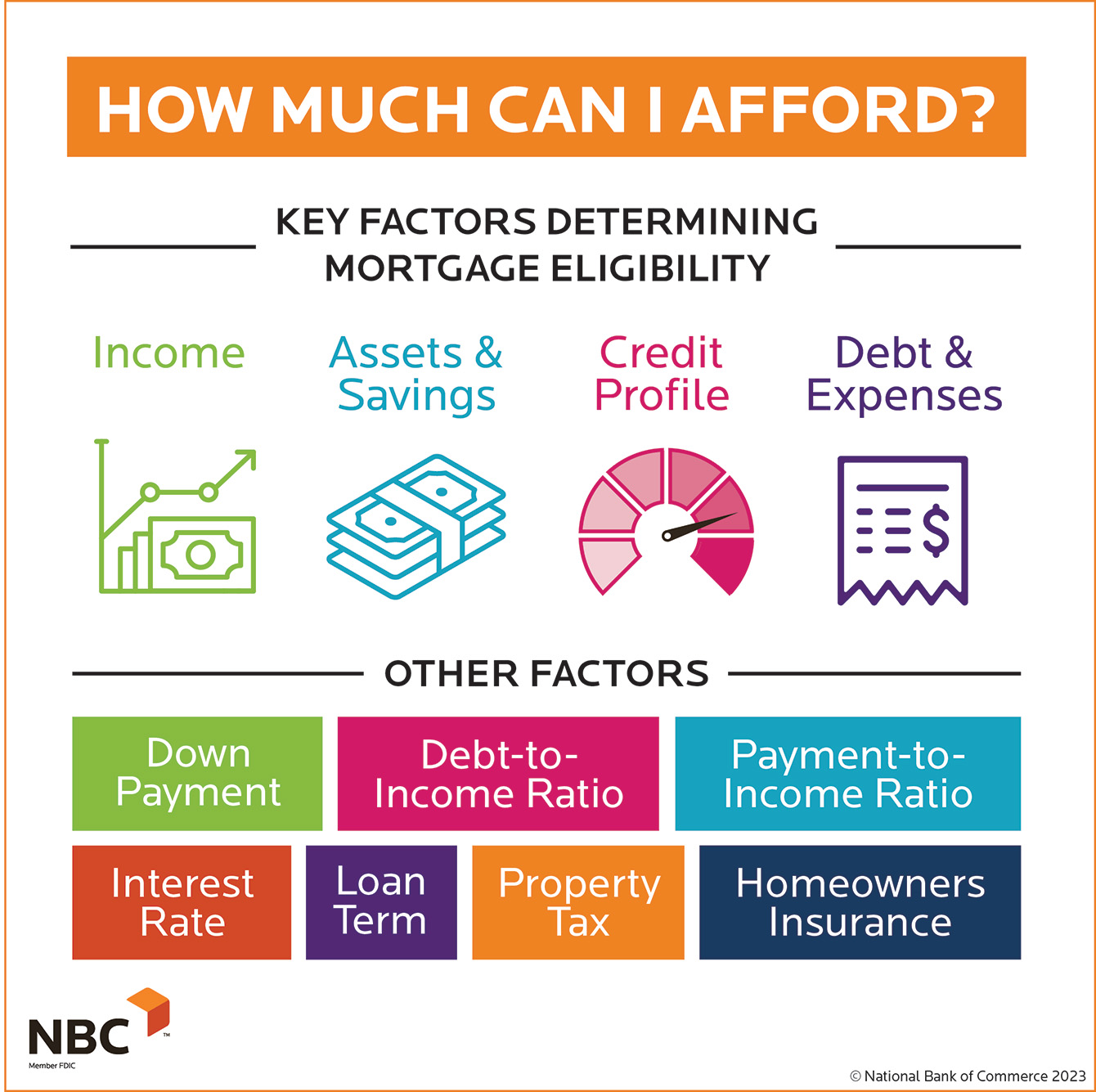
While the specific weight given to each factor might vary slightly between lenders and loan programs, there are universal elements that form the bedrock of any mortgage qualification process. These factors are interconnected, and a weakness in one area might be offset by strength in another, though critical deficiencies can be deal-breakers. Understanding these will allow you to proactively strengthen your financial profile.
The Pillars of Mortgage Eligibility: The 5 Cs of Credit
Many financial institutions distill their lending criteria into what’s often referred to as the “5 Cs of Credit.” While typically applied to all forms of credit, they are particularly relevant and robust in the context of mortgage lending due to the significant financial commitment involved. Mastering these concepts is key to unlocking your homeownership potential.
Capacity: Your Ability to Pay (Income & DTI)
Capacity refers to your ability to repay the mortgage. Lenders scrutinize your income and employment history to ensure it’s stable, reliable, and sufficient to cover your future mortgage payments alongside your existing financial obligations. They typically look for a consistent employment history, often two years or more, in the same field or with upward mobility.
- Income Stability: W-2 employees with steady salaries generally have an easier time demonstrating income stability. Self-employed individuals or those with commission-based income may need to provide more extensive documentation, such as tax returns, to prove consistent earnings over several years.
- Debt-to-Income (DTI) Ratio: This is arguably one of the most critical metrics. Your DTI ratio compares your total monthly debt payments (including the proposed mortgage payment, property taxes, and insurance) to your gross monthly income. Lenders typically look for a DTI ratio below a certain threshold, often around 43-50%, though this can vary by loan program. A lower DTI indicates less financial strain and a greater capacity to handle new debt.
Capital: Your Down Payment and Reserves
Capital refers to the assets you have. This primarily includes your down payment and any cash reserves held in savings or investment accounts after the down payment and closing costs are paid.
- Down Payment: While 20% down is often seen as the gold standard to avoid Private Mortgage Insurance (PMI) on conventional loans, many programs allow for much lower down payments, sometimes as little as 3-5% for conventional loans or even 0% for VA and USDA loans. A larger down payment reduces the loan amount, lowers your monthly payments, and signals less risk to the lender.
- Reserves: Lenders often like to see that you have a cushion of cash reserves (e.g., two to six months of mortgage payments) remaining after closing. These reserves demonstrate your ability to cover payments in case of unexpected financial setbacks, such as job loss or medical emergencies.
Collateral: The Home Itself
In a mortgage, the home you are purchasing serves as the collateral for the loan. If you default on your payments, the lender has the right to repossess the property to recoup their investment.
- Appraisal: Lenders require an appraisal to ensure the property’s value is at least equal to the loan amount. This protects them from lending more than the home is worth. The condition, location, and comparable sales of the property are all factored into the appraisal.
- Property Type: The type of property (single-family home, condo, multi-family, manufactured home) can also influence qualification, with some loan programs having specific requirements or limitations for certain property types.
Character: Your Credit History
Your credit history, encapsulated in your credit score, is a reflection of your past financial behavior and a strong indicator of your willingness to repay debts. Lenders use credit scores (like FICO scores) to quickly assess your creditworthiness.
- Credit Score: Most conventional loans require a minimum FICO score of 620-640, while government-backed loans like FHA may allow slightly lower scores (e.g., 580 with a 3.5% down payment). Higher scores (700+) generally qualify you for better interest rates and terms.
- Credit Report: Lenders will pull a full credit report to look for any red flags such as late payments, bankruptcies, foreclosures, or excessive outstanding debt. They want to see a history of responsible borrowing and timely payments.
Conditions: Loan Type and Economic Factors
Conditions refer to the specific terms of the loan and broader economic factors that might influence lending decisions.
- Loan Product Selection: Different mortgage products (e.g., fixed-rate vs. adjustable-rate, FHA vs. Conventional) have varying qualification criteria. The loan you apply for will dictate many of the specific conditions you must meet.
- Market Conditions: Interest rates, inflation, and the overall health of the housing market can also play a role. Lenders might adjust their risk appetite or loan offerings based on the prevailing economic climate.
Navigating Different Mortgage Loan Programs
The good news is that there isn’t a one-size-fits-all mortgage. A variety of loan programs exist, each designed to serve different needs and financial situations. Understanding these options can help you find a loan that aligns with your qualifications and goals.
Conventional Loans: The Most Common Path
Conventional loans are not insured or guaranteed by a government agency. They are the most common type of mortgage and adhere to guidelines set by Fannie Mae and Freddie Mac.

- Requirements: Generally require a good to excellent credit score (typically 620+), a DTI ratio usually below 45-50%, and down payments can range from 3% to 20% or more.
- Pros: Flexible terms, possibility to avoid PMI with 20% down, and generally fewer restrictions than government-backed loans.
- Cons: Can be harder to qualify for with lower credit scores or higher DTI, and PMI is required for down payments less than 20%.
Government-Backed Loans: FHA, VA, and USDA
These loans are insured or guaranteed by the U.S. government, which allows lenders to offer more flexible qualification criteria, especially for borrowers who might not qualify for conventional loans.
- FHA Loans (Federal Housing Administration): Designed to help low-to-moderate-income borrowers, FHA loans allow for lower credit scores (as low as 500-580 depending on down payment) and a minimum down payment of 3.5%. They do require mortgage insurance premiums (MIP), both upfront and annually, for the life of the loan in most cases.
- VA Loans (Department of Veterans Affairs): Exclusively for eligible service members, veterans, and surviving spouses, VA loans are a phenomenal benefit offering 0% down payment, no private mortgage insurance, and competitive interest rates. They have specific service requirements for eligibility.
- USDA Loans (United States Department of Agriculture): Aimed at promoting homeownership in designated rural and suburban areas, USDA loans also offer 0% down payment for eligible low-to-moderate-income borrowers. There are income limits and property location restrictions.
Jumbo Loans and Other Niche Products
- Jumbo Loans: For properties that exceed the conventional loan limits set by Fannie Mae and Freddie Mac, jumbo loans are required. These typically have stricter qualification criteria, requiring higher credit scores, larger down payments (often 10-20% or more), and substantial cash reserves.
- Portfolio Loans: Some lenders offer “portfolio loans” that they keep on their books rather than selling on the secondary market. These can sometimes offer more flexible underwriting for unique situations, but may come with different rates or terms.
Steps to Maximize Your Qualification Potential
Understanding what lenders look for is only half the battle; proactively improving your financial standing is the other. Taking strategic steps before applying for a mortgage can significantly enhance your qualification prospects and potentially secure you a better loan.
Improving Your Credit Score
Your credit score is a numerical representation of your creditworthiness. Focus on these actions:
- Pay Bills On Time, Every Time: Payment history is the most significant factor.
- Reduce Credit Card Balances: Keep your credit utilization (amount owed vs. credit limit) below 30%, ideally even lower.
- Avoid New Credit Applications: Each application can temporarily ding your score.
- Check Your Credit Report for Errors: Dispute any inaccuracies promptly.
Reducing Your Debt-to-Income Ratio
Lowering your DTI signals to lenders that you have more disposable income to allocate toward a mortgage.
- Pay Down Existing Debts: Focus on high-interest debts like credit cards or personal loans.
- Avoid Taking on New Debt: Resist the urge to make large purchases on credit before applying for a mortgage.
- Increase Your Income: If feasible, explore options like a raise, bonus, or side hustle to boost your gross monthly income.
Saving for a Down Payment and Reserves
The more you save, the stronger your application becomes.
- Automate Savings: Set up automatic transfers to a dedicated savings account.
- Cut Discretionary Spending: Temporarily reduce non-essential expenses.
- Explore Down Payment Assistance Programs: Many states and local governments offer programs to help first-time homebuyers with down payments and closing costs.
Getting Pre-Approved: Your First Strategic Move
A pre-approval letter is not a guarantee of a loan, but it is a conditional commitment from a lender stating how much they are willing to lend you based on a preliminary review of your finances.
- Benefits: It gives you a clear budget, strengthens your offer to sellers (showing you’re a serious and qualified buyer), and identifies any potential issues early in the process.
- Process: Involves submitting financial documentation (pay stubs, tax returns, bank statements) for the lender to review your credit and income.
Beyond Qualification: Choosing the Right Mortgage for You
Qualifying for a mortgage is just the beginning. The next crucial step is selecting the right mortgage product that aligns with your long-term financial goals and risk tolerance.
Fixed-Rate vs. Adjustable-Rate Mortgages
- Fixed-Rate Mortgage: The interest rate remains the same for the entire life of the loan, offering predictable monthly payments. Ideal for those who value stability and plan to stay in their home for many years.
- Adjustable-Rate Mortgage (ARM): The interest rate is fixed for an initial period (e.g., 3, 5, 7, or 10 years) and then adjusts periodically based on a market index. ARMs often start with lower interest rates than fixed-rate loans but carry the risk of increased payments in the future. Suitable for those who expect to sell or refinance before the fixed period ends, or those comfortable with potential payment fluctuations.
Understanding Loan Terms and Interest Rates
Mortgage terms typically range from 15 to 30 years. A shorter term (e.g., 15-year fixed) means higher monthly payments but less interest paid over the life of the loan. A longer term (e.g., 30-year fixed) means lower monthly payments but more interest paid overall. The interest rate itself is heavily influenced by your credit score, DTI, down payment, loan type, and current market conditions. Even a small difference in the interest rate can equate to tens of thousands of dollars over the loan’s lifetime.

The Importance of Shopping Around
Do not settle for the first offer you receive. Mortgage rates and fees can vary significantly between lenders.
- Compare Multiple Lenders: Get quotes from at least three to five different lenders, including banks, credit unions, and mortgage brokers.
- Look Beyond the Interest Rate: Compare the annual percentage rate (APR), which includes fees, and scrutinize closing costs.
- Read the Fine Print: Understand all terms, fees, and conditions before committing.
The question “what mortgage loan can I qualify for?” is the cornerstone of your homeownership journey. By understanding the rigorous yet logical criteria lenders apply, taking proactive steps to strengthen your financial profile, exploring the diverse range of loan products available, and diligently shopping for the best terms, you can confidently navigate the mortgage qualification process. Arm yourself with knowledge, prepare your finances, and soon you’ll be well on your way to unlocking the door to your new home.
aViewFromTheCave is a participant in the Amazon Services LLC Associates Program, an affiliate advertising program designed to provide a means for sites to earn advertising fees by advertising and linking to Amazon.com. Amazon, the Amazon logo, AmazonSupply, and the AmazonSupply logo are trademarks of Amazon.com, Inc. or its affiliates. As an Amazon Associate we earn affiliate commissions from qualifying purchases.