
In the intricate world of finance, few metrics hold as much sway over both personal budgets and the broader economy as the prime interest rate. It’s a foundational benchmark that ripples through nearly every aspect of borrowing and lending, influencing everything from the interest you pay on your credit card to the cost of a business loan for a burgeoning startup. Understanding what the prime rate is, how it’s determined, and its current implications is not just for financial professionals; it’s essential knowledge for anyone looking to make informed financial decisions in a dynamic economic landscape. While the specific number itself is subject to frequent adjustment based on market conditions and central bank policy, grasping the mechanisms behind it empowers individuals and businesses to navigate their financial futures more effectively.
Understanding the Prime Rate: A Core Financial Indicator
The prime rate serves as a linchpin in the financial system, acting as a baseline for a vast array of lending products. It is, quite simply, the interest rate that commercial banks charge their most creditworthy corporate customers. While this definition might seem narrow, its influence extends far beyond a select group of large corporations, setting the tone for lending across the entire spectrum of financial services.
Defining the Prime Rate: What it is and Who Sets It
At its heart, the prime rate is a preferential lending rate. Banks offer this rate to customers deemed least likely to default on a loan, meaning those with excellent credit histories and strong financial standing. For everyone else – including consumers and smaller businesses – interest rates on loans will typically be set at a certain percentage point above the prime rate, reflecting the perceived higher risk.
Crucially, the prime rate is not set directly by any single government entity. Instead, it is predominantly determined by commercial banks themselves, but with a heavy, almost direct, influence from the central bank. In the United States, this is the Federal Reserve. When the Federal Reserve alters its benchmark rate, known as the federal funds rate, commercial banks typically adjust their prime rate in lockstep. This synchronicity is a testament to the Federal Reserve’s powerful role in steering monetary policy and influencing the cost of money throughout the economy.
The Federal Funds Rate Connection: How the Fed Influences the Prime Rate
The federal funds rate is the target rate for overnight lending between banks. When one bank lends excess reserves to another bank that needs them, this is the rate they aim for. The Federal Reserve’s Federal Open Market Committee (FOMC) votes on changes to this target rate. While the Fed doesn’t directly set the prime rate, changes to the federal funds rate cascade through the financial system, directly impacting the cost of funds for banks.
When the Fed raises the federal funds rate, it becomes more expensive for banks to borrow money from each other. To maintain their profit margins and reflect the increased cost of funds, banks will, in turn, raise their prime lending rate. Conversely, when the Fed lowers the federal funds rate, borrowing becomes cheaper for banks, and they typically respond by lowering their prime rate. This direct relationship, often seeing the prime rate hover around 3 percentage points above the federal funds rate target, makes the Fed’s decisions critical indicators for the prime rate’s direction.
Historical Context and Significance: Why It Matters
The concept of a prime rate has been around for decades, serving as a relatively stable and transparent benchmark. Its significance lies in its widespread application. By providing a clear starting point for various loan products, it offers both lenders and borrowers a common reference. For individuals, knowing the prime rate helps in understanding the fairness of interest rates offered on their loans. For businesses, it affects investment decisions, expansion plans, and overall operational costs.
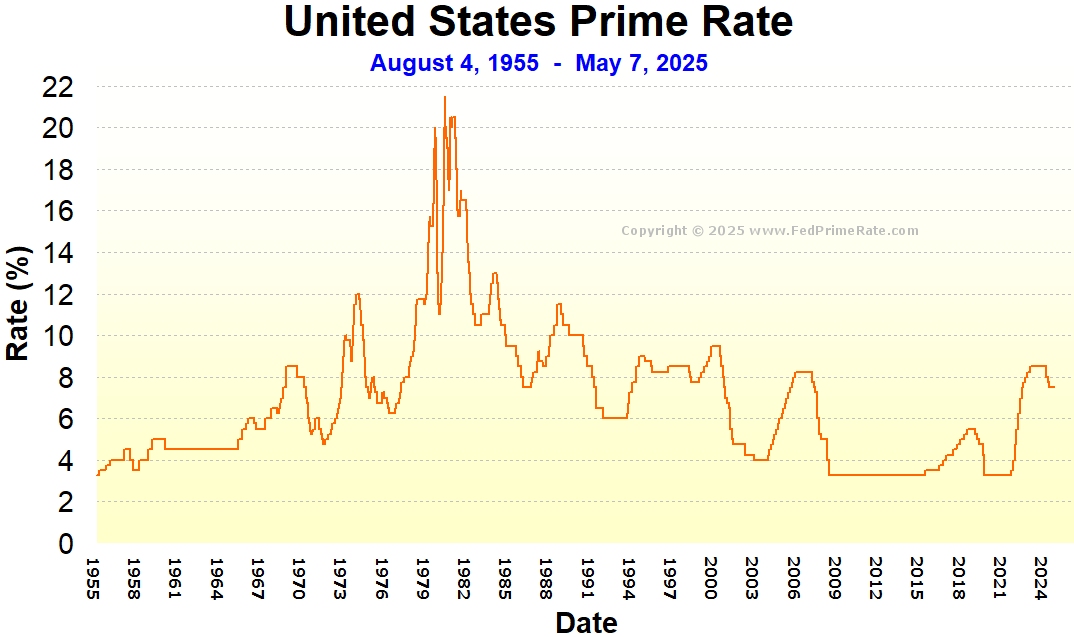
Historically, periods of high prime rates have often coincided with efforts by the Federal Reserve to combat inflation by tightening monetary policy, making borrowing more expensive to cool down economic activity. Conversely, low prime rates typically follow periods of economic slowdowns or recessions, as the Fed aims to stimulate growth by making money cheaper and encouraging investment and spending. Understanding this historical interplay provides crucial context for interpreting current prime rate levels and anticipating future economic trends.
How the Prime Rate Impacts Your Personal Finances
While initially defined for corporate borrowers, the prime rate’s ripple effects extend profoundly into the realm of personal finance. For most consumers, the prime rate isn’t an abstract concept discussed by economists; it’s a tangible factor that can directly impact monthly budgets and long-term financial planning.
Variable-Rate Loans: Mortgages, HELOCs, and Credit Cards
The most immediate and direct impact of changes in the prime rate is felt by individuals holding variable-rate debt. These are loans where the interest rate can fluctuate over time, typically tied to an index, which is often the prime rate itself.
- Home Equity Lines of Credit (HELOCs): These are perhaps the most common personal loans directly indexed to the prime rate. A HELOC’s interest rate is usually expressed as “prime plus a margin” (e.g., Prime + 0.50%). When the prime rate goes up, your HELOC payments will increase, and vice-versa.
- Adjustable-Rate Mortgages (ARMs): While many ARMs are tied to other indexes like the SOFR (Secured Overnight Financing Rate), some are still indexed to the prime rate or a related measure. For these, your interest rate and monthly payments can change after an initial fixed period, directly influenced by prime rate movements.
- Credit Cards: The vast majority of credit cards have variable Annual Percentage Rates (APRs) that are tied to the prime rate. Your cardholder agreement will typically state “Prime Rate plus a margin” for your purchase, balance transfer, or cash advance APRs. An increase in the prime rate means a higher interest charge on any outstanding credit card balances, making it more expensive to carry debt.
Savings Accounts and CDs: The Less Direct but Still Relevant Impact
While less directly tied than variable-rate loans, the prime rate also plays a role in the returns you see on your savings. When the prime rate rises, it signals a general increase in interest rates across the economy.
- Savings Accounts and Money Market Accounts: Banks tend to offer higher interest rates on these accounts when their own cost of funds (influenced by the prime rate) increases, as they can earn more from lending. However, the connection here is often less immediate and less pronounced than on the borrowing side, with banks often being slower to raise deposit rates than loan rates.
- Certificates of Deposit (CDs): CD rates generally move in tandem with broader interest rate trends. When the prime rate is higher, you can typically find higher-yielding CDs, offering an opportunity for savers to lock in better returns for a set period.
Student Loans and Auto Loans: Understanding Fixed vs. Variable
For other common consumer loans, the impact depends heavily on whether the loan is fixed or variable.
- Student Loans: Many federal student loans are fixed-rate, meaning the interest rate is set at the time of origination and does not change. However, some private student loans can be variable-rate, often indexed to the prime rate or another benchmark like LIBOR (though LIBOR is being phased out). For these variable loans, changes in the prime rate will affect monthly payments.
- Auto Loans: Most auto loans are fixed-rate, so a change in the prime rate after you’ve secured your loan won’t affect your payments. However, if you are applying for a new auto loan, the prevailing prime rate and broader interest rate environment will influence the rate you are offered. When the prime rate is high, new auto loans tend to be more expensive.
The Prime Rate’s Role in Business and Economic Health
Beyond individual finances, the prime rate is a critical barometer for business activity and the overall health of the economy. Its movements can stimulate or suppress investment, influence employment levels, and shape the competitive landscape for companies of all sizes.

Business Lending and Growth: How it Affects Small and Large Enterprises
For businesses, access to capital is the lifeblood of growth and innovation. The prime rate directly affects the cost of that capital.
- Small Business Loans: Many loans to small and medium-sized businesses (SMBs), including lines of credit and some term loans, are tied to the prime rate. When the prime rate rises, borrowing becomes more expensive for SMBs, potentially stifling their ability to invest in new equipment, expand operations, or hire more staff. This can slow job creation and economic growth.
- Corporate Financing: Larger corporations also utilize prime rate-linked loans, especially for working capital needs or short-term financing. While they often have access to more diverse funding sources, the prime rate still forms a significant part of their cost of capital considerations. Higher prime rates mean higher interest expenses, which can eat into profit margins and affect shareholder returns.
- Project Feasibility: For any business considering a major project – be it building a new factory, developing a new product, or acquiring another company – the cost of financing is a key input in their financial models. A higher prime rate can make projects that were once financially viable suddenly appear unprofitable, leading to postponed or canceled investments.
Investment Decisions and Market Sentiment: Investor Behavior
The prime rate also plays a nuanced role in influencing investment decisions and overall market sentiment.
- Risk-Free Rate: The federal funds rate (and by extension, the prime rate) influences the “risk-free” rate of return, often proxied by short-term government bonds. When this risk-free rate rises, it makes less risky investments more attractive. This can divert money away from stocks and other riskier assets, as investors can earn a decent return without taking on as much risk.
- Valuations: Higher interest rates generally lead to lower valuations for companies, particularly those with significant debt or whose profits are expected far in the future (like growth stocks). This is because future earnings are discounted at a higher rate.
- Economic Outlook: A rising prime rate, often initiated by the Fed to combat inflation, can signal a period of economic tightening. This can lead to increased caution among investors, potentially dampening market enthusiasm and leading to slower growth in equity markets. Conversely, falling prime rates often signal a supportive economic environment, encouraging investment.
Economic Indicators and Inflation: Broader Implications
The prime rate is not just a consequence of economic conditions; it’s also a tool used by central banks to influence them.
- Controlling Inflation: When inflation is high, the Federal Reserve typically raises the federal funds rate, leading to a higher prime rate. The goal is to make borrowing more expensive, thereby reducing demand, slowing down economic activity, and putting downward pressure on prices.
- Stimulating Growth: During periods of economic weakness or recession, the Fed might lower the federal funds rate, leading to a lower prime rate. This is designed to make borrowing cheaper, encouraging businesses to invest and consumers to spend, thereby stimulating economic growth.
- Exchange Rates: Interest rate differentials between countries can also influence exchange rates. A higher prime rate (and underlying policy rate) in one country relative to another can make that country’s currency more attractive to foreign investors seeking higher yields, leading to an appreciation of the currency.
Strategies for Navigating a Changing Prime Rate Environment
Given the pervasive influence of the prime rate, understanding how to adapt your financial strategies to its movements is crucial for both personal and business finance. Proactive planning can help mitigate risks and capitalize on opportunities.
For Borrowers: Refinancing, Debt Management, and Rate Locks
- Monitor Variable-Rate Debt: If you have HELOCs, ARMs, or credit card balances, regularly check the prime rate. If it’s on an upward trend, prioritize paying down these debts to minimize interest expenses.
- Consider Refinancing: In a declining prime rate environment, look into refinancing variable-rate loans (like ARMs or HELOCs) into fixed-rate alternatives to lock in lower payments. Conversely, if rates are rising, consider refinancing into a fixed rate before they climb too high.
- Lock in Rates: For large purchases like a home, if you anticipate rates to rise, consider locking in your mortgage rate as early as possible during the application process.
- Consolidate High-Interest Debt: If you have multiple high-interest credit card balances, consider a personal loan at a fixed rate, which might offer a lower and more predictable payment, especially if the prime rate is expected to rise.
For Savers and Investors: Maximizing Returns and Diversification
- Seek Higher-Yielding Savings: In a rising prime rate environment, shop around for high-yield savings accounts, money market accounts, and Certificates of Deposit (CDs). Banks become more competitive for deposits when lending rates are higher.
- Rebalance Investment Portfolios: Understand how different asset classes react to interest rate changes. Growth stocks and long-duration bonds tend to be more sensitive to rising rates. Consider diversifying your portfolio to include assets that may perform better in different rate environments, such as value stocks, dividend-paying stocks, or short-duration bonds.
- Floating-Rate Securities: Some investors might consider floating-rate notes or funds, which adjust their coupon payments as interest rates change, potentially offering protection against rising rates.
- Understand Economic Signals: For investors, the prime rate and the Federal Reserve’s stance on monetary policy are key signals about the broader economic outlook, which should inform your investment strategy.
Staying Informed and Planning Ahead: Proactive Financial Management
The most effective strategy is to remain informed and proactive.
- Track Economic News: Pay attention to announcements from the Federal Reserve, inflation reports, and other economic indicators. These provide clues about the likely direction of the federal funds rate and, consequently, the prime rate.
- Regular Financial Reviews: Periodically review your personal and business balance sheets. Understand your exposure to variable-rate debt and identify opportunities to optimize your savings and investments based on the current and anticipated rate environment.
- Consult a Financial Advisor: For complex situations, a qualified financial advisor can provide personalized guidance tailored to your specific goals and risk tolerance.
Current Prime Rate Snapshot and Future Outlook
As of the current financial landscape (without providing a specific real-time number which changes), the prime interest rate reflects the ongoing monetary policy decisions aimed at balancing economic growth with inflation control. Typically, you can find the current prime rate prominently displayed on the websites of major financial institutions or through financial news outlets. It’s often reported as a single figure, representing a consensus among major banks.
Where We Stand Today
The current level of the prime rate is a direct reflection of the Federal Reserve’s target for the federal funds rate. If the Fed has recently been aggressive in raising rates to combat persistent inflation, the prime rate will likely be significantly higher than during periods of economic stimulus. Conversely, if the economy is soft and inflation is low, the prime rate would likely be lower, reflecting a more accommodative monetary policy. It’s crucial to remember that this rate is not static and can shift multiple times within a year.
Expert Predictions and Economic Forecasts
Economic forecasts regarding the prime rate are heavily tied to expectations about inflation, employment, and overall economic growth. Financial analysts and economists constantly monitor these indicators to predict the Federal Reserve’s next moves. Predictions might suggest further rate hikes if inflation remains stubbornly high, or potential rate cuts if the economy shows signs of slowing significantly, potentially leading to a recession. Geopolitical events and global economic conditions also play an increasingly important role in these forecasts. Staying abreast of these predictions provides valuable context for your financial planning.

Your Action Plan
Regardless of the specific prime rate at any given moment, the fundamental principles of sound financial management remain. For borrowers, a higher prime rate environment emphasizes the importance of managing variable-rate debt, exploring refinancing options, and maintaining a healthy credit score to qualify for the best possible rates. For savers, it’s an opportunity to seek out higher yields on deposits and consider investments that perform well in a rising rate environment. For businesses, it means carefully evaluating investment projects and managing debt costs.
Ultimately, understanding “what is the prime interest rate now” is more than just knowing a number; it’s about comprehending its profound impact on your financial life and making informed decisions to secure your financial well-being in an ever-evolving economic climate.
aViewFromTheCave is a participant in the Amazon Services LLC Associates Program, an affiliate advertising program designed to provide a means for sites to earn advertising fees by advertising and linking to Amazon.com. Amazon, the Amazon logo, AmazonSupply, and the AmazonSupply logo are trademarks of Amazon.com, Inc. or its affiliates. As an Amazon Associate we earn affiliate commissions from qualifying purchases.