
Interest rates are the silent orchestrators behind countless financial decisions, from the cost of your home loan to the return on your savings. They are the invisible hand shaping economic landscapes, influencing everything from consumer spending and business investment to national inflation and global capital flows. Yet, despite their pervasive influence, the precise mechanisms and far-reaching implications of interest rates often remain opaque to the general public. Understanding “what the interest rate” truly means is not just an academic exercise; it’s a fundamental pillar of personal financial literacy and strategic economic engagement. This article aims to demystify interest rates, exploring their core definitions, various types, the forces that drive them, their profound impact on individuals and economies, and how you can navigate their fluctuating currents to your financial advantage.
The Fundamental Concept of Interest Rates
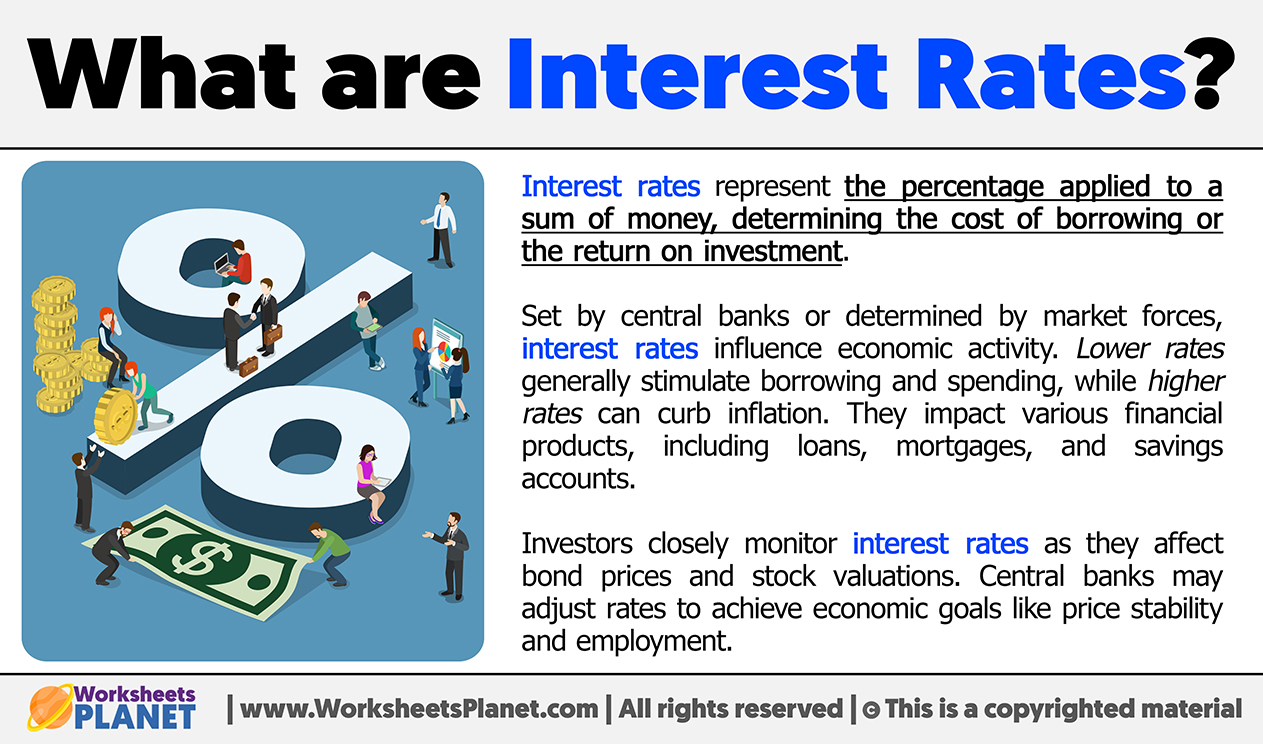
At its core, an interest rate is simply the cost of borrowing money or the reward for lending it. It represents the percentage of the principal amount charged by the lender to the borrower, typically expressed on an annual basis. This percentage compensates the lender for the use of their money over time, for the risk of not getting it back, and for the opportunity cost of not being able to use that money themselves.
Defining Interest Rates
Imagine you borrow $1,000 for a year at a 5% interest rate. At the end of that year, you would owe not only the initial $1,000 but also an additional $50 in interest. Conversely, if you deposit $1,000 in a savings account paying 5% interest, you would earn $50 over the year. This simple transaction underscores the dual nature of interest rates: they are a cost for the borrower and an income for the lender. Various factors dictate this percentage, including the loan’s duration, the borrower’s creditworthiness, and the prevailing economic conditions.
The Time Value of Money
The concept of interest rates is inextricably linked to the “time value of money” – the principle that a sum of money today is worth more than the same sum will be at a future date due to its potential earning capacity. Money available now can be invested or used to generate returns, which future money cannot. Therefore, when you lend money, you forego the opportunity to use or invest that money yourself, and the interest rate compensates you for that lost opportunity and for the erosion of purchasing power due to inflation over time. This foundational principle explains why lenders expect to be compensated for deferring consumption or investment.
Types of Interest Rates and Their Applications
Interest rates manifest in various forms, each serving distinct purposes across the financial spectrum. From the rates you pay on your mortgage to the yields you earn on your investments, understanding these different types is crucial.
Lending Rates (for Borrowers)
For individuals and businesses seeking capital, lending rates are a critical determinant of affordability and financial feasibility.
- Mortgages: These are perhaps the most significant loans for many individuals. Mortgage interest rates can be fixed, meaning they remain constant for the life of the loan, offering predictability, or adjustable (ARM), where they fluctuate periodically based on an underlying benchmark, potentially offering lower initial payments but higher future risk.
- Credit Cards: These typically carry some of the highest interest rates, often expressed as an Annual Percentage Rate (APR). Credit card interest is usually compounded daily, making outstanding balances expensive to maintain.
- Personal Loans: Unsecured loans often come with fixed rates, which are generally lower than credit card rates but higher than mortgage rates, reflecting the higher risk compared to secured loans.
- Business Loans: Companies borrow at rates that depend on their credit profile, the loan’s purpose, and the prevailing market conditions, impacting their expansion plans and operational costs.
Saving/Investing Rates (for Lenders/Savers)
For those looking to grow their wealth, interest rates determine the returns on their capital.
- Savings Accounts: Basic bank accounts offer nominal interest rates, providing liquidity and security but often little real return after inflation.
- Certificates of Deposit (CDs): These offer higher, fixed interest rates in exchange for locking up funds for a specified period (e.g., 6 months, 1 year, 5 years).
- Bonds: When you buy a bond, you are essentially lending money to a government or corporation. The “yield” on a bond is its effective interest rate, representing the return an investor receives on their investment. Bond yields can be fixed or variable and are influenced by the issuer’s creditworthiness and market demand.
Benchmark Rates
Central to the global financial system are benchmark rates, set or heavily influenced by central banks.
- Central Bank Rates: Institutions like the U.S. Federal Reserve’s Federal Funds Rate, the European Central Bank’s Main Refinancing Operations Rate, or the Bank of England’s Bank Rate are policy rates. They represent the interest rate at which commercial banks borrow and lend their excess reserves to each other overnight. These rates are the foundation upon which all other interest rates in an economy are built.
- Prime Rate: In many countries, the prime rate is a specific interest rate determined by commercial banks, typically calculated by adding a fixed spread (e.g., 3%) to the central bank’s benchmark rate. It’s the interest rate that commercial banks charge their most creditworthy corporate customers and serves as a base for many variable-rate consumer loans.
Factors Influencing Interest Rates
Interest rates are not static; they are dynamic economic indicators constantly responding to a complex interplay of forces. Understanding these drivers is key to anticipating future rate movements and making informed financial decisions.
Central Bank Monetary Policy
The most powerful influencer of interest rates is the monetary policy set by a nation’s central bank. Central banks use interest rates as a primary tool to achieve economic objectives like controlling inflation, fostering employment, and ensuring financial stability.
- Rate Hikes: When inflation is high or the economy is overheating, central banks may raise their benchmark rates. This makes borrowing more expensive, slowing down economic activity and curbing inflation.
- Rate Cuts: During economic downturns or periods of low inflation, central banks may lower rates to stimulate borrowing, investment, and consumer spending, thereby boosting economic growth.
- Quantitative Easing/Tightening: Beyond direct rate adjustments, central banks also influence long-term rates through large-scale asset purchases (quantitative easing) or sales (quantitative tightening), affecting the supply and demand for bonds.
Inflation Expectations
Lenders are acutely aware that inflation erodes the purchasing power of money over time. If lenders expect inflation to rise, they will demand higher interest rates to ensure that the real value of their future repayments maintains its purchasing power. Conversely, low inflation expectations can lead to lower nominal interest rates. This is why inflation data is closely watched by financial markets.
Economic Growth and Demand for Credit
In a robust, growing economy, businesses are more likely to expand, and consumers are more willing to spend and take on debt. This increased demand for credit tends to push interest rates higher. Conversely, during economic slowdowns or recessions, the demand for credit typically falls, leading to lower interest rates as lenders compete for fewer borrowers.
Risk and Creditworthiness
The perceived risk associated with a borrower or a particular investment directly impacts the interest rate.
- Individual Credit Scores: For personal loans and mortgages, a higher credit score indicates lower risk to lenders, resulting in more favorable (lower) interest rates. A lower score signals higher risk, leading to higher rates.
- Economic Stability: At a broader level, the perceived stability of a country’s economy or a corporation’s financial health affects the interest rates on government bonds and corporate debt. Higher risk typically demands a higher yield.
Supply and Demand for Money
Like any commodity, the price of money (the interest rate) is influenced by its supply and demand. If there’s an abundance of savings (high supply of money) relative to borrowing demand, interest rates tend to fall. If borrowing demand outstrips the available supply of money, interest rates will generally rise.
The Impact of Interest Rates on Your Financial Life
The fluctuations in interest rates have tangible, real-world consequences for every aspect of your financial life, whether you’re saving for retirement, buying a home, or running a business.
For Borrowers
Interest rates directly impact the cost of debt, making them a crucial factor in major financial decisions.
- Loan Affordability: Higher interest rates mean higher monthly payments for mortgages, car loans, and personal loans, potentially making large purchases less affordable or requiring smaller loan amounts. Conversely, lower rates can significantly reduce your monthly burden.
- Credit Card Debt Management: With variable rates tied to benchmarks, a rise in overall rates can quickly make existing credit card debt more expensive, potentially trapping individuals in a cycle of high-interest payments.
- Business Expansion Costs: For businesses, higher borrowing costs can deter investment, expansion, and hiring, impacting economic growth. Lower rates can encourage businesses to take on more debt for productive investments.
For Savers and Investors
While higher rates are a bane for borrowers, they can be a boon for savers and certain investors.
- Returns on Savings Accounts and Fixed Deposits: Higher interest rates mean better returns on cash held in savings accounts, money market funds, and Certificates of Deposit, helping to preserve and grow capital.
- Bond Market Dynamics: There’s an inverse relationship between interest rates and bond prices. When interest rates rise, newly issued bonds offer higher yields, making existing lower-yield bonds less attractive, and thus their market value falls. The opposite occurs when rates fall.
- Stock Market Implications: Interest rate changes can affect corporate earnings (cost of borrowing), investor sentiment (alternatives to stocks becoming more attractive), and the discount rate used to value future cash flows, all influencing stock prices. Generally, rising rates can be a headwind for equities, while falling rates can provide a tailwind.
For the Economy at Large
The ripple effects of interest rate changes extend across the entire economic landscape.
- Consumer Spending and Investment: Lower rates encourage borrowing, leading to increased consumer spending on big-ticket items and business investment, stimulating economic activity. Higher rates have the opposite effect.
- Housing Market: Mortgages are sensitive to interest rates. Lower rates make housing more affordable, boosting demand and home prices. Higher rates can cool down an overheated housing market.
- Exchange Rates: Higher interest rates can attract foreign capital seeking better returns, increasing demand for the domestic currency and causing its value to appreciate. Lower rates can lead to currency depreciation.
- Inflation: Central banks primarily use interest rates to manage inflation. Higher rates reduce demand and can curb inflationary pressures, while lower rates can fuel inflation if the economy overheats.
Navigating Interest Rate Environments
Given the profound and varied impacts of interest rates, understanding how to strategically respond to different rate environments is essential for sound financial planning. Proactive management can protect your wealth and seize opportunities.
Strategies in a Rising Rate Environment
When interest rates are on an upward trajectory, certain actions can mitigate risks and optimize returns:
- Lock In Fixed Rates: If you anticipate needing a major loan (like a mortgage) or have variable-rate debt, consider locking in a fixed rate to shield yourself from future increases. This applies to fixed-rate mortgages, personal loans, or even consolidating variable-rate credit card debt into a fixed-rate loan.
- Pay Down Variable Debt: Prioritize paying off high-interest, variable-rate debt, such as credit card balances or lines of credit, as the cost of carrying these debts will only increase.
- Re-evaluate Investment Portfolios: Consider adjusting your portfolio to be less sensitive to rising rates. This might involve reducing exposure to long-duration bonds, which are more susceptible to price declines when rates rise, and potentially favoring dividend-paying stocks or short-term fixed-income products. Cash becomes more attractive as savings rates improve.
Strategies in a Falling Rate Environment
Conversely, when rates are declining, different opportunities and challenges emerge:
- Refinance Existing Loans: If you have a high-interest mortgage or other loans, a falling rate environment is an ideal time to consider refinancing to a lower rate, potentially saving tens of thousands of dollars over the life of the loan.
- Seek Higher-Yielding Alternatives: While savings accounts and CDs might offer less attractive returns, this environment often prompts investors to look for higher yields in other asset classes, such as dividend stocks, real estate, or riskier bonds (while carefully managing risk).
- Consider Long-Term Investments: Falling rates can boost the appeal of growth stocks and long-duration bonds, as the cost of capital for businesses decreases, and the present value of future earnings is higher.
Tools and Resources
Navigating the complexities of interest rates doesn’t have to be a solo journey.
- Financial Advisors: A qualified financial advisor can provide personalized guidance, helping you understand how interest rate movements might affect your specific financial goals and recommend suitable strategies.
- Online Calculators: Numerous online tools can help you estimate mortgage payments, calculate loan interest, or project savings growth under different interest rate scenarios.
- Staying Informed: Regularly following economic news, central bank announcements, and financial market trends will equip you with the knowledge to anticipate changes and make timely decisions. Resources from reputable financial news outlets and government economic agencies are invaluable.
Conclusion
The question “what the interest rate?” unveils a fundamental truth about our financial world: it is a dynamic, interconnected system where the cost of money plays a pivotal role. From the micro-level decisions of individuals and families borrowing for a home or saving for retirement, to the macro-economic shifts influenced by central bank policy, interest rates are a constant and powerful force. By understanding their core definitions, the various forms they take, the myriad factors that drive their movements, and their far-reaching impacts, you gain a critical tool for financial empowerment. Staying informed, being proactive, and strategically adapting your financial decisions to prevailing interest rate environments are not just advisable; they are indispensable practices for building and maintaining lasting financial well-being.
aViewFromTheCave is a participant in the Amazon Services LLC Associates Program, an affiliate advertising program designed to provide a means for sites to earn advertising fees by advertising and linking to Amazon.com. Amazon, the Amazon logo, AmazonSupply, and the AmazonSupply logo are trademarks of Amazon.com, Inc. or its affiliates. As an Amazon Associate we earn affiliate commissions from qualifying purchases.