
The pursuit of homeownership often begins with a fundamental question: “What is the current 30-year mortgage rate?” This seemingly simple query, however, unlocks a complex world of financial markets, economic indicators, and personal financial decisions. While no single article can provide a real-time, universally applicable rate due to constant fluctuations and individual borrower differences, understanding the dynamics behind the 30-year fixed-rate mortgage is crucial for anyone navigating the path to homeownership or considering a refinance. This comprehensive guide will demystify the 30-year mortgage, explore the myriad factors influencing its rates, and equip you with the knowledge to find the best possible terms for your financial situation.
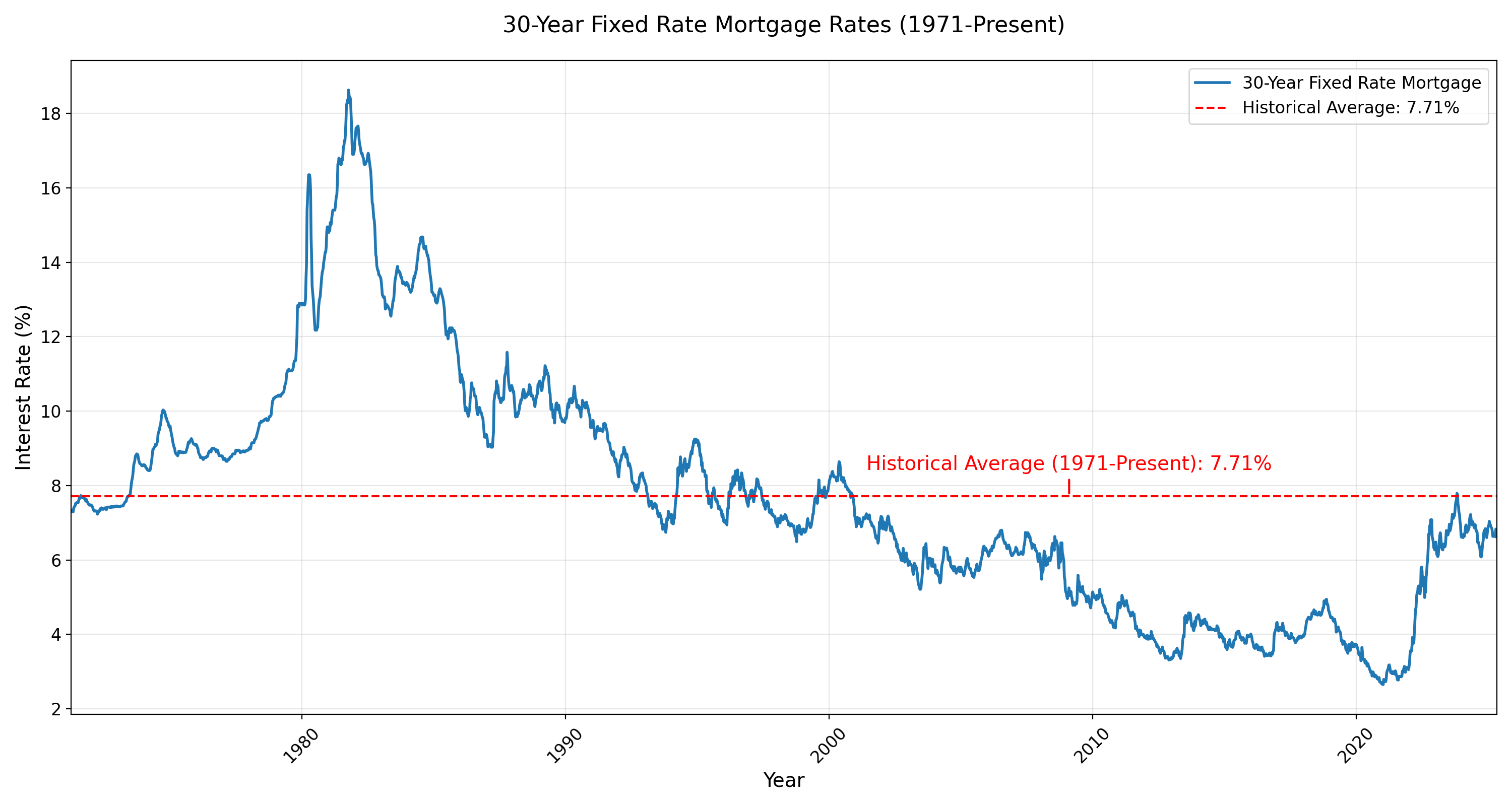
Understanding the 30-Year Fixed-Rate Mortgage
The 30-year fixed-rate mortgage is the most popular home loan product in the United States, and for good reason. It offers a blend of stability and affordability that appeals to a wide range of homebuyers.
The Stability of a Fixed Rate
A “fixed-rate” mortgage means that the interest rate remains constant for the entire duration of the loan. This provides homeowners with predictable monthly principal and interest payments, making budgeting easier and offering a strong sense of financial security, especially in times of economic uncertainty. Unlike adjustable-rate mortgages (ARMs), which can see their rates – and thus monthly payments – change periodically, a fixed-rate mortgage locks in your interest expense from day one. This predictability is invaluable for long-term financial planning, protecting borrowers from potential interest rate hikes over three decades.
Why 30 Years? Examining the Amortization Schedule
The 30-year term is a key component of its appeal. By spreading repayments over three decades, the monthly payments are significantly lower than those of a 15-year or 20-year mortgage for the same loan amount. This lower monthly payment makes homeownership more accessible to a broader population, enabling many to afford larger homes or to free up cash flow for other financial goals. However, the extended term also means that borrowers will pay considerably more in total interest over the life of the loan compared to shorter-term mortgages, assuming the same interest rate. The amortization schedule of a 30-year mortgage illustrates how payments are allocated over time, gradually shifting from a larger proportion of interest to a larger proportion of principal as the loan matures.
Principal vs. Interest: The Early Years
A distinct characteristic of 30-year fixed-rate mortgages, especially in their early stages, is the significant portion of each payment dedicated to interest. During the first several years, the vast majority of your monthly payment goes towards servicing the interest on the loan, with only a small fraction reducing the principal balance. This often surprises new homeowners, but it’s a standard feature of amortizing loans. As time progresses, the balance gradually shifts, and more of each payment begins to chip away at the principal, accelerating equity build-up. While this front-loading of interest means slower equity growth initially, the fixed payment allows homeowners to strategically make extra principal payments if they wish to accelerate their equity and reduce overall interest paid without facing increased mandatory payments.
Key Factors Influencing Mortgage Rates
Mortgage rates are dynamic, influenced by a complex interplay of economic forces, monetary policy, and market sentiment. Understanding these drivers is essential for comprehending why rates fluctuate and what might cause them to move up or down.
The Federal Reserve and Monetary Policy
While the Federal Reserve does not directly set mortgage rates, its actions profoundly impact them. The Fed’s primary tool is the federal funds rate, a target rate for interbank lending. When the Fed raises this rate, it typically makes borrowing more expensive across the economy, influencing the prime rate and subsequently impacting a broad range of consumer loans. Mortgage rates are more closely tied to the bond market, particularly the yields on U.S. Treasury bonds and Mortgage-Backed Securities (MBS). However, the Fed’s stance on inflation and economic growth, communicated through its public statements and actions (like quantitative easing or tightening), heavily influences the overall interest rate environment, thus indirectly steering mortgage rates.
Inflation Expectations
Inflation is a significant adversary of bond investors. When inflation is expected to rise, the purchasing power of future fixed payments from bonds diminishes. To compensate for this anticipated loss, investors demand higher yields for holding bonds, including MBS. Since mortgage rates are priced off these MBS yields, higher inflation expectations generally lead to higher mortgage rates. Conversely, a stable or declining inflation outlook can put downward pressure on rates. The bond market constantly digests economic data and geopolitical events to form its inflation expectations, which directly translate into the cost of borrowing for homebuyers.
Economic Indicators: GDP, Employment, and Housing Data
The overall health of the economy, as measured by various economic indicators, provides crucial signals to the bond market and, by extension, to mortgage rates.
- Gross Domestic Product (GDP): A strong, growing economy (high GDP growth) often signals robust demand and potential inflation, which can push rates higher. A weakening economy, conversely, might lead to lower rates as investors seek the safety of bonds.
- Employment Data: Low unemployment rates and strong job growth indicate a healthy economy, which can contribute to inflationary pressures and higher rates. Conversely, rising unemployment or a weak job market can signal an economic slowdown, potentially leading to lower rates.
- Housing Data: Reports on housing starts, existing home sales, and housing inventories reflect the demand and supply dynamics within the real estate market itself. A red-hot housing market with high demand can sometimes correlate with economic strength, contributing to upward pressure on rates, while a cooling market might see rates ease.
The Bond Market: Treasury Yields
The bond market is perhaps the most direct determinant of mortgage rates. Specifically, the yield on the 10-year U.S. Treasury note is often seen as a benchmark for long-term interest rates, including mortgages. Mortgage-Backed Securities (MBS), which are bundles of individual home loans bought and sold by investors, also play a critical role. When MBS yields rise, mortgage rates tend to follow suit, and vice versa. Investors’ demand for these securities, their perceived risk, and their comparison to other investment opportunities directly influence the rates lenders can offer.
Lender-Specific Factors and Loan Types
Beyond broad economic forces, individual lenders apply their own risk assessments and business strategies. Factors like the lender’s overhead costs, profit margins, and specific portfolio goals can lead to variations in rates offered. Furthermore, the type of loan (e.g., FHA, VA, USDA, conventional) can also affect the rate. Government-backed loans often have slightly different rate structures due to their unique insurance requirements and eligibility criteria.
How to Find the Most Accurate Current Rates
Given the volatility and individualized nature of mortgage rates, obtaining an accurate quote requires proactive research and understanding where to look. No single website can tell you your rate, but several avenues exist to get the most precise figures for your unique situation.
Online Mortgage Lenders and Comparison Sites
The digital age has revolutionized how consumers shop for mortgages. Online lenders have streamlined the application process, often offering competitive rates due to lower overhead costs. Mortgage comparison sites aggregate data from multiple lenders, allowing you to input your financial information (credit score range, down payment, loan amount, property location) and receive personalized quotes from various providers. These platforms are an excellent starting point for getting a broad overview of prevailing rates and identifying potential lenders. Be aware that the displayed rates are often “teaser rates” or “best case” scenarios, and your actual rate may vary.
Local Banks and Credit Unions

Don’t overlook traditional financial institutions. Your local bank or credit union might offer competitive rates, especially if you have an existing relationship with them. They often provide a more personalized service, and credit unions, in particular, are member-owned, sometimes allowing them to offer slightly better terms or lower fees. Visiting a branch or calling a loan officer allows for a direct conversation where you can discuss your specific needs and receive a tailored quote.
Mortgage Brokers: A Personalized Approach
A mortgage broker acts as an intermediary between you and multiple lenders. They work on your behalf, leveraging their network to find the best rate and loan product that fits your profile. Brokers can be particularly helpful for borrowers with unique financial situations or those who want to compare a wide range of options without directly applying to numerous lenders themselves. They earn a commission, either from the lender or the borrower (or both), which should be clearly disclosed upfront.
What Information You’ll Need
To get an accurate rate quote, lenders will typically ask for specific financial details. Be prepared to provide:
- Your Credit Score: A higher score (typically 740+) generally qualifies you for the best rates.
- Loan-to-Value (LTV) Ratio: This is determined by your down payment amount relative to the home’s purchase price. A lower LTV (larger down payment) indicates less risk to the lender and can result in a better rate.
- Debt-to-Income (DTI) Ratio: This measures your total monthly debt payments against your gross monthly income. A lower DTI signifies better financial health.
- Property Type and Location: Interest rates can vary slightly based on the type of property (e.g., single-family home vs. condo) and its geographical location.
- Loan Term and Type: Specify that you’re looking for a 30-year fixed-rate mortgage.
- Purpose of Loan: Purchase or refinance.
Beyond the Rate: Hidden Costs and Considerations
While the interest rate is undeniably important, it’s only one piece of the mortgage puzzle. To truly understand the cost of your loan, you must look beyond the headline rate and consider other associated expenses.
Annual Percentage Rate (APR) vs. Interest Rate
The interest rate is the percentage charged by the lender on the principal loan amount. The Annual Percentage Rate (APR), on the other hand, provides a more comprehensive measure of the total cost of borrowing. It includes the interest rate plus most of the fees associated with the loan, such as origination fees, discount points, and some closing costs, expressed as an annual percentage. When comparing loan offers, the APR is often a more accurate metric for side-by-side comparison, as it reflects the true yearly cost of the loan. A lower APR generally indicates a cheaper loan overall.
Closing Costs: Understanding the Full Picture
Closing costs are a collection of fees paid at the close of a real estate transaction. These can range from 2% to 5% of the loan amount and cover various services, including:
- Lender fees: Origination fees, underwriting fees, application fees.
- Third-party fees: Appraisal fees, credit report fees, title search and insurance, attorney fees, survey fees.
- Prepaid items: Property taxes and homeowner’s insurance premiums that are paid in advance and often held in an escrow account.
Understanding these costs is vital, as they represent a significant out-of-pocket expense that can impact your overall affordability and cash flow for moving in.
Points: Buying Down Your Rate
Mortgage points, also known as discount points, are an upfront fee paid to the lender in exchange for a lower interest rate. One point typically equals 1% of the loan amount. For example, on a $300,000 loan, one point would cost $3,000. Paying points can reduce your monthly payment and the total interest paid over the life of the loan. The decision to pay points depends on how long you plan to stay in the home. If you plan to stay for many years, the long-term savings might outweigh the upfront cost, reaching a “break-even point” where the cumulative savings from the lower interest rate surpass the cost of the points.
Escrow Accounts: Taxes and Insurance
Many mortgage lenders require borrowers to establish an escrow account. This account, managed by the lender, holds funds collected from your monthly mortgage payment specifically for paying property taxes and homeowner’s insurance premiums when they come due. While it adds to your monthly payment, it simplifies budgeting for these significant annual expenses and ensures they are paid on time, protecting both you and the lender’s interest in the property. Your escrow payment can fluctuate annually based on changes in your property taxes and insurance premiums.
Strategies for Securing the Best Mortgage Rate
While market conditions are beyond your control, several personal financial strategies can significantly improve your chances of securing the most favorable 30-year mortgage rate.
Improving Your Credit Score
Your credit score is arguably the single most important factor within your control that influences the interest rate you’ll be offered. Lenders use it to assess your creditworthiness and the likelihood of you repaying the loan. A higher FICO score (generally 740 or above) signals lower risk, qualifying you for the most competitive rates. Steps to improve your credit score include paying bills on time, reducing credit card balances, avoiding new debt inquiries before applying for a mortgage, and correcting any errors on your credit report.
Managing Your Debt-to-Income Ratio
Your Debt-to-Income (DTI) ratio is another critical metric lenders evaluate. It’s calculated by dividing your total monthly debt payments (including the potential new mortgage payment) by your gross monthly income. Lenders typically prefer a DTI ratio of 36% or less, though some programs allow up to 43% or even higher. A lower DTI indicates that you have ample income to manage your debt obligations, making you a less risky borrower and potentially qualifying you for better rates. Reducing existing debt or increasing your income (if possible) before applying for a mortgage can positively impact your DTI.
Making a Larger Down Payment
The size of your down payment directly affects your Loan-to-Value (LTV) ratio. A larger down payment translates to a lower LTV, meaning you’re borrowing less relative to the home’s value. This reduces the lender’s risk and can often result in a lower interest rate. Additionally, a down payment of 20% or more typically allows you to avoid Private Mortgage Insurance (PMI), a costly monthly premium that protects the lender in case you default. While saving 20% can be challenging, even a slightly larger down payment can make a difference in your rate and overall mortgage cost.
Shopping Around and Comparing Offers
This cannot be stressed enough: always shop around and compare offers from multiple lenders. As discussed, rates and fees can vary significantly between different financial institutions. Contacting at least three to five lenders – including online lenders, local banks, and mortgage brokers – will give you a comprehensive view of the market and foster competition for your business. When comparing offers, look beyond just the interest rate; compare the APR, closing costs, and any specific terms or conditions. Requesting a Loan Estimate from each lender will provide a standardized document for easy comparison.

Locking in Your Rate
Once you’ve found a competitive rate and are moving forward with a specific lender, consider a “rate lock.” A rate lock guarantees your interest rate for a specific period (typically 30, 45, or 60 days) while your loan application is being processed. This protects you from potential rate increases between the time you apply and your closing date. Be mindful of the lock period; if your closing is delayed beyond the lock expiration, you may need to pay an extension fee or risk a higher rate if market conditions have shifted.
Navigating the mortgage market to secure the best 30-year fixed rate requires diligence, financial preparation, and a thorough understanding of the factors at play. While the “current” rate is a moving target, empowering yourself with knowledge and employing smart financial strategies will put you in the strongest possible position to achieve your homeownership dreams. By focusing on your credit, DTI, down payment, and meticulously shopping for the right lender, you can optimize your mortgage terms and set yourself up for long-term financial stability.
aViewFromTheCave is a participant in the Amazon Services LLC Associates Program, an affiliate advertising program designed to provide a means for sites to earn advertising fees by advertising and linking to Amazon.com. Amazon, the Amazon logo, AmazonSupply, and the AmazonSupply logo are trademarks of Amazon.com, Inc. or its affiliates. As an Amazon Associate we earn affiliate commissions from qualifying purchases.