
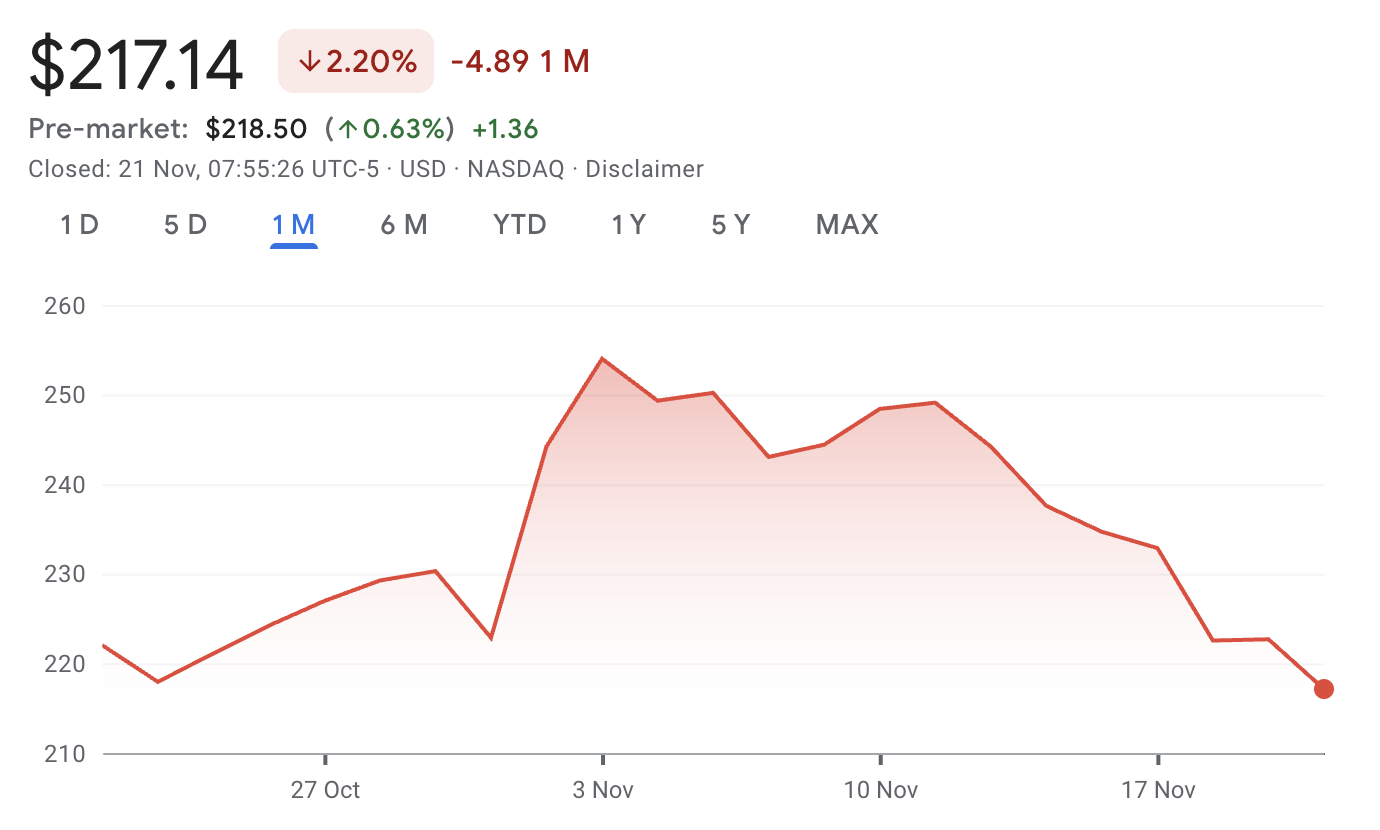
The stock market is a complex ecosystem, constantly reacting to a myriad of factors ranging from global economic shifts to company-specific news. When a titan like Amazon (AMZN) experiences a significant dip, it rarely happens in a vacuum. Understanding the “why” behind such a movement requires a deep dive into both macro- and microeconomic forces, investor sentiment, and technical indicators. Today’s decline in Amazon’s stock price, while potentially unsettling for some investors, is likely a confluence of several identifiable elements that warrant careful examination. This analysis will explore the multifaceted reasons that could be contributing to the stock’s performance, providing context for what many see as a bellwether for both the e-commerce sector and broader technological innovation.
Navigating Macroeconomic Headwinds
Global economic conditions play a pivotal role in shaping investor confidence and, consequently, stock market performance. Amazon, being a massive multinational corporation with diverse revenue streams, is particularly susceptible to these broader economic currents.
Inflationary Pressures and Consumer Spending
One of the most pervasive challenges facing economies worldwide is persistent inflation. Rising prices for goods and services erode consumer purchasing power, leading to a tightening of discretionary spending. For a company like Amazon, whose core business heavily relies on consumer spending in its e-commerce segment, a slowdown here directly impacts revenue growth. When consumers cut back on non-essential purchases or opt for cheaper alternatives, Amazon’s sales volumes and average order values can decline. Furthermore, Amazon itself faces increased costs for fuel, shipping, labor, and raw materials, which squeeze profit margins even if sales remain stable. Investors, anticipating these margin compressions and a potential slowdown in top-line growth, might react by selling off shares, contributing to a downward trend.
Interest Rate Hikes and Their Impact on Growth Stocks
Central banks globally have been aggressively raising interest rates in a bid to combat inflation. While necessary for economic stability, higher interest rates have a disproportionate impact on growth stocks, of which Amazon is a prime example. Growth companies often rely on future earnings potential to justify their high valuations. Higher interest rates increase the cost of capital for businesses, making it more expensive to borrow for expansion, research and development, and other growth initiatives. More critically, higher discount rates used in valuation models reduce the present value of those anticipated future earnings, making growth stocks appear less attractive relative to value stocks or fixed-income investments. This re-evaluation by investors often leads to a re-pricing of high-growth tech stocks, potentially pushing their prices down.
Broader Market Sentiment and Recession Fears
The specter of a global economic recession looms large, fueled by inflationary pressures, geopolitical tensions, and ongoing supply chain disruptions. When the broader market is in a risk-off mode, investors tend to divest from riskier assets, including volatile growth stocks like Amazon, and flock to safer havens. A general market downturn or correction can drag down even fundamentally strong companies. Fears of a recession directly translate into concerns about future corporate earnings across all sectors, leading to widespread selling. Amazon, given its significant market capitalization and widespread institutional ownership, often experiences amplified movements during such periods of heightened market anxiety.
Company-Specific Catalysts and Concerns
While macroeconomic factors set the stage, specific developments related to Amazon’s operations, financial performance, and strategic direction can act as direct catalysts for stock movement.
Disappointing Earnings or Revenue Guidance
One of the most common and immediate triggers for a stock decline is an earnings report that misses analyst expectations or, perhaps more critically, provides weaker-than-anticipated forward guidance. Even if current quarter results are respectable, a cautious outlook on future revenue or profit can signal underlying challenges or a slowdown in growth. For Amazon, key metrics like AWS revenue growth, e-commerce sales volumes, and profitability margins are closely scrutinized. A deceleration in AWS, for instance, which is a significant profit engine, can severely impact investor sentiment. Similarly, a decline in advertising revenue or a significant increase in fulfillment costs can also cast a shadow, leading analysts to revise their models downward and investors to re-evaluate their positions.
Increasing Operating Costs and Profitability Challenges
Amazon’s vast operational footprint, spanning e-commerce, cloud computing, logistics, and advertising, comes with significant operating costs. In recent periods, the company has faced unprecedented cost pressures. Labor shortages have led to increased wage expenses and signing bonuses. Fuel prices have surged, impacting its massive shipping network. Investment in new fulfillment centers and technological infrastructure, while crucial for long-term growth, incurs substantial short-term capital expenditures. Moreover, the winding down of pandemic-era demand has left Amazon with excess capacity in its fulfillment network in some regions, leading to underutilization costs. If these rising costs outpace revenue growth, Amazon’s profitability can suffer, directly impacting its bottom line and the confidence of shareholders.
Competitive Landscape and Market Share Battles
Despite its dominance, Amazon operates in highly competitive arenas. In e-commerce, it faces challengers from Walmart, Target, and a plethora of niche online retailers. In cloud computing (AWS), Google Cloud and Microsoft Azure are formidable competitors, aggressively vying for market share with competitive pricing and innovative services. The digital advertising space is dominated by Google and Meta, but new entrants are constantly emerging. Increased competition can force Amazon to invest more in pricing, marketing, and innovation, potentially squeezing margins. Any signs of losing market share in its core segments or failing to penetrate new markets effectively can be interpreted negatively by investors, signaling a potential slowdown in future growth opportunities.
Regulatory Scrutiny and Antitrust Concerns
Amazon’s sheer size and market power have attracted considerable regulatory attention globally. Governments in the US, Europe, and elsewhere are increasingly scrutinizing its business practices related to competition, data privacy, labor relations, and seller treatment on its marketplace. The threat of antitrust lawsuits, potential breakups of its business segments, or new regulations that could limit its operational flexibility or increase compliance costs creates significant uncertainty. Investors dislike uncertainty, and the ongoing regulatory overhang can contribute to a discount on Amazon’s stock price, as the potential financial and operational implications of adverse rulings are difficult to quantify.
Sector-Specific Shifts and Evolving Dynamics
Beyond company-specific issues, broader trends within the sectors Amazon operates in can also explain stock movements.

Post-Pandemic Normalization in E-commerce Growth
The COVID-19 pandemic accelerated the shift to online shopping, providing an unprecedented boom for Amazon’s e-commerce business. However, as economies have reopened and consumer behaviors have normalized, the pace of e-commerce growth has inevitably slowed. While online shopping continues its long-term upward trend, the hyper-growth rates seen during lockdowns are unsustainable. Investors who extrapolated pandemic-era growth rates might be disappointed by more modest, albeit still substantial, growth figures. This normalization translates into lower revenue growth projections for Amazon’s core retail segment, prompting a re-evaluation of its valuation metrics.
Cloud Computing (AWS) Growth Deceleration
Amazon Web Services (AWS) has been the company’s most profitable and fastest-growing segment for years, acting as a crucial counterbalance to the lower-margin e-commerce business. However, even AWS has begun to show signs of growth deceleration. This can be attributed to several factors: the increasing maturity of the cloud market, greater competition, and macroeconomic pressures causing businesses to optimize their cloud spending or delay new projects. Enterprises are becoming more sophisticated in managing their cloud infrastructure, leading to cost optimization initiatives that can temporarily reduce spending on AWS. A slowdown in AWS growth, even if still robust, is a significant concern for investors because it directly impacts Amazon’s overall profitability and its long-term growth narrative.
Digital Advertising Market Fluctuations
Amazon has quietly built a substantial and highly profitable digital advertising business, leveraging its vast trove of shopper data and prime ad placements on its e-commerce platform. However, the digital advertising market is highly cyclical and sensitive to economic conditions. In periods of economic uncertainty, businesses often cut back on their advertising budgets first. This can lead to a slowdown in ad revenue growth for Amazon, mirroring trends seen in other major ad platforms. Given the high-margin nature of advertising revenue, any significant dip here can have an outsized impact on Amazon’s overall profitability, further contributing to investor apprehension.
Technical Trading and Investor Sentiment
Beyond fundamental analysis, the mechanics of market trading and prevailing investor sentiment can also influence short-term stock price movements.
Analyst Downgrades and Price Target Adjustments
Research analysts from major financial institutions continuously monitor Amazon’s performance and prospects. A downgrade in a stock’s rating (e.g., from “buy” to “hold”) or a reduction in its price target can trigger a wave of selling. These changes often reflect new information, revised earnings estimates, or a shift in the analyst’s perception of the company’s risk profile. Institutional investors, in particular, often react to analyst recommendations, leading to significant trading volumes that can push the stock lower. A consensus shift among analysts to a more cautious stance can create a negative feedback loop.
Algorithmic Trading and Short-Term Volatility
A significant portion of today’s market trading is executed by high-frequency trading (HFT) firms and algorithmic systems. These algorithms react instantaneously to news headlines, economic data releases, and technical chart patterns. A slight dip or a negative news item can trigger automated selling programs, which can exacerbate downward movements in a short period. While these movements are often temporary and not necessarily reflective of a company’s fundamental health, they contribute to the day’s price action and can create the appearance of significant weakness.
Profit-Taking and Rebalancing Activities
After a period of strong performance, or simply as part of regular portfolio management, institutional investors and large funds may engage in profit-taking. This involves selling a portion of their holdings to lock in gains, especially if the stock has reached certain valuation milestones or if they need to rebalance their portfolios to maintain specific asset allocations. Such large-scale selling, even if unrelated to new negative news about Amazon itself, can create downward pressure on the stock. Similarly, some investors might be rebalancing their portfolios away from growth stocks and towards value stocks or bonds, contributing to selling pressure on Amazon.
The Long-Term Perspective Amidst Short-Term Volatility
While the immediate decline in Amazon’s stock price can be attributed to a combination of these factors, it is crucial for investors to maintain a long-term perspective. Short-term market movements are often driven by sentiment, technical factors, and immediate news, which may not always reflect the underlying fundamental strength or long-term growth potential of a company.
Amazon’s Fundamental Strengths and Diversification
Despite the current headwinds, Amazon possesses undeniable fundamental strengths. Its vast global logistics network, dominant position in cloud computing (AWS), growing advertising business, and ventures into new areas like healthcare and satellite internet (Project Kuiper) provide significant diversification and multiple avenues for future growth. The company’s relentless focus on customer obsession and innovation continues to drive its competitive advantage. These underlying strengths suggest that while the stock may face challenges today, its long-term trajectory could remain robust.
Investing Through Market Fluctuations
For long-term investors, periods of stock decline can represent opportunities to acquire shares of quality companies at potentially more attractive valuations. It’s essential to distinguish between temporary headwinds and fundamental shifts in a company’s prospects. A stock being “down today” does not necessarily mean its long-term investment thesis is broken. Patience and a focus on the company’s ability to navigate challenges and execute on its strategic vision are paramount.
What Investors Should Monitor Next
Going forward, investors in Amazon should closely monitor several key indicators: the trajectory of inflation and interest rates, consumer spending trends, AWS growth rates and profitability, the success of cost-cutting initiatives, and any developments in regulatory scrutiny. The company’s next earnings report, along with management’s outlook, will provide crucial insights into how Amazon is adapting to the current economic environment and positioning itself for future growth. Understanding these dynamics will be key to deciphering future movements in Amazon’s stock price.
aViewFromTheCave is a participant in the Amazon Services LLC Associates Program, an affiliate advertising program designed to provide a means for sites to earn advertising fees by advertising and linking to Amazon.com. Amazon, the Amazon logo, AmazonSupply, and the AmazonSupply logo are trademarks of Amazon.com, Inc. or its affiliates. As an Amazon Associate we earn affiliate commissions from qualifying purchases.