
Investing in individual stocks like Amazon (AMZN) can be a compelling way to participate in the growth of a leading global enterprise and potentially build wealth over time. Amazon, a titan of e-commerce, cloud computing, digital advertising, and entertainment, has redefined multiple industries and remains a significant player in the global economy. For many aspiring investors, owning a piece of such an influential company is an attractive proposition. However, the process of buying stock, particularly for newcomers, can seem daunting. This comprehensive guide will demystify the steps involved, offering a clear roadmap to help you confidently acquire Amazon shares and integrate them into your broader financial strategy.
Understanding Amazon Stock: A Gateway to Growth
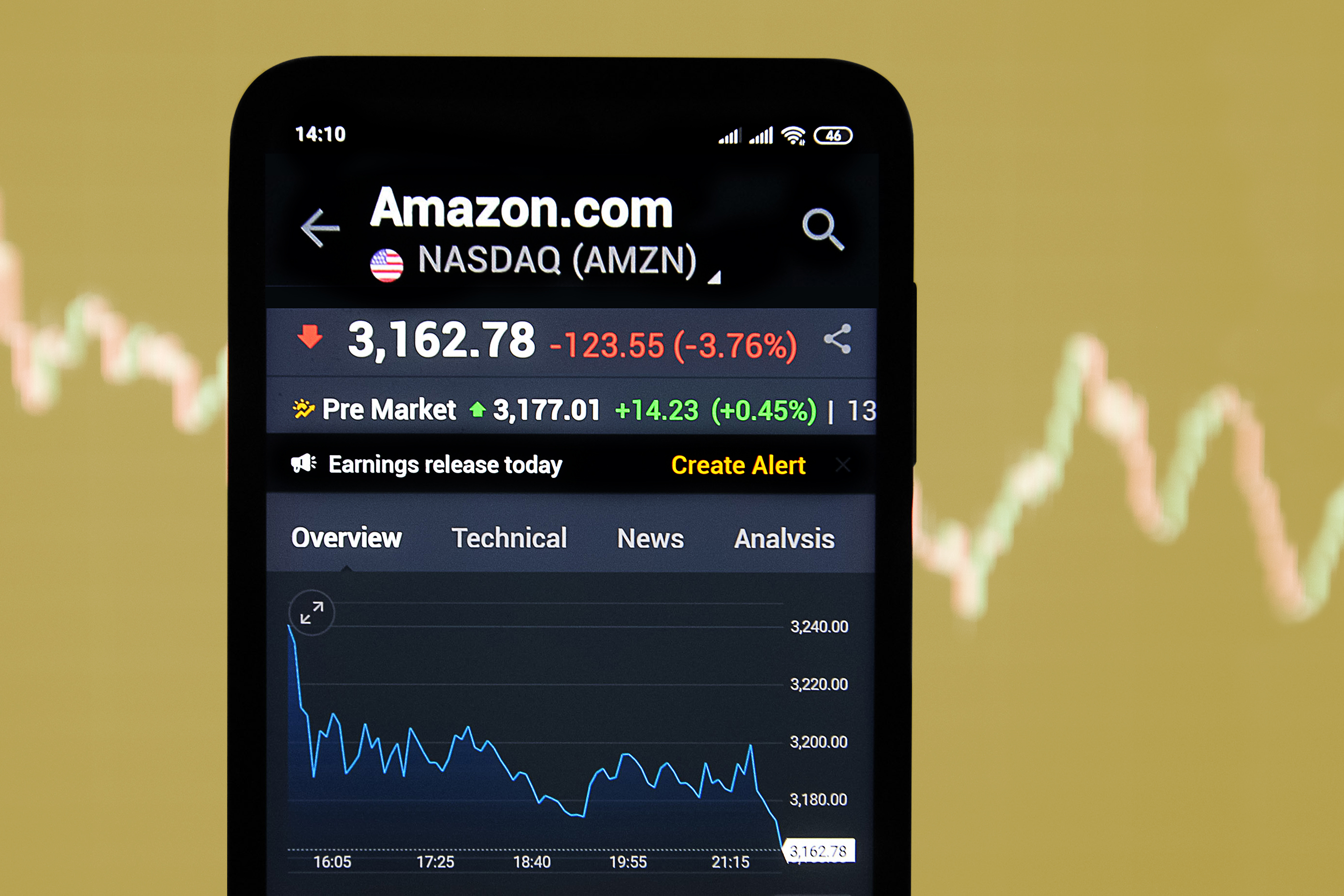
Before diving into the mechanics of purchase, it’s crucial to understand what you’re investing in. Amazon’s stock, traded under the ticker symbol AMZN on the NASDAQ exchange, represents ownership in a multifaceted conglomerate. Its sustained growth has made it a darling for long-term investors, but like any investment, it comes with its unique set of considerations.
Why Invest in Amazon (AMZN)?
Investing in Amazon is often seen as a bet on continued innovation, market dominance, and secular growth trends. The company’s diverse revenue streams and strategic positioning offer several compelling reasons for potential investors:
- Market Leadership: Amazon holds dominant positions in e-commerce, cloud services (Amazon Web Services – AWS), and digital advertising. These sectors are critical to the global digital economy and continue to expand.
- Innovation Engine: Amazon consistently invests in research and development, pioneering new technologies and business models, from AI (Alexa) and logistics to satellite internet (Project Kuiper) and healthcare.
- Diversified Revenue: Unlike many companies reliant on a single product or service, Amazon’s revenue is generated across multiple high-growth segments, providing a degree of resilience against downturns in any one area.
- Scalability: The inherent scalability of its platforms, particularly AWS, allows Amazon to grow revenue and profits efficiently as demand increases.
Amazon’s Business Segments
A deeper understanding of Amazon’s operational segments reveals the sources of its financial strength and future potential:
- Online Stores: The core e-commerce business, encompassing direct sales and third-party seller services, remains massive, though its growth has matured compared to other segments.
- Amazon Web Services (AWS): The leading cloud computing platform, AWS provides scalable and reliable infrastructure services to millions of businesses and governments worldwide. It is a highly profitable and rapidly growing segment.
- Subscription Services: Includes Amazon Prime memberships, which offer benefits like free shipping, video streaming (Prime Video), and music. This segment fosters customer loyalty and provides recurring revenue.
- Advertising Services: Leveraging its vast user data and e-commerce platform, Amazon has become a formidable player in digital advertising, competing directly with Google and Meta.
- Physical Stores: A smaller but growing segment, including Amazon Go, Amazon Fresh, and Whole Foods Market.
- Other: Encompasses various nascent ventures and technologies, including devices, content, and emerging businesses.
Key Considerations Before Investing
While Amazon’s track record is impressive, prudent investors must weigh potential risks and personal financial goals:
- Valuation: Amazon’s stock can often trade at premium valuations, reflecting its growth prospects. Investors should assess whether the current price justifies the future earnings potential.
- Market Risks: Broader market downturns, economic recessions, or shifts in consumer spending can impact Amazon’s performance, regardless of its underlying strength.
- Competition and Regulation: Amazon faces intense competition across all its segments and increasing scrutiny from regulators regarding antitrust and labor practices.
- Personal Risk Tolerance: Understand that individual stock investing carries higher risk than diversified portfolios. Be prepared for potential volatility and fluctuations in stock price.
- Long-Term Horizon: Amazon is often considered a long-term investment, as its growth story unfolds over years, not weeks or months. Short-term speculation can be highly risky.
Essential Steps to Purchasing Amazon Stock
Once you’ve decided that Amazon aligns with your investment goals and risk tolerance, the actual process of buying shares is straightforward. It primarily involves setting up an investment account and then executing your trade.
Opening a Brokerage Account
The first and most critical step is to open an investment account with a reputable brokerage firm. This account will serve as your gateway to the stock market.
- Choosing the Right Broker: Several excellent online brokers cater to different types of investors. Key factors to consider include:
- Fees and Commissions: Many brokers now offer commission-free trading for stocks and ETFs, which is ideal.
- Minimum Deposit: Some brokers require a minimum initial deposit, though many offer no minimums, especially for fractional shares.
- Investment Options: Ensure the broker offers access to individual stocks (like AMZN), as well as ETFs, mutual funds, and other assets if you plan to diversify.
- User Interface and Tools: A user-friendly platform with robust research tools, educational resources, and analytical capabilities can significantly enhance your investing experience.
- Customer Service: Responsive and knowledgeable customer support is vital, especially for new investors.
- Regulation and Security: Ensure the broker is regulated by relevant authorities (e.g., SEC and FINRA in the US) and offers strong security measures, including SIPC insurance. Popular options include Fidelity, Charles Schwab, Vanguard, E*TRADE, and Interactive Brokers.
- Setting Up Your Account: The application process is typically online and takes about 10-15 minutes. You’ll need to provide personal information such as:
- Full name, address, and contact details
- Social Security Number (SSN) or Tax Identification Number (TIN)
- Employment information
- Financial details (income, net worth, investment experience)
- You may also need to upload a copy of a government-issued ID.
Funding Your Account
After your brokerage account is approved, you’ll need to deposit funds to buy stock. Brokers offer several convenient methods:
- Electronic Funds Transfer (ACH): This is the most common and often free method, allowing you to transfer money directly from your linked bank account. It typically takes 1-3 business days for funds to clear and become available for trading.
- Wire Transfer: Faster than ACH, wire transfers usually clear within hours but often incur a fee from your bank.
- Check Deposit: You can mail a check to your brokerage, but this is the slowest method.
- Linked Debit Card: Some brokers allow instant deposits via debit card for smaller amounts.
Placing Your Order
Once your account is funded, you can search for Amazon stock and place your trade.
- Find the Stock: Use the stock’s ticker symbol, AMZN, in your brokerage platform’s search bar.
- Select “Buy”: Choose to buy shares.
- Enter the Quantity or Dollar Amount:
- Whole Shares: Specify the number of whole shares you wish to purchase (e.g., 1 share, 5 shares).
- Fractional Shares: If your broker offers it, you can specify a dollar amount (e.g., $100 worth of AMZN), and you’ll receive a fraction of a share.
- Choose Order Type: This is a crucial decision:
- Market Order: Instructs your broker to buy shares immediately at the best available price. While quick, the execution price might differ slightly from the real-time quote, especially in volatile markets.
- Limit Order: Allows you to specify the maximum price you are willing to pay per share. Your order will only execute if the stock’s price falls to or below your specified limit. This gives you more control over the purchase price but means your order might not execute if the price never reaches your limit.
- Review and Confirm: Double-check all details of your order before confirming. Once confirmed, your order will be sent to the market.
Different Ways to Invest in Amazon
Beyond simply buying whole shares, modern brokerage platforms offer various methods that cater to different budgets and investment philosophies.
Buying Whole Shares
This is the traditional method. If Amazon stock is trading at $150 per share, you would need $150 to buy one share, $300 for two, and so on. This approach gives you direct ownership and voting rights (though for most individual investors, proxy voting is minimal). It’s suitable for investors with sufficient capital to purchase full shares of higher-priced stocks.
Fractional Shares
Fractional share investing has revolutionized access to expensive stocks. Many brokers now allow you to buy a portion of a share. Instead of needing hundreds of dollars for a full Amazon share, you can invest as little as $5, $10, or $100. If an Amazon share costs $150, and you invest $75, you’d own 0.5 shares. This is an excellent option for beginners, those with smaller budgets, or investors wanting to diversify with limited capital.
Exchange-Traded Funds (ETFs) and Mutual Funds
If you’re interested in Amazon’s growth but prefer a more diversified approach than owning a single stock, consider ETFs or mutual funds that include Amazon in their holdings.
- Tech-Focused ETFs: Many ETFs track the technology sector or specific themes (like e-commerce, cloud computing, or large-cap growth) and will have Amazon as a top holding. Examples include the Invesco QQQ Trust (QQQ) or Technology Select Sector SPDR Fund (XLK).
- Broad Market Index Funds: Funds that track indices like the S&P 500 (SPY, VOO) will also have Amazon as a significant component due to its large market capitalization.
- Actively Managed Growth Funds: Some mutual funds or ETFs are actively managed by professionals who select a portfolio of growth companies, often including Amazon.

Investing in funds provides instant diversification, reducing the risk associated with any single company. You gain exposure to Amazon’s performance alongside other leading companies, smoothing out potential volatility.
Retirement Accounts (IRAs, 401(k)s)
For a tax-advantaged way to invest in Amazon, consider purchasing its stock (or funds containing it) within retirement accounts:
- Individual Retirement Accounts (IRAs): Both Traditional and Roth IRAs allow you to buy individual stocks. Contributions to Traditional IRAs may be tax-deductible, and earnings grow tax-deferred. Roth IRAs offer tax-free withdrawals in retirement.
- 401(k)s: While most 401(k) plans offer a curated selection of mutual funds and ETFs, some allow a “brokerage window” where you can invest in individual stocks like Amazon. Check with your plan administrator.
Utilizing retirement accounts allows your Amazon investment to potentially grow with significant tax benefits, amplifying long-term returns.
Navigating the Investment Process: Tips and Best Practices
Buying Amazon stock is just the beginning. Prudent investing requires ongoing attention to research, diversification, and understanding the financial landscape.
Research and Due Diligence
Never invest based on hype or a whim. Conduct thorough research:
- Company Financials: Review Amazon’s quarterly and annual reports (10-K and 10-Q filings with the SEC) to understand its revenue, profits, balance sheet, and cash flow.
- News and Analyst Reports: Stay updated on company news, industry trends, and what financial analysts are saying. However, form your own opinions.
- Competitive Landscape: Understand who Amazon’s competitors are and how it maintains its competitive edge.
Diversification
This is a fundamental principle of investing. Do not put all your investment capital into a single stock, no matter how promising it seems. While Amazon might be a strong company, unforeseen events can impact any individual stock. Diversify across:
- Different Companies: Invest in a variety of industries and sectors.
- Asset Classes: Beyond stocks, consider bonds, real estate, or other alternative investments.
- Geographies: Invest in both domestic and international markets.
Diversification helps mitigate risk. If one investment performs poorly, others may perform well, balancing out your portfolio’s overall return.
Long-Term vs. Short-Term Investing
- Long-Term: Most successful individual stock investors adopt a long-term horizon (years, even decades). They buy companies they believe in and hold through market fluctuations, allowing compounding to work its magic. Amazon, with its strong fundamentals, is generally viewed as a long-term growth play.
- Short-Term: Attempting to profit from short-term price movements (day trading) is highly speculative and risky. It’s often associated with significant losses, especially for inexperienced investors.
Understanding Costs
While many brokers offer commission-free stock trading, be aware of other potential costs:
- Expense Ratios: If you invest in Amazon through an ETF or mutual fund, the fund will have an annual expense ratio, which is a percentage of your investment that covers the fund’s operating costs.
- Trading Fees: Some brokers might charge fees for specific types of trades or if you don’t meet certain activity requirements.
- Inactivity Fees: A few brokers charge if you don’t make trades for an extended period.
Tax Implications
Understand the tax consequences of your investments:
- Capital Gains: When you sell Amazon stock for a profit, you’ll incur capital gains tax.
- Short-Term Capital Gains: If you hold the stock for one year or less, profits are taxed at your ordinary income tax rate.
- Long-Term Capital Gains: If you hold for more than one year, profits are taxed at a lower, preferential rate.
- Dividends: While Amazon currently does not pay dividends, if it were to in the future, these would be taxable income.
- Tax-Advantaged Accounts: Investing within an IRA or 401(k) can defer or eliminate taxes on capital gains and dividends, making them powerful tools for wealth accumulation.
Beyond the Purchase: Managing Your Investment
Buying Amazon stock is a single transaction, but managing your investment is an ongoing process. A proactive approach to monitoring and adjusting your portfolio is crucial for long-term success.
Monitoring Your Portfolio
Regularly check in on your investments, but avoid obsessive daily checking, which can lead to emotional decisions.
- Performance Tracking: Most brokerage platforms provide tools to track your portfolio’s performance, showing gains, losses, and overall returns.
- Market News: Stay informed about relevant market news, economic indicators, and specific developments concerning Amazon and its industry. This doesn’t mean reacting to every headline, but rather understanding broader trends.
- Company Updates: Periodically review Amazon’s earnings reports and investor relations communications to stay abreast of its business health and strategic direction.
Rebalancing and Adjusting
Your investment portfolio is not static. Over time, the value of different assets will change, potentially shifting your desired asset allocation.
- Periodic Review: Once or twice a year, review your entire portfolio. Has Amazon grown to represent too large a percentage of your holdings, potentially creating an undue concentration risk?
- Rebalancing: If an asset, like Amazon, has grown significantly, you might consider selling a portion of it to bring your portfolio back to your target allocation. Conversely, if it has underperformed but you still believe in its long-term prospects, you might buy more. Rebalancing helps manage risk and ensures your portfolio remains aligned with your financial goals.
- Life Events: Major life changes (e.g., career change, marriage, home purchase, retirement) often warrant a re-evaluation of your investment strategy and asset allocation.

Continuous Learning
The financial markets are dynamic, and investing is a journey of continuous learning.
- Educational Resources: Utilize the wealth of resources available – books, reputable financial websites, podcasts, and online courses – to deepen your understanding of investing principles, market dynamics, and economic concepts.
- Stay Informed: Keep up with financial news, not just about individual companies, but about global economics, monetary policy, and technological advancements that could impact your investments.
- Seek Advice: Consider consulting with a qualified financial advisor, especially as your portfolio grows or your financial situation becomes more complex. They can provide personalized guidance and help you create a comprehensive financial plan.
In conclusion, buying Amazon stock is a straightforward process once you understand the necessary steps and tools. By opening a brokerage account, funding it, and placing your order, you can become an owner in one of the world’s most innovative companies. However, true investing success lies not just in the initial purchase but in a disciplined approach to research, diversification, managing risks, and continuous learning. Approach your investment in Amazon, and indeed all your financial endeavors, with careful consideration and a long-term perspective to build lasting wealth.
aViewFromTheCave is a participant in the Amazon Services LLC Associates Program, an affiliate advertising program designed to provide a means for sites to earn advertising fees by advertising and linking to Amazon.com. Amazon, the Amazon logo, AmazonSupply, and the AmazonSupply logo are trademarks of Amazon.com, Inc. or its affiliates. As an Amazon Associate we earn affiliate commissions from qualifying purchases.