
Apple Inc., a name synonymous with innovation, design, and market dominance, often grabs headlines not just for its groundbreaking products but also for its colossal financial stature. The question, “how much money does Apple have?” isn’t a simple query seeking a single number; it’s an invitation to explore the intricate web of corporate finance, strategic cash management, and the underlying economic power that defines one of the world’s most valuable companies. Understanding Apple’s financial fortress requires delving deeper than surface-level figures, examining its cash reserves, investment strategies, and the broader financial philosophy that underpins its enduring success.

Beyond the Headlines: Understanding Apple’s Cash Position
When discussing the money Apple “has,” it’s crucial to distinguish between various financial terms often conflated in public discourse. The sheer scale of Apple’s financial operations means that precise, real-time figures are constantly fluctuating, but public financial statements offer a clear snapshot at specific points in time.
Differentiating Cash Reserves from Market Cap
The most common mistake is to confuse Apple’s market capitalization with its cash on hand. Market capitalization, which often hovers well into the trillions of dollars, represents the total value of all its outstanding shares and reflects investor perception of its future earnings potential. It is not money the company has in its bank account. Apple’s actual cash reserves, while still astronomical, are a distinct and much smaller figure, representing the liquid assets and short-term investments it controls. This cash is what the company can readily deploy for operations, investments, or returns to shareholders.
The Nuance of Gross vs. Net Cash
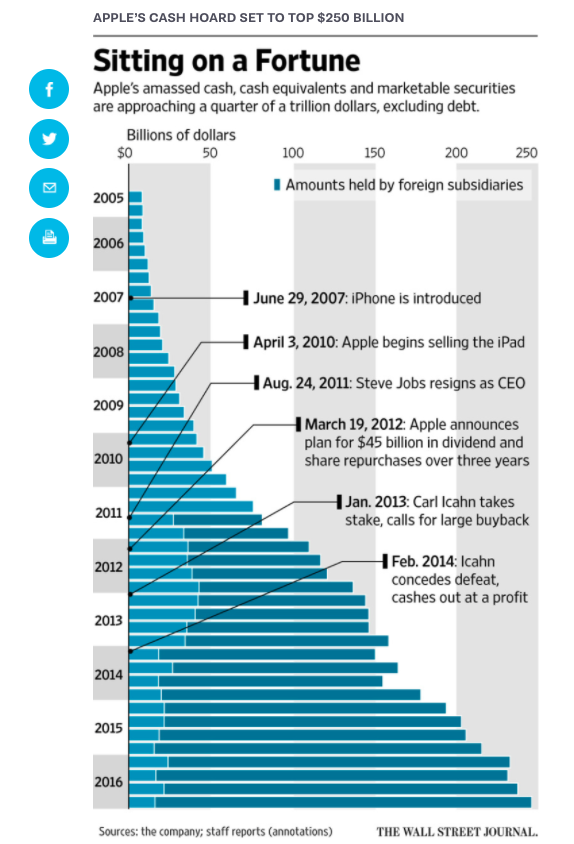
Financial analysts often refer to both “gross cash” and “net cash.” Gross cash refers to the total amount of cash, cash equivalents, and marketable securities held by the company. As of recent filings, this figure has often been in the range of hundreds of billions of dollars. However, Apple also strategically utilizes debt, primarily to fund share repurchases and dividend payments without repatriating offshore cash (which historically incurred significant tax penalties). Net cash, therefore, subtracts the total debt from the gross cash. For several years, Apple actively reduced its net cash position, often aiming for a “net cash neutral” position, meaning its cash holdings roughly equaled its debt. This strategy aimed to maximize shareholder returns through leveraging its balance sheet. However, more recent trends have seen a slight re-accumulation of net cash as the company continues to generate immense free cash flow.
A Historical Perspective on Apple’s Cash Accumulation
Apple’s cash pile began its dramatic ascent in the 2000s, propelled by the unparalleled success of the iPod, iPhone, and iPad. For years, the company accumulated cash at an astonishing rate, often exceeding the GDP of many small nations. This accumulation was largely driven by robust product sales, high profit margins, and a cautious approach to capital deployment in its earlier growth phases. A significant portion of this cash was held offshore to minimize tax liabilities under previous U.S. tax laws. While tax reforms (like the Tax Cuts and Jobs Act of 2017) eased the repatriation of foreign earnings, Apple still maintains a globally distributed cash management strategy, and its financial flexibility remains a cornerstone of its competitive advantage. The ability to generate consistent and substantial free cash flow, year after year, ensures that this financial fortress is continuously replenished.
The Strategic Purpose of Apple’s Vast Cash Pile
A company doesn’t simply hoard hundreds of billions of dollars for the sake of it. Apple’s vast cash reserves are not inert; they are a critical strategic asset deployed to safeguard its future, fuel innovation, and deliver shareholder value.
Fueling Innovation and R&D Investments
At its core, Apple is an innovation company. Its substantial cash reserves allow for massive, sustained investments in research and development (R&D) without external financial constraints. These investments are crucial for developing future products, improving existing technologies, and exploring entirely new market segments, from augmented reality to automotive projects. The ability to fund long-term, high-risk R&D projects is a distinct competitive advantage, ensuring Apple remains at the forefront of technological advancement regardless of immediate market pressures. This allows for multi-year development cycles for groundbreaking products without short-term profitability concerns.
Strategic Acquisitions and Ecosystem Expansion
While Apple is not known for frequent, large-scale acquisitions in the same vein as some other tech giants, its cash reserves provide the firepower for strategic purchases when opportunities arise. These acquisitions often focus on intellectual property, specific technologies (like AI or chip design firms), or talent to bolster its ecosystem and services. Smaller, “acqui-hires” of startups with promising tech or teams are more common. The cash ensures that Apple can act decisively to acquire critical components, software capabilities, or content that enhances its product offerings and reinforces its integrated ecosystem, thereby reducing reliance on third-party suppliers or competitors.
Shareholder Returns: Dividends and Buybacks
A significant portion of Apple’s cash flow is returned to shareholders through two primary mechanisms: dividends and share repurchases. Apple initiated a dividend program in 2012 and has consistently increased it, making it one of the largest dividend payers globally. More notably, the company has engaged in aggressive share buyback programs, repurchasing hundreds of billions of dollars worth of its own stock over the past decade. These buybacks reduce the number of outstanding shares, thereby increasing earnings per share (EPS) and often boosting stock price, demonstrating a strong commitment to shareholder value and capital efficiency. This strategy effectively utilizes capital that might otherwise sit idle or be less efficiently deployed.
Navigating Economic Downturns and Market Volatility
In an unpredictable global economy, a robust cash position acts as an invaluable buffer. Apple’s financial strength provides stability during economic downturns, supply chain disruptions, or periods of market volatility. It ensures the company can continue its operations, invest in its future, and maintain its workforce without resorting to emergency financing or drastic cost-cutting measures that might compromise its long-term vision. This financial resilience is a key factor in Apple’s enduring stability and attractiveness to investors, allowing it to weather storms that might cripple less capitalized companies.
Where Does Apple Keep Its Money? Global Cash Management
Managing hundreds of billions of dollars is a complex undertaking, particularly for a multinational corporation like Apple. The company’s cash management strategy is sophisticated, involving a global network of financial instruments and careful navigation of international tax laws.
The Challenge of International Cash Repatriation
Historically, a substantial portion of Apple’s cash was generated and held outside the United States. This was a common strategy for U.S. multinationals to defer U.S. corporate taxes on foreign earnings until those earnings were “repatriated” or brought back into the U.S. While the 2017 U.S. tax reform significantly altered this landscape, introducing a one-time repatriation tax and moving to a territorial tax system, Apple still manages its global cash strategically. This involves optimizing cash flows, managing foreign exchange risks, and ensuring liquidity across its various international operations to fund local investments and operations efficiently without unnecessary tax implications.
Investment Strategies for Cash Holdings
Apple doesn’t simply let its cash sit idly in bank accounts. Its treasury department actively invests these funds in a diversified portfolio of high-quality, short-term marketable securities. These typically include U.S. Treasury securities, corporate bonds, commercial paper, and other highly liquid investments. The primary goals are capital preservation and liquidity, followed by generating a modest return. While the returns on these types of investments are relatively low compared to Apple’s operating profits, on hundreds of billions of dollars, even a small percentage yield translates into billions of dollars in investment income annually, contributing significantly to its overall profitability.
Debt Management Amidst Abundant Cash
Paradoxically, despite having immense cash reserves, Apple also carries a substantial amount of debt, often exceeding $100 billion. This strategy might seem counterintuitive, but it’s financially astute. Apple has historically issued debt at very low interest rates, taking advantage of its strong credit rating. This allows it to fund shareholder returns (like buybacks and dividends) and U.S. operations with cheaper U.S. debt, rather than repatriating offshore cash that might have incurred higher tax costs under previous tax regimes. Moreover, holding cash (especially foreign cash) and issuing debt provides greater financial flexibility and optionality in a dynamic global financial environment.
The Financial Health Beyond Just Cash: A Broader Perspective
While cash is a vital metric, a holistic understanding of Apple’s financial strength requires looking at its overall financial health, encompassing revenue generation, profitability, and operational efficiency.
Revenue Streams and Profitability Drivers
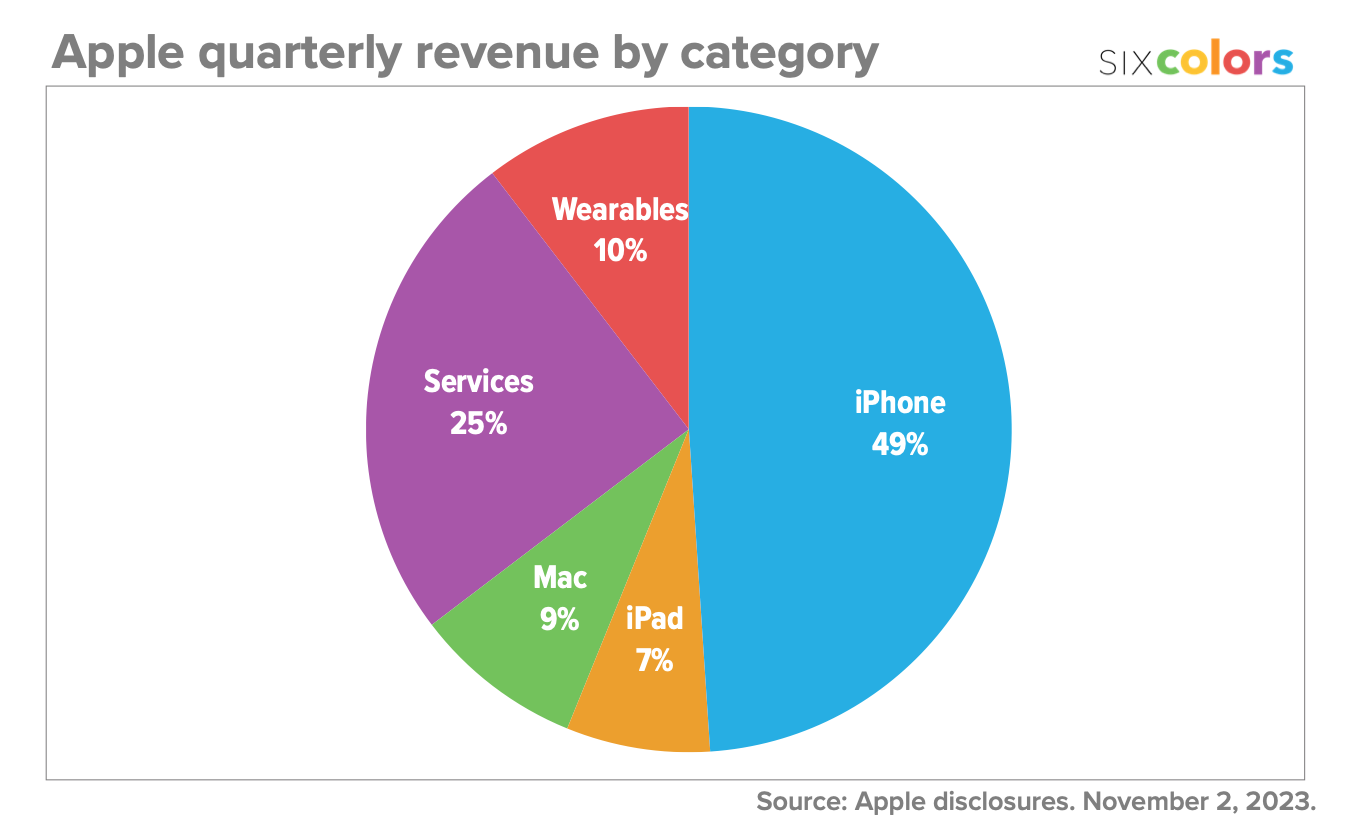
Apple’s financial power is fundamentally driven by its ability to generate massive revenues and high profit margins. While iPhone sales remain the largest contributor, the company has successfully diversified its revenue streams. The Services segment (App Store, Apple Music, iCloud, Apple Pay, advertising, warranty plans, etc.) has grown exponentially, becoming a significant and high-margin revenue source. Wearables, Home, and Accessories (Apple Watch, AirPods) also represent a rapidly expanding and profitable segment. This diversification makes Apple less reliant on a single product cycle and provides more stable, recurring revenue, strengthening its overall financial resilience.
Supply Chain Finance and Working Capital Management
Apple’s legendary operational efficiency extends to its supply chain and working capital management. The company maintains tight control over its inventory, accounts receivable, and accounts payable. Its ability to command favorable terms with suppliers, coupled with rapid inventory turnover, means it often receives cash from customers before it has to pay its suppliers. This “negative working capital cycle” effectively means its suppliers are financing a portion of Apple’s operations, a testament to its immense market power and a significant source of free cash flow. This operational excellence ensures capital is not tied up unnecessarily in inventory or receivables.
Long-Term Investments and Future Growth Catalysts
Beyond liquid cash, Apple also makes long-term investments in its future, including capital expenditures on manufacturing facilities, data centers, and retail stores. These investments are crucial for scaling its operations, enhancing its infrastructure, and supporting its global expansion. Furthermore, a substantial portion of its resources is allocated towards developing new technologies and services, which are the growth catalysts for future revenue streams. This forward-looking financial commitment ensures Apple’s long-term viability and growth trajectory.
The Implications of Apple’s Financial Power
Apple’s immense financial resources have far-reaching implications, influencing everything from market dynamics to regulatory scrutiny and its overall corporate identity.
Market Influence and Competitive Advantage
Apple’s financial might gives it unparalleled leverage in the market. It can command advantageous terms from suppliers, outspend competitors in R&D, marketing, and talent acquisition, and weather economic downturns more effectively. This financial strength translates directly into a significant competitive advantage, solidifying its position as a market leader across multiple industries. Its ability to self-fund almost any venture gives it an independence few companies can match.
Investor Confidence and Valuation
For investors, Apple’s robust balance sheet and consistent cash generation are a source of immense confidence. The company is often viewed as a safe haven due to its stability and predictability of earnings, attracting a broad base of institutional and retail investors. This confidence contributes to its high market valuation, enabling it to access capital markets at extremely favorable rates should the need arise. Its consistent shareholder returns further cement this investor loyalty.
Regulatory Scrutiny and Public Perception
The sheer scale of Apple’s financial power also attracts significant regulatory scrutiny, particularly regarding antitrust concerns, tax practices, and market dominance. Governments and consumer groups worldwide often question the influence wielded by such a financially powerful entity. From a public perception standpoint, the vast wealth also sparks debates about corporate responsibility, wealth distribution, and the role of mega-corporations in society. Managing this public and regulatory perception is an ongoing challenge for a company of Apple’s financial magnitude.
In conclusion, understanding “how much money Apple has” is far more than glancing at a single number. It involves appreciating the strategic deployment of hundreds of billions of dollars in cash, debt, and investments, meticulously managed to fuel innovation, reward shareholders, and maintain an unparalleled competitive edge. Apple’s financial fortress is not just a testament to its past successes but a dynamic engine driving its future growth and cementing its enduring position at the apex of the global economy, all while navigating the complexities of modern corporate finance.
aViewFromTheCave is a participant in the Amazon Services LLC Associates Program, an affiliate advertising program designed to provide a means for sites to earn advertising fees by advertising and linking to Amazon.com. Amazon, the Amazon logo, AmazonSupply, and the AmazonSupply logo are trademarks of Amazon.com, Inc. or its affiliates. As an Amazon Associate we earn affiliate commissions from qualifying purchases.