
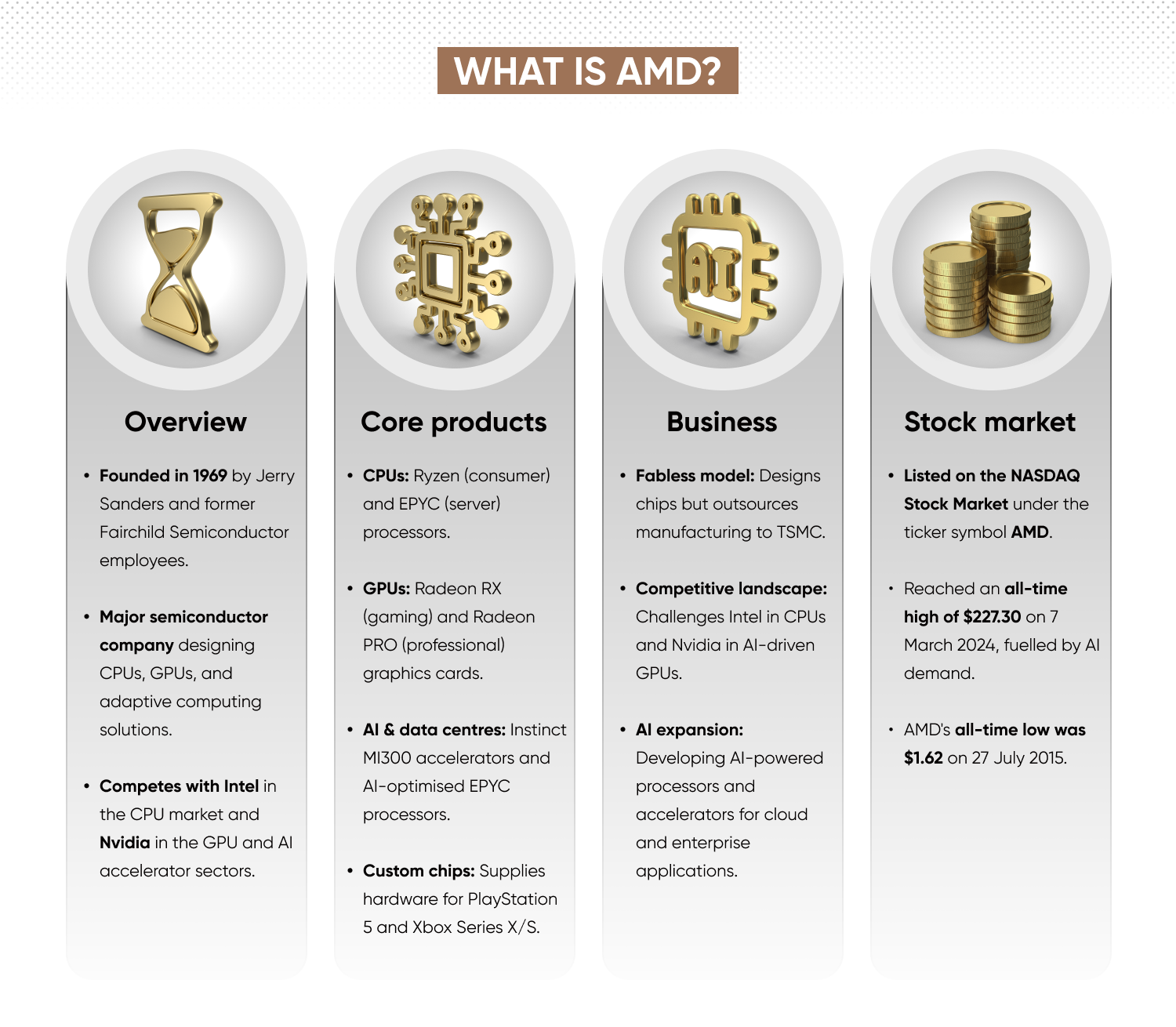
Advanced Micro Devices (AMD) is a global semiconductor company that has been a foundational pillar of the technology industry for over five decades. While often recognized as a formidable competitor to Intel in the CPU market and NVIDIA in the GPU space, AMD’s influence extends far beyond mere rivalry. At its core, AMD designs and develops high-performance central processing units (CPUs), graphics processing units (GPUs), chipsets, and other integrated solutions that power a vast array of modern electronic devices, from personal computers and gaming consoles to enterprise servers and supercomputers. Its relentless pursuit of innovation has not only shaped the landscape of computing but continues to drive advancements across virtually every sector reliant on digital processing.
A Legacy of Innovation in Semiconductor Manufacturing
AMD’s journey is one marked by consistent technological breakthroughs and a persistent drive to challenge the status quo. Founded in 1969, the company began as a manufacturer of second-source semiconductor products before venturing into its own proprietary designs. This foundation instilled a deep-seated engineering culture, pushing the boundaries of silicon design and manufacturing processes.
From Early Beginnings to Global Powerhouse
In its early years, AMD primarily focused on microprocessors and memory chips, often acting as a second-source supplier for companies like Intel. However, the company soon began developing its own x86-compatible processors, laying the groundwork for its future as a direct competitor. Key milestones like the K5, K6, and Athlon processors in the 1990s and early 2000s demonstrated AMD’s capability to deliver high-performance alternatives, often at competitive prices. The acquisition of ATI Technologies in 2006 was a pivotal moment, integrating industry-leading graphics processing units into AMD’s portfolio and creating a comprehensive silicon powerhouse capable of producing both CPUs and GPUs—a unique advantage that few other companies possess. This vertical integration has been crucial to AMD’s strategic positioning, enabling it to offer more cohesive and optimized computing platforms.
The Core Business: CPUs and GPUs
At the heart of AMD’s operations are two primary product categories: Central Processing Units (CPUs) and Graphics Processing Units (GPUs). CPUs are the “brains” of a computer, responsible for executing instructions, performing calculations, and managing the overall flow of data. AMD’s CPUs, particularly its Ryzen and EPYC lines, are known for their strong multi-core performance and efficiency. GPUs, on the other hand, are specialized processors designed to rapidly manipulate and alter memory to accelerate the creation of images in a frame buffer intended for output to a display. AMD’s Radeon and Instinct GPUs excel at tasks requiring massive parallel processing, such as rendering complex graphics in video games, professional content creation, scientific simulations, and artificial intelligence workloads. Together, these two technologies form the bedrock of almost all modern computing.
Powering the Digital World: AMD’s Diverse Product Portfolio
AMD’s product portfolio is strategically designed to cater to a broad spectrum of computing needs, from individual consumers seeking powerful personal devices to global enterprises running massive data centers. This diversification allows AMD to have a hand in nearly every facet of the digital ecosystem.
Central Processing Units (CPUs): Ryzen and EPYC
AMD’s CPU offerings are segmented into distinct families, each optimized for specific applications:
- Ryzen: This is AMD’s flagship line of consumer CPUs, primarily designed for desktop PCs, laptops, and high-performance workstations. Ryzen processors have revitalized AMD’s presence in the consumer market, offering compelling performance for gaming, content creation (video editing, 3D rendering), and general productivity. They are celebrated for their multi-core prowess, which makes them highly efficient for demanding, multi-threaded applications.
- EPYC: Targeted at the server and data center market, EPYC processors are built for enterprise-grade workloads. They are designed for high core counts, robust security features, and immense memory bandwidth, making them ideal for cloud computing, virtualization, big data analytics, and high-performance computing (HPC) clusters. EPYC has rapidly gained market share in this critical sector, demonstrating AMD’s capability to deliver solutions that meet the stringent demands of modern data infrastructure.
Graphics Processing Units (GPUs): Radeon and Instinct
AMD’s GPU division is equally robust, offering solutions for both consumer entertainment and professional acceleration:
- Radeon: These discrete graphics cards are the go-to choice for PC gamers and creative professionals. Radeon GPUs deliver stunning visual fidelity and high frame rates for the latest video games, as well as accelerate tasks in graphic design, video editing, and 3D modeling applications.
- Instinct: This line of accelerators is specifically engineered for data centers, AI/machine learning, and high-performance computing. Instinct GPUs are optimized for parallel processing with massive compute power, enabling researchers and developers to train complex AI models, perform scientific simulations, and tackle some of the world’s most challenging computational problems.
Integrated Solutions and APUs
Beyond discrete CPUs and GPUs, AMD also develops Accelerated Processing Units (APUs). An APU integrates a CPU and a GPU onto a single die, providing a compact and efficient solution that excels in systems where space and power consumption are critical. These are commonly found in entry-level to mid-range laptops, small form-factor PCs, and some embedded systems, offering a balanced combination of processing and graphics capabilities without the need for a separate discrete GPU.
Custom Silicon for Consoles and More
A significant, though often less visible, part of AMD’s business involves designing custom silicon solutions. AMD is the exclusive provider of the APUs that power the latest generations of leading video game consoles, including Sony’s PlayStation and Microsoft’s Xbox. This means that millions of gamers worldwide rely on AMD technology every day for their entertainment. Additionally, AMD’s custom silicon extends to various embedded applications, from industrial control systems to automotive infotainment, showcasing its versatility and engineering prowess across diverse industries.
Pioneering Performance and Efficiency
AMD’s recent resurgence and success can be attributed to several architectural innovations that have redefined performance metrics and challenged established norms in semiconductor design.
Zen Architecture: The Resurgence of AMD
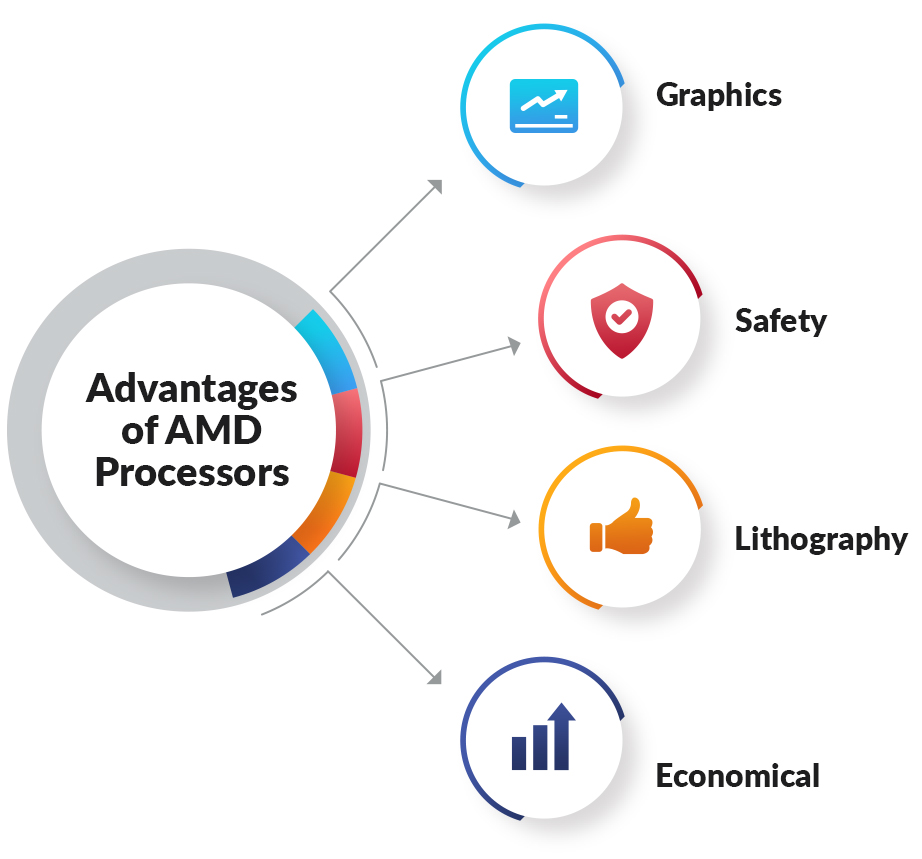
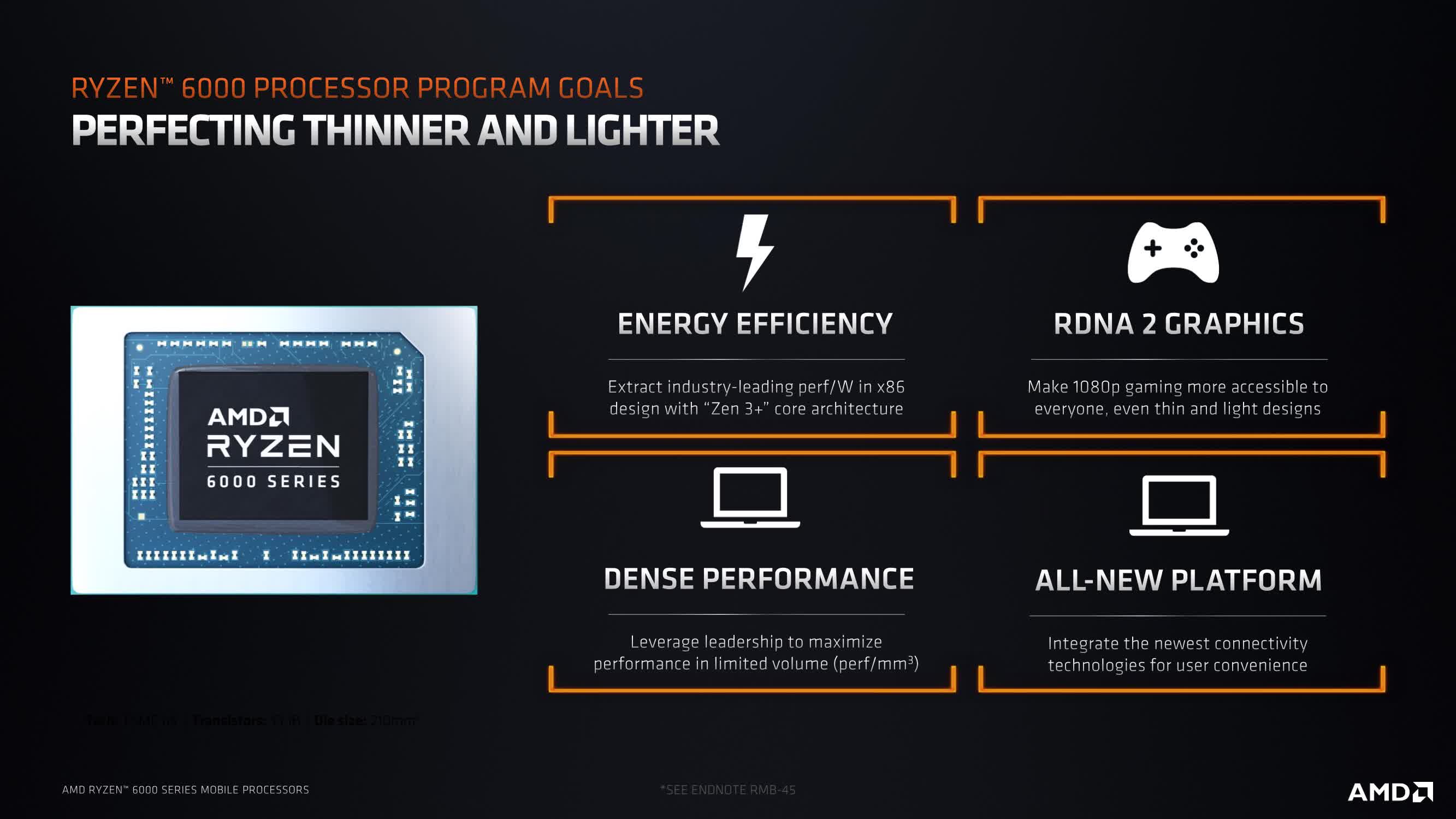
The introduction of the Zen microarchitecture in 2017 marked a pivotal moment for AMD. Zen was a complete ground-up redesign of AMD’s CPU architecture, focusing on improving instruction per cycle (IPC) performance and efficiency. This innovative design allowed AMD’s Ryzen processors to offer competitive, and in many cases superior, multi-threaded performance compared to rival offerings, effectively closing the performance gap that had persisted for years. Subsequent iterations, such as Zen 2, Zen 3, and Zen 4, have continued to refine and enhance this architecture, bringing further performance gains, improved power efficiency, and advanced features like chiplet design.
RDNA and CDNA Architectures: Advancing Graphics and AI
On the graphics front, AMD developed distinct architectures tailored for different workloads. The RDNA (Radeon DNA) architecture underpins its consumer Radeon GPUs, optimized for gaming performance, visual fidelity, and features like hardware-accelerated ray tracing. It focuses on maximizing clock speed and instruction throughput for graphics rendering. In parallel, the CDNA (Compute DNA) architecture powers its Instinct data center accelerators. CDNA is specifically designed for high-performance computing and artificial intelligence workloads, prioritizing raw compute throughput, memory bandwidth, and the efficiency of matrix operations crucial for machine learning tasks, rather than traditional graphics rendering.
Chiplet Design and Advanced Packaging
AMD has been a pioneer in implementing chiplet design, particularly with its Zen-based CPUs and some GPUs. Instead of fabricating a single, monolithic die for a processor with many cores, AMD designs smaller, modular “chiplets,” each containing a subset of cores or specific functionalities (like CPU cores or I/O controllers). These chiplets are then interconnected on a single package. This approach offers several advantages:
- Improved Manufacturing Yields: Smaller dies are easier to manufacture without defects.
- Scalability: Allows for flexible core counts and configurations.
- Cost-Effectiveness: Reduces the cost of producing high-core-count processors.
- Performance: Enables specialized silicon to be placed closer together, reducing latency.
This modular approach, combined with advanced packaging technologies, has been instrumental in AMD’s ability to deliver high-performance, high-core-count processors efficiently and economically.
AMD’s Impact on Modern Technology
AMD’s technological contributions are deeply embedded in the fabric of modern computing, influencing how we work, play, and innovate.
Empowering Gaming and Entertainment
For gamers, AMD is synonymous with immersive experiences. Its Radeon GPUs and Ryzen CPUs drive the latest gaming PCs, enabling ultra-high-definition graphics, smooth frame rates, and advanced features like AMD FidelityFX for enhanced visual fidelity. Furthermore, AMD’s custom silicon is the engine behind popular game consoles, ensuring that millions worldwide can enjoy cutting-edge interactive entertainment. This pervasive presence makes AMD a silent force behind much of the digital entertainment industry.
Fueling Data Centers and Cloud Computing
In the enterprise realm, AMD’s EPYC processors have become a dominant force in data centers and cloud infrastructure. Major cloud providers leverage EPYC’s high core counts, robust security features, and superior power efficiency to deliver scalable and cost-effective cloud services. This means that when you stream a movie, access a web application, or use online storage, there’s a significant chance that AMD technology is processing your data in a server somewhere.
Accelerating AI and Scientific Discovery
AMD’s Instinct accelerators are at the forefront of the artificial intelligence revolution and scientific research. They provide the raw computational power needed to train complex neural networks, accelerate drug discovery, perform climate modeling, and unlock new insights in various scientific fields. By providing powerful, open-source-friendly hardware and software platforms like ROCm, AMD is empowering researchers and developers to push the boundaries of AI and high-performance computing.
Shaping the Future of Embedded Systems
Beyond traditional computers and servers, AMD’s embedded solutions are increasingly found in a wide range of devices. From industrial automation and robotics to smart city infrastructure and next-generation automobiles, AMD’s processors offer the reliability, performance, and efficiency required for specialized, mission-critical applications. This expansion into edge computing and IoT further broadens AMD’s technological footprint.
The Road Ahead: AMD’s Future Innovations
AMD’s trajectory indicates a continued commitment to innovation and expansion into new technological frontiers. The company is poised to maintain its momentum by building upon its architectural strengths and exploring emerging market opportunities.
Continued Performance Leadership
AMD consistently invests heavily in research and development, with a clear roadmap for future generations of its Zen, RDNA, and CDNA architectures. These developments promise further gains in performance, power efficiency, and feature sets, ensuring that AMD remains at the cutting edge of CPU and GPU technology. Expect to see continued advancements in core counts, clock speeds, and specialized accelerators to meet ever-increasing computational demands.
Expanding into New Markets
Beyond its traditional strongholds, AMD is actively exploring and expanding into nascent but high-growth markets. This includes areas like automotive computing (for autonomous driving and advanced infotainment systems), edge computing (processing data closer to its source), and specialized computing for defense and aerospace. These new ventures represent significant opportunities for AMD to apply its expertise in high-performance, power-efficient silicon to solve complex problems in diverse industries.
Software Ecosystem and Open Standards
Recognizing that hardware is only as good as the software that runs on it, AMD is heavily investing in its software ecosystem. Initiatives like ROCm (Radeon Open Compute platform) provide an open-source alternative for GPU programming, fostering innovation and making its accelerators more accessible to a broader community of developers and researchers. AMD’s commitment to open standards and robust software support is crucial for its long-term success, especially in competitive fields like AI and HPC.
In conclusion, AMD is far more than just a chip manufacturer; it is a vital enabler of modern technology. From powering the most thrilling gaming experiences and facilitating complex scientific discoveries to underpinning the global cloud infrastructure, AMD’s innovative CPUs, GPUs, and custom silicon solutions are indispensable. Its legacy of challenging giants, coupled with a forward-looking approach to architecture and market expansion, solidifies AMD’s position as a critical force driving the future of computing and digital innovation across the globe.
aViewFromTheCave is a participant in the Amazon Services LLC Associates Program, an affiliate advertising program designed to provide a means for sites to earn advertising fees by advertising and linking to Amazon.com. Amazon, the Amazon logo, AmazonSupply, and the AmazonSupply logo are trademarks of Amazon.com, Inc. or its affiliates. As an Amazon Associate we earn affiliate commissions from qualifying purchases.