
Navigating the landscape of car financing can often feel like deciphering a complex financial puzzle. Among the many variables, the interest rate stands out as one of the most crucial, directly impacting the total cost of your vehicle and your monthly payments. Understanding how interest rates are calculated, what influences them, and how to effectively manage them is not just about saving money; it’s about making an informed financial decision that aligns with your long-term goals. This comprehensive guide will demystify car loan interest rates, providing you with the knowledge and tools to confidently approach your next vehicle purchase.
Understanding the Fundamentals of Car Loan Interest
Before diving into calculations, it’s essential to grasp the core concepts that define a car loan’s interest. A clear understanding of these terms will empower you to interpret loan offers and make sound financial judgments.
What is an Interest Rate (APR vs. Nominal Rate)?
At its most basic, an interest rate is the cost of borrowing money, expressed as a percentage of the principal (the amount borrowed). However, it’s crucial to distinguish between the nominal interest rate and the Annual Percentage Rate (APR).
The nominal interest rate is the stated rate that the lender charges on the principal. It doesn’t typically include other fees associated with the loan.
The Annual Percentage Rate (APR), on the other hand, is a more comprehensive measure of the cost of borrowing. It includes not only the nominal interest rate but also other fees and charges that a lender might impose, such as administrative fees, origination fees, or closing costs. For car loans, the APR is the most important figure to consider because it reflects the true annual cost of your loan. When comparing loan offers, always use the APR for an accurate apples-to-apples comparison.
Key Terms: Principal, Term, and Monthly Payment
- Principal: This is the initial amount of money you borrow to purchase the car. If the car costs $30,000 and you make a $5,000 down payment, your principal loan amount will be $25,000.
- Loan Term: This refers to the duration over which you agree to repay the loan, typically expressed in months (e.g., 36, 48, 60, 72, or even 84 months). A longer loan term usually results in lower monthly payments but often means you’ll pay more in total interest over the life of the loan. Conversely, a shorter term means higher monthly payments but less total interest paid.
- Monthly Payment: This is the fixed amount you pay back to the lender each month. Each payment consists of a portion that reduces your principal balance and a portion that covers the interest accrued since your last payment.
Why Interest Rates Vary
Interest rates on car loans are not arbitrary; they are influenced by a multitude of factors, both personal and market-driven. Understanding these variables can help you anticipate the kind of rate you might qualify for and take steps to improve your position. Key factors include your credit score, the loan term, the down payment, current market conditions, and even the type of vehicle. We will explore these factors in more detail later, but knowing that they exist is the first step towards understanding why one person’s rate might differ significantly from another’s.
Demystifying Car Loan Interest Rate Calculation: Tools and Techniques
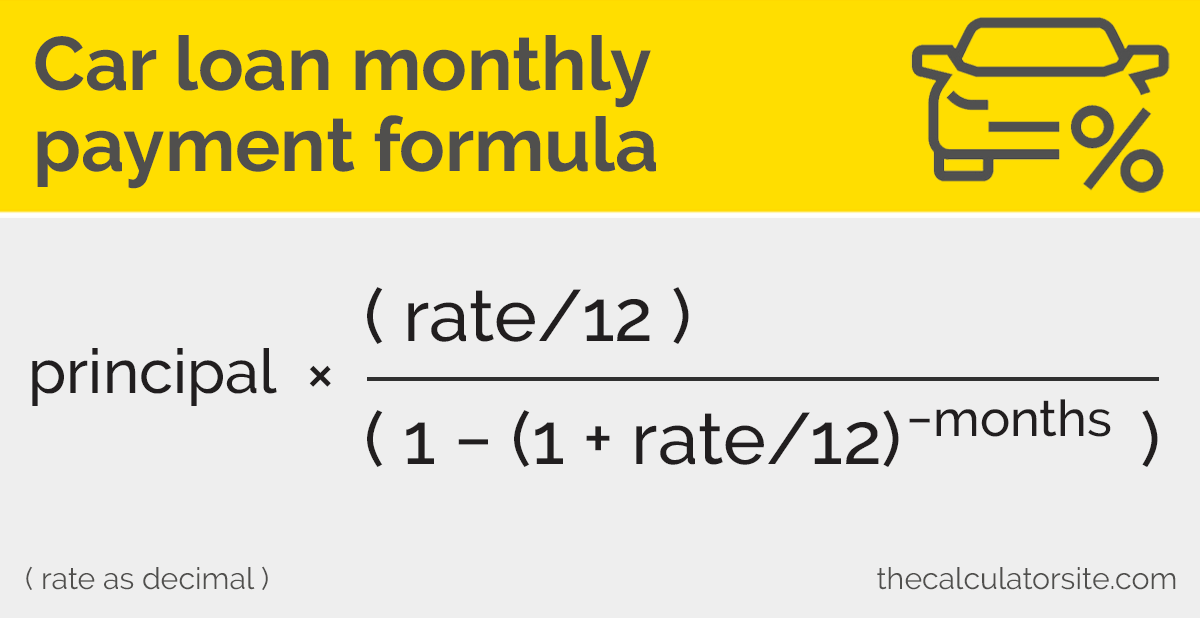
While lenders provide the interest rate (APR) to you, understanding how it translates into your monthly payments and total interest paid is crucial. Calculating the exact APR on an amortizing loan (where each payment gradually reduces the principal) can be mathematically complex using a formula alone. However, consumers primarily need to understand what the given APR means for their finances and how to verify it.
Understanding the APR: Your True Cost
As discussed, the APR represents the total cost of borrowing, expressed as an annual percentage. When you receive a loan offer, the APR is the most critical number to scrutinize. A lower APR directly translates to less money paid in interest over the life of the loan. Even a seemingly small difference in APR (e.g., 0.5% or 1%) can result in hundreds, or even thousands, of dollars saved over a typical 5-7 year car loan. It’s not about “calculating” the APR yourself from scratch (unless you are a financial analyst); it’s about understanding and comparing the APRs presented by different lenders.
Leveraging Online Amortization Calculators
For practical purposes, online car loan calculators are your best friend. These tools simplify the complex math involved in amortizing loans and allow you to quickly see the impact of different interest rates, loan terms, and principal amounts.
To use an online calculator, you’ll typically input:
- Loan Principal: The amount you wish to borrow.
- APR: The interest rate quoted by the lender.
- Loan Term: The number of months you’ll be repaying the loan.
The calculator will then instantly display your estimated monthly payment and the total interest you will pay over the life of the loan. This is an invaluable way to compare different scenarios – for example, how a lower APR from one lender versus a longer term from another might affect your bottom line.
Spreadsheet Power: Calculating Total Interest
For those who prefer a more hands-on approach or want to create their own customizable scenarios, a spreadsheet program like Microsoft Excel or Google Sheets can be incredibly powerful. You can use built-in financial functions to calculate monthly payments and total interest.
The primary function you’d use is PMT (Payment).
The syntax is typically PMT(rate, nper, pv, [fv], [type]) where:
rate: The interest rate per period (APR/12 for monthly payments).nper: The total number of payments for the loan (loan term in months).pv: The present value, or the principal loan amount.fv: [Optional] The future value, or a cash balance you want to attain after the last payment (usually 0 for loans).type: [Optional] When payments are due (0 for end of period, 1 for beginning).
Once you calculate thePMT(your monthly payment), you can then determine the total amount paid by multiplying the monthly payment by the total number of payments (PMT * nper). Finally, subtract the original principal loan amount from the total amount paid to find the total interest paid.
For example, if you borrow $25,000 at 5% APR over 60 months:rate= 0.05 / 12nper= 60pv= -25000 (negative because it’s an outflow)
ThePMTfunction would give you the monthly payment. Then:
Total Paid = Monthly Payment * 60
Total Interest = Total Paid – $25,000
Verifying Your Loan Offer
If you have a loan offer in hand and want to verify the APR, you can use the RATE function in a spreadsheet, though it’s more complex as it requires iterative calculations. A simpler approach for verification is to plug the stated principal, term, and APR from the lender into an online calculator or your own spreadsheet setup (using the PMT function). If the monthly payment generated by your tool matches the monthly payment quoted by the lender, then the APR and other terms are consistent. Discrepancies might indicate an error or hidden fees, prompting further inquiry with the lender.
Factors Influencing Your Car Loan Interest Rate
Several key factors determine the interest rate you’ll be offered on a car loan. Understanding these can help you position yourself to secure the most favorable terms.
Credit Score
Your credit score is arguably the most significant factor influencing your interest rate. Lenders use your credit score (e.g., FICO Score) as a primary indicator of your creditworthiness – essentially, how likely you are to repay the loan on time. Borrowers with excellent credit scores (typically 760-850) are considered low-risk and usually qualify for the lowest interest rates. Those with good (700-759), fair (650-699), or poor (below 650) credit scores will generally face higher interest rates because lenders perceive a greater risk of default. Improving your credit score before applying for a loan is one of the most effective ways to reduce your borrowing costs.
Loan Term (Shorter vs. Longer)
The length of your loan repayment period also plays a crucial role. Shorter loan terms (e.g., 36 or 48 months) typically come with lower interest rates because the lender’s risk is reduced over a shorter period. While these terms mean higher monthly payments, you’ll pay significantly less in total interest. Conversely, longer loan terms (e.g., 72 or 84 months) offer lower monthly payments, making the vehicle seem more affordable. However, lenders often charge higher interest rates for these extended terms to compensate for the increased risk over time, resulting in substantially more total interest paid.
Down Payment
Making a larger down payment reduces the amount you need to borrow (the principal). This not only lowers your monthly payments but can also positively impact your interest rate. Lenders view a substantial down payment as a sign of financial stability and commitment, reducing their risk exposure. A larger down payment means you’re financing less of the vehicle’s value, which can translate into a more favorable interest rate.
Vehicle Type (New vs. Used)

The type of vehicle you’re financing can also affect your interest rate. New car loans often come with lower interest rates compared to used car loans. This is partly because new cars are seen as less risky collateral by lenders; they depreciate predictably and are often covered by warranties. Used cars, especially older models, are considered higher risk due to potential mechanical issues and more variable depreciation, which can lead to higher interest rates.
Market Conditions and Lender Type
Broader economic conditions, such as the Federal Reserve’s interest rate policies, influence the base rates that lenders charge. When the Fed raises rates, borrowing costs generally increase across the board, including for car loans.
Furthermore, the type of lender matters. Banks, credit unions, and dealership financing each have their own lending criteria and rate structures. Credit unions, for instance, are often known for offering competitive rates due to their member-focused structure. Dealerships might offer promotional low APRs from captive finance companies, but these are usually reserved for highly qualified buyers.
Strategies for Securing a Lower Interest Rate
Armed with the knowledge of how interest rates work and what influences them, you can proactively employ strategies to secure the most favorable terms for your car loan.
Improve Your Credit Score
This is paramount. Before you even start car shopping, pull your credit reports and scores. Dispute any inaccuracies and take steps to improve your score if needed. This could include paying down existing debts, making all payments on time, and avoiding opening new credit lines. Even a small bump in your credit score can translate into significant savings on interest over the life of your loan.
Shop Around for Lenders (Get Pre-Approved)
Never settle for the first loan offer you receive, especially from the dealership. It’s highly recommended to get pre-approved for a loan from at least 2-3 different lenders (banks, credit unions, online lenders) before you visit the dealership. Pre-approvals give you a concrete interest rate offer, which you can then use as leverage to negotiate with the dealership’s finance department. This empowers you to compare rates effectively and ensures you walk into the dealership with a strong negotiating position.
Make a Larger Down Payment
As discussed, a larger down payment reduces your loan principal and signals financial stability to lenders. Aim to put down at least 10-20% of the vehicle’s price if possible. This not only lowers your monthly payment and total interest but can also help you qualify for a better interest rate.
Choose a Shorter Loan Term (If Affordable)
While longer loan terms offer lower monthly payments, they almost always result in paying significantly more interest overall. If your budget allows, opt for the shortest loan term you can comfortably afford. This strategy not only saves you money on interest but also helps you build equity in your vehicle faster.
Negotiate with the Dealership/Lender
Don’t be afraid to negotiate the interest rate. If you have a pre-approved offer from another lender, present it to the dealership. They may be willing to match or even beat it to earn your business, especially if they are trying to hit sales targets. Remember, the interest rate is a negotiable component of your car purchase.
Consider a Co-signer
If you have a limited credit history or a less-than-stellar credit score, a co-signer with excellent credit can significantly improve your chances of securing a lower interest rate. A co-signer agrees to be legally responsible for the loan if you default, reducing the lender’s risk. However, this is a serious commitment for the co-signer and should only be considered with careful thought and clear communication.
The Long-Term Impact of Interest Rates
Understanding and managing your car loan interest rate isn’t just about the immediate savings; it has profound long-term implications for your financial health.
Total Cost of the Loan
The interest rate directly determines the total amount you will pay for your car over the life of the loan. A higher interest rate means a significantly larger portion of your monthly payments will go towards interest rather than reducing your principal. Over a 5-7 year loan term, the difference between a 3% APR and a 7% APR on a $30,000 loan can amount to several thousands of dollars in extra payments. This money could otherwise be used for savings, investments, or other financial goals.
Monthly Payment Affordability
While a lower interest rate can make a car more affordable in the long run, it also impacts your monthly cash flow. A slightly higher interest rate can push your monthly payment beyond your comfortable budget, potentially straining your finances and making it harder to meet other financial obligations. Conversely, securing a lower rate helps keep your monthly obligations manageable, contributing to overall financial stability.
Equity Building
Equity is the portion of your car’s value that you own outright (value of car – outstanding loan balance). A lower interest rate means more of your early payments go towards reducing the principal, allowing you to build equity faster. This is beneficial because it reduces the risk of being “upside down” on your loan (owing more than the car is worth), which can be a problem if you need to sell or trade in your car prematurely.
Opportunity Cost
Every dollar spent on high interest is a dollar that cannot be invested, saved, or used for wealth creation. The opportunity cost of a high interest rate is the lost potential earnings from that money. By securing a low interest rate, you free up more of your income to work for you, contributing to your long-term financial growth and security.
Conclusion
Calculating the interest rate on a car loan, for the average consumer, isn’t about deriving the percentage from raw numbers; it’s about comprehending the given Annual Percentage Rate (APR) and understanding its profound impact on your overall financial health. By familiarizing yourself with key financial terms, utilizing online calculators, understanding the factors that influence rates, and employing smart strategies for securing better terms, you empower yourself to make intelligent decisions. A car loan is often one of the largest debts many individuals undertake, second only to a mortgage. Approaching it with knowledge and due diligence will not only save you money but also set a strong foundation for a more secure financial future. Always remember: shop around, understand the numbers, and negotiate for the best deal possible.
aViewFromTheCave is a participant in the Amazon Services LLC Associates Program, an affiliate advertising program designed to provide a means for sites to earn advertising fees by advertising and linking to Amazon.com. Amazon, the Amazon logo, AmazonSupply, and the AmazonSupply logo are trademarks of Amazon.com, Inc. or its affiliates. As an Amazon Associate we earn affiliate commissions from qualifying purchases.