
In the span of a single decade, the paradigm of media consumption has undergone a radical transformation. We have transitioned from the era of linear broadcasting—where viewers were beholden to rigid schedules and physical transmission towers—to an era of on-demand digital delivery. At the heart of this revolution is “TV streaming.” While the term is often used colloquially to describe watching Netflix or YouTube, from a technical perspective, streaming represents a sophisticated orchestration of data packets, cloud computing, and advanced compression algorithms.
To understand what TV streaming truly is, one must look beyond the user interface. It is a continuous transmission of audio and video files from a server to a client device, allowing the content to be played in real-time without requiring the file to be fully downloaded first. This technological shift has not only changed how we watch television but has also redefined the infrastructure of the modern internet.

The Mechanics of Modern Media: How Streaming Works Under the Hood
Unlike traditional downloading, where a file must be entirely saved to a hard drive before it can be accessed, streaming relies on a “just-in-time” delivery system. This process involves several layers of high-level software engineering and hardware optimization.
Data Packets and Real-Time Transmission
When you press “play” on a streaming service, the source video is broken down into small data packets. These packets are transmitted via the Internet Protocol (IP) across various networks. The receiving device (a smart TV, smartphone, or laptop) collects these packets and reassembles them into a coherent video stream. Because the device only needs to store a few seconds of data ahead of the current playback point—a process known as “buffering”—the viewer experiences near-instantaneous playback.
The Role of Codecs and Compression
Raw 4K video files are massive, often reaching several terabytes for a full-length feature film. Transmitting such data over standard home internet connections would be impossible without codecs (Coder-Decoders). Technologies like H.264 (AVC), H.265 (HEVC), and the newer AV1 are essential. These algorithms identify redundant information within video frames—such as a static blue sky—and compress it, significantly reducing the file size while maintaining high visual fidelity. The efficiency of these codecs is a primary driver in the industry’s ability to offer 4K and HDR (High Dynamic Range) content over average broadband speeds.
Buffering and Adaptive Bitrate Streaming (ABS)
One of the most critical technical innovations in TV streaming is Adaptive Bitrate Streaming (ABS). This technology monitors the user’s internet connection speed and processing power in real-time. If the bandwidth drops, the streaming client automatically requests a lower-resolution version of the next few seconds of video to prevent the stream from stopping entirely. This is why a video might look “blurry” for a few seconds before snapping back into high definition; the software is dynamically balancing quality against continuity.
The Infrastructure of Content Delivery Networks (CDNs)
If every Netflix user in the world tried to pull data from a single central server in California, the global internet would collapse under the strain. To solve this, streaming providers utilize Content Delivery Networks (CDNs).
Reducing Latency through Proximity
A CDN is a geographically distributed group of servers that work together to provide fast delivery of internet content. In the context of TV streaming, a provider will store copies of their library on “edge servers” located in data centers around the world. When a viewer in London requests a show, the data is served from a local London-based server rather than one across the Atlantic. This drastically reduces latency—the delay between the request and the start of playback—and minimizes network congestion.
Edge Computing in Video Delivery
The evolution of CDNs has led to “edge computing,” where some of the data processing happens at the edge of the network, closer to the user. This is particularly vital for live-streamed events, such as sports or breaking news. Managing millions of concurrent viewers for a live event requires massive technical coordination to ensure the “live” feed isn’t delayed by several minutes compared to traditional cable or satellite broadcasts.
Software Ecosystems and Streaming Protocols
The “TV” in TV streaming no longer refers solely to the physical hardware in the living room; it refers to the software ecosystems that facilitate the experience. This involves a complex interplay of protocols and operating systems.
HTTP Live Streaming (HLS) vs. DASH
The two most dominant protocols for delivering video are HLS (developed by Apple) and MPEG-DASH (an international standard). These protocols dictate how video is sliced into segments and how the client device should request them. HLS is the industry leader due to its wide compatibility with iOS and web browsers, while DASH offers an open-source, vendor-neutral alternative that provides high levels of customization for developers.
The Operating Systems of Modern Television
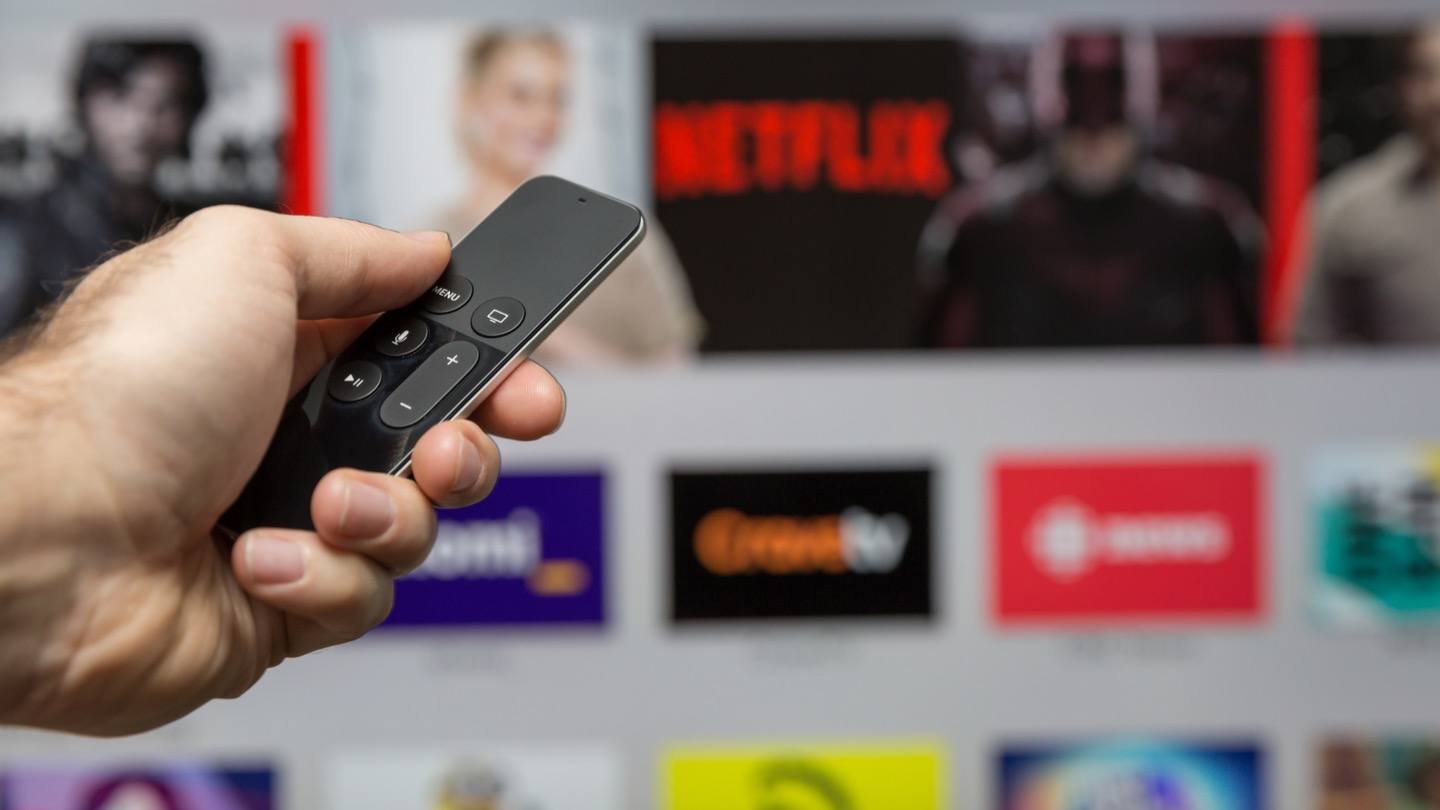
Modern TVs are essentially specialized computers. Operating systems like Google TV (Android TV), Roku OS, tvOS (Apple TV), and Tizen (Samsung) provide the framework for streaming apps to function. These OSs manage the hardware acceleration required to decode high-resolution video and handle the Digital Rights Management (DRM) layers that protect copyrighted content. The integration of “Universal Search” and voice-activated AI within these OSs allows for a seamless bridge between various technical platforms.
Hardware Innovations: From Set-Top Boxes to Smart Integration
While the software handles the logic, the hardware must handle the heavy lifting of data processing and signal output.
The Evolution of Streaming Hardware
Early streaming was confined to desktop computers. The introduction of dedicated streaming sticks (like the Amazon Fire Stick) and set-top boxes (like Apple TV 4K) brought high-performance processors to the back of the television. These devices feature dedicated SoCs (System on a Chip) designed specifically for video decoding and graphical rendering. They often outperform the built-in processors found in mid-range Smart TVs, providing a smoother user interface and faster app switching.
Wireless Standards: Wi-Fi 6 and the Impact of 5G
Streaming high-bitrate 4K or 8K content requires a robust local network. The move toward Wi-Fi 6 (802.11ax) has been instrumental in reducing interference in crowded residential areas, allowing for more stable wireless streaming. Simultaneously, the rollout of 5G technology is enabling “fixed wireless” streaming, where homes can access high-speed TV streaming via cellular networks, bypassing the need for traditional fiber or cable installations.
The Future of Streaming: AI, Personalization, and Higher Fidelity
As we look toward the future, the technology behind TV streaming is becoming increasingly sophisticated, moving beyond simple video delivery into the realms of artificial intelligence and ultra-high-fidelity immersion.
AI-Driven Upscaling and Recommendation Engines
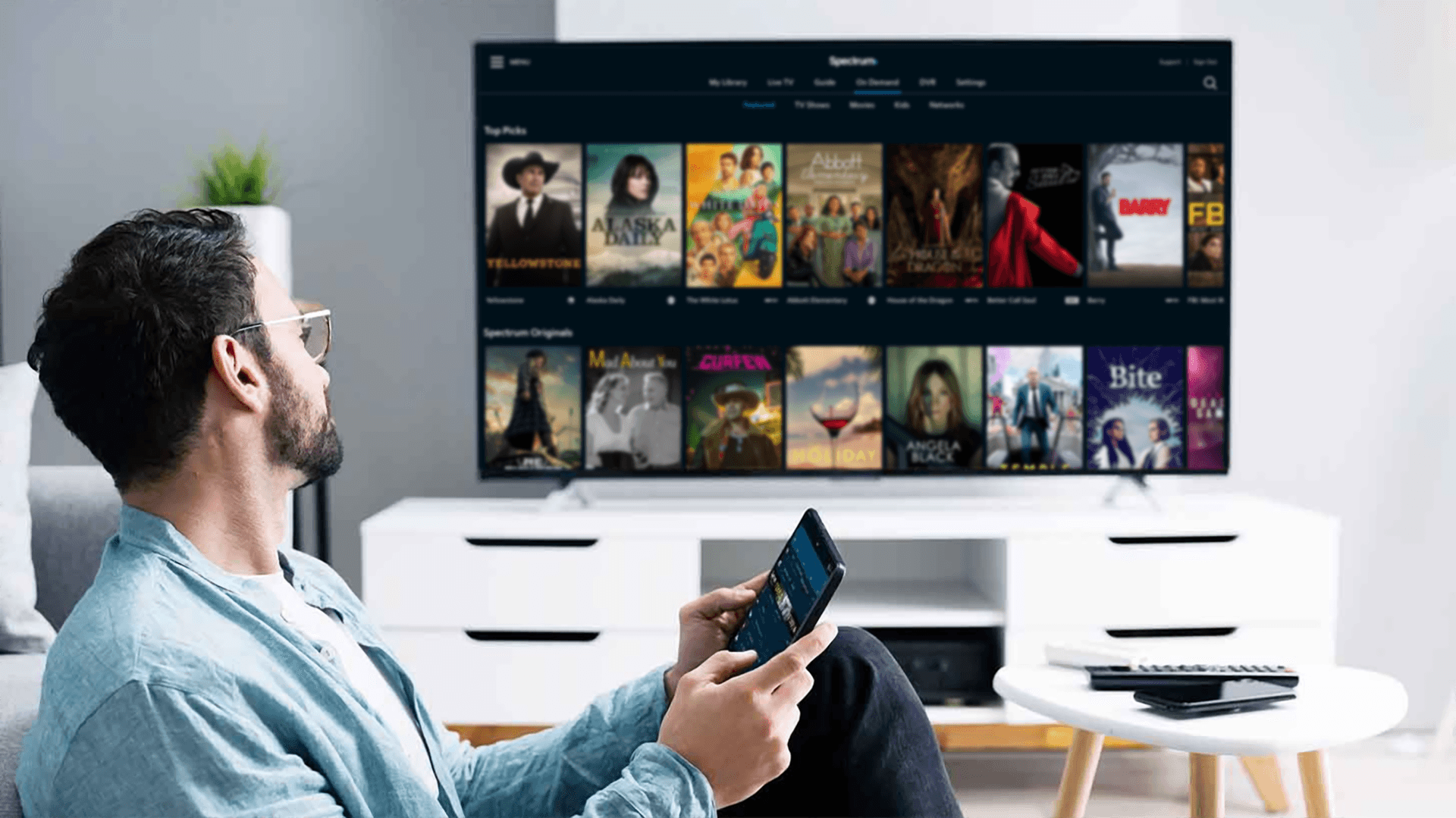
Artificial Intelligence is now being integrated directly into the streaming hardware. Devices like the Nvidia Shield use AI upscaling to take a 1080p stream and “reconstruct” it into 4K in real-time, sharpening edges and reducing noise. On the server side, AI-driven recommendation engines analyze billions of data points to predict what a user wants to watch next, reducing “choice fatigue” and increasing platform engagement.
The Path to Seamless 8K and Beyond
While 4K has become the standard, the industry is already preparing for 8K. This jump requires four times the data of 4K, necessitating even more efficient compression like VVC (Versatile Video Coding). Furthermore, the integration of Object-Based Audio (like Dolby Atmos) into streaming metadata ensures that the auditory experience is just as immersive as the visual one.
In conclusion, TV streaming is far more than a digital replacement for cable television. It is a pinnacle of modern software engineering that leverages cloud infrastructure, sophisticated data compression, and edge computing to deliver high-quality media to any screen on the planet. As internet speeds increase and AI-driven processing matures, the distinction between “streaming” and “reality” will continue to blur, offering viewers levels of immersion that were previously unimaginable. For the tech-savvy consumer, understanding these underlying layers is key to navigating the rapidly evolving landscape of digital entertainment.
aViewFromTheCave is a participant in the Amazon Services LLC Associates Program, an affiliate advertising program designed to provide a means for sites to earn advertising fees by advertising and linking to Amazon.com. Amazon, the Amazon logo, AmazonSupply, and the AmazonSupply logo are trademarks of Amazon.com, Inc. or its affiliates. As an Amazon Associate we earn affiliate commissions from qualifying purchases.