
The landscape of home entertainment has undergone a seismic shift over the last decade. The era of the clunky, proprietary cable box is rapidly fading, replaced by the agile, software-driven world of live TV streaming. For technology enthusiasts and casual viewers alike, the transition from linear cable to Internet Protocol Television (IPTV) and Over-the-Top (OTT) services represents more than just a change in how we pay for television—it is a fundamental evolution in how data is delivered, processed, and consumed.
Choosing the “best” streaming service for live TV is no longer a simple matter of counting channels. It involves evaluating cloud-based infrastructure, user interface (UI) responsiveness, streaming resolution capabilities, and the seamless integration of cross-platform applications. This guide analyzes the top contenders in the market through a technological lens, helping you identify which platform offers the most robust digital experience for your hardware ecosystem.
The Evolution of Live TV Technology
To understand why certain streaming services outperform others, we must first look at the underlying technology that powers them. Unlike traditional cable, which relies on dedicated coaxial or fiber-optic lines to deliver a constant stream of data, live TV streaming services utilize the open internet, presenting a unique set of engineering challenges.
From Linear Cable to Cloud-Based Ecosystems
Traditional television was a one-way street. Your cable provider sent a signal, and your tuner decoded it. Modern live TV streaming services function as complex cloud ecosystems. When you press “play” on a live broadcast, you are accessing a stream that has been encoded in real-time, distributed across a Content Delivery Network (CDN), and then decoded by your specific device—be it a smartphone, a web browser, or a 4K streaming stick. This shift allows for unprecedented features like “Start Over” (rewinding a live broadcast) and cloud-based DVRs that don’t require physical hard drives in your living room.
The Role of Content Delivery Networks (CDNs)
The difference between a glitchy, buffering experience and a seamless 1080p broadcast often comes down to the quality of the service’s CDN. Large-scale providers like Google (which owns YouTube TV) or Disney (which owns Hulu) have the advantage of massive, global infrastructure. By caching content closer to the end-user at various edge locations, these services reduce latency—the “delay” between a live event occurring and it appearing on your screen. This is particularly crucial for live sports, where even a 30-second delay can lead to spoilers via social media notifications.
Evaluating Platform Performance: Features and User Experience
In the tech world, hardware is only as good as the software that runs on it. When comparing live TV services, the sophistication of the application itself is a primary differentiator.
Cloud DVR Capacity and Management
The most significant technological leap from cable to streaming is the Cloud DVR. No longer limited by the storage space of a physical box, top-tier services now offer “unlimited” storage. However, the tech behind these DVRs varies. Some services utilize a “point-in-time” recording method, while others simply grant you access to a VOD (Video on Demand) version of the program. The best services, such as YouTube TV, provide a true recording that allows you to skip commercials and keep recordings for up to nine months, managed through a high-performance database that handles millions of concurrent requests.
Multistreaming and Concurrent User Access
The ability to handle multiple streams across different devices is a feat of session management. High-end services must track user authentication, geographical location (to enforce regional sports blackouts), and bandwidth allocation simultaneously. We look for services that offer at least three concurrent streams as a standard, utilizing robust APIs to ensure that adding a new device to the network doesn’t result in “maximum stream” errors or degraded video quality.
Intuitive UI/UX Design Trends
A streaming service is essentially a massive database of live and on-demand metadata. The User Interface (UI) must be able to sort, filter, and present this data with minimal input lag. The industry has moved toward “Live Guides” that mimic the familiarity of cable but enhance it with rich imagery, cast information, and algorithmic recommendations. The speed at which a guide populates and the fluidity of the animations are key indicators of a well-optimized app.
Top Tech Contenders in the Live Streaming Space
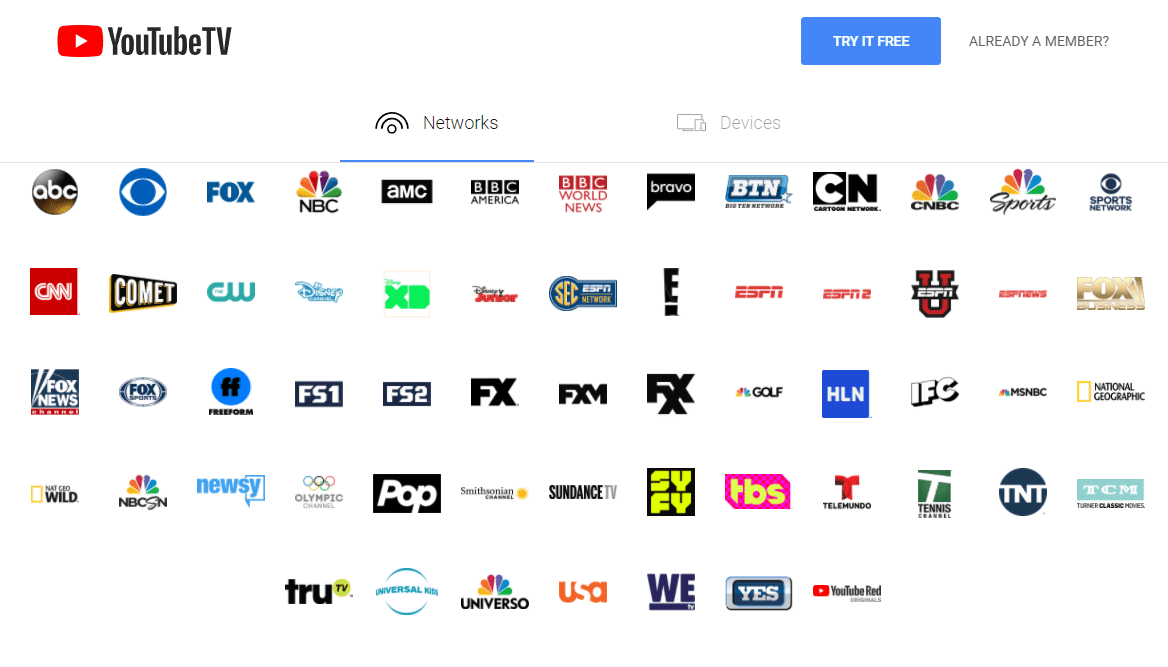
Several platforms have emerged as leaders by leveraging superior software engineering and infrastructure. Here is how the top players stack up from a technical perspective.
YouTube TV: The King of Integration and Reliability
YouTube TV is widely considered the gold standard of live TV tech. Built on Google’s world-class infrastructure, it offers the most stable stream in the industry with the lowest latency. Its “Key Plays” feature uses machine learning to identify significant moments in a sports game, allowing users to catch up quickly. Furthermore, its integration with the broader Google ecosystem—including Google Assistant and Chromecast—makes it a powerhouse for users already embedded in that tech stack.
Hulu + Live TV: Leveraging the Disney Ecosystem
Hulu + Live TV takes a different approach by merging a massive VOD library with a live broadcast engine. From a software perspective, Hulu’s greatest strength is its recommendation engine. By analyzing viewing habits across both live and on-demand content, it creates a highly personalized “My Stuff” section. While its UI can sometimes feel “heavy” on lower-powered devices like older smart TVs, its integration with Disney+ and ESPN+ through a single billing and authentication portal is a masterclass in platform synergy.
Sling TV: The Modular Tech Pioneer
Sling TV caters to the user who wants a lightweight, customizable experience. Technically, Sling is impressive because it can run efficiently on even the most basic hardware. It uses highly efficient compression codecs (like H.264 and increasingly H.265/HEVC) to deliver a clear picture even on slower internet connections. Its modular “Blue” and “Orange” architecture allows users to essentially “build” their own service, managed through a simplified back-end that focuses on core functionality over flashy extras.
FuboTV: Specialized Tech for Sports Enthusiasts
FuboTV has carved out a niche by focusing on high-bitrate streams and 4K content, specifically for sports. While many services cap their resolution at 720p or 1080i for live broadcasts, Fubo has been a leader in testing 4K HDR streams. This requires significantly more bandwidth and advanced decoding capabilities on the user’s device. Fubo also features a “Multiview” mode on Apple TV, allowing users to watch up to four live channels at once—a feature that pushes the limits of local device processing and network throughput.
Technical Requirements for a Seamless Streaming Experience
To truly unlock the potential of these services, your home network and hardware must be up to the task.
Bandwidth Management and Compression Codecs
While most services claim to work with speeds as low as 5 Mbps, a truly high-definition experience requires more. For a single 1080p stream, 10–15 Mbps is ideal to account for fluctuations in network traffic. If you are aiming for 4K, 25 Mbps is the minimum. Modern services use Adaptive Bitrate Streaming (ABS), which adjusts the quality of the video in real-time based on your connection speed. This tech prevents the video from stopping entirely (buffering), instead opting to lower the resolution momentarily until the connection stabilizes.
Hardware Synergy: Smart TVs vs. Streaming Dongles
Not all “Smart” platforms are created equal. The processors inside many budget smart TVs are often underpowered, leading to sluggish app performance. Tech enthusiasts generally recommend dedicated streaming hardware—such as the Apple TV 4K, NVIDIA Shield, or Roku Ultra. These devices feature dedicated GPUs and faster RAM, which allow for smoother navigation of the UI and faster app switching. Furthermore, using a device with an Ethernet port can significantly reduce jitter and latency compared to a Wi-Fi connection.
The Future of Live TV Tech: AI and Personalization
The next frontier for live streaming services lies in Artificial Intelligence and enhanced interactivity. We are moving away from a “passive” viewing experience toward one that is data-rich and highly tailored.
AI-Driven Recommendation Engines
Future iterations of these platforms will use AI not just to suggest what to watch, but to predict when you will watch it. By pre-caching the first few seconds of a program you are likely to click on, services can achieve “instant-on” playback. AI is also being used to improve video upscaling, taking a standard 720p broadcast and using neural networks to sharpen it for 4K displays in real-time.

The Push for Real-Time Interactive Content
As 5G and fiber-to-the-home (FTTH) become more prevalent, the latency between the stadium and the screen will drop to near zero. This opens the door for real-time interactivity, such as live betting integrations, interactive polling, and multi-angle camera selections. The “best” streaming service of tomorrow will not just be the one with the most channels, but the one with the most sophisticated software architecture capable of handling these high-bandwidth, low-latency demands.
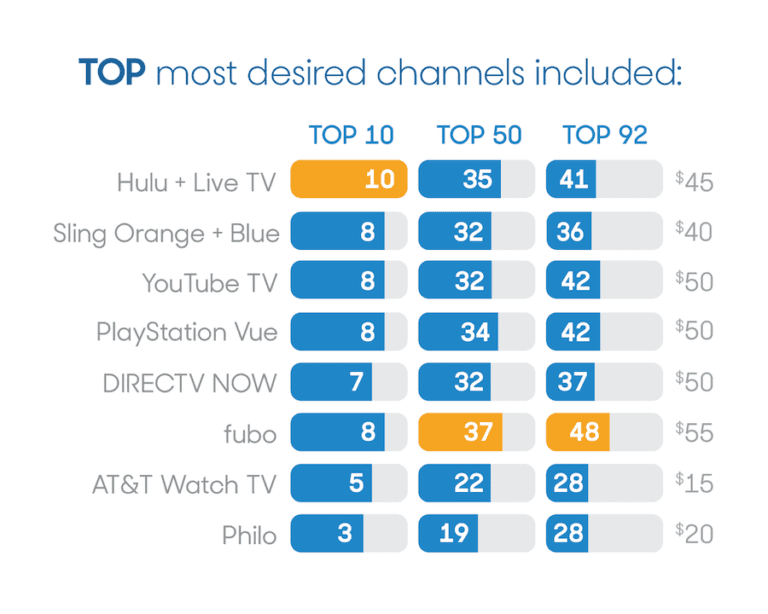
In conclusion, the best streaming service for live TV depends heavily on your technical priorities. If you value stability and a massive cloud DVR, YouTube TV leads the pack. If you want a deep library and personalized recommendations, Hulu + Live TV is the top choice. For those seeking high-fidelity sports and 4K experimentation, FuboTV remains the technological vanguard. Regardless of your choice, the transition to streaming marks a permanent shift toward a more flexible, data-driven future for television.
aViewFromTheCave is a participant in the Amazon Services LLC Associates Program, an affiliate advertising program designed to provide a means for sites to earn advertising fees by advertising and linking to Amazon.com. Amazon, the Amazon logo, AmazonSupply, and the AmazonSupply logo are trademarks of Amazon.com, Inc. or its affiliates. As an Amazon Associate we earn affiliate commissions from qualifying purchases.