
In the dynamic world of cryptocurrencies, understanding the fundamental economics of any digital asset is paramount for investors, financial analysts, and market observers. One of the most critical aspects to grasp is a cryptocurrency’s supply — how many units exist, how they are created, and how they are distributed. For XRP, the native digital asset of the XRP Ledger, these questions are particularly pertinent due to its unique design, its association with Ripple Labs, and its intended role in global payments.
The simple question, “How many XRP coins are there?”, belies a complex interplay of fixed supply, managed distribution, and ongoing escrow mechanisms that distinguish it from many other digital assets. Unlike Bitcoin, which has a predictable mining schedule, or Ethereum, which has undergone significant changes to its supply mechanism, XRP’s supply dynamics are centrally governed yet designed for ultimate decentralization. This article will delve into the precise figures, the mechanisms controlling its availability, and the profound financial implications these factors hold for its market value and investment appeal.
Understanding XRP’s Unique Supply Dynamics
XRP stands apart in the cryptocurrency landscape largely due to its predetermined and finite total supply, coupled with a systematic, transparent release mechanism. This structure is a cornerstone of its financial model and a key point of differentiation.
The Fixed Maximum Supply
From its inception, the maximum total supply of XRP was hard-capped at 100 billion (100,000,000,000) XRP coins. This figure was set when the XRP Ledger (XRPL) was created in 2012 by Jed McCaleb, Chris Larsen, and Arthur Britto. Crucially, no more XRP can ever be created. This contrasts sharply with fiat currencies, which can be printed by central banks, or even some cryptocurrencies with inflationary models or dynamic supply adjustments. The fixed maximum supply of XRP is a foundational element designed to provide a predictable economic environment for its use in payments and value transfer. It implies a degree of scarcity that, theoretically, could support its long-term value, assuming consistent demand. This hard cap also means there is no “mining” of XRP in the traditional sense, as seen with proof-of-work cryptocurrencies like Bitcoin. Instead, all 100 billion XRP were pre-mined at the genesis of the ledger.
The Role of Ripple Labs and Escrow
While all 100 billion XRP were created at once, they were not immediately released into circulation. The creators allocated 80 billion XRP to Ripple Labs (then called OpenCoin) to fund its development, promote the XRP Ledger, and incentivize adoption by financial institutions. This significant allocation raised concerns about centralization and potential market manipulation in the early days.
To address these concerns and provide transparency and predictability, Ripple Labs placed 55 billion XRP into a cryptographically secured escrow account in December 2017. This escrow operates on the XRP Ledger itself, meaning its terms are transparent and immutable. The escrow locks up the vast majority of Ripple’s XRP holdings, releasing a maximum of 1 billion XRP each month over a period of 55 months. Any XRP not used or sold by Ripple within a given month is returned to the back of the escrow queue. This mechanism ensures that the release of XRP is gradual and predictable, removing the uncertainty of a large, unencumbered supply potentially being dumped onto the market. It also signals Ripple’s commitment to the long-term health and stability of the XRP ecosystem.
Circulating vs. Total Supply
Understanding the distinction between circulating supply and total supply is critical for XRP.
- Total Supply: This refers to the full 100 billion XRP that were created at genesis. This figure remains constant and represents the absolute maximum number of XRP that will ever exist.
- Circulating Supply: This refers to the number of XRP that are currently available to the public and actively trading on exchanges or held by individuals and institutions outside of the Ripple escrow accounts. This number fluctuates as XRP is released from escrow, as transactional fees are “burned” (destroyed), and as Ripple or other holders move their XRP. As of early 2024, the circulating supply typically hovers around 55 billion XRP, though this figure constantly updates. Investors frequently monitor the circulating supply because it directly impacts market capitalization (price per coin × circulating supply) and provides a more accurate picture of the asset’s current liquidity and market availability. The difference between the total supply and the circulating supply, minus the burned XRP, largely comprises the XRP held in Ripple’s escrow and other uncirculated reserves.
The XRP Ledger: A Distinct Architecture and Financial Utility
Beyond its supply mechanics, the XRP Ledger itself is engineered with a specific financial purpose, influencing how its native asset, XRP, functions in the global economy. Its architectural choices directly impact its utility and, consequently, its financial value proposition.
Decentralization and Validators
The XRP Ledger operates on a unique consensus mechanism known as the XRP Ledger Consensus Protocol. Unlike Bitcoin’s proof-of-work or Ethereum’s proof-of-stake, the XRPL relies on a network of trusted validators. These validators collectively agree on the order and validity of transactions without requiring all validators to be identical or geographically dispersed to prevent a single point of failure. While Ripple initially operated a significant number of validators, the network is designed to be decentralized, with a growing number of independent validators operated by universities, financial institutions, and other entities. This push towards broader validator participation enhances the ledger’s robustness and ensures that no single party, including Ripple, can unilaterally control the network, which is a crucial aspect for its adoption in financial services.
Transaction Speed and Cost Efficiency
One of XRP’s primary value propositions lies in its exceptional transaction speed and low cost. Transactions on the XRP Ledger typically settle in 3 to 5 seconds, a stark contrast to the minutes or even hours required for traditional banking systems or other major cryptocurrencies. Furthermore, the average transaction fee on the XRPL is minuscule, often a fraction of a cent, making it highly cost-effective for both large-value transfers and micro-payments. This efficiency is critical for its intended use case: facilitating fast, low-cost cross-border payments and remittances, thereby challenging traditional correspondent banking networks. The burning of a small amount of XRP for each transaction also introduces a deflationary element, albeit minor, to the circulating supply over time.
Use Cases Beyond Speculation
While XRP is traded on exchanges and subject to speculative investment, its core design focuses on real-world utility in the financial sector.
- Cross-Border Payments: This is XRP’s most prominent application. Financial institutions can use XRP as a bridge currency to facilitate instant and inexpensive international transfers, bypassing the inefficiencies and high costs of traditional Nostro/Vostro accounts. Ripple’s “On-Demand Liquidity” (ODL) solution leverages XRP for this purpose.
- Liquidity Provision: XRP can act as a liquidity tool, enabling efficient exchange between different fiat currencies or other digital assets without requiring pre-funded accounts in various currencies.
- Micropayments: Due to its low transaction fees and speed, XRP is also suitable for enabling micropayments, an area where traditional payment systems often struggle due to high overheads.
- DeFi and NFTs (Emerging): The XRP Ledger is also evolving to support smart contract functionality and decentralized applications, including non-fungible tokens (NFTs) and decentralized finance (DeFi) protocols, expanding its potential utility beyond payments.
Financial Implications of XRP’s Supply
The supply mechanics of XRP have profound implications for its market capitalization, price volatility, and ultimately, its investment viability.
Impact on Market Capitalization
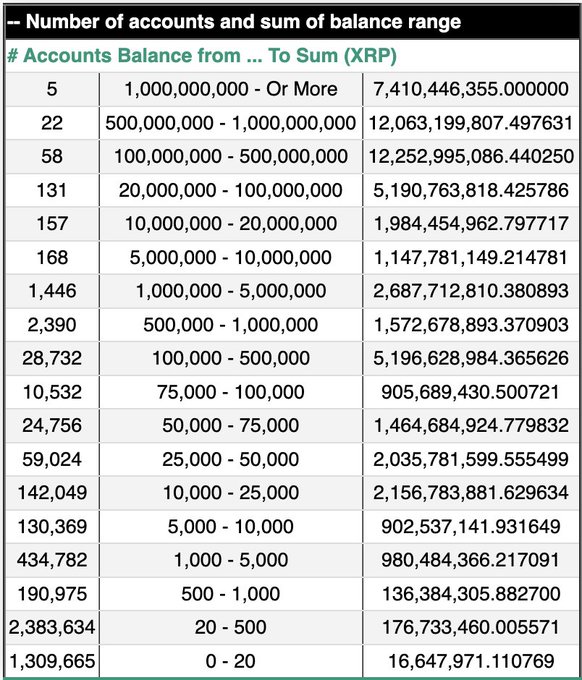
Market capitalization (market cap) is a key metric in finance, calculated by multiplying the circulating supply of an asset by its current price. For XRP, the managed release from escrow and the finite total supply directly influence this figure. A controlled release prevents sudden surges in circulating supply that could dilute per-coin value, while the ultimate hard cap provides a long-term anchor for scarcity. As the circulating supply gradually increases according to the escrow schedule, sustained demand is required to maintain or increase the market cap and, consequently, the price per XRP. Investors analyze the market cap to gauge the overall size and health of the XRP ecosystem relative to other digital assets.
Price Volatility and Scarcity
The 100 billion maximum supply of XRP, while large, provides a fixed upper bound. The gradual release from escrow aims to reduce sudden supply shocks that could cause extreme price volatility. However, like all cryptocurrencies, XRP is subject to market forces of supply and demand, investor sentiment, and broader macroeconomic trends. News events, regulatory developments (such as the SEC lawsuit against Ripple), and shifts in adoption by financial institutions can significantly impact its price. The perceived scarcity created by the hard cap can contribute to its long-term value proposition, but in the short to medium term, demand-side factors often dominate price movements. If demand for XRP increases due to greater adoption in cross-border payments, for instance, the fixed supply could theoretically lead to upward price pressure.
Investment Considerations and Long-Term Value
For investors, understanding XRP’s supply dynamics is crucial for evaluating its long-term potential. The systematic release schedule provides a level of predictability often absent in other crypto assets. However, investors must weigh several factors:
- Utility vs. Speculation: Is the primary driver of XRP’s value its utility in payments, or is it predominantly speculative trading? A strong use case in cross-border payments could provide a floor for its value.
- Regulatory Environment: The ongoing regulatory clarity surrounding XRP (especially in the US) significantly impacts institutional adoption and investor confidence.
- Competition: XRP competes with numerous other blockchain projects and traditional payment systems. Its ability to maintain a competitive edge in terms of speed, cost, and reliability is key.
- Decentralization: The ongoing efforts to further decentralize the XRP Ledger and reduce reliance on Ripple Labs are important for its long-term viability and appeal as a neutral asset.
Ultimately, the investment thesis for XRP hinges on the successful and widespread adoption of the XRP Ledger and XRP as a bridge currency by financial institutions and individuals globally, leveraging its unique supply and technological advantages.
Transparency and Distribution: A Deep Dive
Transparency in the distribution of any digital asset is vital for building trust and ensuring market integrity. XRP’s system, particularly the escrow, is designed to offer a high degree of clarity.
Tracking XRP’s Supply
The XRP Ledger is a public blockchain, meaning all transactions are recorded and visible to anyone. This includes the movement of XRP from escrow accounts, sales by Ripple, and transfers between wallets. Various blockchain explorers and crypto data websites provide real-time information on:
- Circulating Supply: The current number of XRP available in the market.
- Total Supply: The constant 100 billion XRP.
- Escrow Balances: The exact amount of XRP still held in Ripple’s escrow accounts.
- Burn Rate: The amount of XRP permanently removed from the supply due to transaction fees.
This level of transparency allows investors and analysts to independently verify the supply figures and monitor Ripple’s adherence to its stated escrow release schedule, fostering confidence in the asset’s economic model.
Escrow Schedule and Release Mechanism
The 55 billion XRP held in escrow is divided into 55 separate contracts, each programmed to release 1 billion XRP on the first day of each month. This automated, on-ledger mechanism provides a predictable inflow of XRP into the market. As mentioned, any unutilized XRP from a monthly release is automatically placed back into a new escrow contract at the end of the queue, effectively extending the overall duration of the escrow release process. This system has been operating consistently since December 2017, demonstrating a commitment to a measured and transparent supply management strategy. The predictable nature of these releases allows market participants to factor future supply increases into their valuations.
Community Engagement and Governance
While Ripple Labs initially created XRP and developed the XRP Ledger, the long-term vision involves a truly decentralized ecosystem. Community engagement plays a role in the governance of the XRP Ledger, with proposals for changes to the ledger protocol being voted on by validators. While these proposals don’t directly alter the total supply of XRP (which is fixed), they can influence transaction fees, features, and the overall health of the network, indirectly affecting XRP’s utility and demand. Active participation from the broader XRP community, developers, and independent validators is crucial for the continuous evolution and adoption of the XRPL, strengthening its financial utility and reducing perceived centralization risks.
Comparing XRP’s Supply to Other Cryptocurrencies
To fully appreciate XRP’s supply model, it’s beneficial to compare it with other prominent cryptocurrencies, as tokenomics significantly influence investment theses.
Bitcoin’s Halving and Fixed Cap
Bitcoin, the pioneering cryptocurrency, has a maximum supply of 21 million BTC. Its supply mechanism is vastly different: new Bitcoin is “mined” by solving complex computational puzzles (Proof-of-Work). Approximately every four years, the reward for mining a block is halved, an event known as “halving.” This programmed reduction in the rate of new supply creation makes Bitcoin increasingly scarce over time, contributing significantly to its deflationary narrative and value proposition. The key difference from XRP is the continuous creation of new coins until the cap is reached, albeit at a decreasing rate, whereas XRP’s 100 billion were all created at genesis, with distribution managed via escrow.
Ethereum’s Evolving Supply
Ethereum’s supply model is more dynamic. Originally, new Ether (ETH) was created through Proof-of-Work mining with no hard cap. However, with the transition to Proof-of-Stake (the “Merge”), Ethereum’s issuance rate dramatically decreased. Furthermore, a mechanism introduced with EIP-1559 burns a portion of transaction fees, potentially leading to a deflationary net issuance under certain network conditions. This makes Ethereum’s supply harder to predict than Bitcoin’s or XRP’s, as it is influenced by network activity. Investors in ETH must consider these ongoing changes to its tokenomics, which reflect a network attempting to balance security, utility, and economic stability.

The Importance of Tokenomics in Investment Decisions
These comparisons highlight why understanding “tokenomics” — the economic model governing a cryptocurrency — is paramount.
- Scarcity: A fixed or decreasing supply can create scarcity, which can drive value if demand is constant or increasing.
- Inflation/Deflation: Whether an asset’s supply is designed to be inflationary (increasing), deflationary (decreasing), or disinflationary (increasing at a slower rate) significantly impacts its long-term purchasing power.
- Distribution: How an asset is distributed (e.g., mining, pre-mine, ICO, airdrop, escrow) impacts initial ownership concentration and potential for manipulation.
- Utility: The fundamental use cases of an asset provide a basis for its demand, which then interacts with its supply to determine value.
XRP’s 100 billion fixed supply, managed escrow releases, and focus on real-world utility in payments position it uniquely within the crypto ecosystem. For investors, its financial viability depends not only on its current supply figures but also on the continued execution of its strategy to become the standard for efficient global value transfer. The question “How many XRP coins are there?” therefore opens up a comprehensive discussion on economics, market dynamics, and the future of digital finance.
aViewFromTheCave is a participant in the Amazon Services LLC Associates Program, an affiliate advertising program designed to provide a means for sites to earn advertising fees by advertising and linking to Amazon.com. Amazon, the Amazon logo, AmazonSupply, and the AmazonSupply logo are trademarks of Amazon.com, Inc. or its affiliates. As an Amazon Associate we earn affiliate commissions from qualifying purchases.