
Securing your financial future is not merely an aspiration; it’s a critical journey that begins with informed decisions today. Among the most potent tools available for long-term wealth accumulation and retirement planning is the Individual Retirement Account (IRA). Often lauded for its significant tax advantages and compounding growth potential, an IRA can be the bedrock of a comfortable retirement. Yet, for many, the process of opening and managing an IRA can seem daunting, shrouded in financial jargon and perceived complexities.
This comprehensive guide aims to demystify the process, breaking down everything you need to know about opening an IRA, from understanding its fundamental benefits to making your first investment choices. Whether you’re just starting your career, nearing retirement, or somewhere in between, understanding how to effectively leverage an IRA is paramount to building a secure financial future. Let’s embark on this journey to empower you with the knowledge and confidence to take control of your retirement savings.
Understanding the Power of an IRA for Your Future
Before diving into the mechanics of opening an account, it’s crucial to grasp what an IRA is and why it holds such a vital position in personal finance. An IRA isn’t an investment itself; rather, it’s a special type of account that holds investments, offering unique tax benefits designed to encourage saving for retirement.
What is an IRA and Why Do You Need One?
An Individual Retirement Account (IRA) is a tax-advantaged savings plan designed to help individuals save for retirement. Unlike employer-sponsored plans like a 401(k), an IRA is opened by an individual, allowing for greater control and portability. The primary allure of an IRA lies in its tax benefits, which can significantly accelerate your savings growth.
There are several compelling reasons why you need an IRA:
- Tax Advantages: Depending on the type of IRA, you can benefit from tax-deductible contributions (Traditional IRA) or tax-free withdrawals in retirement (Roth IRA). These advantages can lead to substantial savings over decades.
- Compounding Growth: Money invested in an IRA grows over time, with earnings generating further earnings. This “compounding” effect is incredibly powerful, turning modest contributions into significant wealth given enough time.
- Diversification: IRAs allow you to invest in a wide range of assets, including stocks, bonds, mutual funds, exchange-traded funds (ETFs), and more. This flexibility enables you to build a diversified portfolio tailored to your risk tolerance and financial goals.
- Portability: Unlike a 401(k) tied to an employer, your IRA goes wherever you do. This makes it an excellent option for those who change jobs frequently or want a retirement account independent of their employment.
- Catch-Up Contributions: For those aged 50 and over, IRAs offer “catch-up” contribution limits, allowing you to contribute more than the standard annual limit to boost your retirement savings in later years.
Differentiating Between Traditional and Roth IRAs
The two most common types of IRAs are the Traditional IRA and the Roth IRA, each offering distinct tax treatments. Understanding their differences is key to choosing the one that best suits your current financial situation and future tax expectations.
Traditional IRA:
- Tax Treatment: Contributions are often tax-deductible in the year they are made, reducing your taxable income in the present. This means you save on taxes now.
- Withdrawals: Withdrawals in retirement are taxed as ordinary income.
- Eligibility: No income limits for contributions, but deductibility of contributions may be limited if you or your spouse are covered by a retirement plan at work and your income exceeds certain thresholds.
- Best For: Individuals who expect to be in a lower tax bracket in retirement than they are today, or those who want to reduce their current taxable income.
Roth IRA:
- Tax Treatment: Contributions are made with after-tax dollars, meaning they are not tax-deductible.
- Withdrawals: Qualified withdrawals in retirement are entirely tax-free. This means your growth and principal are free from federal income tax (and often state tax, depending on your state).
- Eligibility: Subject to income limits. If your modified adjusted gross income (MAGI) exceeds certain thresholds, you may not be eligible to contribute directly to a Roth IRA.
- Best For: Individuals who expect to be in a higher tax bracket in retirement than they are today, or those who value tax-free income in retirement. Young professionals just starting their careers, often in lower tax brackets, can particularly benefit from Roth IRAs.
Other IRA Options: SEP and SIMPLE IRAs
While Traditional and Roth IRAs are the most common, it’s worth briefly mentioning two other types designed for small business owners and self-employed individuals:
- SEP IRA (Simplified Employee Pension): Allows employers (including self-employed individuals) to contribute to their own and their employees’ retirement accounts. Contributions are tax-deductible, and growth is tax-deferred. Contribution limits are generally much higher than for Traditional or Roth IRAs.
- SIMPLE IRA (Savings Incentive Match Plan for Employees): A retirement plan for small employers (100 or fewer employees) that is simpler and less expensive to administer than a 401(k). Both employees and employers can contribute, and employer contributions are mandatory.
For most individuals, the primary choice will be between a Traditional and a Roth IRA, making understanding their nuances critical.
Preparing for Your IRA Application
Opening an IRA isn’t just about filling out forms; it requires a bit of foresight and preparation. Taking these preliminary steps will streamline the application process and help you make informed decisions about your investments.
Eligibility Requirements
Before you even begin the application, ensure you meet the basic eligibility criteria for an IRA:
- Earned Income: To contribute to a Traditional or Roth IRA, you must have “earned income” for the tax year. This includes wages, salaries, commissions, bonuses, and net earnings from self-employment. Investment income (like capital gains) or pension income generally doesn’t count. Your contributions cannot exceed your earned income for the year.
- Age: There is no maximum age for contributing to a Roth IRA, as long as you have earned income. For a Traditional IRA, prior to 2020, you could not contribute past age 70½, but this restriction was removed by the SECURE Act.
Gathering Necessary Documentation
Having your documents ready beforehand will significantly speed up the account opening process:
- Social Security Number (SSN): Essential for identifying you for tax purposes.
- Government-Issued ID: A driver’s license, state ID, or passport to verify your identity.
- Bank Account Information: You’ll need your bank’s routing number and your account number to link your IRA for electronic transfers (funding contributions, withdrawing funds in retirement).
- Beneficiary Information: You’ll need the full name, date of birth, and Social Security Number of your primary and contingent beneficiaries. This ensures your assets are distributed according to your wishes upon your death.
Deciding on Your Investment Strategy
An IRA is merely the container; what you put inside it is what truly matters. Before opening, consider your overarching investment strategy:
- Long-Term Goals: What do you hope to achieve with this money? Retirement at what age? What lifestyle do you envision?
- Risk Tolerance: How comfortable are you with the fluctuations of the market? Are you willing to accept higher risk for potentially higher returns, or do you prefer a more conservative approach? Your risk tolerance will influence your asset allocation.
- Investment Types: Research the various types of investments you can hold within an IRA:
- Stocks: Represent ownership in a company, offering potential for capital appreciation.
- Bonds: Debt instruments issued by governments or corporations, generally less volatile than stocks, providing regular interest payments.
- Mutual Funds: Professionally managed portfolios of stocks, bonds, or other assets, offering diversification.
- Exchange-Traded Funds (ETFs): Similar to mutual funds but trade like stocks on an exchange throughout the day.
- Certificates of Deposit (CDs): Low-risk, fixed-interest savings accounts.
- Money Market Accounts: Very low-risk savings accounts, though returns are typically minimal.
Having a general idea of your investment philosophy will guide you in choosing the right brokerage and specific investments once your account is open.
Step-by-Step Guide to Opening Your IRA Account
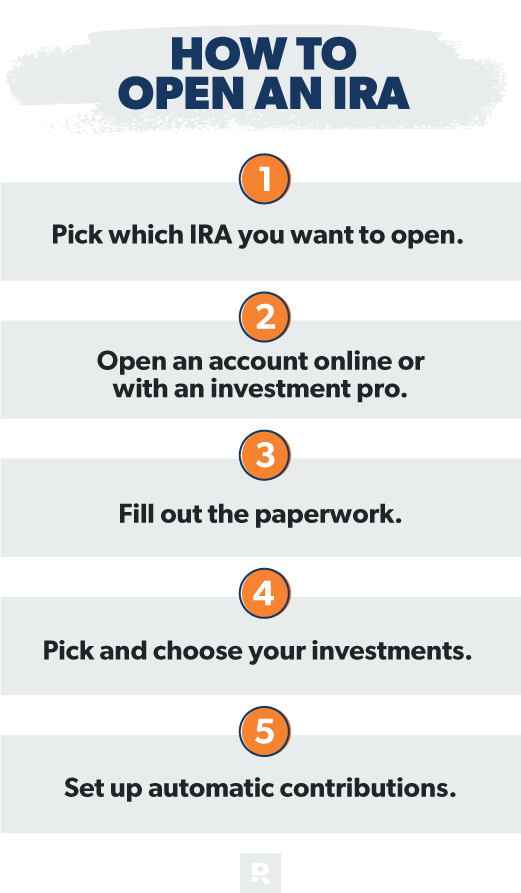
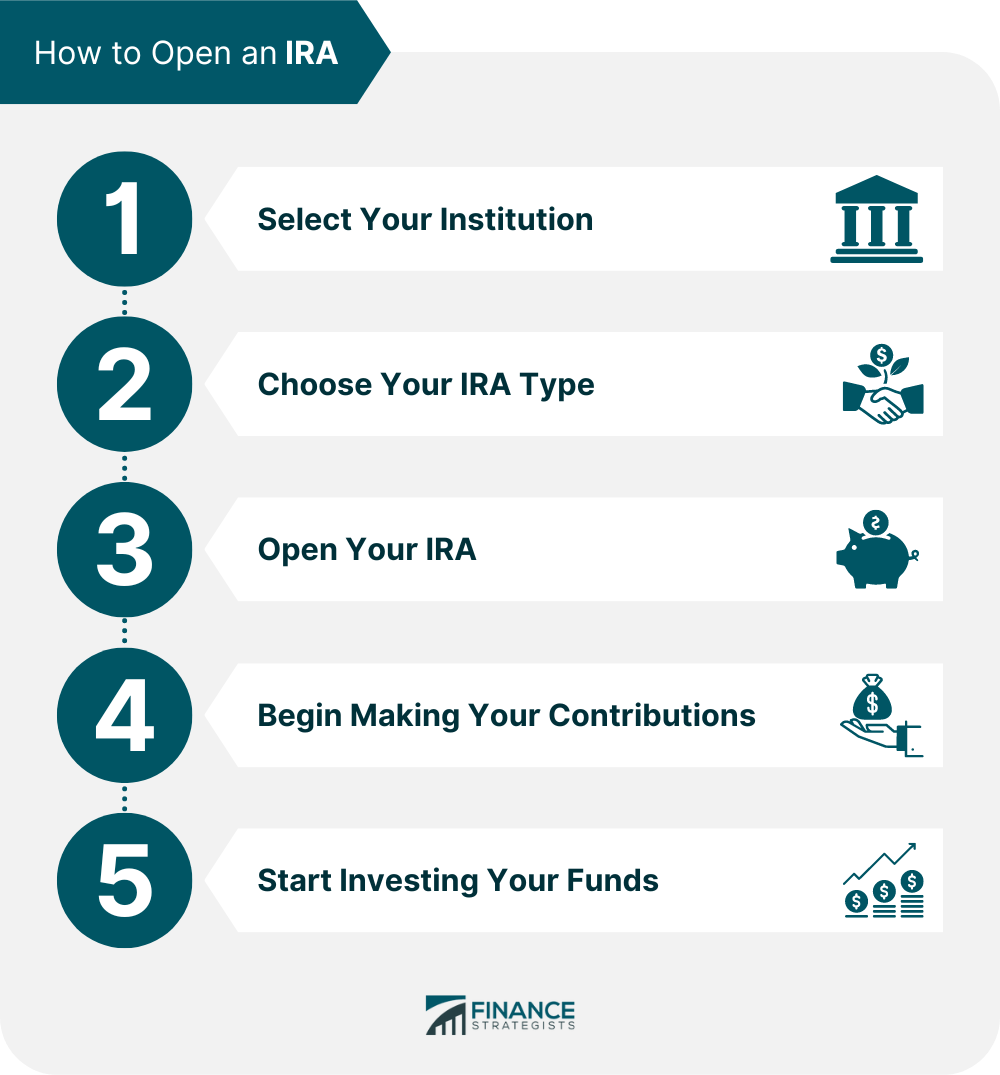
With your preparation complete, you’re ready to open your IRA. The process is straightforward, particularly if you choose an online brokerage.
Choosing the Right Financial Institution
This is a critical first step. The institution you choose will hold your IRA and provide the platform for your investments. Consider the following factors:

- Brokerage Firms: Offer the widest range of investment options (stocks, bonds, mutual funds, ETFs) and often provide research tools and educational resources. Examples include Fidelity, Vanguard, Charles Schwab, E*TRADE, and Merrill Edge.
- Robo-Advisors: Automated investment platforms (e.g., Betterment, Wealthfront) that build and manage diversified portfolios based on your risk tolerance and goals, often with lower fees than traditional advisors.
- Banks/Credit Unions: May offer IRAs, primarily for CDs or money market accounts. They typically have a more limited range of investment options compared to brokerages.
Factors to consider when choosing:
- Fees: Look for low or no annual maintenance fees, trading commissions, and expense ratios for funds.
- Investment Options: Ensure they offer the types of investments you’re interested in.
- Customer Service: Do they offer robust support via phone, chat, or in-person?
- Research Tools & Education: Are there resources to help you make informed investment decisions?
- Minimums: What is the minimum amount required to open an account or invest in certain funds?
Online vs. In-Person Application
Most IRA accounts are opened online today, a process that can take as little as 15-30 minutes.
-
Online Application:
- Pros: Convenient, fast, can be done anytime, anywhere. Often features user-friendly interfaces and digital document submission.
- Cons: Requires comfort with technology; customer support may be less immediate than in-person for complex questions.
- Process: Navigate to the institution’s website, click “Open an Account,” select “IRA” (Traditional or Roth), fill out personal information, link your bank account, and set up beneficiaries. You’ll likely sign documents electronically.
-
In-Person Application:
- Pros: Personalized assistance, ability to ask questions directly, suitable for those less comfortable with online processes.
- Cons: Less convenient, may require an appointment, limited to banking hours.
- Process: Visit a local branch of your chosen institution. A representative will guide you through the forms and help you set up your account.
Funding Your IRA
Once your account is open, the next step is to fund it.
- Contribution Limits: Be mindful of the annual contribution limits set by the IRS. These limits are adjusted periodically, so always check the most current figures. There are also “catch-up” contributions for those aged 50 and older.
- Methods of Funding:
- Electronic Funds Transfer (EFT): Most common, directly linking your bank account.
- Check: Mailing a physical check.
- Rollover: Transferring funds from an existing retirement account (like a 401(k) from a previous employer) into your IRA. This is a common strategy when changing jobs.
- Automated Contributions: Setting up recurring monthly or bi-weekly contributions can help you consistently save and take advantage of dollar-cost averaging.
Selecting Your Investments
With funds in your IRA, the final step is to invest them.
- Diversification: Don’t put all your eggs in one basket. Spread your investments across different asset classes, industries, and geographies to reduce risk.
- Asset Allocation: Determine the right mix of stocks, bonds, and other assets based on your age, risk tolerance, and time horizon. Younger investors with a longer time horizon often opt for a higher percentage of stocks, while those closer to retirement may choose a more conservative mix.
- Rebalancing: Periodically review your portfolio and adjust your holdings to maintain your target asset allocation. Market fluctuations can cause your allocations to drift.
Many brokerages offer model portfolios or target-date funds that automatically adjust your asset allocation as you approach retirement, simplifying this process.
Maximizing Your IRA’s Potential
Opening an IRA is a fantastic first step, but truly maximizing its benefits requires ongoing attention and smart management.
Understanding Contribution Limits and Deadlines
Stay informed about the IRS contribution limits for your IRA type. These limits are updated annually and dictate how much you can contribute each year. Remember that you can contribute to an IRA for a given tax year up until the tax filing deadline of the following year (typically April 15th), even if you file for an extension. Utilizing catch-up contributions if you’re 50 or older can significantly boost your savings.
Beneficiary Designations
It’s easy to overlook, but designating beneficiaries for your IRA is crucial. In the event of your passing, a properly designated beneficiary will receive the assets directly, bypassing the often lengthy and costly probate process.
- Primary Beneficiary: The first person or entity to receive assets.
- Contingent Beneficiary: The person or entity who receives assets if the primary beneficiary has passed away or cannot be located.
Regularly review and update your beneficiaries, especially after major life events like marriage, divorce, birth of a child, or death of a loved one.
Managing Your Investments Over Time
Your investment journey is not a “set it and forget it” endeavor, though automated tools can help.
- Regular Reviews: Periodically (e.g., annually) review your portfolio’s performance and ensure it still aligns with your financial goals and risk tolerance.
- Rebalancing: As mentioned, market movements can shift your asset allocation. Rebalancing brings your portfolio back to your desired mix. For example, if stocks have performed exceptionally well, you might sell some stock holdings and buy more bonds to restore your original allocation percentage.
- Adapting to Life Changes: Major life events—a new job, marriage, having children, buying a home, or approaching retirement—can all warrant adjustments to your investment strategy. Be prepared to adapt.
Avoiding Common Pitfalls
While IRAs are powerful tools, there are a few traps to avoid:
- Early Withdrawals: Withdrawing funds from an IRA before age 59½ can trigger a 10% penalty in addition to income taxes (for Traditional IRAs). There are some exceptions, but generally, these funds are for retirement.
- Going Over Contribution Limits: Contributing more than the allowed amount can result in tax penalties. The IRS has rules for correcting excess contributions.
- Not Investing Adequately: Simply opening an IRA and letting cash sit there misses the entire point of the account. The power comes from investing those funds and letting them grow.
- Ignoring Fees: High fees, whether for trading or fund expense ratios, can erode your returns over time. Always be mindful of the costs associated with your investments.
The Long-Term Impact: Why Start Now?
The decision to open an IRA, especially early in your career, is one of the most impactful financial choices you can make. The long-term benefits are profound, extending far beyond simple numbers.
The Magic of Compounding
Albert Einstein reportedly called compound interest the “eighth wonder of the world.” For an IRA, this means that not only do your initial contributions earn returns, but those returns themselves also start earning returns. The longer your money is invested, the more powerful compounding becomes.
Consider this: A 25-year-old who contributes $500 per month ($6,000 annually) to an IRA earning an average of 7% per year would have over $1.3 million by age 65. If they waited until age 35 to start, with the same contributions and returns, they would only accumulate around $650,000. The difference of a decade starting early means double the wealth. This illustrates why the most potent ingredient for an IRA’s success is time.
Peace of Mind and Financial Security
Beyond the numerical growth, an IRA provides invaluable peace of mind. Knowing that you are actively building a nest egg for your future alleviates stress and offers a sense of control over your financial destiny. This security extends to knowing you won’t be solely reliant on Social Security (which may not be enough) or your children in your later years. It allows you to envision and work towards a retirement where you maintain your desired lifestyle, pursue hobbies, travel, or simply relax without financial worries.
Take Control of Your Retirement Today
Opening an IRA is a foundational step in your journey toward financial independence and a comfortable retirement. It’s an accessible, powerful tool designed to leverage tax advantages and the incredible force of compounding interest. By understanding the different types of IRAs, preparing your documentation, choosing the right financial institution, and making informed investment decisions, you empower yourself to build significant wealth over time.
Don’t let perceived complexity deter you. Start small, be consistent, and regularly review your strategy. The sooner you begin, the more time your money has to grow, securing not just your financial future, but your peace of mind. Take action today, open your IRA, and lay the groundwork for the retirement you truly deserve.
aViewFromTheCave is a participant in the Amazon Services LLC Associates Program, an affiliate advertising program designed to provide a means for sites to earn advertising fees by advertising and linking to Amazon.com. Amazon, the Amazon logo, AmazonSupply, and the AmazonSupply logo are trademarks of Amazon.com, Inc. or its affiliates. As an Amazon Associate we earn affiliate commissions from qualifying purchases.