
The annual tax season can feel like a daunting financial puzzle, with countless forms, calculations, and ever-changing regulations. For millions, TurboTax has become a trusted ally in navigating this complexity, offering a streamlined path to filing federal and state returns. However, with multiple editions—Free, Deluxe, Premier, Self-Employed, and their “Live” counterparts—the initial question isn’t how to file, but rather, “Which TurboTax do I need?” Making the right choice isn’t just about picking a piece of software; it’s a critical financial decision that can impact your refund, tax liability, and overall financial peace of mind.
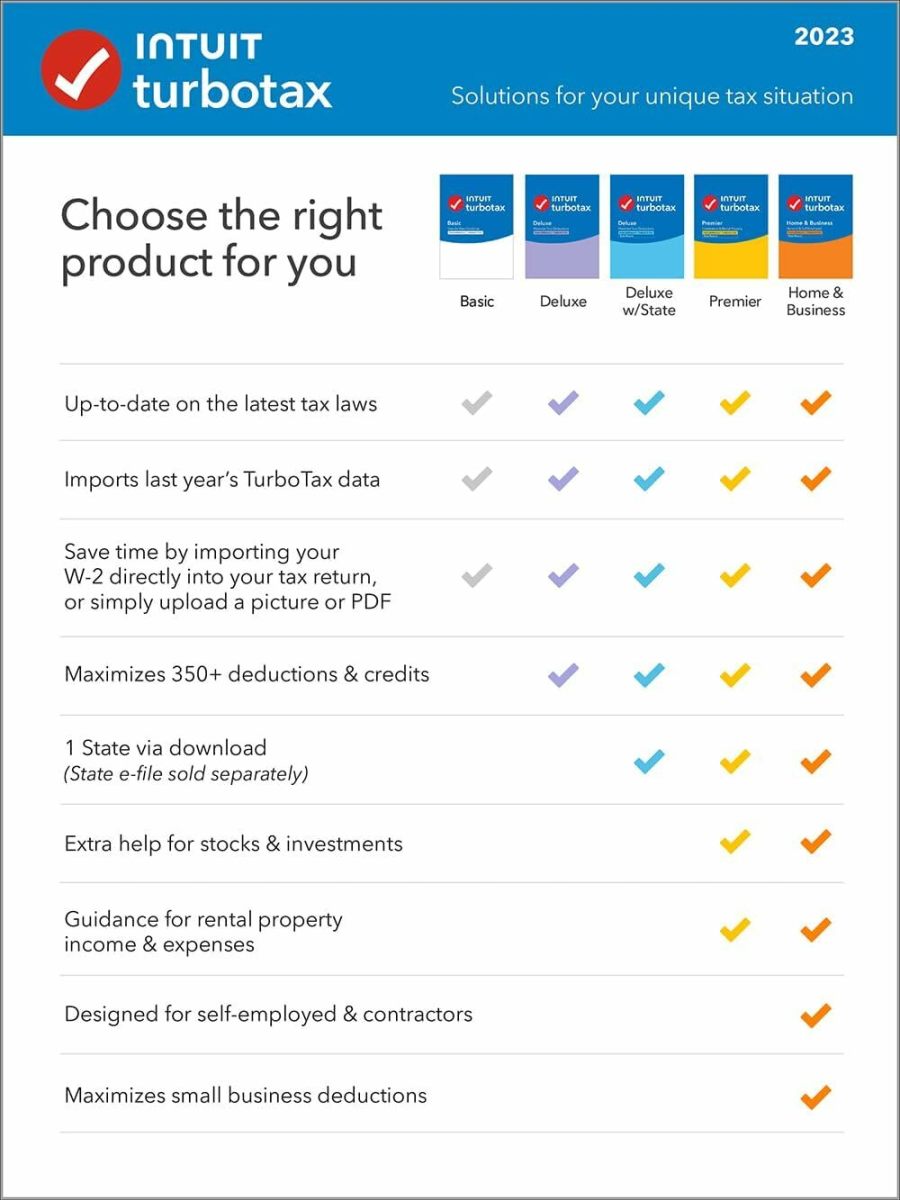
This article delves exclusively into the financial considerations behind selecting the optimal TurboTax edition for your specific situation. We’ll explore how your personal financial landscape—from simple W-2 income to complex investments and business ventures—dictates which version offers the best value, maximizes your deductions, and ultimately contributes to sound personal finance management. Understanding the nuances of each edition will empower you to make an informed decision, ensuring you don’t overpay for features you don’t need or, more critically, miss out on significant savings because you opted for an insufficient package.
Understanding Your Tax Situation: The First Step to Financial Efficiency
Before even looking at TurboTax’s offerings, the most financially prudent step is to accurately assess your own tax profile. Your income sources, financial assets, and life events all play a pivotal role in determining the complexity of your return and, consequently, which TurboTax edition will serve you best. Ignoring this preliminary assessment can lead to unnecessary expenses or, worse, overlooked deductions and potential compliance issues.
Simple Returns vs. Complex Finances
The spectrum of tax situations is vast, ranging from straightforward to highly intricate.
- Simple W-2 Income and Standard Deductions: If your income primarily comes from a W-2 form, you don’t own a home, have no dependents, and plan to take the standard deduction, your tax situation is considered simple. This profile often aligns with the most basic and financially accessible TurboTax options, potentially even the free versions. For individuals prioritizing minimal cost and simplicity, this is the ideal scenario.
- Itemized Deductions, Investment Income, and Dependents: As you accumulate assets or experience life changes, your financial picture grows more complex. Owning a home typically means you’ll be looking at itemized deductions for mortgage interest and property taxes. Having children introduces credits like the Child Tax Credit. Investment income, whether from a brokerage account, mutual funds, or even cryptocurrency, adds another layer of reporting. These scenarios require more robust features to accurately account for these financial elements and maximize potential savings.
- Rental Properties and Business Income (Schedule C): Landlords with rental income and expenses, or individuals operating a sole proprietorship, freelance business, or gig economy venture, face significantly more complex tax filings. These situations often involve Schedule C (Profit or Loss from Business) and require detailed tracking of income, expenses, and asset depreciation. Opting for an insufficient TurboTax edition here is a critical financial misstep, as it can lead to underreporting deductions, miscalculating profits, and potentially incurring penalties. Understanding your specific business-related deductions is crucial for financial health.
State vs. Federal Filing: A Dual Financial Consideration
While federal income tax is universal, state income tax requirements vary significantly. Most individuals will need to file both federal and state returns.
- Single State Filing: If you live and work in the same state, filing a state return is generally straightforward, though it often comes with an additional fee if not included in your chosen TurboTax package. Budgeting for this separate cost is an important part of your overall tax preparation expense.
- Multiple State Filings: For individuals who moved states during the year, worked in one state while residing in another, or have income from properties in different states, the complexity—and often the cost—of state filing increases. Each state return typically incurs a separate charge, and ensuring accurate allocation of income across states is vital to avoid double taxation or underpayment. The right TurboTax edition will facilitate this complex multi-state calculation, safeguarding your finances against errors.
Life Changes and Their Tax Implications
Significant life events rarely happen in a vacuum, and they almost always carry financial and tax implications.
- Marriage or Divorce: Changing marital status impacts your filing status (Married Filing Jointly, Married Filing Separately, Head of Household) and potentially your tax brackets and deductions.
- New Dependents: The arrival of a child or taking on care for an elderly parent can qualify you for valuable tax credits and deductions.
- Buying or Selling a Home: Homeownership introduces deductions for mortgage interest and property taxes, while selling a home involves capital gains considerations.
- Retirement or Career Changes: These shifts can impact income sources, eligibility for retirement plan contributions, and specific deductions.
Each of these scenarios necessitates a careful review of your tax situation and will influence which TurboTax edition can best accommodate your new financial reality, ensuring you capture all eligible financial benefits.
Decoding TurboTax Editions: A Financial Overview
TurboTax offers a tiered system designed to match varying levels of financial complexity. Understanding what each edition covers, and more importantly, what it doesn’t, is paramount to making a cost-effective and accurate choice.
TurboTax Free Edition: For the Basics
As the name suggests, this is TurboTax’s entry-level offering, designed for individuals with the simplest financial situations.
- Eligibility and Limitations: Primarily for those with W-2 income only, taking the standard deduction, and with no dependents. It typically handles unemployment income and student loan interest deductions.
- Financial Savings: This is the most financially attractive option if you qualify, as it costs nothing for federal filing. However, be mindful that state filing often incurs an additional fee, even with the Free Edition. This is a crucial detail for budgeting.
- Who it’s for: Students, entry-level professionals, or anyone with uncomplicated finances looking to minimize tax preparation expenses.
TurboTax Deluxe: Expanding Your Financial Deductions
Deluxe is the most popular TurboTax edition, catering to a broader range of taxpayers who have slightly more complex financial situations than those eligible for the free version.
- Itemized Deductions: This is Deluxe’s primary financial advantage. It allows users to itemize deductions for mortgage interest, property taxes, charitable contributions, and medical expenses. For homeowners, this is almost always the go-to choice, as itemizing can lead to significantly larger tax savings than the standard deduction.
- Maximizing Write-Offs: Deluxe guides you through identifying common deductions, helping you retain more of your hard-earned money. It’s a wise financial investment for those with significant deductible expenses.
- Who it’s for: Homeowners, individuals with significant charitable donations, or those with medical expenses exceeding a certain threshold.
TurboTax Premier: Navigating Investments and Rentals
As your financial portfolio grows, particularly through investments or rental properties, Premier becomes the essential tool.
- Stocks, Bonds, Mutual Funds, and Cryptocurrency: Premier is specifically designed to handle income from these sources, including capital gains and losses, dividend income, and complex investment transactions (e.g., K-1 forms). For investors, accurately reporting these transactions is not just about compliance but also about optimizing capital gains/losses to reduce taxable income.
- Rental Property Income/Expenses: Landlords benefit greatly from Premier’s ability to track and categorize rental income and expenses, including depreciation calculations. This is vital for accurately determining taxable rental income and ensuring all eligible deductions are claimed, directly impacting your net profit from real estate.
- Impact on Portfolio and Net Worth: For active investors or property owners, Premier is a critical financial tool for accurately reflecting your wealth and optimizing your tax strategy in relation to your investment portfolio.
- Who it’s for: Investors with varied portfolios, cryptocurrency traders, and landlords.
TurboTax Self-Employed: For Business Owners and Gig Workers

This edition is a financial lifeline for entrepreneurs, freelancers, and independent contractors.
- Schedule C & Business Expenses: Self-Employed is tailored to guide you through completing Schedule C, where you report profit or loss from your business. It excels at helping you identify and categorize a wide array of business expenses, from home office deductions and vehicle mileage to professional development and supplies. Maximizing these deductions is paramount for reducing your taxable income as a business owner.
- Estimated Taxes: This edition helps calculate and plan for estimated quarterly tax payments, a crucial aspect of financial management for the self-employed to avoid underpayment penalties.
- Optimizing Business Finances: By offering robust tools for business-specific deductions and income tracking, TurboTax Self-Employed ensures you’re optimizing your business’s financial health and compliance.
- Who it’s for: Freelancers, independent contractors, small business owners (sole proprietors), gig workers (e.g., rideshare drivers, delivery services), and anyone who receives 1099-NEC or 1099-K income.
TurboTax Live Editions: Expert Assistance for Peace of Mind
For those who value expert guidance without hiring a dedicated accountant, TurboTax Live offers a unique hybrid solution. Available across Basic, Deluxe, Premier, and Self-Employed tiers, these versions include access to a tax expert.
- Live Basic, Live Deluxe, Live Premier, Live Self-Employed: Each “Live” version offers the features of its standard counterpart, plus the ability to connect with a tax expert via live chat or video call. This expert can answer questions, offer advice, and, crucially, conduct a final review of your return before filing.
- Cost vs. Value of Expert Review: While Live editions come at a higher price point, the financial value can be significant. An expert review can catch overlooked deductions, prevent errors that could lead to audits, and provide reassurance that your return is accurate and optimized. For complex situations, or if you simply lack confidence in your own tax knowledge, the added cost can be a wise financial investment, potentially saving you more in missed deductions or penalties than the extra fee.
- Who it’s for: Individuals who want the convenience of DIY filing but desire the security and insight of a professional tax review, especially those with moderately complex or entirely new tax situations.
Beyond the Software: Hidden Costs and Value Propositions
Choosing your TurboTax edition isn’t just about the initial price tag; it’s also about understanding the additional financial considerations that can arise during the filing process. Being aware of these elements helps in creating a comprehensive financial plan for tax season.
State Filing Fees: A Common Addition
One of the most frequently encountered “hidden” costs is the fee for filing state taxes. While federal filing might be free or included in your package, most TurboTax editions charge separately for state returns.
- How They Add Up: If you need to file in multiple states, these fees can accumulate quickly. For instance, moving mid-year might require filing partial-year returns in two states, doubling your state filing costs.
- Planning for Them: Always factor in state filing fees when budgeting for your overall tax preparation expenses. Some higher-tier packages might include one state filing, but this is less common with TurboTax and more prevalent with other tax software providers. It’s crucial to verify.
Add-on Services: Audit Defense and Maximizing Refunds
TurboTax often presents various add-on services that promise peace of mind or additional financial benefits.
- Audit Defense: This service provides representation and support in the event of an IRS audit. While it adds to the cost, for some, it’s a valuable financial hedge against the potential time, stress, and expense of dealing with an audit. Is it worth it? That depends on your risk tolerance and the complexity of your return. If you have a very complex return or significant self-employment income, it might be a sensible investment.
- Maximizing Refunds: Some services claim to help you find more deductions. While the software itself is designed to do this within its parameters, these add-ons might be redundant if you’ve already chosen the correct edition for your financial profile. Be discerning about whether these truly offer additional financial value or simply reiterate features already built into the product.
Price vs. Financial Complexity: When to Upgrade
The core financial dilemma when choosing TurboTax is balancing cost with the complexity of your tax situation.
- The Trade-off: Paying more for a higher tier can seem like an unnecessary expense, but it can be a financially savvy move. An inadequate version might not support all your forms or accurately guide you through all eligible deductions, potentially costing you far more in missed savings or penalties than the upgrade fee.
- When to Upgrade: If your financial life has evolved (e.g., buying a home, starting a side hustle, making significant investments), an upgrade is usually a wise investment. The extra cost for Deluxe, Premier, or Self-Employed is often recouped through identified deductions and credits that a basic version simply wouldn’t handle.
Refund Options: Direct Deposit vs. Prepaid Card
How you receive your refund also has financial implications.
- Direct Deposit: This is the fastest and most secure method, directly crediting your bank account. It’s the most financially efficient option, ensuring quick access to your funds for budgeting or investing.
- Prepaid Card: While convenient for those without traditional bank accounts, prepaid cards often come with fees (activation, ATM withdrawals, maintenance). These fees can erode a small portion of your refund, making it a less financially optimal choice for many.
- Advance Options: TurboTax also offers refund advance loans, which provide quick access to a portion of your refund. While these can offer immediate liquidity, it’s crucial to understand the terms and any associated costs. For careful financial planners, waiting for direct deposit is often the preferred, no-cost option.
Making the Smart Financial Choice: Key Considerations
Ultimately, selecting the right TurboTax edition is a personal financial decision that should align with your comfort level, the value of your time, and your broader financial planning goals.
Your Comfort Level with Tax Preparation
- DIY vs. Professional Help: How confident are you in preparing your own taxes, especially with complex financial transactions? If you’re comfortable and your situation is straightforward, a standard TurboTax edition is suitable. If you find tax forms intimidating or your finances are intricate, investing in a TurboTax Live edition or even a traditional accountant might be a more financially sound decision to prevent errors and maximize legitimate claims. The cost of a professional can be offset by ensuring accuracy and identifying all possible financial benefits.
The Value of Time vs. Cost Savings
- How Much Is Your Time Worth?: While the free or cheaper TurboTax versions save you money upfront, they might require more of your time and effort to navigate, especially if your financial situation is moderately complex. If your time is valuable, paying for a higher tier that automates more calculations, provides better guidance, or offers expert review might be a more cost-effective choice in the long run. The time saved can be reinvested in other productive financial activities.

Future Financial Planning
- How Tax Preparation Impacts Future Decisions: Your tax preparation today isn’t just about the past year; it’s a valuable learning experience for future financial planning. By actively engaging with TurboTax, you gain a better understanding of how various income sources, deductions, and credits impact your overall tax liability. This insight can inform future decisions, such as increasing retirement contributions, optimizing investment strategies, or tracking business expenses more diligently, all contributing to better long-term financial health. The right TurboTax edition can serve as an educational tool, deepening your financial literacy.
In conclusion, “Which TurboTax do I need?” is a question best answered through a meticulous review of your personal financial landscape. By carefully assessing your income sources, investments, deductions, and life events, you can pinpoint the edition that not only meets your filing requirements but also optimizes your financial outcome. Whether it’s the cost-saving Free Edition, the deduction-maximizing Deluxe, the investment-savvy Premier, the business-focused Self-Employed, or the expert-backed Live versions, choosing wisely ensures you’re managing your tax obligations effectively and smartly safeguarding your finances for the year ahead. Don’t view tax preparation as merely a compliance task, but as an integral part of your annual financial review and planning cycle.
aViewFromTheCave is a participant in the Amazon Services LLC Associates Program, an affiliate advertising program designed to provide a means for sites to earn advertising fees by advertising and linking to Amazon.com. Amazon, the Amazon logo, AmazonSupply, and the AmazonSupply logo are trademarks of Amazon.com, Inc. or its affiliates. As an Amazon Associate we earn affiliate commissions from qualifying purchases.