
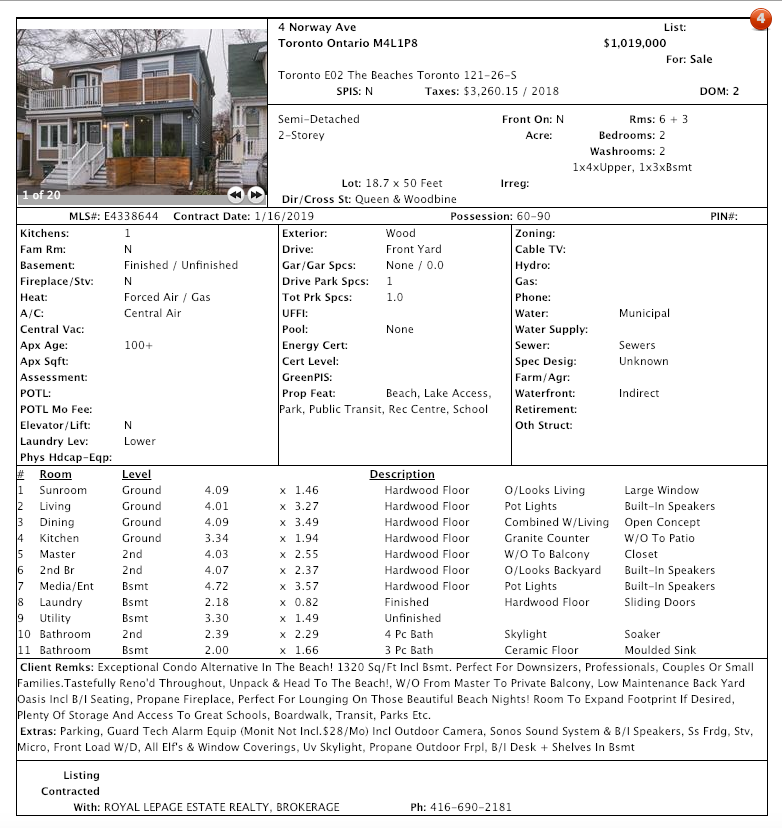
In the complex and often daunting world of real estate, understanding the mechanisms that drive transactions is paramount for anyone looking to buy, sell, or invest. At the heart of this intricate system lies the Multiple Listing Service (MLS), a term frequently heard but often misunderstood in its profound financial implications. Far from just a list of properties, an MLS listing represents a crucial financial tool, a central nervous system for market data that dictates values, influences investment decisions, and ultimately shapes the financial outcomes for all parties involved in a real estate transaction.

For homeowners, investors, and prospective buyers alike, comprehending the financial power of the MLS is not merely academic; it is essential for making astute financial decisions, mitigating risks, and maximizing returns in what is typically one’s largest asset or liability. This article will delve into the financial core of the MLS, revealing how it facilitates transactions, serves as a strategic financial tool, guides investment perspectives, and highlights the significant financial implications of operating outside its expansive reach.
The Core Financial Mechanism: How MLS Facilitates Transactions
The MLS operates as a cooperative database, established and maintained by real estate brokers, designed to provide comprehensive, up-to-date information on properties for sale within a specific geographical area. Its primary function, when viewed through a financial lens, is to streamline and enhance the efficiency of real estate transactions, which are inherently financial endeavors.
Centralizing Market Data for Informed Financial Decisions
One of the most significant financial contributions of the MLS is its role in centralizing vast amounts of market data. Before the advent of sophisticated MLS systems, real estate information was fragmented and often siloed, making it difficult for buyers and sellers to gauge true market values. The MLS pools listings, including detailed property specifications, pricing history, and sales data, creating a comprehensive database that is invaluable for accurate valuation and market analysis.
For sellers, this means their agent can access robust data to determine a competitive and realistic asking price – one that attracts buyers while maximizing potential profit. Overpricing a property can lead to prolonged market time, carrying costs, and eventual price reductions that erode equity. Underpricing, conversely, means leaving money on the table. The MLS provides the empirical data necessary to hit that financially optimal sweet spot.
For buyers, especially those with an investment mindset, this centralized data allows for prudent financial planning. They can evaluate properties based on their budget, compare features and prices across numerous listings, and identify properties that offer strong potential for appreciation or rental income. This transparency is crucial for making informed offers that align with market realities and personal financial goals. Without this data, buyers risk overpaying or missing out on genuinely valuable opportunities.
Enhancing Market Transparency and Financial Efficiency
The very existence of the MLS significantly enhances market transparency, a cornerstone of efficient financial markets. By making property information widely accessible (to licensed professionals), the MLS reduces information asymmetry, where one party holds more or better information than the other. This transparency leads to fairer pricing, as both buyers and sellers operate with a clearer understanding of market conditions and property values.
Furthermore, the MLS dramatically improves financial efficiency in real estate transactions. It accelerates the matching process between buyers and sellers. An agent can quickly identify suitable properties for a buyer, and a seller’s listing gains immediate exposure to a vast network of potential purchasers. This efficiency translates directly into financial benefits: reduced marketing costs for sellers, faster transaction times (minimizing holding costs like mortgage payments, taxes, and insurance for sellers, and allowing buyers to secure their desired property quicker), and a more dynamic market where capital can flow freely. In a market where transactions can take months, reducing this timeframe even slightly can result in substantial financial savings or gains.
The Role of Brokers in Monetizing MLS Access
It’s important to understand that direct access to the full, exclusive MLS database is typically restricted to licensed real estate professionals – brokers and agents. This controlled access underscores the financial model of the real estate industry. Agents pay membership fees to their local MLS board, granting them the ability to list properties and access the detailed financial and property data.
This access is what enables agents to earn their commissions. They leverage the MLS to market properties effectively for sellers and to find suitable properties for buyers. The commission, usually a percentage of the sale price, is their remuneration for providing this specialized service, which includes strategic pricing derived from MLS data, broad marketing reach via the MLS, negotiation, and handling the complexities of the transaction. From a financial perspective, the MLS provides the platform that makes the traditional real estate brokerage model viable and valuable, directly linking professional expertise and market access to financial outcomes.
MLS as a Strategic Financial Tool for Sellers and Buyers
Beyond its foundational role in facilitating transactions, the MLS functions as a powerful strategic financial tool, empowering both sellers to optimize their returns and buyers to make sound investment decisions.
Maximizing Seller Returns Through Broad Exposure
For a seller, the primary financial objective is often to achieve the highest possible sale price for their property within a reasonable timeframe. Listing a property on the MLS is the most effective way to achieve this through unparalleled market exposure. Once a property is entered into the MLS, it is instantly visible to thousands of real estate agents and their prospective buyers, not just locally but often nationally through syndication to public real estate websites (like Zillow, Realtor.com, etc., which draw data from the MLS).
This broad exposure significantly increases the buyer pool, fostering competition that can lead to multiple offers and, consequently, a higher sale price. The incremental cost of an agent’s commission is often outweighed by the financial benefits of wider reach and competitive bidding, which a seller attempting to go “For Sale By Owner” (FSBO) would struggle to replicate. The MLS acts as a financial multiplier, transforming a single property into a widely accessible opportunity for a vast network of potential investors and homeowners.
Empowering Buyers with Investment-Grade Information
Buyers, especially those considering real estate as an investment, rely heavily on MLS data to guide their financial strategy. With their agent’s access to the MLS, buyers can filter properties based on specific financial criteria: price range, potential rental yield, cap rates for commercial properties, property tax history, and even proximity to amenities that might increase future value.
For an investor, the ability to quickly identify multi-family units, distressed properties, or homes in up-and-coming neighborhoods with strong appreciation potential is invaluable. The MLS provides the detailed financial context – such as current rental rates in the area, property condition reports, and sometimes even seller motivations – necessary to assess the financial viability and potential return on investment (ROI) for any given property. This empowers buyers to move beyond simply finding a “home” to finding a sound financial asset.
Analyzing Comparables (Comps) for Accurate Valuation
Perhaps one of the most critical financial applications of the MLS is its role in providing “comparable sales” or “comps.” Both sellers and buyers use MLS data to identify recently sold properties that are similar in size, age, condition, and location to the subject property. This data is the bedrock of property valuation.

For sellers, reviewing comps helps establish an asking price that is defensible, competitive, and aligns with current market values, preventing both overpricing (which deters buyers) and underpricing (which leaves money on the table). For buyers, analyzing comps allows them to formulate an offer that is fair, market-aligned, and financially prudent, avoiding overpayment while still being attractive enough to the seller.
Appraisers, crucial players in the financial aspect of real estate transactions, also rely almost exclusively on MLS data to perform their valuations. These appraisals directly impact the amount a lender is willing to finance, making MLS data fundamental to the mortgage lending process and the overall financial structure of a home purchase.
Investment Perspectives and Financial Planning with MLS Data
The strategic financial benefits of the MLS extend significantly into the realm of real estate investment and long-term financial planning, providing investors with the raw material for informed decisions.
Identifying Investment Opportunities
For seasoned real estate investors and aspiring landlords alike, the MLS is a goldmine for identifying investment opportunities. Its robust filtering capabilities allow investors to pinpoint properties based on criteria such as:
- Price points: Finding properties within a specific investment budget.
- Property type: Searching for multi-family homes, commercial spaces, land, or even short-term rental opportunities.
- Days on Market (DOM): Identifying properties that have been on the market for an extended period, potentially indicating a motivated seller open to negotiation, a key strategy for increasing an investor’s profit margin.
- Price changes: Tracking properties that have seen price reductions, signaling potential deals.
- Distressed properties: While not always explicitly listed as “distressed,” investors can often infer this from pricing trends, property descriptions, and agent notes, allowing them to target potential fix-and-flip candidates or properties needing significant renovation for value addition.
By leveraging these filters and the comprehensive data available, investors can conduct due diligence more efficiently, analyze potential cash flow from rental properties, and project appreciation rates, all critical components of a sound real estate investment strategy.
Risk Mitigation Through Data-Driven Analysis
Investing in real estate carries inherent risks, but the MLS offers powerful tools for risk mitigation. By analyzing historical data – such as past sale prices, time on market trends, and pricing adjustments for similar properties in the area – investors can gain a clearer picture of market volatility and stability.
For example, observing a trend of increasing property values and decreasing DOM in a particular zip code might suggest a robust market with lower investment risk. Conversely, an area with stagnant prices and long DOM could signal a less liquid market, prompting investors to demand a higher potential return to compensate for the increased risk. This data-driven analysis helps investors make more secure financial decisions, protecting their capital and optimizing their portfolio.
Impact on Property Valuations and Mortgage Lending
As previously touched upon, the data housed within the MLS is indispensable for formal property appraisals. When a buyer secures a mortgage, the lender almost always requires an appraisal to ensure the property’s value justifies the loan amount. Appraisers use MLS data to find recent comparable sales, adjust for differences, and arrive at an independent valuation.
This valuation directly impacts the buyer’s financial leverage. If the appraisal comes in lower than the agreed-upon purchase price, the lender may reduce the loan amount, requiring the buyer to bring more cash to closing – a significant financial hurdle. Thus, the integrity and comprehensiveness of MLS data are not just about finding a home; they are fundamental to the entire financial ecosystem of mortgage lending and a homeowner’s ability to secure financing.
Financial Implications of Not Using the MLS (or Limited Access)
While the benefits of the MLS are clear, it’s also crucial to understand the financial ramifications of not utilizing this powerful system, or attempting to navigate the market with limited access.
The “Off-Market” Trade-offs: Lower Reach, Potentially Lower Returns
Some properties are sold “off-market” – meaning they are not listed on the MLS. While this can sometimes be a strategic choice for high-net-worth individuals seeking privacy, or in very specific niche markets, for the vast majority of sellers, bypassing the MLS carries significant financial trade-offs.
Without the broad exposure of the MLS, a seller’s property is only seen by a limited network of agents and their immediate clients, or by those who happen to drive by a “For Sale” sign. This drastically reduces the pool of potential buyers, leading to less competition. Less competition often translates to fewer offers, and those offers may be lower than what could be achieved on the open market. The financial consequence is a potentially lower sale price and, consequently, reduced returns for the seller. Additionally, off-market sales can take longer to finalize due to the smaller buyer pool, leading to extended carrying costs.
FSBO (For Sale By Owner) and Discount Brokerage Models
The “For Sale By Owner” (FSBO) model is an attempt by sellers to save on agent commissions, directly impacting their financial outlay. While the motivation is purely financial – to maximize net profit – the risks can be substantial. Without MLS access, FSBO sellers face the challenge of marketing their property effectively to a broad audience. They also lack the crucial data for accurate pricing and valuation, potentially leading to underpricing or overpricing. Statistically, FSBO homes often sell for less than agent-assisted sales, and they typically stay on the market longer, offsetting much of the financial savings from avoiding commissions.
Discount brokerages offer a hybrid model, providing some level of MLS access for a flat fee or reduced commission. For financially savvy sellers willing to take on more responsibility, this can be a cost-effective alternative. However, the level of service and marketing support can vary greatly, and sellers must carefully weigh the financial savings against the potential for reduced exposure or less expert guidance during negotiations, which can still impact the final sale price.
The Cost of Financial Ignorance: Why MLS Data is Priceless
Ultimately, the most significant financial implication of operating without access to or understanding of the MLS is the “cost of financial ignorance.” The real estate market is complex, dynamic, and laden with financial risks and opportunities. Without the comprehensive, real-time data provided by the MLS, buyers and sellers are effectively flying blind.
Buyers might unknowingly overpay for a property that is overpriced compared to recent comps. Sellers might undervalue their asset or fail to reach the most motivated and financially qualified buyers. Investors might miss critical trends or overlook lucrative opportunities. The MLS, through its aggregation and dissemination of vital financial data, acts as a guiding light, enabling informed decision-making that can protect and grow one’s wealth. Its value, therefore, is not just in listing properties, but in providing the indispensable financial intelligence necessary to navigate the real estate landscape successfully.
Conclusion
The MLS listing is far more than a simple database entry; it is a foundational financial instrument in the real estate world. By centralizing market data, enhancing transparency, and streamlining transactions, the MLS directly contributes to financial efficiency and empowers all stakeholders. For sellers, it’s a conduit to maximizing returns through broad exposure and competitive bidding. For buyers and investors, it’s an invaluable source of investment-grade information, enabling data-driven decisions that mitigate risk and identify lucrative opportunities. Operating without the robust financial intelligence provided by the MLS carries significant financial risks, highlighting its indispensable role in the modern real estate market. In a world where real estate assets constitute a significant portion of individual and national wealth, understanding and leveraging the financial power of the MLS is not just beneficial—it is essential for financial success.
aViewFromTheCave is a participant in the Amazon Services LLC Associates Program, an affiliate advertising program designed to provide a means for sites to earn advertising fees by advertising and linking to Amazon.com. Amazon, the Amazon logo, AmazonSupply, and the AmazonSupply logo are trademarks of Amazon.com, Inc. or its affiliates. As an Amazon Associate we earn affiliate commissions from qualifying purchases.