
The question “how much is Meta stock?” is more complex than a simple number. It’s a snapshot in time, a reflection of market sentiment, corporate performance, and macroeconomic winds, all constantly shifting. For investors, whether seasoned or novice, understanding the current valuation of Meta Platforms (META), the parent company of Facebook, Instagram, WhatsApp, and Reality Labs, requires delving beyond just the ticker price. It necessitates an appreciation of the dynamic forces that shape its value on a minute-by-minute basis, alongside a deeper analysis of its financial health, strategic direction, and market position.
Meta Platforms stands as a colossal entity in the digital landscape, a technological titan that has evolved from a social networking pioneer into a sprawling ecosystem with ambitious bets on the future of connectivity, particularly in the nascent metaverse. This journey has seen its stock price experience exhilarating highs and challenging lows, mirroring the company’s own triumphs and tribulations. This article will dissect the layers behind Meta’s stock valuation, exploring how to ascertain its current price, the myriad factors that influence its ebb and flow, its historical trajectory, and crucial considerations for anyone contemplating an investment in this influential company.
Understanding Meta Platforms (META) Stock Valuation
Ascertaining “how much” Meta stock is begins with understanding where to find its current value and what broader financial metrics signify. The price you see at any given moment is a result of millions of buy and sell orders executing on global exchanges.
The Real-Time Price
The most immediate answer to “how much is Meta stock?” is its real-time trading price. This figure fluctuates constantly throughout market hours (typically 9:30 AM to 4:00 PM Eastern Time on weekdays for U.S. exchanges) and even in pre-market and after-hours trading. You can find this price on virtually any financial news website (e.g., Google Finance, Yahoo Finance, Bloomberg), through your brokerage account, or on dedicated stock market apps. It’s crucial to remember that this price is a moving target, reflecting the immediate supply and demand for META shares. A bid/ask spread exists, representing the highest price a buyer is willing to pay and the lowest price a seller is willing to accept at that exact moment.
Market Capitalization
Beyond the per-share price, market capitalization provides a holistic view of a company’s total market value. Market cap is calculated by multiplying the current stock price by the total number of outstanding shares. For a behemoth like Meta, its market capitalization often ranks among the largest globally, indicating its significant presence and influence within the global economy. A high market cap often suggests a company with a strong competitive advantage, robust revenue streams, and investor confidence in its future prospects, though it also means larger sums of capital are required to move its price significantly.
Key Financial Metrics to Consider
Smart investors look past just the stock price to a company’s underlying financial health. For Meta, this includes a suite of metrics:
- Earnings Per Share (EPS): Indicates how much profit the company makes for each share of stock outstanding.
- Price-to-Earnings (P/E) Ratio: Compares the current stock price to its EPS, helping assess if the stock is undervalued or overvalued relative to its earnings.
- Revenue Growth: Reflects the company’s ability to increase sales over time, crucial for an advertising-dependent business.
- Net Income & Profit Margins: Shows the company’s overall profitability and efficiency in converting revenue into profit.
- Free Cash Flow (FCF): Represents the cash a company generates after accounting for cash outflows to support operations and maintain its capital assets. FCF is a strong indicator of a company’s financial flexibility and ability to fund future growth or return capital to shareholders.
These metrics, among others, provide a more comprehensive picture of Meta’s financial standing and its potential for future performance, informing the market’s perception of its value.
Factors Influencing Meta Stock Price
Meta’s stock price is not determined in a vacuum. It is a highly sensitive instrument, reacting to a complex interplay of internal corporate developments, external market dynamics, and broader economic conditions. Understanding these drivers is essential for any investor.
Company Performance and Earnings Reports
Perhaps the most direct influence on Meta’s stock price comes from its quarterly earnings reports. These reports disclose vital information about the company’s financial health, including revenue, net income, user growth across its platforms (Facebook, Instagram, WhatsApp), and its outlook for future quarters. Positive surprises in revenue or earnings, strong user engagement metrics, or optimistic guidance can send the stock soaring. Conversely, missed expectations, slower user growth, or conservative forecasts can trigger sharp declines, as investors react to perceived changes in the company’s profitability and growth trajectory.
Macroeconomic Conditions
Broader economic trends significantly impact Meta. Factors like interest rates, inflation, consumer spending levels, and the overall health of the global economy play a crucial role. When interest rates rise, for example, growth stocks like Meta can become less attractive as future earnings are discounted more heavily, and alternative investments (like bonds) offer more competitive returns. Economic downturns often lead to reduced advertising budgets, directly impacting Meta’s primary revenue stream.
Industry Trends and Competition
The digital advertising landscape, Meta’s core business, is intensely competitive and constantly evolving. The rise of competitors like TikTok, changes in data privacy policies by platforms like Apple (e.g., App Tracking Transparency), and shifts in consumer behavior all directly affect Meta’s ability to attract and retain advertisers and users. Furthermore, Meta’s significant investments in the metaverse and AI face competition from other tech giants and startups, with market perception of its long-term success in these areas influencing investor confidence.
Regulatory Environment and Legal Challenges
As one of the largest tech companies, Meta faces intense scrutiny from regulators worldwide. Antitrust concerns, data privacy regulations (like GDPR in Europe or CCPA in California), and content moderation controversies can lead to hefty fines, restrictions on business practices, or negative public sentiment, all of which can weigh on the stock price. Potential legislative actions or government investigations can introduce significant uncertainty and risk, impacting investor confidence.
Investor Sentiment and Market Hype
Beyond fundamentals, investor sentiment, news cycles, and market hype can create short-term volatility. Positive or negative news (e.g., product launches, executive changes, scandals, analyst upgrades/downgrades) can cause rapid price movements. Social media trends, meme stock phenomena, and general market enthusiasm or fear can also amplify price swings, often detaching the stock’s immediate movement from its underlying intrinsic value.
Metaverse Investment and Future Prospects
Meta’s aggressive pivot to the metaverse, embodied by its Reality Labs division, represents a colossal long-term bet. While the company believes this investment will unlock massive future revenue streams, it currently incurs substantial losses, impacting profitability. Investor perception of the metaverse’s viability, the timeline for its monetization, and Meta’s execution in this futuristic endeavor heavily influence the stock’s valuation, often causing a divergence between its current advertising business valuation and its speculative future potential.
A Historical Perspective on Meta’s Stock Journey
Meta’s journey as a publicly traded company has been nothing short of eventful, marked by periods of exponential growth, significant controversies, and strategic pivots that have shaped its stock performance.

IPO and Early Growth
Facebook went public in May 2012 at $38 per share, in one of the most anticipated IPOs in history. After an initial period of volatility, the stock demonstrated remarkable growth, fueled by its dominant position in social networking, successful acquisitions of Instagram and WhatsApp, and its ability to monetize its vast user base through digital advertising. Early investors witnessed substantial returns as the company expanded its global reach and diversified its product offerings.
Periods of Volatility and Growth
Throughout its history, Meta (formerly Facebook) experienced both robust expansion and challenging headwinds. Scandals, most notably the Cambridge Analytica data breach in 2018, led to significant stock price drops and increased regulatory scrutiny. However, the company consistently demonstrated resilience, adapting its advertising models and continuing to grow its user base, often recovering stronger after setbacks. Its ability to innovate and integrate new features, coupled with the secular tailwinds of digital advertising, powered much of its impressive ascent over the decade following its IPO.
The Metaverse Rebrand and Subsequent Performance
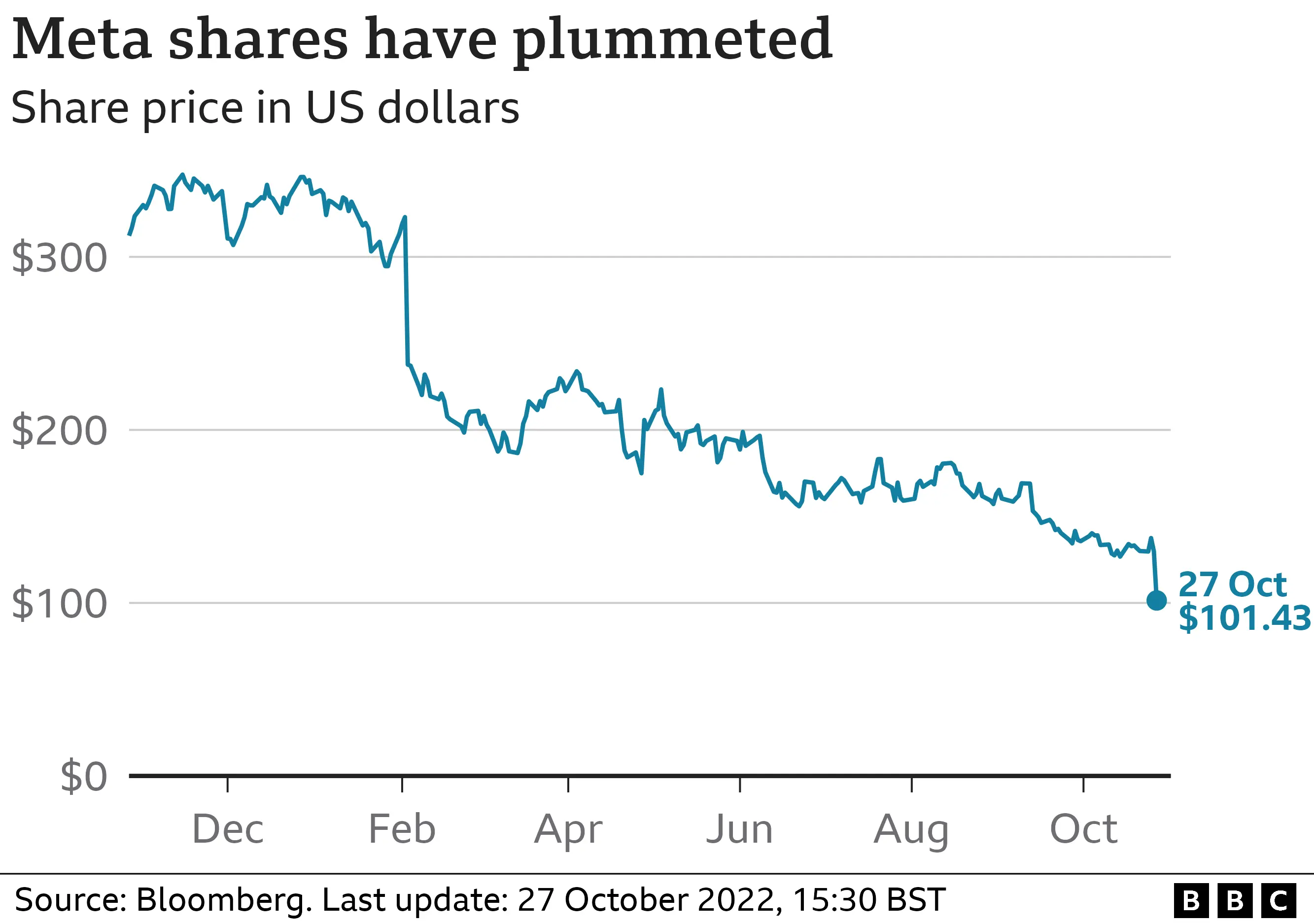
In October 2021, Facebook rebranded as Meta Platforms, signaling a strategic commitment to building the metaverse. This bold move was accompanied by a significant increase in investment in its Reality Labs division, which focuses on virtual and augmented reality hardware and software. Initially, the market reacted with mixed sentiment. The stock experienced a steep decline in late 2021 and 2022, primarily due to concerns over the massive costs associated with metaverse development, a slowdown in digital advertising spending, and competition. However, a renewed focus on efficiency, strong performance in its core advertising business, and increasing optimism around AI and the metaverse’s long-term potential have recently spurred a significant recovery, highlighting the market’s ongoing reassessment of Meta’s future trajectory.
Investing in Meta Stock: Considerations for Potential Investors
Deciding whether to invest in Meta stock requires careful consideration of various factors, aligning with your personal financial goals, risk tolerance, and investment philosophy.
Diversification and Risk Tolerance
Investing in any single stock, even a market leader like Meta, carries inherent risks. It’s crucial not to put all your eggs in one basket. Diversifying your portfolio across different sectors, asset classes, and geographies can mitigate specific company risk. Assess your personal risk tolerance: are you comfortable with the potential for significant short-term fluctuations in exchange for long-term growth potential, or do you prefer more stable, less volatile investments?
Fundamental vs. Technical Analysis
Investors typically approach stock analysis from two main perspectives. Fundamental analysis involves evaluating a company’s intrinsic value by examining its financial statements, management quality, competitive advantages, and industry trends. This approach helps determine if a stock is currently overvalued or undervalued. Technical analysis, on the other hand, focuses on historical price movements and trading volumes to predict future price trends, often using charts and indicators. A comprehensive investment strategy often incorporates elements of both.
Long-Term vs. Short-Term Strategy
Are you looking to hold Meta stock for many years, aiming to benefit from its long-term growth potential (a long-term strategy), or are you looking to profit from short-term price swings (a short-term trading strategy)? Long-term investors often weather market volatility, focusing on the company’s fundamentals and strategic vision. Short-term traders typically rely on technical analysis and rapid market reactions, which demands more active management and carries higher risk.
The Dividend Question
As of the current date, Meta Platforms does not pay a regular dividend. Many growth-oriented technology companies choose to reinvest all their earnings back into the business to fuel further expansion, product development, and strategic initiatives (like the metaverse). While the absence of a dividend means investors don’t receive regular income, it often signals a company committed to aggressive growth and innovation. Investors looking for income generation might consider companies with established dividend policies.
Understanding Meta’s Business Model
A deep understanding of Meta’s business model is paramount. Its vast majority of revenue is derived from advertising across its family of apps (Facebook, Instagram, Messenger, WhatsApp). Its future growth hinges on continuing to innovate these platforms, growing its user base, and effectively competing in the digital advertising market. Simultaneously, its long-term vision is heavily tied to the success of Reality Labs and the metaverse, which represents a significant investment with uncertain returns and a long horizon. Understanding both the current cash cow and the speculative future bets is vital.
How to Buy Meta Stock (and other stocks)
If, after thorough research, you decide to invest in Meta Platforms or any other stock, the process is straightforward through modern financial platforms.
Choose a Brokerage Account
The first step is to open an investment account with a reputable brokerage firm. Many online brokerages offer user-friendly platforms, low or zero commission fees, and a wide range of investment products. Research different brokers to find one that suits your needs in terms of fees, research tools, customer service, and platform usability.
Fund Your Account
Once your brokerage account is open, you’ll need to deposit funds into it. This can typically be done via bank transfer (ACH), wire transfer, or sometimes by linking your bank account for direct debits. Ensure you only invest money you can afford to lose and that your emergency fund is already secured.
Place Your Order
With funds in your account, you can now place an order to buy META stock. You’ll typically enter the ticker symbol (META), the number of shares you wish to purchase, and the type of order. A market order executes immediately at the best available price. A limit order allows you to specify the maximum price you’re willing to pay, ensuring you don’t overpay but potentially risking the order not executing if the stock doesn’t hit your specified price.
Monitor Your Investment
After purchasing shares, it’s crucial to regularly monitor your investment. Keep an eye on Meta’s quarterly earnings reports, news related to the company and the tech industry, and broader market trends. Review your portfolio periodically to ensure it still aligns with your financial goals and risk tolerance. While it’s advisable to avoid excessive short-term trading, staying informed is key to making sound long-term decisions.

Conclusion
The question “how much is Meta stock?” is more than a simple numerical inquiry; it’s an invitation to explore the intricate mechanisms that govern the valuation of one of the world’s most influential companies. The real-time price reflects the immediate pulse of the market, but the true understanding of its worth comes from dissecting its financial health, analyzing the complex interplay of internal and external factors, tracing its historical performance, and critically assessing its future prospects.
Meta Platforms, with its dominant advertising business and ambitious metaverse bet, remains a compelling yet complex investment opportunity. Its stock price is a dynamic entity, shaped by everything from user growth on Instagram to global interest rates, from regulatory decisions to the speculative excitement surrounding virtual worlds. For potential investors, the journey requires diligence, an understanding of both fundamental and technical indicators, and a clear vision of their own investment horizon and risk appetite. As with any investment, thorough research, diversification, and a long-term perspective are not just advisable but essential for navigating the ever-evolving landscape of the financial markets. Ultimately, while no one can perfectly predict future stock movements, an informed approach offers the best pathway to making sound financial decisions concerning a company as pivotal as Meta.
aViewFromTheCave is a participant in the Amazon Services LLC Associates Program, an affiliate advertising program designed to provide a means for sites to earn advertising fees by advertising and linking to Amazon.com. Amazon, the Amazon logo, AmazonSupply, and the AmazonSupply logo are trademarks of Amazon.com, Inc. or its affiliates. As an Amazon Associate we earn affiliate commissions from qualifying purchases.