
In the intricate world of personal and business finance, certain pieces of information act as critical lynchpins, ensuring the smooth and secure movement of money. Among these, the routing number stands out as a fundamental identifier, facilitating everything from direct deposits to bill payments. While often overlooked until needed, knowing where and how to find your routing number is a basic financial literacy skill that can save you time, prevent errors, and ensure your transactions proceed without a hitch.
This comprehensive guide will demystify the routing number, explain its importance, and provide you with clear, actionable steps to locate yours whenever the need arises. Whether you’re setting up a new direct deposit, paying a vendor, or simply curious about your banking details, understanding this nine-digit code is indispensable.

Understanding the Routing Number: More Than Just Digits
Before diving into where to find your routing number, it’s crucial to understand what it is and why it holds such significance in the financial ecosystem. It’s not just a random sequence of numbers; each digit plays a role in directing your money safely to its intended destination.
What is a Routing Number?
A routing number, officially known as an ABA (American Bankers Association) Routing Transit Number (RTN), is a nine-digit code that identifies the specific financial institution where an account is held. It acts like a digital address for your bank, credit union, or other financial services provider, ensuring that funds transferred electronically go to the correct bank.
The system was first developed in 1910 by the American Bankers Association to streamline the processing of paper checks. In an era before widespread electronic transfers, these numbers helped sort checks for clearing and settlement. Today, while paper checks are less common, the routing number’s role has expanded dramatically, becoming central to nearly all electronic funds transfers.
Why is it So Important?
The routing number is an indispensable component for a wide array of financial transactions, acting as a crucial identifier for your bank. Without it, many common financial operations would be impossible or fraught with errors.
- Direct Deposits: This is perhaps one of the most common uses. To receive your salary, tax refunds, social security benefits, or other regular payments directly into your bank account, the payer needs your routing number (along with your account number). It ensures your funds are deposited into the correct bank.
- Automated Clearing House (ACH) Transfers: The routing number is central to ACH transactions, which are electronic payments processed through the ACH network. This includes direct deposits (as mentioned), automatic bill payments (e.g., utility bills, loan payments), and electronic transfers between bank accounts.
- Wire Transfers: While often requiring additional information and having distinct fees, domestic wire transfers also rely on routing numbers to direct funds between banks in real-time. (Note: sometimes a separate wire routing number is used, which we’ll discuss later).
- Online Bill Payments: When setting up payments to service providers through your bank’s online platform, your routing and account numbers enable the bank to send funds on your behalf.
- Linking External Accounts: Many financial apps and services (like budgeting tools, investment platforms, or peer-to-peer payment services) require your routing and account numbers to link your bank account for transfers or withdrawals.
In essence, the routing number is the foundational piece of information that directs the flow of money, making modern banking convenient and efficient.
The Anatomy of a Routing Number
Every ABA routing number is a nine-digit code structured to convey specific information about the financial institution it represents. While most users don’t need to decode it, understanding its structure can provide a layer of insight:
- First Four Digits: Identify the Federal Reserve processing center where the bank is located.
- Next Four Digits: Identify the specific financial institution itself.
- Ninth Digit: A “checksum” digit, used to validate the entire routing number through a mathematical algorithm. This helps prevent errors and ensures the number is legitimate.
This systematic structure ensures accuracy and minimizes the chances of misdirected funds within the vast network of financial institutions.
Common Places to Locate Your Routing Number
The good news is that finding your routing number is usually straightforward, as banks make this information readily accessible through several common channels. Knowing these primary sources will equip you to retrieve the number quickly whenever it’s required.
On Your Checks
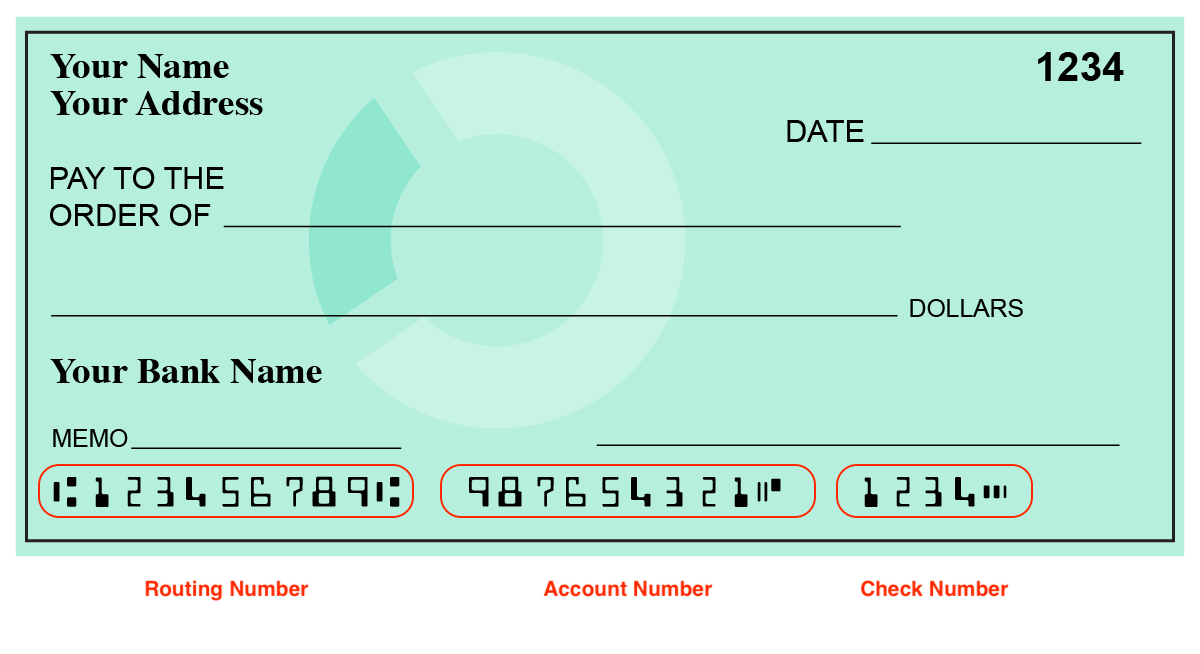
For many, the most traditional and reliable place to find a routing number is on a physical check. Banks typically print these numbers in a standard format on the bottom of your checks.
- Placement: Look at the bottom edge of your check. You’ll typically find three sets of numbers, separated by special symbols.
- The first set of numbers (usually nine digits) on the left is your routing number.
- The middle set (which can vary in length) is your account number.
- The last set is your check number.
- Important Note: Make sure you’re using a check from the correct account. If you have multiple accounts (e.g., checking and savings), their routing numbers might be different, especially if they are at different branches or account types. Always verify it’s a check associated with the account you intend to use for the transaction. Also, temporary checks often do not have the correct routing number or may be missing your name/address, making them unsuitable for certain transactions.
Through Your Online Banking Portal
In today’s digital age, your online banking portal is often the quickest and most convenient way to access your financial information, including your routing number.
- Login: Access your bank’s official website or mobile app and log in securely to your account.
- Navigate to Account Details: Look for a section like “Account Details,” “Account Summary,” “Direct Deposit Information,” or “View Statements.” The exact wording may vary by bank.
- Locate the Number: Your routing number will typically be displayed prominently alongside your account number. Some banks even have a dedicated section for “Direct Deposit Forms” or “ACH Information” which will clearly list both numbers.
- Mobile App: Many bank mobile apps offer similar functionality. Look under “Account Info” or “Details” for the specific account.
This method is particularly useful if you don’t have a checkbook handy or prefer to confirm the number digitally.
On Your Bank Statements
Whether you receive paper statements in the mail or access them electronically through your online banking portal, your bank statement is another reliable source for your routing number.
- Location: Look for your routing number typically near your account number at the top or bottom of the statement. Some banks list it in a “Bank Information” section.
- Electronic Statements: If you’re accessing an e-statement, you can often download it as a PDF and easily find the number there.
Bank statements provide a comprehensive overview of your account, and the routing number is a standard piece of identifying information included.
Contacting Your Bank Directly
If all else fails, or if you prefer direct confirmation, contacting your bank is always an option.
- Phone: Call your bank’s customer service line. Be prepared to verify your identity (e.g., account number, last four digits of SSN, date of birth) before they can provide sensitive information.
- In-Person: Visit a local branch of your bank. A teller or customer service representative will be able to provide you with the correct routing number for your account. Make sure to bring identification.
- Bank Website: Many banks have a “Contact Us” page or a “Frequently Asked Questions” section where general routing numbers for their institution are published. Be cautious with these general numbers, as some banks have different routing numbers for specific regions or transaction types. It’s always best to confirm the one linked to your specific account.
Specific Scenarios and Considerations for Routing Numbers
While the basic concept of a routing number remains consistent, certain situations warrant special attention, as details can sometimes vary. Understanding these nuances can prevent confusion and ensure accuracy.

Direct Deposit and Payroll
Setting up direct deposit for your paycheck or government benefits is a common financial activity that requires your routing number.
- Employer Forms: Your employer will usually provide a direct deposit form, which you’ll need to fill out with your routing number, account number, and sometimes your signature. Double-check all entries before submission.
- Verification: Some employers or government agencies might perform a small “pre-note” transaction (a zero-dollar transfer) to verify the account details before initiating regular deposits. This is a security measure.
Bill Payments and Transfers
When managing recurring bills or making one-off transfers, routing numbers play a key role, but it’s important to differentiate between various payment methods.
- ACH Payments (Automatic Bill Pay): When you set up automatic payments directly with a utility company or loan provider from your bank account, you’ll provide them with your routing and account numbers for ACH debits.
- Wire Transfers vs. ACH: Wire transfers are generally faster (often same-day) and more expensive, handled by the Federal Reserve’s Fedwire system. ACH transfers are processed in batches, typically taking 1-3 business days. For wire transfers, some banks may have a different routing number than the one used for ACH or checks. Always confirm the specific wire transfer routing number with your bank if you’re sending or receiving a wire.
- Peer-to-Peer (P2P) Apps: Services like Zelle, Venmo, or PayPal usually do not require you to input your routing number for standard transactions. They connect to your bank account using your email, phone number, or by logging into your bank directly through their platform. However, to link your bank account initially, they might request your routing and account numbers, or use secure tokenization.
Business Banking vs. Personal Banking
It’s common for individuals to have separate personal and business accounts. It’s crucial to remember that these accounts will have distinct routing numbers.
- Distinct Identifiers: Even if both accounts are with the same bank, a business checking account will have a different routing number than a personal checking account. This is often due to different branches, processing centers, or account structures for commercial versus retail clients.
- Always Verify: When handling business transactions, ensure you are providing the routing number associated with your business account, and vice-versa for personal transactions. Mixing them up can lead to payment rejections and delays.
Debit Cards and Routing Numbers
A common point of confusion is whether a debit card has a routing number. The short answer is no.
- Card Number vs. Account Number: Your debit card has a 16-digit card number and security codes (expiration date, CVV) for transactions made with the card (e.g., swiping, online purchases). This card number is distinct from your bank account number.
- Underlying Account: While your debit card doesn’t have a routing number, it accesses an account that does have a routing number. The routing number identifies the bank, not the individual card.
Security and Best Practices for Your Routing Number
In an age of digital threats, understanding how to protect your financial information is paramount. While a routing number is less sensitive than an account number, it still warrants careful handling.
Is Your Routing Number Sensitive Information?
Compared to your full bank account number, Social Security number, or credit card details, a routing number is generally considered less sensitive. It identifies your bank, not your specific account, and is often publicly available on a bank’s website or even through simple online searches.
- Limited Risk: Someone with only your routing number cannot directly access your funds. They would also need your account number and potentially other personal information to initiate fraudulent transactions.
- Combination is Key: The real risk emerges when your routing number is combined with your account number. This pairing enables electronic funds transfers.
- Precautionary Principle: Despite the lower risk, it’s always wise to treat all financial information with care. Only share it when necessary and with trusted parties.
Protecting Your Financial Information
Adopting good security habits for all your financial data is crucial:
- Secure Connections: Only enter your routing and account numbers on secure websites (look for “https://” and a padlock icon in the URL bar).
- Trusted Parties: Only provide your routing number to legitimate entities such as your employer, trusted billers, or reputable financial institutions.
- Monitor Accounts: Regularly review your bank statements and online banking activity to spot any unauthorized transactions immediately.
- Phishing Awareness: Be wary of unsolicited emails or calls asking for your banking details. Banks will rarely ask for this information via unsecure channels.
What to Do if You Suspect Fraud
If you ever suspect that your routing and account numbers have been compromised, act swiftly:
- Contact Your Bank Immediately: Report the suspected fraud to your bank’s fraud department. They can guide you through the process, potentially freezing accounts, reversing transactions, or issuing new account numbers.
- Change Passwords: Update passwords for your online banking and other financial accounts.
- File a Report: Depending on the severity, you may need to file a police report or report it to relevant consumer protection agencies.
Troubleshooting Common Routing Number Issues
Even with careful attention, issues related to routing numbers can occasionally arise. Knowing how to troubleshoot these common problems can help you resolve them efficiently.
Incorrect Routing Number Entry
Mistakes happen. If you accidentally provide an incorrect routing number for a transaction:
- What Happens: If the incorrect routing number belongs to a non-existent bank or an invalid format, the transaction will likely be rejected and returned to the sender. This can cause delays. If it belongs to another legitimate bank, the funds could be misdirected, but this is less common due to the need for a matching account number.
- Resolution: Contact the sender or receiver of the funds as soon as you realize the error. They may be able to stop the transaction or provide instructions on how to re-initiate it with the correct information. Be prepared for processing delays.
Finding the Correct Routing Number for Wires
As briefly mentioned, some banks use different routing numbers for domestic wire transfers compared to ACH transactions or checks.
- Why the Difference? Wire transfers often go through a different Federal Reserve pathway (Fedwire) and may require a distinct identifier to ensure immediate and direct transfer.
- How to Confirm: Always explicitly ask your bank for their wire transfer routing number if you are sending or expecting a wire. This information is usually found on their website’s “Wire Transfer Instructions” page or by contacting customer service directly. Do not assume the check routing number is sufficient for wires.
My Bank Merged or Changed Names
Bank mergers, acquisitions, or name changes are relatively common in the financial industry. These events can sometimes impact routing numbers.
- Transition Period: When banks merge, there’s typically a transition period during which both old and new routing numbers may be accepted. However, it’s always best to switch to the new routing number as soon as it’s provided.
- New Number, New Checks: The acquiring bank will usually issue new checks and communicate any changes to routing numbers well in advance. Update your direct deposit information with your employer and any automatic bill payment settings as per their instructions.
- Stay Informed: Pay close attention to communications from your bank regarding mergers or name changes, as they will provide specific guidance on how to update your financial information.
Knowing where to find your routing number is a basic yet critical piece of financial knowledge. By understanding its purpose, its various locations, and best practices for its use, you empower yourself to manage your finances with greater confidence, accuracy, and security. Keep this guide handy, and you’ll never be left wondering “where do I find my routing number?” again.
aViewFromTheCave is a participant in the Amazon Services LLC Associates Program, an affiliate advertising program designed to provide a means for sites to earn advertising fees by advertising and linking to Amazon.com. Amazon, the Amazon logo, AmazonSupply, and the AmazonSupply logo are trademarks of Amazon.com, Inc. or its affiliates. As an Amazon Associate we earn affiliate commissions from qualifying purchases.