
In the intricate world of personal finance, certain pieces of information act as crucial keys to unlock various financial transactions. Among these, your bank’s routing number stands out as a fundamental identifier, essential for everything from setting up direct deposit to paying bills online. Despite its importance, many individuals find themselves scratching their heads when asked to locate this nine-digit code, often in a hurry. Understanding where to find it on your check, and why it’s so critical, is a cornerstone of financial literacy.
This comprehensive guide will demystify the routing number, explaining its purpose, its typical location on a standard check, and alternative methods for retrieval. By the end, you’ll not only confidently pinpoint this vital number but also gain a deeper appreciation for its role in your financial ecosystem.

Understanding the Importance of Your Routing Number
Before we dive into the “where,” let’s establish the “what” and “why.” A routing number isn’t just a random string of digits; it’s a meticulously assigned identifier with significant financial implications.
What is a Routing Number?
Officially known as an ABA (American Bankers Association) routing transit number, a routing number is a nine-digit code that identifies the financial institution your bank account belongs to. It’s essentially a digital address that tells other banks where to send or receive funds. Every bank, credit union, and other financial institution in the United States has at least one unique routing number, though larger institutions might have multiple routing numbers for different regions or types of transactions (e.g., one for checking accounts, another for savings, or distinct ones for wire transfers).
These numbers were originally developed by the American Bankers Association in 1910 to facilitate the sorting and routing of paper checks. While technology has evolved dramatically, the fundamental purpose of the routing number remains the same: to ensure that funds are directed to the correct financial institution.
Why Do You Need It?
Your routing number is indispensable for a wide array of common financial activities. Without it, many of the conveniences we take for granted in modern banking simply wouldn’t be possible.
- Direct Deposit: Perhaps the most common use, your routing number, combined with your account number, enables employers to directly deposit your salary or government agencies to send benefit payments straight into your bank account. This eliminates the need for physical checks and speeds up access to your funds.
- Automatic Bill Payments: Setting up recurring payments for utilities, loans, or subscriptions often requires your routing number to authorize electronic transfers directly from your account. This ensures timely payments and helps avoid late fees.
- Electronic Funds Transfers (EFTs): Whether you’re sending money to a friend via a banking app, transferring funds between your own accounts at different institutions, or initiating an online payment to a vendor, the routing number is a key component of these EFTs.
- ACH Transactions: The Automated Clearing House (ACH) network is the electronic funds transfer system that facilitates many of the transactions listed above. Both direct deposits and automatic bill payments are types of ACH transactions, all requiring a routing number.
- Wire Transfers: For larger, faster, and often international money transfers, wire transfers are used. While some banks might use a different routing number for wire transfers than for standard ACH transactions, the principle remains the same: it identifies the receiving bank.
- Tax Refunds: When you file your taxes and opt for direct deposit of your refund, you’ll need to provide your routing and account numbers to the IRS.
Routing Number vs. Account Number
It’s crucial not to confuse your routing number with your account number. While both are vital for financial transactions, they serve distinct purposes:
- Routing Number: Identifies your financial institution (your bank). It’s like the city and street address.
- Account Number: Identifies your specific account within that financial institution. It’s like your individual house number on that street.
Both are needed to ensure funds reach the correct account at the correct bank. Providing one without the other, or mixing them up, will result in failed transactions and potential delays or fees.
Pinpointing Your Routing Number: The Standard Location
For most people, the quickest and most reliable way to find their routing number is to look at a physical check. Banks design checks with specific information in standardized locations to make these details easy to locate.
The Anatomy of a Check
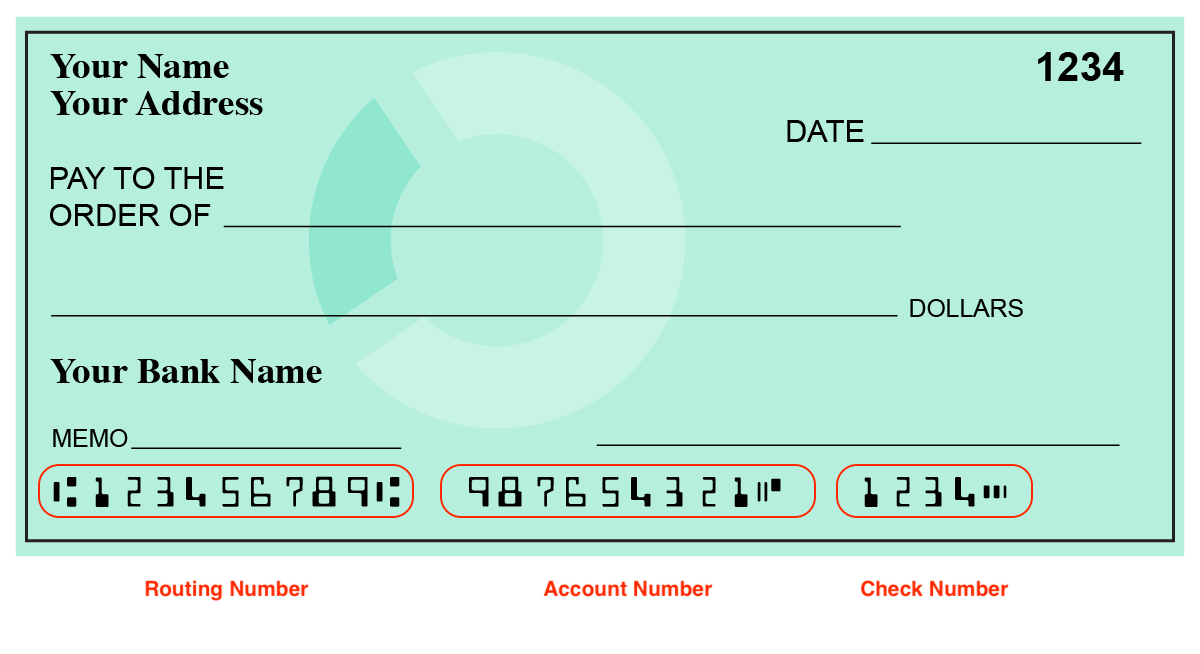
A standard personal check is more than just a piece of paper; it’s a carefully structured financial instrument. To understand where the routing number resides, let’s briefly break down its key components:
- Top Left: Your name and address.
- Top Right: The current date.
- Middle Right: The payee line (who the check is made out to) and the amount in words and numbers.
- Bottom Right: Your signature line.
- Memo Line: An optional line for notes about the payment.
- Bank Information: The name and logo of your bank, usually near the top or middle of the check.
The critical area for finding your routing and account numbers is along the bottom edge of the check.
The MICR Line Explained
The series of numbers printed at the bottom of a check is known as the MICR (Magnetic Ink Character Recognition) line. These numbers are printed using a special magnetic ink that allows machines to read them quickly and accurately, even if the check is slightly wrinkled or damaged. This technology is vital for the high-volume processing of checks by banks.
The MICR line typically contains three distinct sets of numbers, usually separated by special symbols:
- Routing Number: This is the first set of numbers on the left.
- Account Number: This is the second set of numbers, appearing after the routing number.
- Check Number: This is the third set of numbers, which matches the check number printed in the upper right corner of the check.
The Nine-Digit Identifier: How to Read It
When you look at the bottom of your check, you’ll see the routing number as the first nine digits on the left side of the MICR line. It will often be enclosed by a special symbol that looks like two vertical bars followed by a colon or similar glyphs (⑈ or ⑆).
For example, a MICR line might look like this:
⑆123456789⑆ 0001234567 ⑈ 101
In this example:
- 123456789 is your bank’s routing number.
- 0001234567 is your individual account number.
- 101 is the check number.
Always identify the nine-digit sequence that is distinct and usually marked by those unique symbols to ensure you’re using the correct routing number. Remember, it’s always the first set of numbers from the left.
Common Scenarios and Variations
While a standard check is the go-to, there are situations where you might not have one handy, or where the information might appear slightly differently.
Temporary Checks and Starter Checks
If you’ve just opened a new account, your bank might provide you with temporary or starter checks. These checks usually have your routing and account numbers printed on them, but they might lack your name and address. The location of the numbers on the MICR line will typically be the same as on regular checks: routing number first, then account number. However, it’s always a good idea to confirm with your bank if you are unsure about temporary checks, as their security features might be reduced.
Online Banking and Mobile Apps
In today’s digital age, relying solely on paper checks for financial information can be limiting. Fortunately, most modern banks provide easy access to your routing number through their online banking portals and mobile applications.
- Online Banking: Log in to your bank’s website. Once logged in, navigate to your account details. Look for options like “Account Summary,” “Account Information,” “Direct Deposit Information,” or “View Statement.” Your routing number is almost always displayed prominently here, usually alongside your account number. Some banks might have a specific section for “Routing & Account Numbers.”
- Mobile Apps: Similar to online banking, your bank’s mobile app will typically feature your routing number. After logging in, select the specific account (e.g., your checking account). There should be an option to “View Account Details,” “Show Routing Number,” or something similar.
Using these digital tools is often the most convenient and secure way to retrieve your routing number if you don’t have a checkbook readily available.
Contacting Your Bank Directly
If all else fails, or if you prefer a human touch, you can always contact your bank directly.
- Customer Service: Call your bank’s customer service line. After verifying your identity (which they will do rigorously for security reasons), a representative can provide you with your routing number. Have your account number and other verification details ready to expedite the process.
- Visit a Branch: Walking into a local branch is another reliable method. A teller will be able to provide you with the correct routing number for your account after verifying your identity. This is particularly useful if you have complex banking needs or need to understand specific routing numbers for different transaction types.
Special Cases: Wire Transfers and ACH Routing Numbers
It’s important to be aware that some larger banks use different routing numbers for specific types of transactions.
- Wire Transfers: While your standard routing number on a check is generally used for ACH transactions (like direct deposit and online bill pay), some banks use a different routing number specifically for incoming domestic wire transfers. This is often an institutional or corporate routing number. If you are expecting a wire transfer, it is critical to confirm the correct routing number with your bank, as using the wrong one could delay or even lose your funds.
- International Wire Transfers: For international transfers, you’ll typically need a SWIFT (Society for Worldwide Interbank Financial Telecommunication) code or BIC (Bank Identifier Code) in addition to, or instead of, a standard routing number. Your bank will provide this international code.
Always clarify with your bank the specific routing number required for the type of transaction you are performing, especially for wire transfers.
Ensuring Accuracy and Preventing Errors
Having the correct routing number is paramount. An error can lead to significant headaches and financial setbacks.
Double-Checking Before Use
Before you provide your routing number for any transaction, take a moment to double-check its accuracy. Cross-reference it with another source if possible – perhaps against a bank statement, your online banking portal, or another check. This simple step can save you a lot of trouble.
Consequences of Incorrect Numbers
Using an incorrect routing number can lead to several problems:
- Failed Transactions: Most commonly, the transaction will simply fail, and funds won’t be transferred. You’ll likely receive a notification of a bounced payment or failed deposit.
- Delays: Even if the transaction eventually goes through after correction, it will be delayed, potentially leading to missed payment deadlines or delayed access to your funds.
- Fees: Your bank or the receiving institution might charge fees for failed transactions or for processing corrections.
- Funds Sent to the Wrong Account: In rarer but more severe cases, if a routing number happens to match another valid bank and the account number also matches an account at that bank (even if it’s not yours), your funds could be sent to the wrong person. Recovering these funds can be a lengthy and complicated legal process.
Security Considerations
Your routing number is sensitive financial information. While it’s less critical than your full account number or PIN, it’s still part of your financial identity.
- Be Cautious Online: Only enter your routing number on secure, encrypted websites (look for “https://” in the URL and a padlock symbol).
- Phishing Scams: Be wary of emails or calls asking for your routing number, especially if they seem unsolicited or urgent. Banks will rarely ask for this information via unsecure channels.
- Shred Old Checks: When disposing of old checks or documents containing your routing and account numbers, always shred them to prevent identity theft.
Beyond the Check: Other Ways to Find Your Routing Number
While the physical check is a classic source, modern banking offers several convenient alternatives.
Bank Statements
Your monthly or quarterly bank statements, whether physical or electronic, will almost always display your bank’s routing number. Look for it usually near the top of the statement, often close to your account number and bank’s address. It’s a reliable source as these statements are official documents from your financial institution.
Your Bank’s Official Website
Even without logging in, most banks publish their standard routing numbers on their public websites. Look for sections like “Contact Us,” “FAQs,” or “About Us.” Often, there will be a dedicated page or a direct link for “Routing Numbers.” Be sure you are on the official website of your bank, not a look-alike phishing site.

Mobile Banking Apps
As mentioned earlier, your mobile banking app is an incredibly convenient tool. Almost all major bank apps provide a way to quickly view your routing number, often in the account details section for your checking or savings account. This is usually the fastest method if you’re on the go and don’t have a physical check.
In conclusion, knowing where to find your bank’s routing number is a fundamental aspect of managing your personal finances effectively. Whether you refer to a physical check, log into your online banking portal, or simply call your bank, having quick and accurate access to this nine-digit code will empower you to manage your money with confidence and efficiency.
aViewFromTheCave is a participant in the Amazon Services LLC Associates Program, an affiliate advertising program designed to provide a means for sites to earn advertising fees by advertising and linking to Amazon.com. Amazon, the Amazon logo, AmazonSupply, and the AmazonSupply logo are trademarks of Amazon.com, Inc. or its affiliates. As an Amazon Associate we earn affiliate commissions from qualifying purchases.