
The humble checking account number, a string of digits often taken for granted, serves as the unique identifier for your financial lifeblood within a bank. While seemingly a simple detail, understanding its structure, purpose, and security implications is fundamental to effective personal finance management. Far more than just a random sequence, this number is a crucial component that underpins virtually every transaction, from direct deposits to bill payments, defining the digital backbone of your financial interactions.
Navigating the world of personal finance requires a clear grasp of such foundational elements. This article will demystify checking account numbers, exploring their typical length, their critical role in the financial ecosystem, the inherent security considerations, and how they fit into the broader landscape of modern money management.

Understanding the Anatomy of a Checking Account Number
At its core, a checking account number is a unique code assigned by a financial institution to distinguish one account from another. While there isn’t a single, universal standard for its length across all banks and countries, understanding its typical characteristics is key.
The Core Purpose of Account Numbers
An account number’s primary purpose is identification. Imagine millions of accounts within a single bank; each needs a distinct identifier to ensure funds are deposited into the correct place and debited from the right source. It acts much like a street address for your money, directing incoming and outgoing financial traffic with precision. Without this unique identifier, the complex web of financial transactions that occur daily would be impossible to manage, leading to chaos and misdirected funds. Beyond just identification, account numbers facilitate transaction processing, enable electronic transfers, and link your account to various financial services and payment systems. They are the backbone of automated clearing house (ACH) transfers, wire transfers, and even simple direct deposits from an employer or government benefits.
Typical Digit Ranges Across Financial Institutions
When asking “how many digits,” the answer is typically a range rather than a fixed number. In the United States, checking account numbers generally fall between 8 and 12 digits. However, some institutions might use slightly fewer (e.g., 7 digits) or slightly more (e.g., 14 digits), though these are less common. The exact length is determined by the individual bank’s internal numbering system, which takes into account factors like the number of customers, the complexity of their internal routing, and historical legacy systems. For instance, smaller credit unions might have shorter account numbers than mega-banks simply because they have fewer accounts to differentiate. It’s important to remember that this range is an industry norm, not a regulatory mandate, which is why variations exist.
Distinguishing from Other Financial Identifiers
It’s crucial not to confuse your checking account number with other financial identifiers you might encounter, as each serves a distinct purpose:
- Routing Number: This is a 9-digit code (also known as an ABA routing number) that identifies your financial institution itself. Think of it as the “city and state” part of an address, guiding where the money needs to go generally. It’s used in conjunction with your account number to ensure funds reach the correct bank and then the correct account within that bank.
- Debit Card Number: This is typically a 16-digit number found on the front of your debit card. While linked to your checking account, it’s primarily used for point-of-sale transactions and online purchases. It’s a different identifier and should never be used where an account number is requested (e.g., for direct deposit). It functions through payment networks like Visa or Mastercard, rather than directly identifying your bank account for ACH transfers.
- Credit Card Number: Similar to a debit card, this 16-digit number identifies a specific credit card account, which is a form of revolving credit, not a checking account.
- SWIFT/BIC Code: For international transactions, you’ll encounter an 8-to-11-character alphanumeric code that identifies banks globally. This is specific to international wire transfers and serves a similar purpose to a routing number but on a global scale.
Understanding these distinctions is vital for correctly providing information for various financial transactions and for protecting your financial security.
The Financial Significance of Your Account Number
Your checking account number is more than just a series of digits; it is the linchpin for a vast array of financial operations that define modern personal and business finance. Its proper use ensures the smooth flow of funds and access to critical financial services.
Facilitating Transactions: Direct Deposits and Bill Payments
One of the most common and beneficial uses of your account number is for direct deposits. Whether it’s your salary, government benefits, or tax refunds, providing your employer or payer with your checking account number (and routing number) ensures that funds are electronically transferred directly into your account, often bypassing the need for physical checks. This method is not only faster but also more secure and convenient. Similarly, your account number is essential for setting up automatic bill payments. From utility bills to loan repayments, you can authorize merchants or service providers to directly debit your account on specific dates, helping you avoid late fees and manage your budget more effectively. This automation relies entirely on the precise identification provided by your account number.
The Role in ACH Transfers and Wire Transfers
Beyond routine deposits and payments, your checking account number is critical for larger, more formal electronic fund transfers:
- ACH (Automated Clearing House) Transfers: These are electronic payments and money transfers made through the ACH network. This network facilitates a vast volume of transactions, including direct deposits, direct debits, and electronic checks. Your account number is paramount for directing these transfers to and from your specific account. ACH transfers are typically used for domestic transactions within the US and are generally less expensive than wire transfers, though they can take 1-3 business days to clear.
- Wire Transfers: For faster and often larger sum transfers, especially international ones, wire transfers come into play. Your checking account number, along with your bank’s routing number (and often a SWIFT/BIC code for international wires), is essential for sending or receiving these funds. Wire transfers offer same-day or next-day clearance but usually come with higher fees due to their immediate and guaranteed nature. In both ACH and wire transfers, an incorrect account number can lead to delays, returned funds, or, in worst-case scenarios, funds being sent to the wrong recipient, highlighting the need for extreme accuracy.
Managing Your Finances: Statements and Online Banking Access
Your checking account number is also implicitly linked to how you monitor and manage your finances. It’s the identifier that appears on your monthly bank statements, both paper and electronic, allowing you to reconcile transactions and track your spending. Furthermore, while you typically log into online banking with a username and password, your account number is the internal identifier that connects your login credentials to your specific financial data, ensuring you access your own account details, transaction history, and digital tools. Some banks might even require your account number for initial setup or recovery of online banking access, underscoring its foundational role in your digital financial presence.
Security Concerns and Best Practices for Account Numbers
Given its critical role in accessing and moving your money, the security of your checking account number is paramount. Misuse or exposure of this information can lead to significant financial risks.
Protecting Your Financial Identity: Risks of Exposure
While not as immediately dangerous as a debit or credit card number (which can be used for instant unauthorized purchases), your checking account number, especially when paired with your routing number, is a key piece of information for fraudsters. The primary risk associated with its exposure is ACH fraud or check fraud. A perpetrator with both your routing and account number could potentially:
- Create fraudulent checks: They could print fake checks and attempt to cash them.
- Initiate unauthorized ACH debits: This involves setting up recurring or one-time debits from your account without your permission, mimicking legitimate bill payments.
- Attempt wire transfers: While more difficult without additional authentication, it’s a potential avenue for sophisticated fraudsters.
The damage from such fraud can range from depleted funds and bounced checks to long-term credit report issues and the hassle of reclaiming your money. It’s a direct threat to your financial stability and peace of mind.
When to Share and When to Withhold Your Account Number
Understanding when it’s safe and necessary to share your account number is crucial:
When to Share (Legitimate Purposes):
- Setting up direct deposit: With your employer, government agency (e.g., IRS for tax refunds), or benefits provider.
- Setting up automatic bill payments: With trusted service providers (utilities, loan companies, insurance).
- Receiving a wire transfer or ACH payment: To give to someone who needs to send you money.
- Voiding a check: When opening a new account with a financial institution, for example, to link accounts for transfers.
- Your bank customer service: When you initiate contact and they need to verify your identity.
When to Withhold (High Risk or Unnecessary):
- Unsolicited emails or phone calls: Be extremely wary of anyone asking for your account number via email, text, or phone, especially if they claim to be from your bank or a government agency. Legitimate institutions rarely ask for this sensitive information unsolicited.
- Suspicious websites: Never enter your account number on websites that don’t look secure (check for “https://” and a padlock symbol).
- Unknown individuals or companies: If you don’t recognize the entity or have not initiated a transaction with them, do not provide your account number.
- Social media or public forums: Absolutely never post or share your account number publicly.
Safeguarding Against Fraud: Practical Tips
Proactive measures can significantly reduce your risk:
- Monitor your accounts regularly: Check your bank statements and online banking transactions frequently. Set up alerts for large transactions or unusual activity.
- Shred old financial documents: Before discarding bank statements, voided checks, or other documents containing your account number, shred them thoroughly.
- Use strong passwords: Ensure your online banking accounts are protected with unique, complex passwords and, where available, two-factor authentication.
- Be wary of phishing scams: Do not click on suspicious links or open attachments from unknown senders. Always verify the authenticity of requests for financial information.
- Limit check usage: While checks are still necessary for some transactions, minimizing their use can reduce the physical exposure of your account information. When writing checks, keep them secure and don’t leave them lying around.
- Report suspicious activity immediately: If you suspect unauthorized activity or believe your account number has been compromised, contact your bank immediately.
Regional Variations and Future Trends in Account Numbering
While the core concept of a unique account identifier is universal, the specifics can vary significantly across different countries and regions, reflecting diverse banking systems and regulatory landscapes. Moreover, the financial industry is constantly evolving, with new technologies promising to reshape how we interact with our accounts.
Global Differences in Financial Identification Systems
The “how many digits” question becomes more complex when looking beyond the United States. For instance:
- Europe (IBAN): Many European countries utilize the International Bank Account Number (IBAN). An IBAN is an internationally agreed-upon system of identifying bank accounts across national borders. It consists of up to 34 alphanumeric characters, including a two-letter country code, two check digits, a bank identifier, and the account number itself. The actual account number within an IBAN can vary significantly in length. This standardized format facilitates cross-border payments within the Single Euro Payments Area (SEPA) and beyond.
- Canada: Canadian account numbers typically comprise 7 to 12 digits, often used in conjunction with a 5-digit institution number and a 3-digit transit number (similar to a routing number).
- India: Indian bank accounts often use 9 to 18 digits. Furthermore, India has implemented the Unified Payments Interface (UPI), which uses a virtual payment address (VPA) linked to bank accounts, simplifying transactions without needing to share the full account number.
These variations highlight that while the underlying need for unique identification remains, the specific implementation depends on regional financial infrastructure, historical development, and regulatory frameworks.
Evolution Towards Digital and Biometric Authentication
The financial industry is increasingly moving towards more sophisticated and user-friendly methods of authentication and identification, which may indirectly influence the future relevance or usage of traditional account numbers in day-to-day interactions.
- Biometrics: Fingerprint scans, facial recognition, and iris scans are becoming common for unlocking banking apps and authorizing transactions. These methods link directly to your underlying account without requiring you to manually enter an account number.
- Tokenization: In payment systems, tokenization replaces sensitive data (like a card number) with a unique, randomly generated “token” that cannot be reverse-engineered. While primarily used for card payments, the concept of obfuscating or replacing direct account identifiers could evolve.
- Virtual Account Numbers: Some fintech solutions offer temporary or virtual account numbers for specific transactions, adding an extra layer of security by not exposing your primary account details.
These advancements aim to enhance security and convenience, potentially reducing the frequency with which consumers need to recall or manually input their full checking account numbers.
The Future of Account Security and Simplification
The trend is towards abstracting the complexity of account numbers from the end-user while maintaining robust identification in the backend. Future financial tools and platforms are likely to prioritize user experience through simplified interfaces that obscure the raw account number, replacing it with easily recognizable nicknames, linked profiles, or biometric confirmations.
However, the core account number will likely remain a critical backend identifier for the foreseeable future. Regulations, legacy systems, and the fundamental need for a unique, unchangeable identifier for auditing and reconciliation purposes ensure its continued existence. The focus will shift to how financial institutions protect this number and how users interact with services that abstract it, enhancing security without sacrificing functionality.
Practical Applications: Finding and Using Your Account Number
While understanding the theoretical aspects of your checking account number is valuable, knowing how to practically locate and correctly use it is essential for everyday financial management.
Locating Your Account Number (Checks, Statements, Online Banking)
There are several reliable places to find your checking account number:
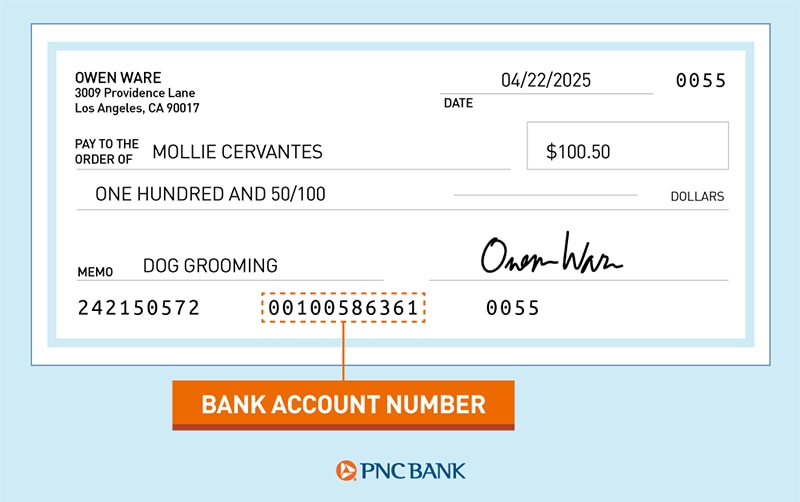
- On a Physical Check: If you have a checkbook, your account number is typically printed at the bottom of the check. It’s usually the middle set of numbers, nestled between your bank’s 9-digit routing number (on the left) and the check number (on the right). Make sure you’re identifying the correct sequence, as all three numbers are important but serve different purposes.
- Bank Statements: Your monthly or quarterly bank statements, whether paper or electronic, will clearly display your checking account number. It’s usually found near the top of the statement, along with your name and address.
- Online Banking Portal: This is often the quickest and most convenient way to find your account number. Log in to your bank’s website or mobile app. Navigate to your checking account details, and you should see the full account number listed. Sometimes, for security reasons, banks might mask some digits (e.g., showing only the last four digits), requiring an extra click or verification step to reveal the full number.
- Calling Your Bank: If all else fails, you can always call your bank’s customer service line. After verifying your identity, they will be able to provide you with your account number.
Common Scenarios Requiring Your Account Number
Knowing where to find it is only half the battle; knowing when to use it is equally important. Here are common situations where your checking account number (often with your routing number) is required:
- Setting up Direct Deposit: For receiving your paycheck, government benefits, or tax refunds.
- Automating Bill Payments: To set up recurring debits for utilities, mortgage, rent, or other services.
- Sending or Receiving Wire Transfers: For large, time-sensitive, or international money transfers.
- Setting Up ACH Payments: For one-time or recurring electronic payments to or from your account.
- Linking External Accounts: When connecting your checking account to an investment platform, another bank account, or a payment app (like PayPal or Venmo).
- Ordering New Checks: Your bank will need it to ensure the checks are linked to the correct account.
- Resolving Account Issues: Your bank’s customer service may ask for it during a support call to quickly access your account information.

Double-Checking for Accuracy
Given the financial implications, it is absolutely critical to double-check and triple-check your account number (and routing number) whenever you provide it for a transaction. A single transposed digit can lead to significant delays, bounced payments, or, worse, funds being sent to an incorrect account, which can be very difficult to recover. When setting up direct deposits or recurring payments, it’s often wise to make a small test transaction first, if possible, to confirm everything is linked correctly. Attention to detail here can save you immense headaches and potential financial losses.
In conclusion, while the specific number of digits in a checking account number might vary, its fundamental role as a unique identifier for your money remains constant. Understanding its purpose, safeguarding it diligently, and knowing when and how to use it are all integral parts of sound personal finance management in today’s interconnected world. It’s a small detail with massive financial implications.
aViewFromTheCave is a participant in the Amazon Services LLC Associates Program, an affiliate advertising program designed to provide a means for sites to earn advertising fees by advertising and linking to Amazon.com. Amazon, the Amazon logo, AmazonSupply, and the AmazonSupply logo are trademarks of Amazon.com, Inc. or its affiliates. As an Amazon Associate we earn affiliate commissions from qualifying purchases.