
In an increasingly digital world, managing your finances often requires quick access to essential information. One such critical piece of data is your bank account number. Whether you’re setting up direct deposit for your paycheck, establishing automatic bill payments, transferring funds, or applying for a loan, knowing your account number is fundamental. It’s a unique identifier that distinguishes your specific account from millions of others within your bank’s system. Yet, despite its importance, many individuals find themselves scrambling to locate this number when the need arises.
This comprehensive guide will demystify the process of finding your bank account number, exploring various convenient methods and offering insights into why this information is so vital. We’ll also delve into critical distinctions, such as the difference between an account number and a routing number, and provide crucial advice on safeguarding your financial details. By the end of this article, you’ll be well-equipped to quickly and securely access your account number whenever required, enhancing your financial literacy and operational efficiency.
Understanding Your Bank Account Number and Its Significance
Before diving into the “how-to,” it’s essential to grasp what a bank account number is, its purpose, and how it differs from other financial identifiers you might encounter. This foundational understanding is key to navigating your personal finances effectively and securely.
What is a Bank Account Number?
Your bank account number is a unique sequence of digits assigned by your financial institution to identify your specific deposit account – be it a checking, savings, or money market account. Typically ranging from 8 to 12 digits, though this can vary by bank and country, it acts like a digital fingerprint for your money. It’s crucial to understand that this number is distinct from your debit card number (which is linked to your account but used for transactions at point-of-sale or ATMs) and your bank’s routing number.
Why is it Important to Know Your Account Number?
Knowing your bank account number is indispensable for a multitude of financial activities. Here are some of the most common scenarios where you’ll need it:
- Setting Up Direct Deposit: Employers and government agencies (for tax refunds, social security benefits, etc.) require your account number to directly deposit funds into your bank account.
- Automating Bill Payments: Many services and utilities offer direct debit options, pulling funds directly from your account using your account number.
- Sending or Receiving Wire Transfers: For large or international money transfers, both your account number and your bank’s routing number are usually required.
- Linking External Accounts: When connecting your bank account to third-party financial apps, investment platforms, or other banks, you’ll often need to provide your account number for verification.
- Applying for Loans or Credit: Lenders may ask for your bank account details to verify your financial standing or set up repayment plans.
- Identity Verification: In certain customer service interactions with your bank, your account number might be requested to confirm your identity.
The Difference Between Account Number and Routing Number
While both are critical for financial transactions, the account number and routing number serve distinct purposes:
- Account Number: Identifies your specific account within your bank. Think of it as your unique house number on a street.
- Routing Number: Identifies your specific bank or credit union within the national banking system. Think of it as the street name.
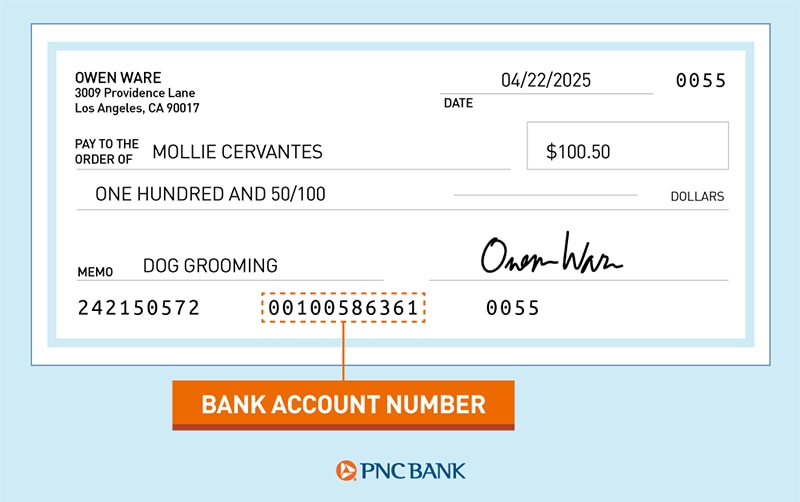
When you write a check, the routing number tells banks which financial institution to send the funds to, and the account number tells that institution which specific account to deposit or withdraw from. Both are typically found at the bottom of a check.
Common and Convenient Ways to Locate Your Account Number
The good news is that your bank account number is readily available through several accessible channels. Most people can find it quickly using one of the following methods, often without even needing to contact their bank.
Check Your Physical Checks
For those who still use a checkbook, this is arguably the quickest and most traditional way to find your account number. Look at the bottom of any personalized check. You’ll typically see three sets of numbers printed in magnetic ink (MICR line):
- The first set of nine digits on the left is usually your routing number.
- The second set of numbers in the middle (which varies in length) is your account number.
- The third set, often on the right, is the check number.
It’s crucial to confirm the exact order with your specific bank if you’re unsure, as the layout can occasionally differ slightly.
Review Your Bank Statements
Bank statements, whether paper or electronic, are a reliable source for your account number.
- Paper Statements: If you receive monthly paper statements in the mail, your full account number is almost always printed prominently near the top of the statement, alongside your name and address. Sometimes, for security reasons, only the last few digits might be shown, but the complete number is usually present somewhere.
- Electronic Statements (e-Statements): Accessing your e-statements through your online banking portal or mobile app is just as effective. Download a recent PDF statement, and you’ll find your account number in the same location as a physical statement.
Log In to Your Online Banking Portal
For the vast majority of digitally-savvy individuals, your bank’s online banking website is the most convenient place to find your account number. The exact steps may vary slightly depending on your bank’s interface, but generally, you’ll follow a similar path:
- Navigate to your bank’s official website and log in securely using your username and password.
- Once logged in, you’ll typically land on your account summary or dashboard page.
- Look for the specific account (e.g., “Checking Account,” “Savings Account”) for which you need the number.
- Click on the account or select an option like “Account Details,” “Account Information,” or “Statement & Documents.”
- Your account number should be displayed there, often alongside other details like your current balance, routing number, and account type. Some banks might require an extra click or a “Show full account number” option for security.
Utilize Your Bank’s Mobile App
Similar to online banking, your bank’s mobile app provides a quick and secure way to access your account number on the go.

- Open your bank’s official mobile app on your smartphone or tablet and log in.
- Tap on the specific account you want to view.
- Look for an option like “Account Details,” “Account Info,” or “Manage Account.”
- Your account number should be displayed here. Again, for security, some apps might initially show only masked digits (e.g., *****1234) and require you to tap to reveal the full number, often with an additional security measure like a fingerprint scan or PIN.
Alternative Methods and When to Use Them
While online and physical documents cover most scenarios, there are times when you might need to resort to alternative methods, especially if you’re unable to access your accounts digitally or physically.
Contact Your Bank Directly
If you’ve exhausted other options or prefer speaking to a human, contacting your bank’s customer service is a reliable choice.
- Phone: Call the customer service number listed on your bank’s official website or the back of your debit card. Be prepared to go through a security verification process, which may include providing your full name, address, date of birth, Social Security Number, and answering security questions. For your security, a representative will never ask for your full password.
- In-Person Visit: If you have a local branch, visiting in person is another option. Bring a valid photo ID (like a driver’s license or passport) and be ready to answer security questions. A teller can look up your account details for you.
Consult Official Bank Documents
When you first opened your account, your bank would have provided you with a welcome kit or various official documents. These can be a treasure trove of information.
- Welcome Kit: This typically includes your account number, routing number, and other essential details.
- Loan Documents: If you have a loan with the same bank, your bank account number might be referenced in the documentation for payment setup.
- Official Correspondence: Any letters or notices directly from your bank regarding your account may also contain the number.
It’s a good practice to keep such important documents in a secure place.
Safeguarding Your Financial Information
Knowing where to find your bank account number is only half the battle; protecting it is equally, if not more, important. Your account number, especially when combined with your routing number, can be used to initiate transactions or compromise your financial security.
Best Practices for Keeping Your Account Number Secure
- Be Wary of Phishing Attempts: Never provide your account number, password, or other sensitive information in response to unsolicited emails, texts, or calls, even if they appear to be from your bank. Banks will rarely ask for such information via these channels.
- Use Strong, Unique Passwords: Ensure your online banking and mobile app accounts are protected with complex, unique passwords and, where available, enable two-factor authentication (2FA).
- Secure Physical Documents: Store paper statements, checkbooks, and other documents containing your account number in a locked drawer or a secure location at home. Shred old documents before discarding them.
- Avoid Public Wi-Fi for Banking: When accessing your online banking or mobile app, use a secure, private internet connection rather than unsecured public Wi-Fi networks.
- Share Only When Necessary: Only provide your account number to trusted entities for legitimate purposes (e.g., your employer for direct deposit, a verified biller for auto-pay).
What to Do If Your Account Number is Compromised
Despite your best efforts, financial information can sometimes fall into the wrong hands. If you suspect your account number has been compromised:
- Contact Your Bank Immediately: Report the potential fraud to your bank’s fraud department. They can advise you on next steps, such as freezing or closing the account, and initiating an investigation.
- Monitor Your Accounts: Regularly check your bank statements and online activity for any unauthorized transactions. Report anything suspicious immediately.
- Change Passwords: Update the passwords for your online banking and other related financial accounts.
- Consider a Credit Freeze: If other personal information was also compromised, consider placing a fraud alert or credit freeze with the major credit bureaus (Equifax, Experian, TransUnion) to prevent identity theft.
Frequently Asked Questions About Account Numbers
To further clarify common queries, here are answers to some frequently asked questions regarding bank account numbers.
Can I find my account number on my debit/credit card?
No, you cannot. Your debit card has a unique 16-digit card number, a CVV/CVC code, and an expiration date, but it does not display your full bank account number. These are distinct identifiers for different purposes. Credit cards also have their own unique card numbers, separate from any bank account.
Is it safe to give out my account number?
It depends on the context. Giving your account number to your employer for direct deposit, a trusted utility company for automatic payments, or to a family member for a legitimate transfer is generally safe. However, you should never provide it to unknown individuals, in response to suspicious emails or calls, or on unsecured websites. Always verify the legitimacy of the request and the requesting party.
What if I have multiple accounts?
Each checking, savings, or money market account you hold with your bank will have its own unique account number. If you have several accounts, make sure you are referencing the correct account number for the specific transaction or purpose. Your online banking or mobile app will clearly list each account and its corresponding number.

Conclusion
Your bank account number is a cornerstone of your personal financial management, serving as a unique identifier crucial for a wide array of transactions and services. From setting up direct deposits to managing automatic payments, knowing where and how to access this information efficiently is a fundamental aspect of financial literacy.
As we’ve explored, your account number is readily available through multiple convenient channels: on your physical checks, bank statements, via your online banking portal, and through your bank’s mobile app. For those less digitally inclined or facing unusual circumstances, contacting your bank directly or consulting original account documents remains a reliable fallback.
Beyond mere access, understanding the distinction between your account number and other financial identifiers, like your routing number, empowers you to navigate financial processes with greater confidence. Most importantly, consistently applying best practices for safeguarding this sensitive information is paramount. By prioritizing security and exercising diligence, you can ensure your financial details remain protected, allowing you to manage your money effectively and with peace of mind.
aViewFromTheCave is a participant in the Amazon Services LLC Associates Program, an affiliate advertising program designed to provide a means for sites to earn advertising fees by advertising and linking to Amazon.com. Amazon, the Amazon logo, AmazonSupply, and the AmazonSupply logo are trademarks of Amazon.com, Inc. or its affiliates. As an Amazon Associate we earn affiliate commissions from qualifying purchases.