
The story of when Apple started is not merely a chronological marker in the history of Silicon Valley; it is the origin story of the modern digital age. On April 1, 1976, Steve Jobs, Steve Wozniak, and Ronald Wayne founded Apple Computer Inc. What began in the iconic Los Altos garage of the Jobs family was a pursuit to make computers small enough and intuitive enough for people to have in their homes and offices. From the hand-soldered circuit boards of the mid-70s to the sophisticated neural engines of today, Apple’s journey is a masterclass in technological persistence and hardware-software integration.
To understand when Apple started is to understand the pivotal shifts in computing architecture, user interface design, and mobile ecosystems that have defined the last five decades. This article explores the technical milestones that transformed a hobbyist’s project into the world’s most influential technology powerhouse.
The Garage Years: Where Apple’s Technological DNA Began
In 1976, the computing landscape was dominated by room-sized mainframes accessible only to large corporations and academic institutions. The “start” of Apple was a direct challenge to this status quo. Steve Wozniak, a self-taught engineer, sought to create a machine that simplified the complex interaction between humans and hardware.
The Apple I and the Birth of Personal Computing
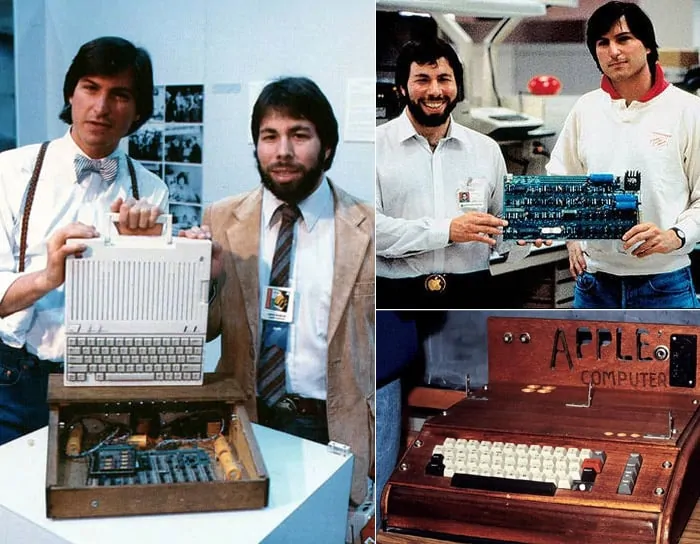
The Apple I was the first product of the partnership. Unlike other hobbyist computers of the era, such as the Altair 8800 which required assembly and featured a cryptic front panel of switches and lights, the Apple I was a fully assembled motherboard. It utilized the MOS 6502 processor, an affordable alternative to the more expensive Intel chips of the time. While it lacked a case, keyboard, or monitor, its design allowed it to be connected to a television, a revolutionary concept that bridged the gap between professional electronics and consumer accessibility.
Steve Wozniak’s Engineering Masterpiece: The Apple II
If the Apple I was a proof of concept, the Apple II—released in 1977—was the catalyst for the personal computer revolution. It featured integrated color graphics, a keyboard, and a plastic casing that looked at home in an office or classroom. Technologically, its most significant advancement was the inclusion of expansion slots, which allowed users to customize the hardware. This modularity fostered a developer ecosystem, leading to the creation of VisiCalc, the first spreadsheet program, which transformed the Apple II from a toy for enthusiasts into a vital business tool.
The Macintosh Revolution: Redefining the User Interface
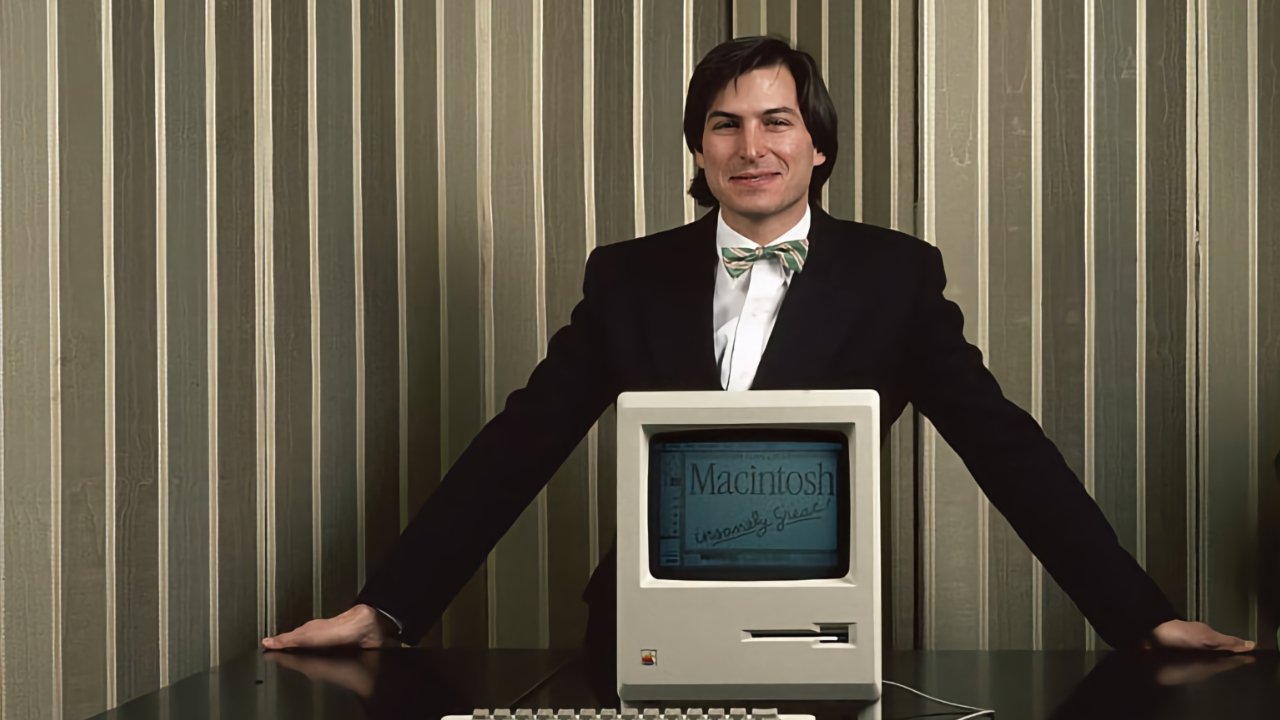
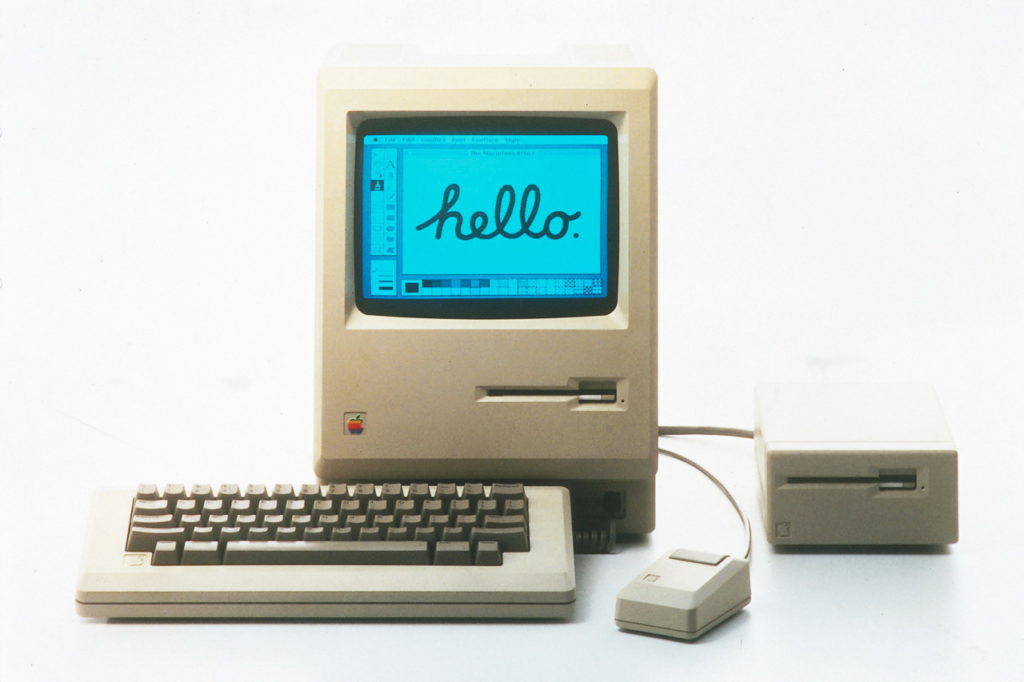
By the early 1980s, the “start” of Apple had moved beyond simple hardware assembly into the realm of software innovation. The 1984 release of the Macintosh marked a paradigm shift in how users interacted with technology.
The Shift from Command Lines to GUIs
Before the Macintosh, using a computer required memorizing complex text-based commands (CLI). Borrowing and refining concepts from Xerox PARC, Apple introduced the Graphical User Interface (GUI) to the masses. The Macintosh replaced the blinking cursor with folders, windows, and icons. This was facilitated by the introduction of the mouse, a peripheral that changed human-computer interaction forever. Under the hood, the Macintosh was powered by the Motorola 68000 chip, which provided the processing power necessary to render bitmapped graphics and proportional fonts in real-time.
The PowerPC Era and Desktop Publishing
As the 90s approached, Apple transitioned its hardware architecture to the PowerPC platform, a RISC (Reduced Instruction Set Computer) architecture developed in collaboration with IBM and Motorola. This transition allowed Apple to dominate the creative industry. The combination of high-performance hardware and sophisticated software like Adobe PageMaker gave birth to “desktop publishing.” For the first time, individuals could design and print high-quality documents from their desks, a technological feat that had previously required a professional printing press.
The Mobile Renaissance: Transforming the Digital Landscape
When Apple started its “second act” upon Steve Jobs’ return in 1997, the focus shifted from the desktop to the pocket. This era saw Apple reinventing itself as a leader in consumer electronics by merging hardware, software, and services into a seamless ecosystem.
The iPod and the Digitization of Media
In 2001, the iPod was released, not just as a music player, but as a sophisticated mobile computing device. It utilized a 1.8-inch 5GB hard drive—a marvel of miniaturization at the time—and a unique “Click Wheel” interface. However, the true technological breakthrough was the integration with iTunes. This synergy between a physical device and a digital service laid the groundwork for the modern “ecosystem” model, where hardware is supported by a robust software infrastructure.
The iPhone: A Supercomputer in Every Pocket
The 2007 launch of the iPhone is perhaps the most significant technological event since the invention of the PC. It discarded the stylus and physical keyboard in favor of “Multi-Touch” technology, allowing for gestures like pinching and swiping. The iPhone integrated three devices—a phone, a widescreen iPod, and an internet communicator—into one. From a technical standpoint, the iPhone’s evolution led to the development of the “A-series” chips, Apple’s custom-designed systems-on-a-chip (SoC), which eventually surpassed many desktop processors in efficiency and performance.
The Modern Ecosystem: Software, Services, and Silicon
Today, the answer to “when did Apple start” is seen as the beginning of a vertically integrated empire. Apple no longer just builds devices; it designs the very atoms of the silicon that powers them and the languages in which their apps are written.
iOS and the App Store Economy
The release of the App Store in 2008 created a new software paradigm. By providing developers with sophisticated SDKs (Software Development Kits) and a secure distribution platform, Apple turned the iPhone into a Swiss Army knife of technology. This software-centric approach ensured that the hardware’s value grew over time. Today, iOS is built on a Darwin (Unix-based) foundation, offering a level of stability and security that has become the industry standard for mobile computing.
The Transition to Apple Silicon (M-Series)
In 2020, Apple began one of the most daring technical transitions in its history: moving the Mac lineup away from Intel processors to “Apple Silicon.” The M1, M2, and M3 chips represent a pinnacle of engineering, combining CPU, GPU, and Neural Engine into a single die. This shift has resulted in unprecedented performance-per-watt, allowing laptops to achieve high speeds with minimal heat and extraordinary battery life. This move solidified Apple’s position as a semiconductor powerhouse, giving them total control over the marriage of hardware and software.
Future Horizons: AI, Spatial Computing, and Beyond
As we look forward from Apple’s humble 1976 start, the company is pivoting toward the next frontier of technology: the intersection of artificial intelligence and the physical world.
Vision Pro and the Era of Spatial Computing
The introduction of the Apple Vision Pro marks the beginning of “spatial computing.” By using a dual-chip design (the M2 for general processing and the R1 for sensor input), Apple has minimized latency to a point where digital objects feel physically present in the user’s environment. This device utilizes advanced eye-tracking and hand-gesture recognition, moving beyond the mouse and the touchscreen into the realm of naturalistic interaction.
Integrating Generative AI into the Apple Ecosystem
While the tech industry has seen a massive surge in generative AI, Apple’s approach focuses on “on-device” processing. By leveraging the Neural Engines built into their custom silicon, Apple is integrating AI features that prioritize user privacy and speed. From predictive text and image recognition to more advanced personal assistants, Apple is ensuring that the AI revolution is baked directly into the hardware, rather than being reliant solely on the cloud.
In conclusion, when Apple started in 1976, it was a company that wanted to put a computer in the hands of everyday people. Decades later, it has succeeded by relentlessly iterating on its core philosophy: that technology should be powerful, yet invisible. From the Apple I to the M3 MacBook and the Vision Pro, Apple’s history is a testament to the idea that the best technology is that which empowers human creativity and connection. As they continue to push the boundaries of silicon and software, the garage startup of 1976 remains the North Star for the entire technological world.
aViewFromTheCave is a participant in the Amazon Services LLC Associates Program, an affiliate advertising program designed to provide a means for sites to earn advertising fees by advertising and linking to Amazon.com. Amazon, the Amazon logo, AmazonSupply, and the AmazonSupply logo are trademarks of Amazon.com, Inc. or its affiliates. As an Amazon Associate we earn affiliate commissions from qualifying purchases.