
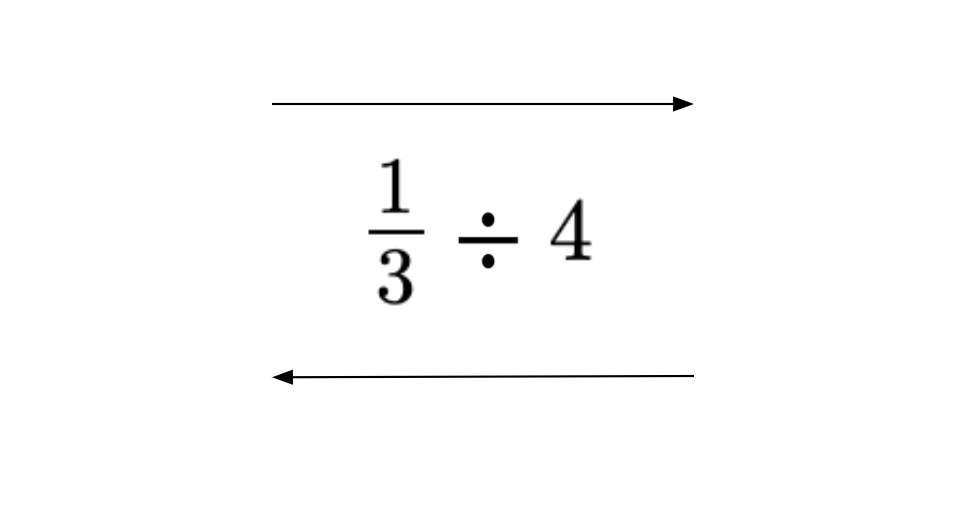
The question “what is 1/3 of 1/4” appears deceptively simple, a basic arithmetic problem encountered in elementary school. The answer, straightforwardly, is 1/12. Yet, for anyone navigating the complexities of personal finance, investing, or business management, the underlying principles of this seemingly basic calculation are profoundly significant. This simple fraction problem serves as a potent metaphor for the foundational mathematical literacy essential for sound financial decision-making. Far from being an academic exercise, understanding how to work with fractions, percentages, and proportions is the bedrock upon which all sophisticated financial strategies are built. Without a firm grasp of these fundamentals, individuals and businesses risk misinterpreting financial data, making suboptimal choices, and ultimately, undermining their financial well-being. This article delves into why mastering such basic concepts is not just helpful but critical in the world of money, transforming simple math into powerful financial insight.
The Foundation of Financial Literacy: More Than Just Simple Math
At its core, financial literacy is the ability to understand and effectively use various financial skills, including personal financial management, budgeting, and investing. While often associated with understanding complex market trends or intricate investment vehicles, its true strength lies in the mastery of basic arithmetic. The seemingly innocuous problem of “1/3 of 1/4” is a perfect entry point into appreciating how fractions dictate much of our financial reality, from allocating funds to calculating returns.
Deciphering Fractions and Percentages in Everyday Finance
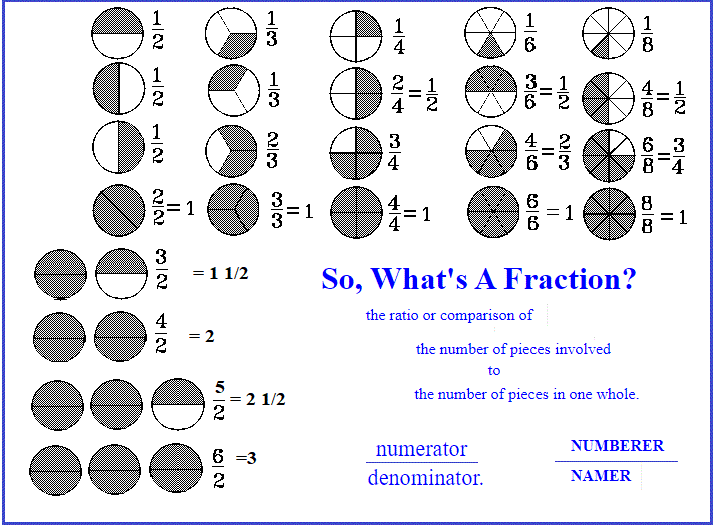
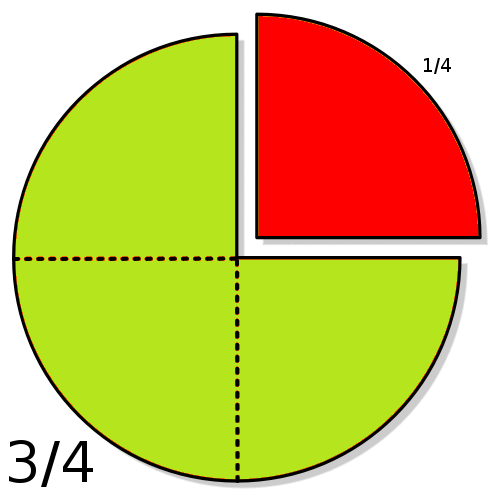
Fractions and percentages are two sides of the same coin, each offering a way to express a part of a whole. In finance, this relationship is ubiquitous. When you’re told a mutual fund charges an expense ratio of 0.75%, you’re dealing with 0.75/100, or 3/400. When a discount is advertised as “25% off,” you instinctively know you’re saving 1/4 of the original price. Our initial problem, 1/3 of 1/4, translates directly into real-world scenarios: if you allocate 1/4 of your investment portfolio to bonds, and 1/3 of those bonds are municipal bonds, then 1/12 of your total portfolio is invested in municipal bonds. This seemingly simple multiplication of fractions helps investors understand their precise exposure and diversification. Without this fundamental understanding, financial statements, investment reports, and even everyday consumer transactions can become a blur of numbers, making informed decisions nearly impossible.
Why Basic Arithmetic Isn’t “Basic” When Money is Involved
The term “basic arithmetic” often carries a connotation of simplicity, something easily dismissed once higher-level math is introduced. However, when applied to money, basic arithmetic becomes anything but trivial. A misplaced decimal point, a miscalculated percentage, or a misunderstanding of how fractions combine can lead to significant financial errors. Consider budgeting: if you mentally allocate 1/3 of your income to housing and 1/4 to debt repayment, failing to correctly calculate the remaining fraction for other expenses could lead to overspending. In investing, miscalculating a fractional share of a company’s earnings or a percentage point of an interest rate can dramatically alter projections of future wealth. The “basics” are the building blocks; if they are weak, the entire financial structure built upon them is precarious. This underscores the professional and insightful need to genuinely grasp these concepts, not merely memorize formulas.
Practical Applications in Personal Finance
Beyond abstract calculations, the principles exemplified by “1/3 of 1/4” are woven into the fabric of everyday personal finance, empowering individuals to manage their money more effectively and make smarter choices.
Budgeting: Allocating Your Income and Expenses
Budgeting is arguably the most crucial aspect of personal finance, and it is fundamentally an exercise in dividing a whole (your income) into parts (your expenses and savings). Whether you use the 50/30/20 rule (50% for needs, 30% for wants, 20% for savings/debt) or create a custom budget, you are inherently working with percentages and fractions. Understanding that 1/3 of your income might go to rent, and 1/4 of what’s left goes to groceries, requires this foundational knowledge. Miscalculating these allocations can lead to budget shortfalls, increased debt, and financial stress. The ability to quickly estimate these proportions allows for agile financial planning and adjustments when unexpected expenses arise.
Understanding Discounts, Sales, and Interest Rates
Consumer transactions are rife with fractions and percentages. A “buy one get one 50% off” sale is a real-world application of percentages and proportional thinking. Understanding that “50% off” means you save 1/2 of the price on the second item allows you to accurately assess the true value proposition. Similarly, interest rates on loans, credit cards, or savings accounts are expressed as percentages. Knowing how to calculate 1/3 of an interest payment or 1/4 of the principal repaid can provide clarity on your financial obligations and progress. This goes beyond simply accepting the stated rate; it’s about understanding the mechanics of how that rate impacts your money over time.
Debt Management and Loan Repayments
Debt management is another area where fractional understanding is paramount. When considering a loan, understanding that a certain fraction of your monthly payment goes towards interest versus principal is critical. Many financial literacy programs emphasize the concept of “accelerated payments” – applying a small fraction of extra money each month to the principal can significantly reduce the total interest paid and the loan term. For example, paying an extra 1/12th of a monthly payment each month (effectively making an extra payment per year) can shave years off a mortgage. Without a clear grasp of how these fractions affect the whole over time, individuals might miss opportunities to strategically reduce their debt burden.
Strategic Thinking for Investing and Wealth Building
For those looking to grow their wealth, the principles derived from basic fractional calculations underpin advanced investment strategies and risk management.
Portfolio Allocation and Diversification
Investing is largely about allocating capital to various assets to achieve financial goals while managing risk. This is a direct application of fractional thinking. Investors decide to put 1/3 of their portfolio in equities, 1/4 in bonds, and the remainder in alternative assets. Within equities, they might further decide that 1/2 of their equity holdings will be in large-cap stocks, and 1/4 in emerging markets. This layered fractional allocation is diversification in practice. The problem “1/3 of 1/4” then becomes a critical mental model for understanding the precise weight of each asset class within the broader portfolio structure. A robust understanding of these proportions allows investors to ensure their asset allocation aligns with their risk tolerance and long-term objectives.
Calculating Returns, Profits, and Losses
The performance of investments is almost always expressed in percentages or fractions. A stock might yield a 5% dividend, or a fund might return 12.5% in a year. To understand your actual profit or loss, you need to apply these percentages (or their fractional equivalents) to your principal investment. If you invest a sum and it grows by 1/4, and then you decide to withdraw 1/3 of your gains, you’re performing the exact type of calculation demonstrated by “1/3 of 1/4.” Errors in these calculations can lead to inaccurate assessments of investment performance, potentially prompting premature withdrawals or missed opportunities for rebalancing.
The Power of Compounding: A Fractional Perspective
Compounding, often hailed as the eighth wonder of the world, is fundamentally about fractions and percentages growing exponentially over time. It’s the concept that your earnings start earning money. While often illustrated with percentages, understanding it through fractions can provide a deeper intuition. If your investment grows by a fraction (e.g., 1/10 each year), that growth is applied to the original principal plus all prior growth. The seemingly small fractional gains accumulate dramatically over decades, highlighting the importance of starting early and consistently contributing. A lack of understanding of this cumulative effect, rooted in basic fractional growth, can lead individuals to underestimate the long-term potential of consistent saving and investing.
Business Finance: From Margins to Market Share
For entrepreneurs and business owners, the mastery of fractional and percentage calculations is not just about personal wealth but about the viability and growth of their enterprise.
Understanding Profit Margins and Cost Structures
Every business operation relies heavily on understanding how costs and revenues break down. Gross profit margin, operating profit margin, and net profit margin are all expressed as percentages, which are essentially fractions of revenue. Knowing that 1/3 of your revenue goes to cost of goods sold, and 1/4 of the remainder goes to operational expenses, provides a clear picture of your business’s financial health. Miscalculating these crucial fractions can lead to inaccurate pricing, unsustainable cost structures, and ultimately, business failure. The ability to dissect these numbers rapidly allows for strategic adjustments in pricing, purchasing, and operational efficiency.
Analyzing Business Performance and Growth
Businesses continually analyze their performance using key metrics often expressed as fractions or percentages. Market share (what fraction of the total market your business captures), revenue growth (percentage increase over time), and customer churn rate (percentage of customers lost) are vital indicators. If a business targets gaining an additional 1/3 of its current market share, and its current market share is 1/4 of the total, understanding that this translates to an additional 1/12 of the total market is crucial for setting realistic goals and allocating resources. Such insights, born from simple arithmetic, inform strategic planning, marketing efforts, and resource allocation.
Leveraging Financial Tools and Calculators
While understanding the underlying math is critical, modern financial tools and calculators can significantly aid in complex calculations. However, these tools are only as effective as the user’s comprehension of the inputs and outputs. If you don’t understand that a loan calculator is fundamentally performing fractional interest calculations over time, you won’t be able to critically evaluate the results or spot potential errors. These tools should be seen as extensions of your financial literacy, not replacements for it. The savvy financial professional or individual uses these tools to confirm their understanding and explore scenarios, rather than relying on them blindly.
Bridging the Gap: From Theory to Informed Financial Decisions
The seemingly basic math problem “what is 1/3 of 1/4” is a microcosm of the fundamental mathematical competencies required for financial empowerment. It’s not about rote memorization, but about intuitive understanding and practical application.
The Cost of Financial Illiteracy
The consequences of financial illiteracy, particularly regarding basic arithmetic, are stark. Individuals may fall prey to predatory lending, fail to save adequately for retirement, mismanage debt, or make poor investment choices. Businesses can hemorrhage profits due to inefficient cost structures or inaccurate pricing. The inability to grasp simple proportional relationships leads to a lack of confidence in financial decision-making, often resulting in paralysis or reliance on potentially biased advice. The cost isn’t just monetary; it’s also the missed opportunities, the added stress, and the reduced quality of life that stems from a lack of financial control.
In conclusion, the answer to “what is 1/3 of 1/4” is more than just 1/12. It represents a gateway to understanding the profound role that fractions, percentages, and basic arithmetic play in personal finance, investing, and business. Mastering these foundational concepts is not an optional extra but an indispensable skill set for anyone seeking to achieve financial stability, grow wealth, and make informed decisions in an increasingly complex financial world. By embracing and applying these basic principles, individuals and businesses can transform abstract numbers into actionable insights, paving the way for a more secure and prosperous financial future.
aViewFromTheCave is a participant in the Amazon Services LLC Associates Program, an affiliate advertising program designed to provide a means for sites to earn advertising fees by advertising and linking to Amazon.com. Amazon, the Amazon logo, AmazonSupply, and the AmazonSupply logo are trademarks of Amazon.com, Inc. or its affiliates. As an Amazon Associate we earn affiliate commissions from qualifying purchases.