
In an increasingly data-driven world, the ability to seamlessly transition between different numerical representations is not just a mathematical skill but a crucial digital literacy. Fractions and decimals are two fundamental ways to express parts of a whole, and the process of converting one to the other is a core operation for everything from financial calculations to scientific measurements and software development. While the underlying mathematical principle remains constant, technology has revolutionized how we understand, execute, and apply these conversions, making them faster, more accurate, and accessible than ever before. This tutorial delves into the practical methods of converting fractions to decimals, viewed through the lens of the digital tools and computational logic that power our modern age.
The Core Computational Logic: The Digital Heart of Conversion
Before diving into the tools, it’s essential to understand the fundamental mathematical operation that underpins every fraction-to-decimal conversion, whether performed by hand or by a supercomputer. This understanding not only empowers users to grasp the ‘why’ behind the ‘how’ but also illuminates the logic that software and algorithms employ.
Division as the Foundation: Manual vs. Automated Calculation
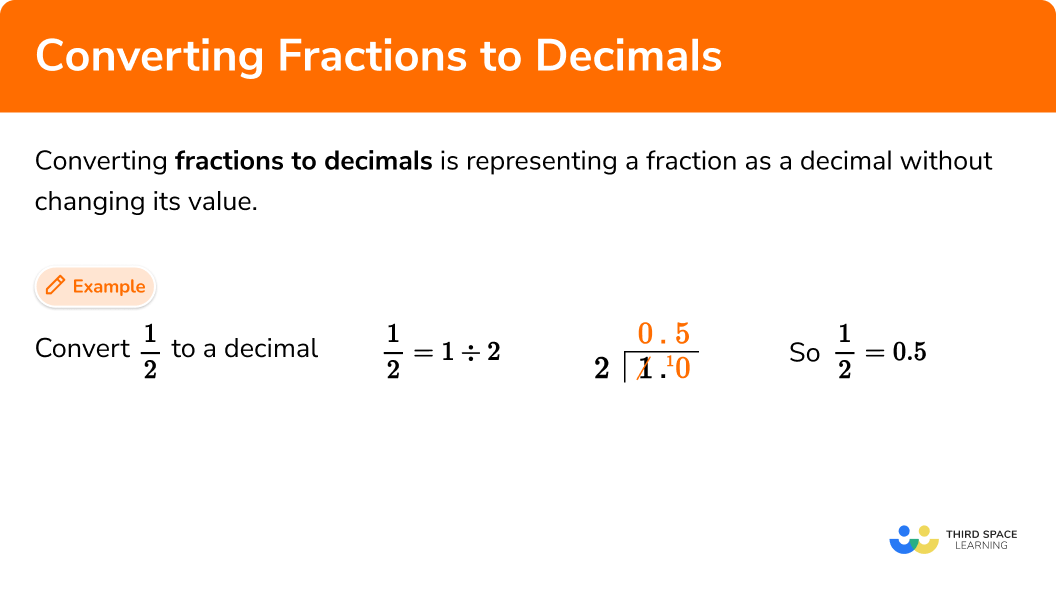
At its heart, a fraction is simply a division problem. The numerator (the top number) is divided by the denominator (the bottom number). For instance, the fraction 3/4 literally means 3 divided by 4.
- Manual Method: Traditionally, this involved long division. You’d place the numerator inside the division symbol and the denominator outside, then perform the division, adding a decimal point and zeros as needed until the division terminates or a repeating pattern emerges.
- Automated Method: Technology automates this long division. When you input “3 ÷ 4” into a calculator or “3/4” into a spreadsheet, the device’s internal processor executes the division algorithm almost instantaneously. This automation eliminates human error in arithmetic and speeds up the process dramatically, especially for complex fractions or those yielding many decimal places. The machine simply carries out the same logical steps of division that a human would, but at an incredible speed and with consistent accuracy.
Understanding Place Value in Decimals
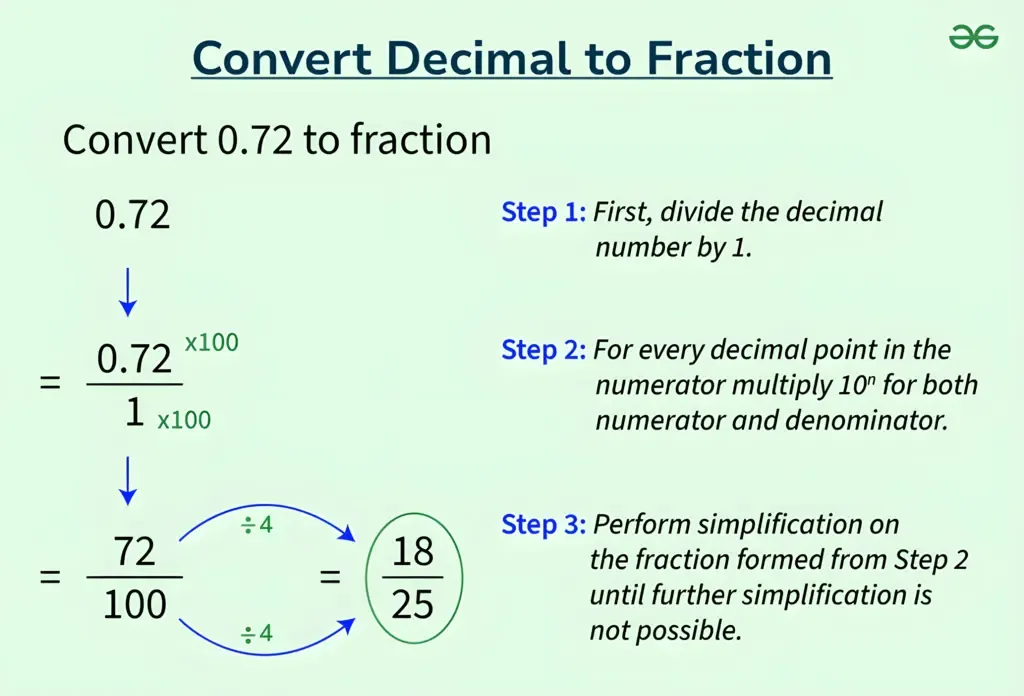
Decimals represent fractions where the denominator is a power of ten (10, 100, 1000, etc.). Each digit to the right of the decimal point signifies a progressively smaller fractional part: tenths, hundredths, thousandths, and so on.
- Example: 0.75 means 7 tenths and 5 hundredths, or 75/100.
When converting a fraction like 3/4 to a decimal, technology’s underlying goal is to represent that value as a sum of these decimal place values. The division process inherently identifies how many “tenths,” “hundredths,” etc., are contained within the fraction. For example, 3 ÷ 4 = 0.75. The “7” is in the tenths place (7/10) and the “5” is in the hundredths place (5/100). Technology simply displays the result in this standard decimal format, leveraging its understanding of positional notation.
Leveraging Everyday Tech for Conversions: Your Digital Toolkit
Modern technology has integrated fraction-to-decimal conversion into nearly every digital device and software we use daily. Mastering these tools is key to efficient numerical handling in any tech-savvy environment.
The Ubiquitous Calculator: From Basic to Scientific
The most common and accessible tool for fraction-to-decimal conversion is the calculator.
- Basic Calculators: For simple fractions, a standard four-function calculator is sufficient. Just input the numerator, press the division key, then the denominator, and finally the equals key. The result will be displayed in decimal form.
- Scientific Calculators: These offer more advanced functionality, often including dedicated fraction buttons (e.g., a “a b/c” key) that allow you to input fractions directly. Some scientific calculators can even convert decimals back to fractions or display repeating decimals with an indicative bar. Many modern smartphones have built-in calculator apps that offer scientific mode functionality, providing powerful conversion capabilities right in your pocket. Learning your calculator’s specific fraction input and conversion features can save significant time.
Spreadsheet Software: Batch Conversions and Data Analysis
Programs like Microsoft Excel, Google Sheets, or Apple Numbers are indispensable for handling large datasets and performing multiple conversions simultaneously.
- Direct Division: The simplest method is to treat the fraction as a division formula. If you have “3” in cell A1 and “4” in cell B1, you can type
=A1/B1into cell C1, and it will display0.75. - Formatting for Clarity: Spreadsheets also allow you to format cells to display numbers with a specific number of decimal places, or even as percentages, which are essentially decimals multiplied by 100. This is crucial for financial reports, scientific data, and any scenario requiring consistent numerical presentation. The ability to apply formulas across entire columns or rows makes spreadsheets incredibly powerful for batch conversions, transforming raw fractional data into a usable decimal format for analysis, graphing, or further computation.
Exploring Specialized Apps and Online Tools: Dedicated Digital Solutions
Beyond general-purpose tools, a plethora of specialized applications and online platforms are designed specifically to aid in mathematical operations, including fraction-to-decimal conversions.
Educational Apps and Interactive Learning Platforms
For students and lifelong learners, numerous educational apps (e.g., Khan Academy, Photomath, various math practice apps) provide interactive ways to understand and perform these conversions.
- Step-by-Step Guidance: Many apps not only provide the answer but also walk users through the step-by-step process of converting a fraction to a decimal, reinforcing the underlying mathematical principles. This is particularly valuable for developing a deeper understanding rather than just getting an answer.
- Visual Aids and Practice: Interactive platforms often use visual models and gamified exercises to make the learning process engaging, helping users internalize the concept of fractions and decimals and their interconversion. This digital scaffolding can significantly enhance comprehension.
Online Converters and Their Practical Uses
A quick web search for “fraction to decimal converter” will yield numerous free online tools. These are generally simple to use: you input the numerator and denominator, click “convert,” and the decimal equivalent appears.
- Quick Checks and Verifications: Online converters are excellent for quickly checking answers or converting obscure fractions without needing to open dedicated software or perform manual calculations.
- Dealing with Complex or Repeating Decimals: Some advanced online converters can handle fractions that result in very long or repeating decimals, often indicating the repeating pattern with a bar over the digits, which standard calculators may truncate. These tools prioritize precision and clarity in their output.
The Role of Programming and Automation: Beyond the User Interface
For those with a deeper interest in how technology works, understanding how fractions are converted to decimals at a programmatic level offers valuable insight into software development and computational thinking.
Simple Scripting for Fraction-Decimal Conversion
Basic programming languages like Python or JavaScript can convert fractions to decimals with a single line of code, demonstrating the efficiency of computational logic.
- Python Example:
python

numerator = 3

denominator = 4

decimal_value = numerator / denominator

print(decimal_value) # Output: 0.75
This simple script directly implements the division principle. For more complex scenarios, programming allows for handling edge cases (like division by zero), rounding rules, and integrating conversions into larger applications, showcasing how developers embed this core mathematical function into various software tools.
How AI and Advanced Software Handle Numeric Conversions
Even sophisticated AI and machine learning models rely on these fundamental conversions. When AI processes numerical data, it often standardizes it into a decimal format for efficient computation.
- Data Preprocessing: In fields like data science, raw data might come in various formats, including fractions. AI models require clean, uniform numerical inputs, and converting all fractional data to decimals is a common preprocessing step.
- Algorithmic Efficiency: Decimals are generally easier for computers to process in floating-point arithmetic than fractions, making conversions a hidden but crucial part of how AI understands and manipulates numerical information to perform tasks like prediction, classification, or pattern recognition.
Best Practices and Troubleshooting in a Digital Context: Ensuring Accuracy
While technology streamlines conversion, users must still adhere to best practices to ensure accuracy and avoid common pitfalls. The human element of understanding and verifying outputs remains critical.
Precision and Rounding: Digital Limitations
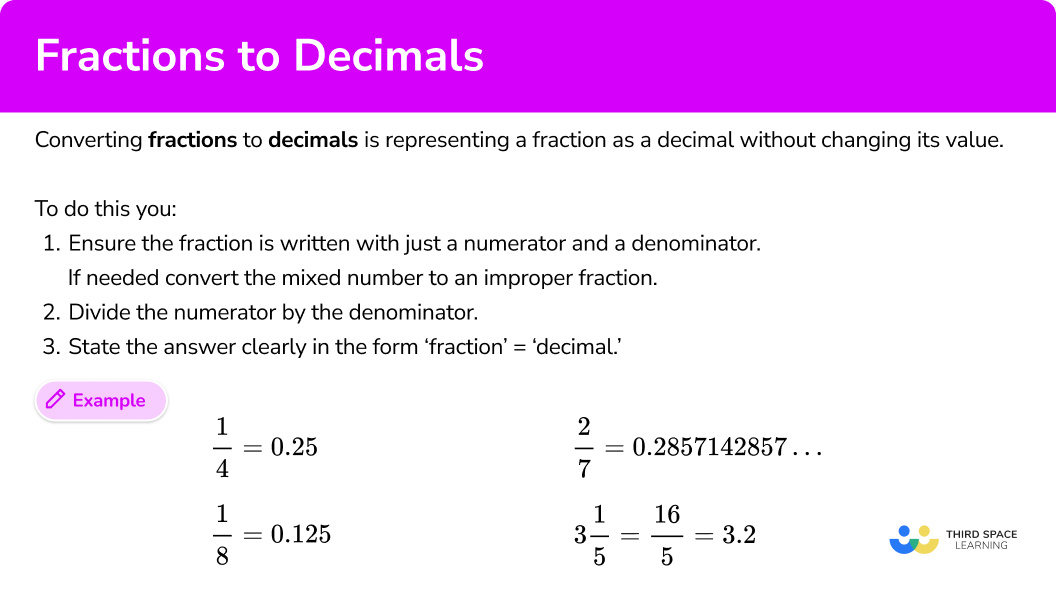
Digital systems have finite precision. While some fractions (like 1/4 or 3/8) convert to terminating decimals, others (like 1/3 or 2/7) result in infinitely repeating decimals.
- Understanding Truncation and Rounding: Calculators and software will often truncate or round these repeating decimals after a certain number of digits. It’s vital to understand the implications of this. For scientific measurements or financial calculations, premature rounding can introduce significant errors. Always be aware of the required precision for your specific task and configure your tools accordingly (e.g., setting decimal places in Excel).
- Impact of Floating-Point Arithmetic: Computers use “floating-point numbers” to represent decimals, which can sometimes lead to tiny inaccuracies due to the way they approximate real numbers. While rarely noticeable in everyday tasks, it’s a critical consideration in high-precision scientific or engineering applications.
Verifying Results with Multiple Tools
A good practice, especially for critical conversions, is to verify results using more than one method or tool.
- Cross-Referencing: If you convert a fraction using your phone calculator, quickly check it with an online converter or a spreadsheet formula. This helps catch potential input errors or misunderstandings of a specific tool’s functionality.
- Estimating for Sanity Checks: Develop a mental estimation habit. For instance, knowing that 1/2 is 0.5 and 1/4 is 0.25 helps you quickly gauge if a converted decimal value is in the correct ballpark. If your calculator tells you 3/4 is 0.075, you’ll immediately know something is wrong.
Conclusion
The ability to convert fractions to decimals is a cornerstone of numerical fluency, and in the digital age, this skill is profoundly enhanced by technology. From the simple act of dividing on a calculator to leveraging complex spreadsheet functions, specialized apps, or even understanding the underlying code, technology provides an indispensable framework for mastering this conversion. By grasping the core computational logic and effectively utilizing the myriad of digital tools available, individuals can not only perform these conversions with speed and accuracy but also gain a deeper appreciation for the interplay between mathematics and the technological innovations that shape our modern world. In a landscape increasingly defined by data, mastering “how to make fractions decimals” with the aid of technology is more than a mathematical task—it’s a fundamental digital competency.
aViewFromTheCave is a participant in the Amazon Services LLC Associates Program, an affiliate advertising program designed to provide a means for sites to earn advertising fees by advertising and linking to Amazon.com. Amazon, the Amazon logo, AmazonSupply, and the AmazonSupply logo are trademarks of Amazon.com, Inc. or its affiliates. As an Amazon Associate we earn affiliate commissions from qualifying purchases.