
Navigating the complexities of retirement income is a critical component of sound financial planning. For many Americans, Social Security benefits form a cornerstone of their golden years. However, a common misconception is that these benefits are entirely tax-free. In reality, a significant portion of Social Security income can be subject to federal income tax, depending on your overall financial picture. Understanding how to calculate the taxable portion of your Social Security benefits is not just about compliance; it’s about empowering yourself to make informed decisions that can significantly impact your retirement budget and tax liability.
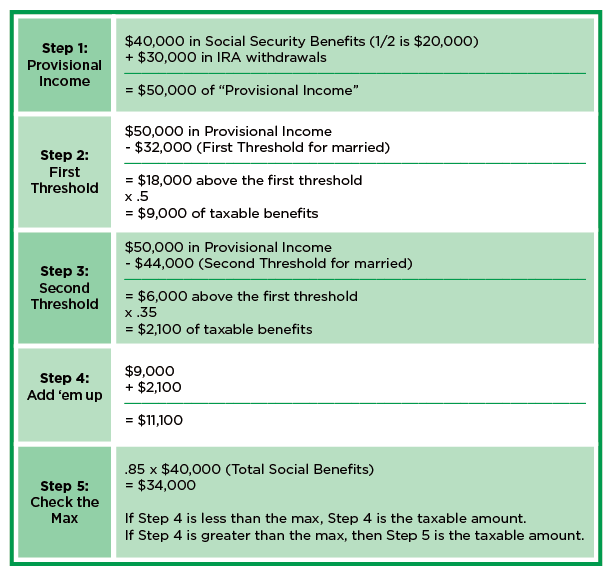
This guide will demystify the process, breaking down the calculation into manageable steps and offering insights into how your other income sources interact with your Social Security benefits to determine taxability. By the end, you’ll have a clear understanding of the rules and practical strategies to better manage your finances in retirement.
Understanding the Basics of Social Security Taxation
The idea that Social Security benefits could be taxed was introduced in 1983 and expanded further in 1993. These legislative changes were designed to ensure the long-term solvency of the Social Security program, primarily by taxing benefits for higher-income beneficiaries. This means that while Social Security provides a vital safety net, it’s not always a completely untaxed source of income.
A Brief History and Purpose
Prior to 1984, Social Security benefits were not subject to federal income tax. However, as the program faced financial strain, Congress enacted legislation to tax a portion of benefits for individuals and couples whose “provisional income” exceeded certain thresholds. The rationale was simple: those with higher incomes likely had less reliance on Social Security as their primary income source and could, therefore, contribute to the program’s sustainability through taxation. The rules were further tightened in 1993, increasing the maximum percentage of benefits that could be taxed from 50% to 85% for even higher income levels. This tiered system ensures that lower and middle-income retirees typically pay less, or no, tax on their benefits, while wealthier retirees contribute more.
Provisional Income: The Key Metric
The concept of “provisional income” is the absolute linchpin in determining how much of your Social Security benefit will be taxed. It’s a specific calculation used only for this purpose and isn’t your Adjusted Gross Income (AGI) alone. Provisional income is calculated as follows:
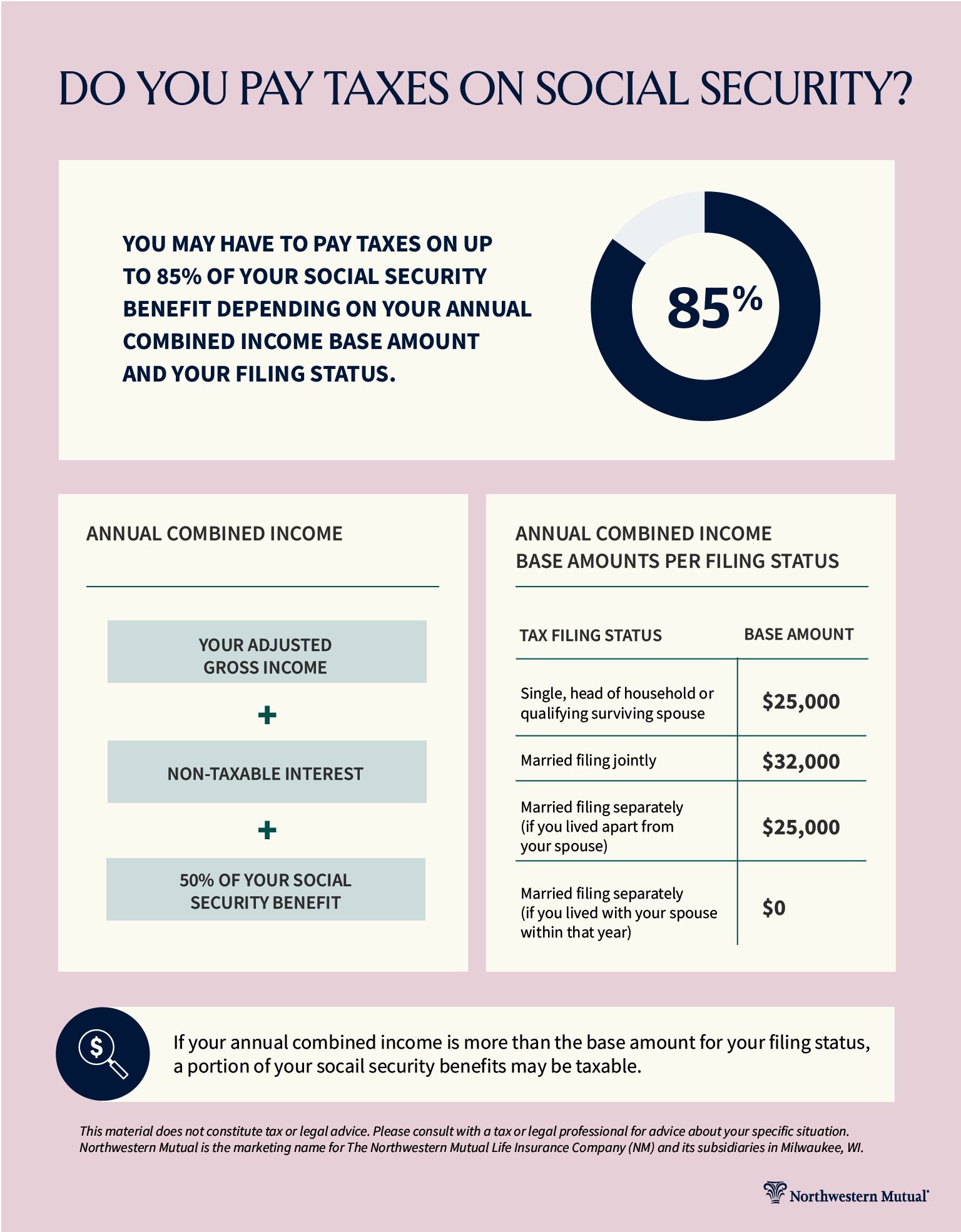
Provisional Income = Your Adjusted Gross Income (AGI) + Nontaxable Interest + One-Half of Your Social Security Benefits
Let’s break down these components:
- Adjusted Gross Income (AGI): This is your gross income minus certain deductions, like traditional IRA contributions, student loan interest, and health savings account deductions. It includes wages, dividends, taxable interest, capital gains, pensions, and other taxable income sources.
- Nontaxable Interest: This refers to tax-exempt interest income, most commonly from municipal bonds. Even though it’s not taxed at the federal level for general income tax purposes, it’s included in provisional income to give a more comprehensive picture of your financial capacity.
- One-Half of Your Social Security Benefits: Only half of your total annual Social Security benefits are added to this calculation. This is a crucial detail that often leads to confusion.
Understanding provisional income is paramount because it is the figure against which the IRS’s taxation thresholds are measured.
The Income Thresholds
Once you’ve calculated your provisional income, the next step is to compare it to specific thresholds set by the IRS. These thresholds determine whether 0%, 50%, or 85% of your Social Security benefits will be subject to federal income tax. The thresholds vary based on your tax filing status:
-
For single individuals, heads of household, and qualifying widow(er)s:
- If your provisional income is between $25,000 and $34,000, up to 50% of your Social Security benefits may be taxable.
- If your provisional income is above $34,000, up to 85% of your Social Security benefits may be taxable.
- If your provisional income is below $25,000, none of your Social Security benefits are taxable.
-
For married individuals filing jointly:
- If your provisional income is between $32,000 and $44,000, up to 50% of your Social Security benefits may be taxable.
- If your provisional income is above $44,000, up to 85% of your Social Security benefits may be taxable.
- If your provisional income is below $32,000, none of your Social Security benefits are taxable.
-
For married individuals filing separately (and lived with your spouse at any time during the year):
- If your provisional income is above $0, up to 85% of your Social Security benefits may be taxable. This is a particularly stringent rule designed to prevent couples from manipulating their filing status to avoid Social Security benefit taxation.
These thresholds are not indexed for inflation, which means as general income levels rise over time, more beneficiaries may find their Social Security benefits becoming taxable, or a larger portion of them becoming taxable.
Step-by-Step Calculation of Taxable Social Security Benefits
Calculating the exact taxable portion of your Social Security can seem intricate, but by following a clear, step-by-step process, it becomes much more manageable. The IRS provides a worksheet for this in Publication 915, which is highly recommended for accuracy.
Step 1: Calculate Your Provisional Income
As discussed, this is the foundational step. Gather all your income documents for the tax year:
- Start with your Adjusted Gross Income (AGI). This can be found on line 11 of your Form 1040.
- Add any tax-exempt interest income. This is typically reported on line 2a of your Form 1040, often from municipal bonds.
- Add one-half of your total Social Security benefits. Your total annual benefits are reported on Form SSA-1099, Box 5. Divide this amount by two.
Example:
- AGI: $28,000
- Tax-Exempt Interest: $2,000
- Total Social Security Benefits: $18,000 (so, half is $9,000)
- Provisional Income = $28,000 + $2,000 + $9,000 = $39,000
Step 2: Compare Provisional Income to Thresholds
Now, take your calculated provisional income and compare it to the thresholds based on your filing status. This comparison tells you which tier of taxation applies to your benefits.
Using our example with a provisional income of $39,000:
- If you are a single filer: Your provisional income of $39,000 is above $34,000, meaning up to 85% of your benefits could be taxable.
- If you are married filing jointly: Your provisional income of $39,000 is between $32,000 and $44,000, meaning up to 50% of your benefits could be taxable.
This distinction is critical because it dictates which calculation formula you’ll use in the next step.
Step 3: Determine the Taxable Portion

This is where the actual taxable amount is determined, based on the thresholds crossed. There are two primary calculation scenarios for when benefits are taxable:
Scenario A: Up to 50% of Benefits Are Taxable
This applies if your provisional income is between the first and second thresholds (e.g., $25,000 – $34,000 for single, or $32,000 – $44,000 for married filing jointly). The taxable amount is the lesser of:
- One-half of your Social Security benefits, OR
- One-half of the amount by which your provisional income exceeds the first threshold.
Example (Single Filer, Provisional Income $28,000, Social Security Benefits $18,000):
- Half of SS benefits: $9,000
- Provisional Income ($28,000) minus first threshold ($25,000) = $3,000. Half of this is $1,500.
- The lesser of $9,000 or $1,500 is $1,500.
- Taxable Social Security = $1,500
Scenario B: Up to 85% of Benefits Are Taxable
This applies if your provisional income exceeds the second (higher) threshold (e.g., above $34,000 for single, or above $44,000 for married filing jointly). The taxable amount is the lesser of:
- 85% of your Social Security benefits, OR
- The sum of:
- The lesser of 50% of your benefits or the amount taxed under the 50% rule (difference between the first and second threshold amounts), PLUS
- 85% of the amount by which your provisional income exceeds the second threshold.
This formula can be complex without a worksheet, but essentially it builds on the 50% rule. A simplified way to think about it for practical purposes is that once you’re above the second threshold, roughly 85% of your benefits become taxable, up to 85% of your total benefits received.
Example (Single Filer, Provisional Income $39,000, Social Security Benefits $18,000):
- 85% of SS benefits: $18,000 * 0.85 = $15,300
- Calculate the 50% portion: (Second threshold minus first threshold for single is $34,000 – $25,000 = $9,000). Half of this is $4,500.
- Note: This is the maximum 50% taxable portion from the ‘between thresholds’ calculation before hitting the 85% tier.
- Provisional Income ($39,000) minus second threshold ($34,000) = $5,000. 85% of this is $4,250.
- Summing up: $4,500 (from 50% portion) + $4,250 (from 85% portion) = $8,750
- The lesser of $15,300 or $8,750 is $8,750.
- Taxable Social Security = $8,750
These calculations underscore the importance of precision and using the correct IRS worksheets or reliable tax software.
Practical Implications and Planning Strategies
Understanding the mechanics of Social Security taxation is just the first step. The true value lies in how you use this knowledge to proactively manage your retirement finances.
Impact on Your Retirement Budget
The portion of your Social Security benefits that becomes taxable contributes to your overall taxable income. This, in turn, can push you into a higher tax bracket and increase your total federal income tax liability. For retirees on a fixed income, an unexpected tax bill can significantly strain a carefully planned budget. It’s crucial to factor in potential taxes on Social Security when estimating your net retirement income and allocating funds for living expenses. Many retirees mistakenly assume their benefits are entirely tax-free, only to face a surprise come tax season.
Strategies to Potentially Reduce Taxable Benefits
While you can’t directly change the Social Security benefits you receive, you can influence your provisional income, which in turn affects the taxability of those benefits.
- Manage Your AGI: Since AGI is a major component of provisional income, strategies to lower your AGI can be effective.
- Roth Conversions: Strategically converting traditional IRA/401(k) funds to a Roth account before retirement can reduce future Required Minimum Distributions (RMDs) from traditional accounts, lowering your AGI in retirement. While the conversion itself is taxable, it can lead to tax-free withdrawals in retirement, keeping your provisional income lower in later years.
- Qualified Charitable Distributions (QCDs): If you are 70½ or older and have an IRA, you can donate up to $105,000 directly from your IRA to a qualified charity. This distribution counts towards your RMD but is excluded from your AGI, thus lowering your provisional income.
- Tax-Loss Harvesting: Selling investments at a loss to offset capital gains and a limited amount of ordinary income (up to $3,000 per year) can reduce your AGI.
- Timing Withdrawals: If you have multiple retirement accounts (taxable, tax-deferred, tax-free), strategically withdrawing from different types of accounts in different years can help manage your AGI.
- Minimize Nontaxable Interest: While municipal bonds are often considered tax-advantaged, their interest does count towards provisional income. For retirees close to the Social Security taxation thresholds, re-evaluating the allocation of investments that generate tax-exempt interest might be worthwhile if managing provisional income is a priority.
- Consider a Roth 401(k) or Roth IRA: Contributions to these accounts are made with after-tax dollars, and qualified withdrawals in retirement are tax-free. This means they do not add to your AGI or provisional income, making them excellent tools for managing future tax liabilities.
Estimated Taxes and Withholding
If you anticipate that a portion of your Social Security benefits will be taxable, it’s vital to plan for the tax liability throughout the year to avoid penalties. You have two primary options:
- Request withholding from your Social Security benefits: You can file Form W-4V (Voluntary Withholding Request) with the Social Security Administration (SSA) to have federal income tax withheld from your benefits. You can choose to withhold 7%, 10%, 12%, or 22% of your monthly benefit.
- Pay estimated taxes: If you have other income sources, or if withholding from Social Security isn’t enough, you may need to make quarterly estimated tax payments to the IRS using Form 1040-ES. This ensures you’re paying your taxes as you earn or receive income, rather than facing a large bill and potential penalties at year-end.
Failure to pay sufficient taxes throughout the year, either through withholding or estimated payments, can result in penalties, especially if your tax liability exceeds $1,000.
Tools and Resources for Calculation and Assistance
While this guide provides a comprehensive overview, various tools and professional assistance can ensure accuracy and provide personalized advice.
IRS Publications and Online Calculators
The IRS is your primary authoritative source for tax information.
- IRS Publication 915, Social Security and Equivalent Railroad Retirement Benefits: This publication provides detailed instructions, worksheets, and examples for calculating taxable Social Security benefits. It is the definitive guide and highly recommended for anyone performing their own calculations.
- IRS.gov: The official IRS website often features interactive tools and updated information regarding tax rules and regulations. While they may not have a dedicated Social Security tax calculator, the general tax resources are invaluable.
Tax Software Integration
Modern tax preparation software is designed to handle complex calculations like taxable Social Security benefits with ease.
- TurboTax, H&R Block, TaxAct, etc.: When you input your Form SSA-1099 and all other income details into these programs, they automatically perform the provisional income calculation and determine the taxable portion of your Social Security benefits based on your filing status and other income. This significantly reduces the chances of errors compared to manual calculation. They also guide you through the process of setting up estimated tax payments if necessary.
When to Consult a Professional
While self-calculation is possible for straightforward situations, there are times when professional advice is invaluable.
- Complex Financial Situations: If you have diverse income streams, significant investments, multiple retirement accounts, or unique tax circumstances, a Certified Financial Planner (CFP) or a tax advisor (e.g., CPA, Enrolled Agent) can provide tailored guidance.
- Proactive Planning: A financial advisor can help you develop a holistic retirement income strategy that not only accounts for Social Security taxation but also optimizes withdrawals from various accounts to minimize your overall tax burden throughout retirement.
- Changing Life Circumstances: Marriage, divorce, the death of a spouse, or significant changes in income can all impact Social Security taxability. A professional can help you navigate these transitions.
The peace of mind that comes from knowing your taxes are accurately calculated and strategically managed is well worth the investment in professional expertise.
Conclusion
The taxation of Social Security benefits is a nuanced aspect of retirement planning that demands careful attention. It’s not a universal levy, but rather a conditional one, directly tied to your provisional income and filing status. By understanding how provisional income is calculated and how it interacts with the IRS’s established thresholds, you gain clarity on your potential tax obligations.
Proactive financial planning—including strategic management of your AGI, considering Roth conversions, and ensuring proper tax withholding or estimated payments—can significantly influence the amount of tax you’ll pay on your Social Security. Utilize the resources available, from IRS publications and tax software to the expertise of financial professionals, to accurately figure your taxable Social Security and secure a more predictable and comfortable financial future in retirement. Staying informed and taking deliberate steps today will empower you to navigate the complexities of retirement income with confidence.
aViewFromTheCave is a participant in the Amazon Services LLC Associates Program, an affiliate advertising program designed to provide a means for sites to earn advertising fees by advertising and linking to Amazon.com. Amazon, the Amazon logo, AmazonSupply, and the AmazonSupply logo are trademarks of Amazon.com, Inc. or its affiliates. As an Amazon Associate we earn affiliate commissions from qualifying purchases.