
Understanding how your Social Security benefits are calculated and what factors influence your payout is one of the most critical aspects of robust personal financial planning. For millions of Americans, Social Security represents a foundational pillar of retirement income, a safety net in case of disability, and vital support for survivors. Yet, the system can seem complex, shrouded in jargon and varying rules. This article aims to demystify the process, providing a professional, insightful, and engaging guide to figuring out your Social Security benefits, ensuring you can make informed decisions that optimize your financial future.

Social Security isn’t just a government program; it’s an earned benefit, funded by your contributions through payroll taxes throughout your working life. Knowing how much you can expect to receive and when is essential for budgeting, investment planning, and gauging your overall retirement readiness. Whether you’re decades away from retirement or approaching the decision point, a clear grasp of this system is invaluable.
Understanding the Foundation: Eligibility and Key Terms
Before delving into the intricacies of benefit calculations, it’s crucial to understand the fundamental requirements for eligibility and the specific terms the Social Security Administration (SSA) uses. These form the bedrock upon which your future benefits are built.
Earning Work Credits: The Gateway to Benefits
To qualify for Social Security retirement benefits, you generally need to accumulate a certain number of work credits. Think of these as points you earn for working and paying Social Security taxes.
- What are Work Credits? In any given year, you can earn up to four work credits. The amount of earnings required for a credit changes annually but is relatively small (e.g., $1,730 per credit in 2024).
- How Many Are Needed? Most people need 40 work credits, which equates to 10 years of work, to qualify for retirement benefits. These credits do not have to be consecutive; they accumulate over your working life. Without enough credits, you might not be eligible for benefits based on your own work record, though you might qualify for spousal or survivor benefits.
Average Indexed Monthly Earnings (AIME): The Basis of Your Benefit Calculation
Your actual benefit amount is heavily dependent on your earnings history. The SSA doesn’t just average your raw earnings; it uses a concept called Average Indexed Monthly Earnings (AIME) to adjust past earnings for changes in general wage levels. This ensures that earlier earnings are brought up to a comparable current value, reflecting their relative worth over time.
- Defining AIME: AIME represents the average of your highest 35 years of indexed earnings. This means if you’ve worked for 40 years, your five lowest-earning years (or years with no earnings) are dropped from the calculation. If you’ve worked less than 35 years, those years are counted as zero, which can significantly lower your AIME.
- The Importance of Indexing: Indexing adjusts your past earnings to account for the growth in national average wages. This process is crucial because a dollar earned in 1980, for example, had far greater purchasing power than a dollar earned today. By indexing, the SSA ensures fairness across different generations and earnings periods.
Primary Insurance Amount (PIA): Your Full Retirement Age Benefit
Once your AIME is determined, the SSA uses a progressive formula to calculate your Primary Insurance Amount (PIA). This is the monthly benefit you are entitled to receive if you claim benefits exactly at your Full Retirement Age (FRA).
- Defining PIA: The PIA is essentially your full, unreduced Social Security benefit. It’s calculated using “bend points,” which are dollar amounts that define segments of your AIME that are multiplied by different percentages. This progressive formula means that lower earners receive a higher percentage of their average earnings back as benefits compared to higher earners, though higher earners still receive a larger absolute dollar amount.
- Bend Points: For example, in 2024, the PIA formula might apply 90% to the first segment of AIME, 32% to the next segment, and 15% to the final segment. These percentages and bend points are updated annually.
Navigating Your Benefit Options and Factors
The most significant decision you’ll make regarding Social Security is when to start claiming your benefits. This choice profoundly impacts the monthly amount you receive for the rest of your life.
Full Retirement Age (FRA): The Benchmark for Unreduced Benefits
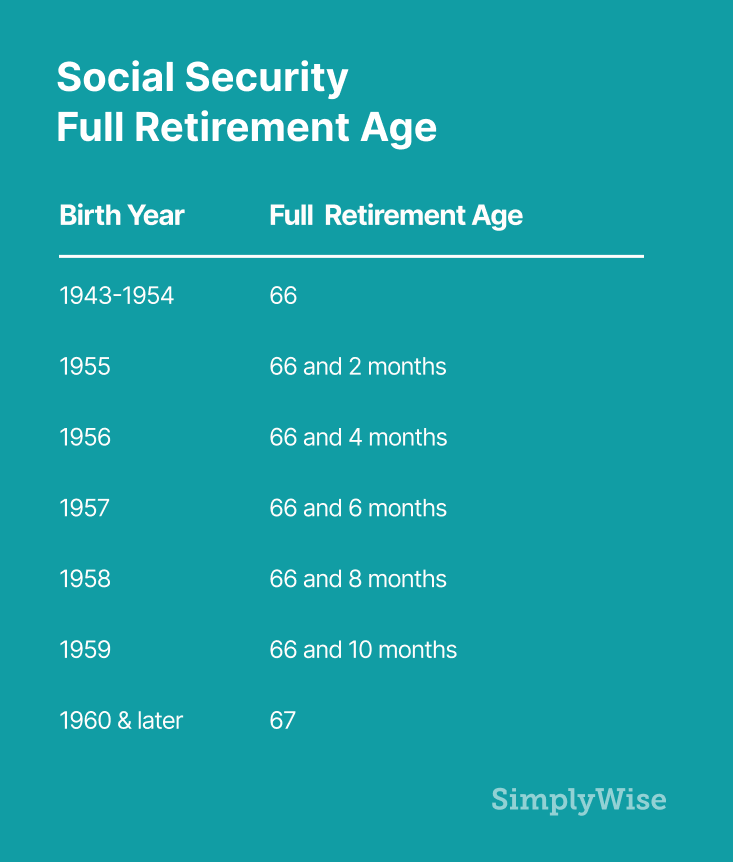
Your Full Retirement Age (FRA) is the age at which you are eligible to receive 100% of your PIA. This age is not static; it depends on your birth year.
- FRA by Birth Year: For those born between 1943 and 1954, FRA is 66. For those born between 1955 and 1959, it gradually increases by a few months each year, reaching 67 for those born in 1960 or later.
- Why FRA is Crucial: Claiming before your FRA results in a permanently reduced benefit, while delaying past your FRA leads to a permanently increased benefit. Understanding your specific FRA is therefore paramount to planning.
Claiming Early: The Trade-off of Reduced Benefits
You can start receiving Social Security retirement benefits as early as age 62. However, this comes with a significant and permanent reduction in your monthly payout.
- Permanent Reduction: If you claim at age 62, your monthly benefit will be reduced by approximately 25% to 30% compared to your PIA, depending on your FRA. This reduction is permanent, meaning your checks will be smaller for the rest of your life.
- Considerations for Early Claiming: While financially appealing to some in the short term, early claiming should be carefully considered. Factors like health status (if you anticipate a shorter lifespan), immediate financial need, or the ability to invest early benefits wisely might justify this decision. However, for most, it represents a substantial loss of lifetime income.
Delaying Benefits: Maximizing Your Monthly Payout
Conversely, delaying your Social Security claim beyond your FRA can significantly boost your monthly benefit. You can earn Delayed Retirement Credits (DRCs) for each month you wait past your FRA, up to age 70.
- 8% Annual Increase: For every year you delay claiming benefits past your FRA, your monthly benefit increases by approximately 8%. This growth rate is an excellent return on investment, guaranteed by the government.
- Considerations for Delaying: Delaying is often a smart strategy for those who are healthy, have other sources of income to cover expenses until age 70, and anticipate a longer lifespan. A larger monthly check can provide significant financial security in your later years, helping to offset inflation and cover rising healthcare costs.
Spousal and Survivor Benefits: Beyond Your Own Work Record
Social Security isn’t just about your individual work record. It also provides benefits to eligible family members, which can be a vital part of a comprehensive financial plan.
- Spousal Benefits: If your spouse has a higher PIA, you may be able to claim a spousal benefit, which can be up to 50% of their PIA, provided you are at least your FRA. If you claim spousal benefits before your FRA, they will be reduced.
- Divorced Spouse Benefits: You might be eligible for benefits based on an ex-spouse’s record if the marriage lasted at least 10 years, you are currently unmarried, and meet other criteria.
- Survivor Benefits: Upon the death of a spouse or ex-spouse, eligible survivors (including children in some cases) can receive benefits based on the deceased’s work record. These benefits can often be higher than one’s own retirement benefit. Understanding these options is critical for family financial protection.
Practical Tools and Strategies for Estimating Your Benefits
While the rules and calculations can seem complex, the SSA provides several user-friendly tools to help you estimate your future benefits and model different claiming scenarios.
The Social Security Administration (SSA) Website and My Social Security Account
The official SSA website is your primary and most accurate resource for understanding your benefits.
- Creating a My Social Security Account: This is the single most important step. Your online account provides personalized estimates of your future benefits at different claiming ages (62, FRA, 70), based on your actual earnings record. You can also review your earnings history for accuracy and access your Social Security statement.
- Using Their Benefit Calculators: The SSA website also hosts various calculators that allow you to model different scenarios, such as the impact of future earnings changes, early claiming, or delaying.
Using Online Calculators and Financial Planning Software
Beyond the SSA’s tools, numerous third-party resources can help with your Social Security planning.
- Third-Party Calculators: Websites from organizations like AARP, as well as financial news outlets, offer calculators that can help you compare different claiming strategies and understand their long-term impact. Many of these tools allow for more dynamic scenario planning.
- Financial Planning Software: Comprehensive retirement planning software often integrates Social Security benefit projections, allowing you to see how different claiming strategies fit into your overall financial picture, including pensions, investments, and other income sources.
Consulting a Financial Advisor
For complex situations or a holistic view of your retirement, a qualified financial advisor can be an invaluable resource.
- Professional Guidance: An advisor specializing in retirement planning can help you navigate intricate rules, especially regarding spousal, divorced spouse, or survivor benefits, and integrate Social Security into your broader financial plan.
- Optimizing Your Strategy: They can help analyze your unique financial situation, risk tolerance, health status, and longevity expectations to recommend an optimal claiming strategy that maximizes your lifetime benefits and complements your other retirement assets.
Factors Influencing Your Social Security Payout
Beyond the core calculations and claiming age, several other factors can impact the actual dollar amount you receive from Social Security.
Earnings History: The Core Driver
As mentioned, your AIME is based on your highest 35 years of indexed earnings. This makes your work history profoundly influential.
- Impact of Gaps or Low Earnings: Years with no earnings or very low earnings will be included as zeros if you have fewer than 35 years of substantial earnings. This can significantly reduce your AIME and, consequently, your PIA. Conversely, working more than 35 years can replace earlier, lower-earning years with higher-earning ones, boosting your AIME.
- Maximizing Earnings: If you’re still working and have less than 35 years of high earnings, continuing to work can potentially increase your future benefit.
Cost-of-Living Adjustments (COLAs): Keeping Pace with Inflation
Social Security benefits are not stagnant. They are subject to annual Cost-of-Living Adjustments (COLAs), designed to help maintain the purchasing power of your benefits against inflation.
- Annual Adjustments: The SSA announces COLA adjustments each fall, which then apply to benefits starting in January of the following year. These adjustments are based on the Consumer Price Index for Urban Wage Earners and Clerical Workers (CPI-W).
- Preserving Purchasing Power: While COLAs may not always perfectly match individual inflation experiences, they are crucial for ensuring that your fixed income retirement benefits don’t erode significantly over time due to rising costs.
Taxation of Benefits: What to Expect
It’s a common misconception that Social Security benefits are entirely tax-free. Depending on your total income in retirement, a portion of your benefits may be subject to federal income tax.
- Provisional Income: The amount of your benefits subject to tax is determined by your “provisional income,” which includes your Adjusted Gross Income (AGI), tax-exempt interest income, and half of your Social Security benefits.
- Taxation Thresholds: If your provisional income exceeds certain thresholds, up to 50% or even 85% of your Social Security benefits can become taxable at ordinary income tax rates. It’s essential to factor this into your retirement income planning and tax strategy. Some states also tax Social Security benefits.
Working While Receiving Benefits: The Earnings Limit
If you decide to continue working while receiving Social Security benefits, be aware of the earnings limit, particularly if you are below your Full Retirement Age (FRA).
- Before FRA: If you are under your FRA and earn more than a certain amount (e.g., $22,320 in 2024), the SSA will temporarily withhold a portion of your benefits. For every $2 you earn over the limit, $1 in benefits is withheld.
- In the Year You Reach FRA: In the year you reach FRA, a higher earnings limit applies, and benefits are withheld at a rate of $1 for every $3 earned over the limit, until the month you reach FRA.
- At or After FRA: Once you reach your Full Retirement Age, there is no earnings limit, and your benefits will not be reduced regardless of how much you earn. Moreover, any benefits withheld due to prior earnings limits are factored back into your monthly payment once you reach FRA, potentially increasing it.

Conclusion
“Figuring your Social Security” is far more than a simple calculation; it’s an ongoing process of understanding, strategizing, and making informed decisions that can profoundly impact your financial security in retirement. From grasping the fundamentals of work credits and AIME to navigating the critical decision of when to claim benefits, every aspect plays a role.
By utilizing the personalized tools available through the Social Security Administration, leveraging online calculators, and consulting with financial professionals when needed, you can gain clarity and confidence in your Social Security strategy. Remember, Social Security is not just a government handout; it’s an earned benefit that you’ve contributed to throughout your working life. Proactively understanding and planning for it is a cornerstone of a well-secured retirement. Don’t leave this vital piece of your financial puzzle to chance; take the time to figure your Social Security and build a more robust financial future.
aViewFromTheCave is a participant in the Amazon Services LLC Associates Program, an affiliate advertising program designed to provide a means for sites to earn advertising fees by advertising and linking to Amazon.com. Amazon, the Amazon logo, AmazonSupply, and the AmazonSupply logo are trademarks of Amazon.com, Inc. or its affiliates. As an Amazon Associate we earn affiliate commissions from qualifying purchases.