
Understanding your annual income is more than just knowing what you earn; it’s the bedrock of sound financial planning. Whether you’re applying for a loan, planning your budget, setting savings goals, or preparing your taxes, an accurate grasp of your total earnings for a year is indispensable. This figure dictates your borrowing power, influences your investment strategies, and provides a clear picture of your financial health. Without this fundamental calculation, navigating the complexities of personal finance becomes a guessing game, potentially leading to missed opportunities or unexpected financial hurdles.
This comprehensive guide will demystify the process of calculating your annual income, breaking it down into manageable steps. We’ll explore the various components that contribute to your total earnings, distinguish between gross and net income, and provide actionable methods for different employment scenarios. By the end, you’ll not only know how to accurately determine your annual income but also understand why this knowledge is so crucial for your financial well-being.
Understanding What Constitutes “Income”
Before you can calculate your annual income, you must first understand what types of money are considered “income.” It’s not just your salary; a multitude of financial inflows contribute to this figure, and it’s critical to account for all of them.
Gross vs. Net Income: The Fundamental Distinction
The first crucial distinction to make is between gross income and net income.
- Gross Income: This is your total earnings before any deductions or taxes are taken out. It’s the headline number, the full amount your employer agrees to pay you, or the total revenue generated from your business or freelance work. When lenders or government agencies ask for your “income,” they usually refer to your gross income.
- Net Income (or Take-Home Pay): This is the amount of money you actually receive after all taxes, deductions, and contributions have been withheld from your gross pay. It’s what lands in your bank account and what you use for daily expenses. While important for budgeting, it’s your gross income that serves as the basis for most financial calculations and eligibility criteria.
For the purpose of calculating your annual income in its broadest sense, we will primarily focus on your gross annual income, as it provides the most comprehensive picture of your earning capacity.
Types of Earned Income
The most common forms of income come directly from your labor or services.
- Wages and Salary: This is the most straightforward category. Wages are typically paid hourly, while salaries are fixed amounts paid over a period (e.g., bi-weekly, monthly, annually), regardless of hours worked.
- Commissions: Often earned by sales professionals, commissions are a percentage of sales generated or a fixed amount per sale. They can be a significant, though sometimes variable, part of your income.
- Tips: Common in service industries, tips are direct payments from customers. In many jurisdictions, tips are considered taxable income and must be reported.
- Bonuses: One-time payments given by employers, often tied to individual or company performance.
- Freelance and Self-Employment Income: For independent contractors, gig workers, and small business owners, this is the total revenue generated from their services or sales before business expenses are deducted.
Other Income Sources
Your income stream might extend beyond your direct employment.
- Investment Income: This includes dividends from stocks, interest from savings accounts or bonds, and capital gains from selling assets like stocks or real estate at a profit.
- Rental Income: Money received from tenants for the use of your property.
- Royalties: Payments received for the use of intellectual property, such as books, music, or patents.
- Alimony and Child Support: Payments received from a former spouse. While child support is generally not taxable income to the recipient, alimony often is.
- Social Security Benefits, Pensions, and Annuities: Income received during retirement.
- Unemployment Benefits: Payments received from the government during periods of unemployment.
- Gambling Winnings: Winnings from lotteries, casinos, or other forms of gambling are considered taxable income.
Non-Taxable Income Exclusions
It’s also important to note certain financial inflows that are generally not considered taxable income, though they might increase your overall financial resources. Examples include most gifts, life insurance proceeds, certain scholarships and fellowships, and some disability benefits. While these enhance your financial position, they are typically not included in the calculation of your taxable annual income. However, for a holistic view of your financial inflows, you might still want to track them separately.
Step-by-Step Guide to Calculating Your Gross Annual Income
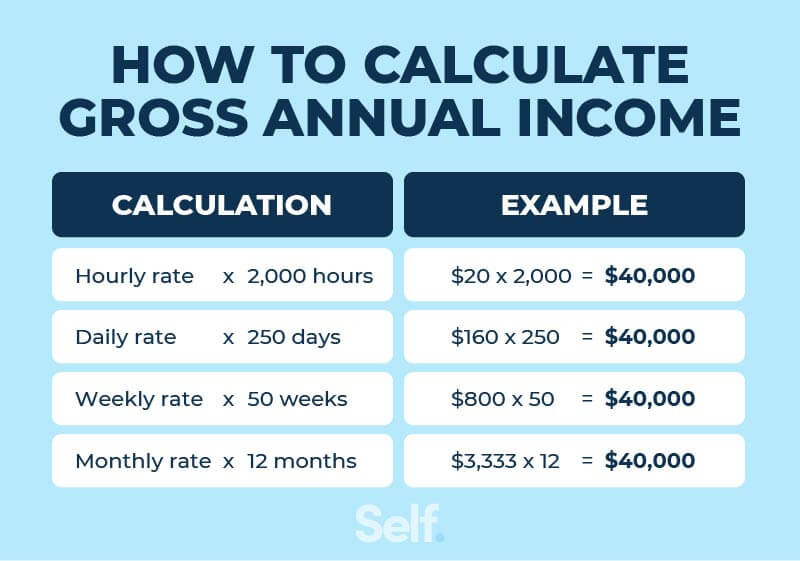
Calculating your gross annual income requires a systematic approach, tailored slightly to your employment type. Gather all relevant documentation, such as pay stubs, bank statements, tax forms (W-2, 1099-MISC, 1099-NEC), and records of other income sources.
For Salaried Employees
If you earn a fixed salary, this is usually the simplest calculation.
- Locate Your Annual Salary: Your employment contract, offer letter, or a recent pay stub will typically state your annual salary.
- Verify with Pay Stubs: If your salary is stated as a monthly or bi-weekly amount, multiply it by the number of pay periods in a year.
- Monthly Salary: Monthly amount x 12
- Bi-Weekly Salary: Bi-weekly amount x 26 (there are 26 bi-weekly periods in a year)
- Semi-Monthly Salary: Semi-monthly amount x 24
- Add Any Bonuses: Include any performance bonuses, signing bonuses, or holiday bonuses you received during the year. These are typically listed on your pay stubs or W-2 form.
- Include Other Employer Benefits (Taxable): Some employer benefits, like certain fringe benefits, might be considered taxable income and should be included. Your W-2 form will summarize these.
For Hourly Employees
Hourly employees need to track their hours carefully.
- Calculate Total Regular Hours: Sum all your regular hours worked throughout the year. If you work a consistent schedule (e.g., 40 hours/week), multiply your weekly hours by 52.
- Calculate Regular Pay: Multiply total regular hours by your hourly rate.
- Calculate Overtime Hours and Pay: Separately track any overtime hours. Multiply overtime hours by your overtime rate (e.g., 1.5 times your regular rate).
- Add Tips and Commissions: Systematically add any tips received and commissions earned throughout the year. Many employers report these on pay stubs, but you should also keep your own records.
- Sum All Earned Income: Add your regular pay, overtime pay, tips, and commissions.
For Freelancers and Self-Employed Individuals
Calculating annual income for the self-employed requires meticulous record-keeping, as income streams can be varied and irregular.
- Track All Client Payments: Keep a detailed record of every payment received from clients or customers throughout the year. This can be done using invoicing software, spreadsheets, or dedicated accounting tools.
- Include All Revenue Sources: Don’t forget income from multiple platforms (e.g., various freelance marketplaces, direct clients, product sales).
- Sum Total Gross Revenue: Add up all payments received. This sum represents your gross annual income before any business expenses. (Note: For tax purposes, you’ll deduct business expenses from this gross revenue to arrive at your net business income, but for a general annual income calculation, you start with the gross).
- Review Bank Statements: Cross-reference your records with bank deposits to ensure all income has been captured.
Incorporating Additional Income Streams
Regardless of your primary employment type, you must integrate all other income sources.
- Investment Income: Collect statements from your brokerage accounts, banks (for interest), and real estate holdings. Sum up all interest, dividends, and realized capital gains.
- Rental Income: Total all rental payments received throughout the year.
- Other Sources: Add any unemployment benefits, alimony, pension payments, or other miscellaneous income types you identified earlier.
Dealing with Irregular Income
If your income fluctuates significantly (e.g., you rely heavily on commissions, seasonal work, or variable freelance projects), a simple projection might not be accurate.
- Average Method: If you have historical data, average your monthly or quarterly income over a period to estimate your annual total.
- Conservative Estimate: When unsure, it’s often better to make a conservative estimate to avoid overestimating your financial capacity.
- Track Continuously: For highly irregular income, continuous tracking throughout the year is essential for an accurate year-end figure.

From Gross to Net: Understanding Deductions and Taxes
While our primary focus is gross annual income, it’s critical to understand how this figure is reduced to your take-home pay. This knowledge is vital for budgeting and understanding your true financial liquidity.
Pre-Tax Deductions
These are amounts withheld from your gross pay before taxes are calculated, thereby reducing your taxable income.
- Retirement Contributions: Contributions to a 401(k), 403(b), or traditional IRA are often pre-tax.
- Health Insurance Premiums: Your share of health, dental, and vision insurance premiums is typically deducted pre-tax.
- Health Savings Accounts (HSAs) and Flexible Spending Accounts (FSAs): Contributions to these accounts are usually pre-tax.
- Transit Benefits: Pre-tax deductions for public transportation or parking costs.
Payroll Taxes
These are mandatory deductions that fund government programs.
- Social Security Tax: Funds retirement, disability, and survivor benefits. Employees and employers each pay 6.2% of wages up to an annual limit.
- Medicare Tax: Funds hospital insurance for the elderly and disabled. Employees and employers each pay 1.45% of all wages, with no income limit.
- Additional Medicare Tax: High-income earners may pay an additional 0.9% on earnings above a certain threshold.
Income Tax Withholding
- Federal Income Tax: The amount withheld from each paycheck to cover your federal income tax liability. This is based on the information you provide on Form W-4 and your filing status, deductions, and credits.
- State Income Tax: Many states also have income taxes, which are withheld similarly to federal taxes.
- Local Income Tax: Some cities or localities impose their own income taxes.
The Impact of Self-Employment Taxes
For freelancers and self-employed individuals, there’s no employer to split payroll taxes. Instead, you are responsible for the entire amount (both the employer and employee portions) of Social Security and Medicare taxes, collectively known as self-employment tax. This is 15.3% on your net earnings from self-employment (your gross revenue minus eligible business expenses) up to the Social Security limit, plus 2.9% on all earnings for Medicare. This significant tax burden necessitates careful financial planning and often quarterly estimated tax payments.
Why Accurate Annual Income Calculation Matters
Knowing your annual income isn’t just an academic exercise; it’s a critical tool that empowers you to make informed financial decisions and achieve your personal goals.
Budgeting and Financial Planning
Your annual income is the starting point for creating a realistic budget. It tells you exactly how much money you have coming in, allowing you to allocate funds effectively to expenses, savings, and investments. Without this figure, your budget is built on guesswork, which can lead to overspending or under-saving. Accurate income data enables you to track spending patterns, identify areas for reduction, and optimize your cash flow.
Tax Planning and Filing
Tax season becomes significantly less stressful when you know your annual income. Your gross annual income determines your tax bracket, your eligibility for certain credits and deductions, and ultimately, your total tax liability. For the self-employed, an accurate income calculation is essential for estimating quarterly tax payments, avoiding penalties, and ensuring you set aside enough for self-employment and income taxes. Having a clear picture helps you plan for potential refunds or payments due, preventing last-minute surprises.
Loan and Credit Applications
Banks, mortgage lenders, and other financial institutions heavily rely on your annual income to assess your creditworthiness and your ability to repay debt. A higher, verifiable income typically translates to better loan terms, higher credit limits, and greater approval odds for significant financial commitments like mortgages or car loans. Inaccurate income reporting, whether intentional or accidental, can jeopardize your application or lead to less favorable rates.
Setting Financial Goals
Whether your goal is to save for a down payment, retire early, invest in the stock market, or pay off debt, your annual income dictates the pace and feasibility of these aspirations. By knowing your income, you can set realistic savings targets, determine how much you can comfortably invest, and project timelines for achieving major financial milestones. It provides the clarity needed to align your income with your ambitions.
Understanding Your True Financial Health
Beyond specific applications, calculating your annual income offers a panoramic view of your financial health. It helps you track your earning trajectory over time, evaluate the impact of raises or new income streams, and understand your overall economic standing. This holistic understanding is crucial for strategic decision-making, career planning, and building long-term wealth.
Tools and Resources for Income Tracking
Maintaining accurate records is paramount for an accurate annual income calculation. Fortunately, various tools and resources can simplify this process.
Spreadsheets and Manual Tracking
For those who prefer a hands-on approach, a simple spreadsheet (e.g., in Excel or Google Sheets) can be incredibly effective. Create columns for dates, income sources, gross amounts, and net amounts. This allows you to categorize income and sum it easily. Manual tracking in a notebook can also work, provided you are diligent and consistent.
Budgeting Apps and Software
Many modern budgeting apps (e.g., Mint, YNAB, Personal Capital) can automatically link to your bank accounts and credit cards, categorizing income and expenses for you. While they often focus on net income for budgeting, they can provide a good overview of deposits that represent your gross income. Accounting software like QuickBooks Self-Employed is invaluable for freelancers and small business owners, tracking invoices, payments, and expenses, thereby making gross income calculation straightforward.

Pay Stubs and Tax Documents
These are your official records and should be diligently kept.
- Pay Stubs: Every pay stub details your gross pay, deductions, and net pay for that period. Keep them organized for reference.
- W-2 Form: Your employer sends you a W-2 form annually, summarizing your total wages, tips, other compensation, and withheld taxes for the year. This is the definitive document for salaried and hourly employees.
- 1099-MISC / 1099-NEC Forms: If you’re a freelancer or independent contractor, clients who pay you over a certain threshold will send you these forms, detailing your non-employee compensation.
- Bank Statements and Investment Account Statements: These provide records of deposits and investment income, serving as a critical cross-reference for your other records.
By consistently utilizing these tools and maintaining meticulous records, you can ensure that your annual income calculation is always accurate, giving you confidence and control over your financial future.
In conclusion, knowing how to calculate your annual income is a fundamental financial literacy skill. It moves you from passively receiving money to actively managing and planning your financial life. This accurate figure empowers better budgeting, smarter tax planning, successful loan applications, and clear goal setting, ultimately paving the way to greater financial security and prosperity. Start tracking today, and take the first critical step toward mastering your personal finances.
aViewFromTheCave is a participant in the Amazon Services LLC Associates Program, an affiliate advertising program designed to provide a means for sites to earn advertising fees by advertising and linking to Amazon.com. Amazon, the Amazon logo, AmazonSupply, and the AmazonSupply logo are trademarks of Amazon.com, Inc. or its affiliates. As an Amazon Associate we earn affiliate commissions from qualifying purchases.