
For millions of Americans, Social Security benefits form a crucial pillar of their retirement income strategy. Understanding how these benefits are calculated is not merely an academic exercise; it’s a vital component of informed financial planning. As you approach retirement, or even earlier in your career, gaining clarity on this complex system can empower you to make smarter decisions about when to retire, when to claim benefits, and how to integrate Social Security with your other financial resources. This article will demystify the Social Security benefits calculation process, providing you with a clear roadmap to estimate and understand your future payments.

Understanding the Fundamentals of Social Security Benefits
Before diving into the intricacies of calculation, it’s essential to grasp the foundational principles that underpin the Social Security system. This context will help illuminate why certain factors weigh more heavily than others in determining your benefit amount.
What is Social Security?
Social Security is a comprehensive federal program in the United States designed to provide financial protection for millions of Americans. It serves several purposes, primarily offering retirement income, but also providing disability benefits, and survivor benefits to the families of deceased workers. Funded primarily through payroll taxes (FICA taxes) paid by current workers and their employers, it operates on a pay-as-you-go system, meaning today’s workers fund today’s retirees and beneficiaries. It’s a social insurance program, not a savings account, and its benefit structure is progressive, designed to replace a higher percentage of income for lower-wage earners.
Who is Eligible for Benefits?
Eligibility for Social Security benefits is based on earning “credits” over your working lifetime. In 2024, you earn one credit for each $1,730 of earnings, up to a maximum of four credits per year. Most people need 40 credits (equivalent to 10 years of work) to be eligible for retirement benefits. However, specific eligibility rules apply for disability and survivor benefits, often requiring fewer credits depending on age and other factors. It’s important to note that these credits determine eligibility; the amount of your benefits is based on your earnings history.
Key Factors Influencing Your Benefit Amount
Several critical factors interact to determine the size of your monthly Social Security check. Understanding these drivers is the first step toward estimating your benefits:
- Your Lifetime Earnings: This is arguably the most significant factor. Social Security bases your benefits on your average indexed monthly earnings over your 35 highest-earning years.
- Your Full Retirement Age (FRA): This is the age at which you are entitled to 100% of your primary insurance amount (PIA). Your FRA depends on your birth year.
- When You Choose to Claim Benefits: You can start receiving retirement benefits as early as age 62, but doing so will result in a permanent reduction in your monthly payment. Conversely, delaying beyond your FRA (up to age 70) can increase your monthly payment.
- Cost-of-Living Adjustments (COLAs): Once you start receiving benefits, your payments typically increase annually to keep pace with inflation.
The Primary Insurance Amount (PIA): Your Core Benefit Value
At the heart of Social Security benefits calculation is the Primary Insurance Amount (PIA). Your PIA is the monthly benefit you would receive if you start collecting benefits exactly at your Full Retirement Age (FRA). It is the benchmark from which all early or delayed claiming adjustments are made.
Defining the AIME: Your Earnings History Matters
To calculate your PIA, the Social Security Administration (SSA) first determines your Average Indexed Monthly Earnings (AIME). This isn’t just a simple average of all your earnings. The process involves a few key steps:
- Indexing Your Earnings: Your historical earnings are adjusted (indexed) to account for changes in general wage levels over time. This ensures that your past earnings are expressed in terms of their modern-day value. For example, $10,000 earned in 1980 holds a different purchasing power than $10,000 earned today. Indexing brings these past earnings up to a more current standard, usually based on the national average wage index for two years before you turn 62. Earnings from age 60 onward are not indexed.
- Identifying Your Highest 35 Years: From your indexed earnings record, the SSA identifies your 35 highest-earning years. If you have worked fewer than 35 years, the remaining years will be counted as zeros in the average calculation, which can significantly reduce your AIME.
- Averaging the Indexed Earnings: The total indexed earnings from your highest 35 years are summed up and then divided by 420 (the number of months in 35 years) to arrive at your AIME.
The PIA Formula: Bending Points and Indexing
Once your AIME is established, the SSA applies a progressive formula to calculate your PIA. This formula uses “bending points” that apply different percentages to different segments of your AIME. For individuals becoming eligible for retirement benefits in 2024, the formula is:
- 90% of the first $1,174 of your AIME
- 32% of your AIME between $1,174 and $7,078
- 15% of your AIME over $7,078
The dollar amounts ($1,174 and $7,078) are the “bending points,” and they are adjusted annually. This progressive formula means that lower-income earners receive a higher percentage of their pre-retirement income compared to higher-income earners, reflecting the program’s social adequacy goals. The result of this calculation is your monthly PIA.
The Importance of Your Highest 35 Years of Earnings
The emphasis on your highest 35 years of earnings cannot be overstated. Each additional year of high earnings can replace a low-earning year (or a zero-earning year if you haven’t worked 35 years), potentially increasing your AIME and, consequently, your PIA. This highlights the value of consistent work history and strong earnings throughout your career, particularly in your peak earning years. If you have gaps in your employment, or years with very low earnings, those years will drag down your AIME unless they are replaced by later, higher-earning years.
Factors That Adjust Your PIA
While the PIA is your core benefit, it is not necessarily the amount you will receive. Your actual monthly benefit will be adjusted based on when you decide to start receiving payments relative to your Full Retirement Age.
Full Retirement Age (FRA): The Benchmark
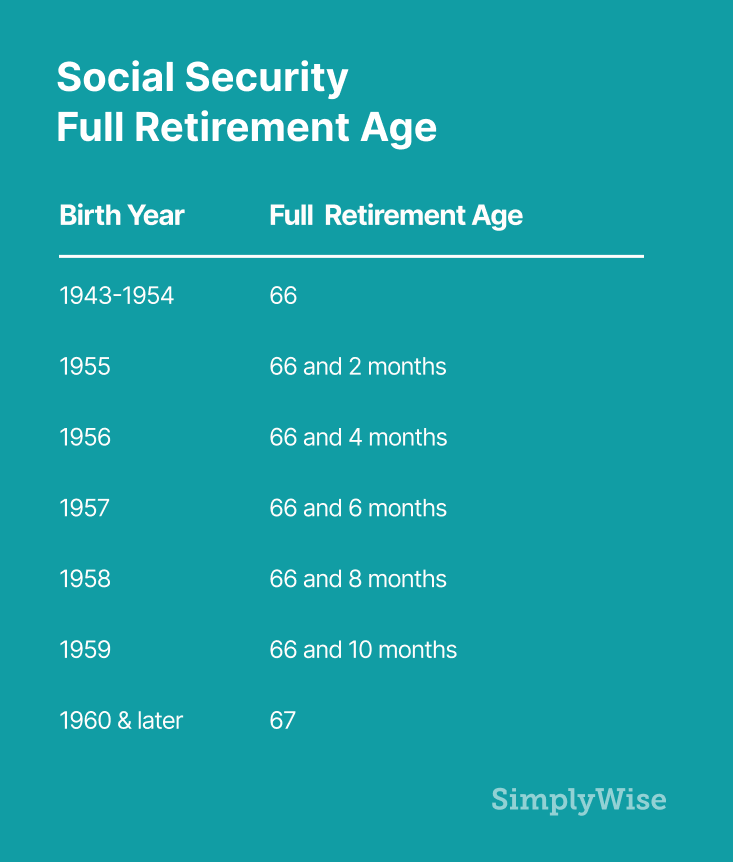
Your Full Retirement Age (FRA) is the age at which you are entitled to 100% of your PIA. The FRA is not universal; it depends on your birth year:
- Born 1943-1954: FRA is 66
- Born 1955: FRA is 66 and 2 months
- Born 1956: FRA is 66 and 4 months
- Born 1957: FRA is 66 and 6 months
- Born 1958: FRA is 66 and 8 months
- Born 1959: FRA is 66 and 10 months
- Born 1960 or later: FRA is 67
Knowing your FRA is crucial for strategic claiming decisions.
Claiming Early: The Impact of Reduced Benefits
You can elect to start receiving Social Security retirement benefits as early as age 62. However, claiming before your FRA results in a permanent reduction of your monthly benefit. The reduction is calculated based on the number of months you claim prior to your FRA.
- For claiming up to 36 months early, your benefit is reduced by 5/9 of 1% for each month.
- For claiming more than 36 months early, your benefit is further reduced by 5/12 of 1% for each additional month.
For someone with an FRA of 67, claiming at age 62 means a 30% reduction in their monthly PIA. This is a significant and permanent reduction that must be carefully considered against your financial needs and life expectancy.
Delaying Benefits: Maximizing Your Monthly Payments
Conversely, if you delay claiming benefits past your FRA, you can earn Delayed Retirement Credits (DRCs). For each month you delay claiming, your monthly benefit increases. This increase is typically 2/3 of 1% per month, or 8% per year, for those born in 1943 or later. These credits accrue until age 70, at which point your monthly benefit reaches its maximum.
For example, if your FRA is 67 and you delay claiming until age 70, you would receive 124% of your PIA (3 years x 8% per year = 24% increase). This is a powerful strategy for those who can afford to wait, as it provides a guaranteed, inflation-adjusted income stream for life.
The Earnings Test: Working While Receiving Benefits
If you claim benefits before your FRA and continue to work, your benefits may be temporarily reduced or withheld if your earnings exceed certain limits. This is known as the Social Security earnings test.
- Before FRA: If you are under your FRA for the entire year, the SSA will deduct $1 from your benefits for every $2 you earn above an annual limit (e.g., $22,320 in 2024).
- In the Year You Reach FRA: In the year you reach your FRA, the deduction rate is $1 for every $3 you earn above a higher limit (e.g., $59,520 in 2024), but only for earnings before the month you reach your FRA.
- At or After FRA: Once you reach your FRA, the earnings test no longer applies, and you can earn any amount without your Social Security benefits being reduced.
It’s important to understand that any benefits withheld due to the earnings test are not permanently lost. Upon reaching your FRA, your monthly benefit will be recalculated to account for the months benefits were withheld, effectively increasing your future payments.
Practical Steps to Estimate Your Benefits
While understanding the underlying formulas is crucial, the SSA provides several user-friendly tools to help you estimate your benefits with greater accuracy.
Utilizing the Social Security Administration (SSA) Website
The official SSA website (www.ssa.gov) is your primary resource for all things Social Security. It offers a wealth of information and direct access to your personal earnings record.
Reviewing Your Social Security Statement
The SSA regularly provides individuals with a Social Security Statement. Historically mailed to workers nearing retirement, it is now primarily available online through your personal my Social Security account. This statement is incredibly valuable as it provides:
- An estimated monthly benefit at age 62, your FRA, and age 70.
- A detailed record of your yearly earnings history.
- Estimates for disability and survivor benefits.
Reviewing your earnings history on the statement is critical. If you find any discrepancies, such as missing earnings from a particular year, you should contact the SSA immediately to correct them. An accurate earnings record ensures your benefits are calculated correctly.
Employing Online Calculators and Financial Planning Tools
Beyond your personal statement, the SSA website offers various online calculators:
- Retirement Estimator: This tool uses your actual earnings record to provide estimates of your future Social Security benefits under different claiming scenarios. You can input various retirement ages and see the resulting benefit amounts.
- Benefit Calculators: Other calculators can help estimate disability, survivor, and even spousal benefits.
Many third-party financial planning software and websites also incorporate Social Security benefit calculators. While these can be useful for comprehensive financial planning, always cross-reference their estimates with information from the official SSA website for the most accurate data based on your specific earnings history.
Maximizing Your Social Security Benefits and Retirement Planning
Calculating your potential Social Security benefits is just one piece of the retirement puzzle. Strategic planning can help you integrate these benefits effectively into your broader financial picture.
Coordinating with Other Retirement Income Streams
Social Security is rarely intended to be a person’s sole source of retirement income. For most, it will supplement pensions, 401(k)s, IRAs, and other savings. Understanding your projected Social Security benefit allows you to:
- Assess your retirement income gap: Determine if your combined income sources will meet your desired lifestyle in retirement.
- Optimize claiming strategies: If you have substantial savings, you might delay Social Security to age 70 for a larger guaranteed income, drawing from savings in the interim. If savings are limited, early claiming might be necessary, even with the reduction.
- Manage sequence of returns risk: Drawing down a stable Social Security income can reduce the need to sell investments during market downturns.
Spousal and Survivor Benefits Considerations
Social Security offers benefits not only to workers but also to their spouses, ex-spouses, and survivors. These benefits can significantly impact a couple’s overall retirement income strategy.
- Spousal Benefits: A spouse can claim up to 50% of the higher-earning spouse’s PIA, provided certain conditions are met (e.g., the higher-earning spouse has filed for benefits, the claiming spouse is at least 62 or caring for a child). This can be a valuable option if one spouse has a significantly lower earning record.
- Survivor Benefits: If a worker dies, their spouse, children, or even dependent parents may be eligible for survivor benefits. A surviving spouse can receive up to 100% of the deceased worker’s benefit.
- “File and Suspend” and “Restricted Application”: While some of the more complex claiming strategies have been eliminated for those born after 1953, understanding basic spousal and survivor benefit rules remains crucial for married couples, especially concerning coordination and timing.
Tax Implications of Social Security Benefits
It’s important to remember that Social Security benefits can be taxable. The amount of your benefits subject to federal income tax depends on your “provisional income,” which is the sum of your adjusted gross income (AGI), tax-exempt interest, and half of your Social Security benefits.
- If your provisional income is between $25,000 and $34,000 (single) or $32,000 and $44,000 (married filing jointly), up to 50% of your benefits may be taxable.
- If your provisional income exceeds $34,000 (single) or $44,000 (married filing jointly), up to 85% of your benefits may be taxable.
Some states also tax Social Security benefits, so it’s wise to check your state’s specific rules and factor potential taxes into your retirement income planning.

Conclusion
Calculating your Social Security benefits might seem daunting at first, given the nuances of indexed earnings, bending points, and age-related adjustments. However, by breaking down the process into its core components—understanding your AIME, identifying your PIA, and accounting for early or delayed claiming—you can gain a clear picture of what to expect. The most effective way to determine your specific benefit amounts is to establish a “my Social Security” account online and regularly review your Social Security Statement. Proactive engagement with this information, combined with thoughtful financial planning, will empower you to make the most of this invaluable retirement resource and ensure a more secure financial future.
aViewFromTheCave is a participant in the Amazon Services LLC Associates Program, an affiliate advertising program designed to provide a means for sites to earn advertising fees by advertising and linking to Amazon.com. Amazon, the Amazon logo, AmazonSupply, and the AmazonSupply logo are trademarks of Amazon.com, Inc. or its affiliates. As an Amazon Associate we earn affiliate commissions from qualifying purchases.