
For millions of Americans, Social Security represents a cornerstone of their retirement security, providing a vital income stream that complements savings and pensions. Yet, despite its widespread importance, the intricate process by which these benefits are calculated often remains a mystery. Understanding “how are SS benefits calculated” is not merely an academic exercise; it’s a critical component of effective personal finance planning, allowing individuals to make informed decisions about their working years, retirement age, and overall financial future.
At its core, Social Security aims to replace a portion of pre-retirement earnings, but it does so through a progressive formula that offers a higher percentage replacement rate for lower-income earners. This system is designed to provide a safety net while encouraging workers to save independently. Delving into the mechanics of this calculation reveals a sophisticated system balancing individual contributions with societal welfare, making it a pivotal subject in the realm of personal finance and wealth management.

The Foundation: Your Earnings Record and AIME
The journey to determining your Social Security benefit begins with your work history and the wages you’ve reported to the Social Security Administration (SSA). Every dollar you earn from employment or self-employment, up to an annual limit, is “covered” by Social Security taxes and contributes to your future benefits.
Understanding Covered Earnings
To qualify for Social Security benefits, individuals must earn “credits” through work. In 2024, you earn one credit for every $1,730 of earnings, up to a maximum of four credits per year. Most people need 40 credits (10 years of work) to be eligible for retirement benefits. However, simply qualifying isn’t enough; the amount of your earnings is paramount. The SSA tracks your earnings year by year, using these records as the raw data for all future calculations. It’s crucial to ensure your earnings record is accurate, which you can regularly check by creating an account on the SSA’s website. These earnings form the bedrock upon which your future financial security rests, directly influencing the generosity of your retirement income.
Adjusting for Inflation: Indexed Earnings
Raw historical earnings, however, don’t tell the full story. A dollar earned in 1985 has significantly less purchasing power than a dollar earned today. To ensure fairness and reflect economic growth, the SSA “indexes” your past earnings. This process adjusts your earnings from previous years to account for changes in the national average wage index over time. For example, earnings from 1985 might be multiplied by a factor to bring them up to a value equivalent to earnings in a more recent year (typically two years before you turn 62). This indexing stops when you turn age 60; earnings from age 60 onwards are counted at their nominal value. This critical step ensures that benefits reflect an individual’s earnings in terms of current economic value, preventing the erosion of benefit value by historical inflation.
The Average Indexed Monthly Earnings (AIME)
Once your earnings have been indexed, the SSA calculates your Average Indexed Monthly Earnings (AIME). This is a critical figure representing your average monthly earnings over your career, adjusted for inflation. To calculate AIME, the SSA takes your highest 35 years of indexed earnings. If you have fewer than 35 years of earnings, the missing years are counted as zero, which can significantly lower your AIME and, consequently, your benefit.
For example, if you worked for 30 years, those 30 years of indexed earnings would be summed, and then 5 years of zero earnings would be added to the total before dividing by 420 (35 years x 12 months). This methodology underscores the importance of a long and consistent work history in maximizing your Social Security benefits. A higher AIME directly translates to a higher primary insurance amount, making this a pivotal calculation in personal finance planning.
The Primary Insurance Amount (PIA): Your Baseline Benefit
The AIME is the foundation, but the Primary Insurance Amount (PIA) is the actual baseline from which all other benefits are derived. It represents the monthly benefit you would receive if you began collecting benefits exactly at your Full Retirement Age (FRA). The calculation of PIA is where the progressive nature of Social Security truly shines.
Introducing Bend Points
The SSA uses a three-tiered formula to convert your AIME into your PIA. This formula involves “bend points,” which are specific dollar amounts in the AIME at which the percentage of earnings replaced changes. These bend points are adjusted annually based on the national average wage index. In essence, the formula applies a higher percentage to the lower portions of your AIME and successively lower percentages to higher portions. This progressive structure is a core tenet of Social Security, ensuring that individuals with lower lifetime earnings receive a greater proportion of their pre-retirement income replaced than those with higher lifetime earnings.
Applying the PIA Formula
For individuals turning 62 in 2024, the PIA formula works as follows:
- 90% of the first $1,174 of your AIME
- 32% of your AIME between $1,174 and $7,078
- 15% of your AIME above $7,078
These dollar thresholds ($1,174 and $7,078) are the “bend points.” Let’s say your AIME is $4,000. Your PIA would be calculated as:
- 90% of $1,174 = $1,056.60
- 32% of ($4,000 – $1,174) = 32% of $2,826 = $904.32
- Total PIA = $1,056.60 + $904.32 = $1,960.92
This calculated PIA is the monthly benefit you’re entitled to at your Full Retirement Age. This example illustrates how the progressive bend points ensure a substantial replacement rate for the lower earnings portion, a moderate rate for the middle, and a more modest rate for the highest earnings.
Why Progressive? Social Security’s Equity Goal
The progressive nature of the PIA formula is a deliberate design choice rooted in Social Security’s goal of social adequacy. It aims to provide a basic safety net for all eligible workers, ensuring that even those with limited earnings receive a meaningful benefit. Without this progressive structure, individuals with lower lifetime earnings might receive benefits insufficient to live on, undermining the program’s primary objective of poverty alleviation. This equitable distribution makes Social Security a crucial anti-poverty program and a core pillar of economic stability for vulnerable populations, distinguishing it from purely contributory systems.
Factors That Adjust Your PIA
While the PIA provides your baseline, it’s rarely the exact amount you’ll receive. Several critical factors can significantly adjust your monthly benefit, primarily your claiming age and any ongoing earnings.
Claiming Age: The Full Retirement Age (FRA)
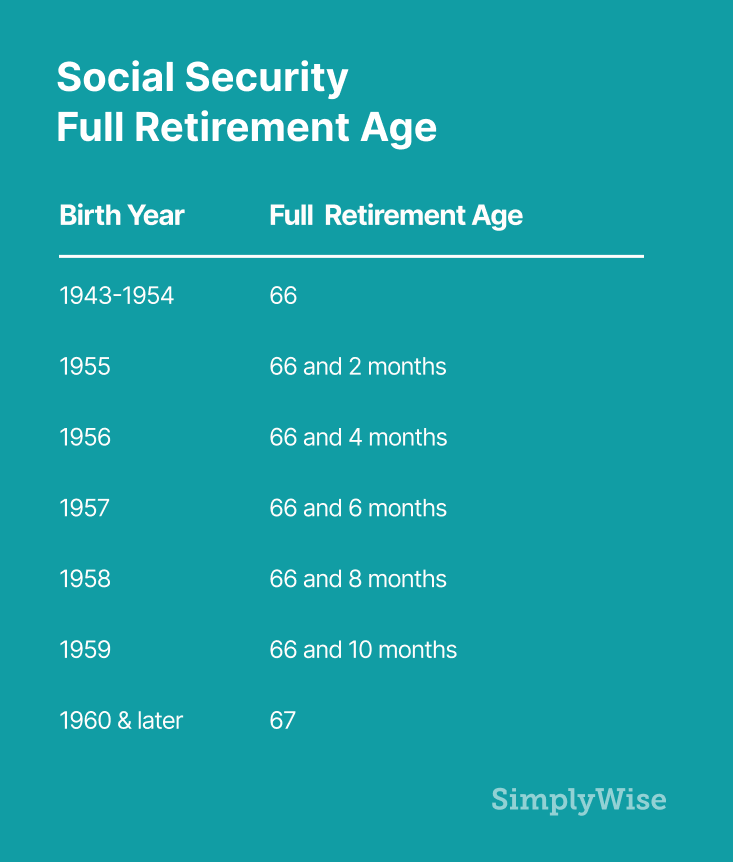
Your Full Retirement Age (FRA) is the age at which you are entitled to receive 100% of your PIA. FRA depends on your birth year. For those born between 1943 and 1954, it’s 66. For those born in 1960 or later, it’s 67. If you claim benefits before or after your FRA, your monthly payment will be adjusted. This is one of the most significant decisions you’ll make regarding your Social Security benefits, directly impacting your lifetime income.
Early Claiming Penalties
You can start receiving Social Security retirement benefits as early as age 62. However, claiming before your FRA results in a permanent reduction of your monthly benefit. For each month you claim early, your benefit is reduced. If your FRA is 67 and you claim at 62, your benefit could be reduced by up to 30%. This reduction is typically calculated as 5/9 of 1% for each of the first 36 months early, and 5/12 of 1% for each additional month. While claiming early provides income sooner, it means a smaller check for the rest of your life. Financial planning around this decision is paramount.
Delayed Retirement Credits (DRCs)
Conversely, if you delay claiming benefits past your FRA, you can earn Delayed Retirement Credits (DRCs). These credits permanently increase your monthly benefit. For each year you delay, up to age 70, your benefit increases by a certain percentage (currently 8% per year for those born in 1943 or later). There’s no additional benefit to delaying past age 70, so it typically makes sense to claim by that point. Delaying can result in a significantly larger monthly check, potentially increasing your benefit by 24-32% compared to your FRA benefit. This strategy is a powerful tool for maximizing lifetime benefits, particularly for those with sufficient other retirement income.
Cost-of-Living Adjustments (COLAs)
Once you start receiving benefits, they are subject to annual Cost-of-Living Adjustments (COLAs). COLAs are designed to ensure that the purchasing power of Social Security benefits is not eroded by inflation. Each year, if the Consumer Price Index for Urban Wage Earners and Clerical Workers (CPI-W) rises, benefits are adjusted upward accordingly. These adjustments are a vital feature, protecting retirees’ financial stability over decades of retirement.
The Earnings Test (for Early Claimers)
If you claim Social Security benefits before your FRA and continue to work, your benefits might be temporarily reduced if your earnings exceed a certain limit. This is known as the “earnings test.” In 2024, if you are under FRA, $1 in benefits is withheld for every $2 you earn above $22,320. In the year you reach FRA, the reduction is $1 for every $3 earned above a higher limit ($59,520 in 2024), only counting earnings before the month you reach FRA. Once you reach your FRA, the earnings test no longer applies, and you can earn any amount without your benefits being withheld. Importantly, any benefits withheld due to the earnings test are not lost; they are factored back into your benefit calculation at your FRA, leading to a higher monthly payment later on.
Beyond Individual Benefits: Family Considerations
Social Security isn’t just for individual retirees; it’s a family-based system designed to provide financial protection to spouses, children, and survivors of eligible workers.
Spousal and Dependent Benefits
If you’re married, your spouse may be eligible to receive benefits based on your earnings record. A spouse can receive up to 50% of your PIA if they claim at their own FRA. If they claim earlier, their spousal benefit is also reduced. This also applies to divorced spouses under specific conditions. Additionally, your unmarried children (under 18, or 19 if still in high school, or any age if disabled before age 22) may also be eligible for benefits. These provisions extend the reach of Social Security, providing crucial support to families.
Survivor Benefits
In the event of your death, Social Security provides survivor benefits to your eligible family members, including your widow(er), minor children, and dependent parents. A surviving spouse can receive benefits as early as age 60 (or age 50 if disabled) and up to 100% of your benefit amount if they claim at their FRA. This aspect of Social Security acts as a vital life insurance policy, offering financial security to families during challenging times.
Maximum Family Benefit
While Social Security is generous with family benefits, there’s a limit to the total amount that can be paid to a family on one worker’s earnings record. This is known as the “maximum family benefit.” This limit varies but is typically between 150% and 188% of the worker’s PIA. If the sum of individual family member benefits exceeds this maximum, each individual’s benefit is proportionately reduced until the total equals the maximum. This cap ensures the program’s sustainability while still providing substantial family support.
Planning for Your Social Security Future
Understanding the mechanics of Social Security benefit calculation is more than just academic knowledge; it’s a powerful tool for proactive financial planning.
Checking Your Social Security Statement
The single most important step you can take is to regularly review your Social Security Statement. You can access it online by creating a “my Social Security” account at ssa.gov. This statement provides a detailed record of your earnings, an estimate of your future benefits at different claiming ages, and an overview of potential disability and survivor benefits. It’s crucial to check your earnings record for accuracy, as errors can impact your future benefits.
Maximizing Your Benefits
There are several strategies to maximize your Social Security benefits:
- Work at least 35 years: To avoid zero-earning years in your AIME calculation.
- Work during your highest-earning years: Especially if you’re replacing lower-earning years from earlier in your career.
- Delay claiming benefits: If financially feasible, waiting until your FRA or even age 70 can significantly increase your monthly payment for life.
- Coordinate with your spouse: Strategic claiming can optimize combined benefits for couples, often involving one spouse claiming early while the other delays.

Integrating Social Security into Your Retirement Plan
Social Security should be viewed as one component of your broader retirement strategy, not the sole source of income. It provides a reliable baseline, but personal savings, investments, and pensions will likely be necessary to maintain your desired lifestyle in retirement. Factor in your estimated Social Security benefits when determining how much you need to save and invest independently. Financial advisors can help integrate your Social Security strategy into a comprehensive retirement plan, considering your unique circumstances and goals.
Understanding how your Social Security benefits are calculated empowers you to make informed decisions that can profoundly impact your financial well-being in retirement. From the foundational indexing of your earnings to the progressive PIA formula and the critical decision of when to claim, each step plays a vital role. By actively engaging with your Social Security statement and planning strategically, you can optimize this invaluable resource and secure a more stable financial future.
aViewFromTheCave is a participant in the Amazon Services LLC Associates Program, an affiliate advertising program designed to provide a means for sites to earn advertising fees by advertising and linking to Amazon.com. Amazon, the Amazon logo, AmazonSupply, and the AmazonSupply logo are trademarks of Amazon.com, Inc. or its affiliates. As an Amazon Associate we earn affiliate commissions from qualifying purchases.