
In the intricate world of finance, where numbers dictate everything from personal budgets to multi-million dollar investments, understanding percentages is not just a basic skill—it’s a fundamental necessity. But what happens when you encounter a “percentage of a percentage”? This seemingly simple mathematical concept can become a powerful tool or a hidden pitfall, especially when dealing with discounts, taxes, commissions, or compound interest. Mastering this calculation isn’t just about arithmetic; it’s about gaining a deeper insight into financial mechanics, empowering you to make more informed decisions, identify hidden costs, and optimize your financial strategies. This article delves into the core of nested percentage calculations, exploring its diverse applications across personal finance, investing, and business operations, offering practical insights and strategies to leverage this knowledge for your financial advantage.
The Core Concept: Understanding Nested Percentages in Finance
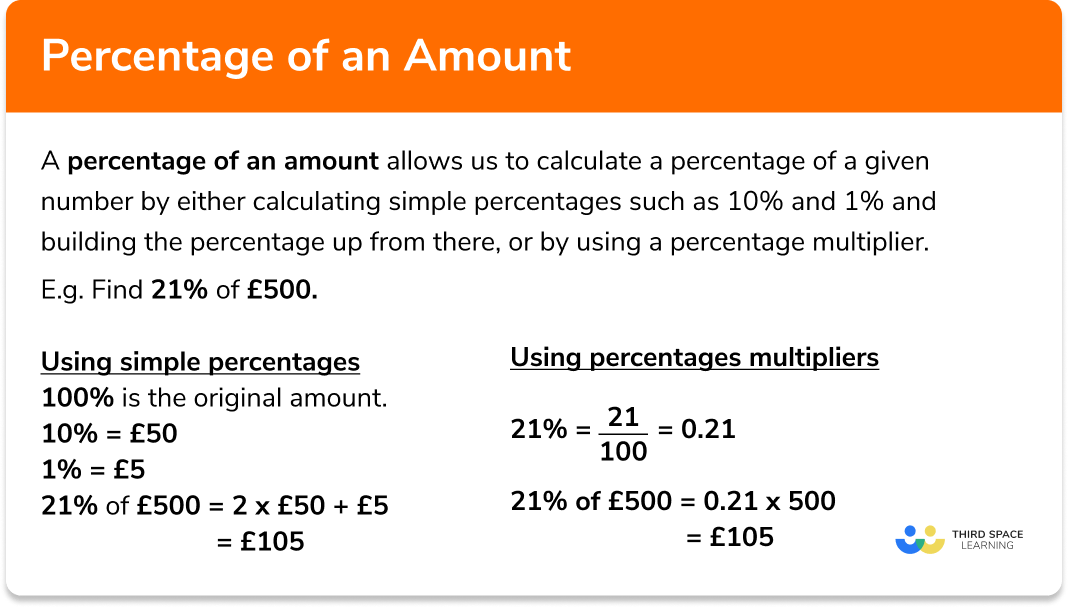
At its heart, a percentage represents a proportion of a whole. When we talk about a “percentage of a percentage,” we’re essentially applying one proportional reduction or increase to a value that has already undergone another proportional change. This layering effect is surprisingly common in financial transactions and can significantly alter the final outcome.
What Exactly is a Percentage of a Percentage?
A percentage of a percentage means that you are taking a fraction (represented by the first percentage) of an already existing fraction (represented by the second percentage, applied to an initial base). For instance, imagine a product priced at $100. If it’s discounted by 20%, its price becomes $80. If you then apply an additional 10% member discount on that already discounted price, you are taking 10% of $80, not 10% of the original $100. This second discount (10%) is a percentage of the already discounted percentage (80% of the original price).
The critical aspect here is the changing base. Each subsequent percentage is applied to the new value resulting from the previous calculation, not necessarily the original starting value. This distinction is paramount in finance, where small errors can lead to significant discrepancies over time or across large sums.
Why This Matters: Common Financial Scenarios
The concept of a percentage of a percentage isn’t an abstract mathematical exercise; it’s woven into the fabric of daily financial life and complex economic models. Recognizing these nested calculations is crucial for:
- Accurate Budgeting and Spending: When you’re dealing with sales tax on discounted items, or calculating a tip on a meal that had a promotional discount, understanding the order of operations and the correct base is essential to avoid overspending or underpaying.
- Maximizing Investment Returns: Compound interest is the classic example of a percentage of a percentage at work, where your earnings from previous periods also earn interest. Grasping this helps you appreciate the power of long-term investing.
- Navigating Business Costs and Revenues: From calculating multi-tiered commissions for sales teams to determining the net profit after various deductions and taxes, businesses constantly deal with nested percentages that impact their bottom line.
- Evaluating Financial Products: Loan interest rates, credit card annual percentage rates (APRs), and investment fees often involve complex structures where various percentages are applied, sometimes sequentially.
The Fundamental Formula: Unpacking the Calculation
Calculating a percentage of a percentage is straightforward once you understand the sequential nature. The most common approach involves converting percentages to their decimal equivalents and multiplying.
Let’s say you have an initial value (V) and you want to apply a percentage P1, and then another percentage P2 to the result.
-
Convert Percentages to Decimals:
- P1% becomes P1/100
- P2% becomes P2/100
-
Calculate the first percentage application:
- New Value = V * (1 + P1/100) if it’s an increase, or V * (1 – P1/100) if it’s a decrease.
- Alternatively, calculate the percentage amount: Amount1 = V * (P1/100). The new value would be V +/- Amount1.
-
Apply the second percentage to the new value:
- Result = New Value * (1 + P2/100) or New Value * (1 – P2/100).
Example: A $100 item is discounted by 20%, then an additional 10% is taken off the discounted price.
- Step 1: Convert 20% to 0.20, and 10% to 0.10.
- Step 2: First discount: $100 * (1 – 0.20) = $100 * 0.80 = $80.
- Step 3: Second discount on the new value: $80 * (1 – 0.10) = $80 * 0.90 = $72.
The final price is $72. Notice that if you simply added the percentages (20% + 10% = 30%) and applied it to the original price ($100 * 0.70 = $70), you would get a different, incorrect result. The order and the changing base are critical.
Practical Applications in Personal Finance and Investing
Understanding nested percentages is not just an academic exercise; it has tangible impacts on your everyday spending, savings, and investment growth.
Discounts, Sales Tax, and Tip Calculations
One of the most frequent encounters with nested percentages occurs in retail and service industries.
- Discounts on Sales: As shown above, if a store offers a 20% discount, and then an additional 15% off for loyalty members, these are applied sequentially to the current price. It’s crucial not to simply add the percentages.
- Sales Tax on Discounted Items: In most jurisdictions, sales tax is applied after all discounts have been subtracted from the original price. If you buy an item for $50, get a 10% discount, and then pay 8% sales tax:
- Discounted price: $50 * (1 – 0.10) = $45.
- Sales tax: $45 * 0.08 = $3.60.
- Total cost: $45 + $3.60 = $48.60.
- Tipping on Discounted Meals: When you receive a percentage-based discount on your meal, it’s generally customary (and financially beneficial for you) to calculate the tip based on the discounted subtotal, before tax.
Understanding Compound Interest and Investment Returns
Compound interest is often called the “eighth wonder of the world” because it exemplifies the power of a percentage of a percentage working for you. When your investments earn interest, and that interest then earns more interest, you are essentially getting a percentage return on a base that grows each period.
- Compounding Growth: If you invest $1,000 at a 5% annual interest rate, in year one you earn $50, bringing your total to $1,050. In year two, you earn 5% not just on the original $1,000, but on the new $1,050, resulting in $52.50 interest. This continuous percentage application on a growing base is why long-term investing yields substantial returns.
- Total Returns with Fees: If an investment fund generates a 10% return, but charges a 1% management fee on the total asset value, this is a nested calculation. The 1% is applied to the full value, including the generated return, effectively reducing your net percentage gain.
Navigating Fees and Charges
Financial institutions and service providers often levy fees as percentages, and these can sometimes be nested, leading to a greater impact than initially perceived.
- Layered Investment Fees: Some investment products might have a management fee, plus an expense ratio, plus trading costs—each potentially calculated as a percentage of different bases or sequentially. Unpacking these ensures you understand the true cost of your investments.
- Credit Card Interest and Penalties: While usually straightforward, a late payment fee (a flat percentage of the overdue amount) might then be subject to interest calculations if not paid promptly, creating a nested effect.
Budgeting and Financial Planning
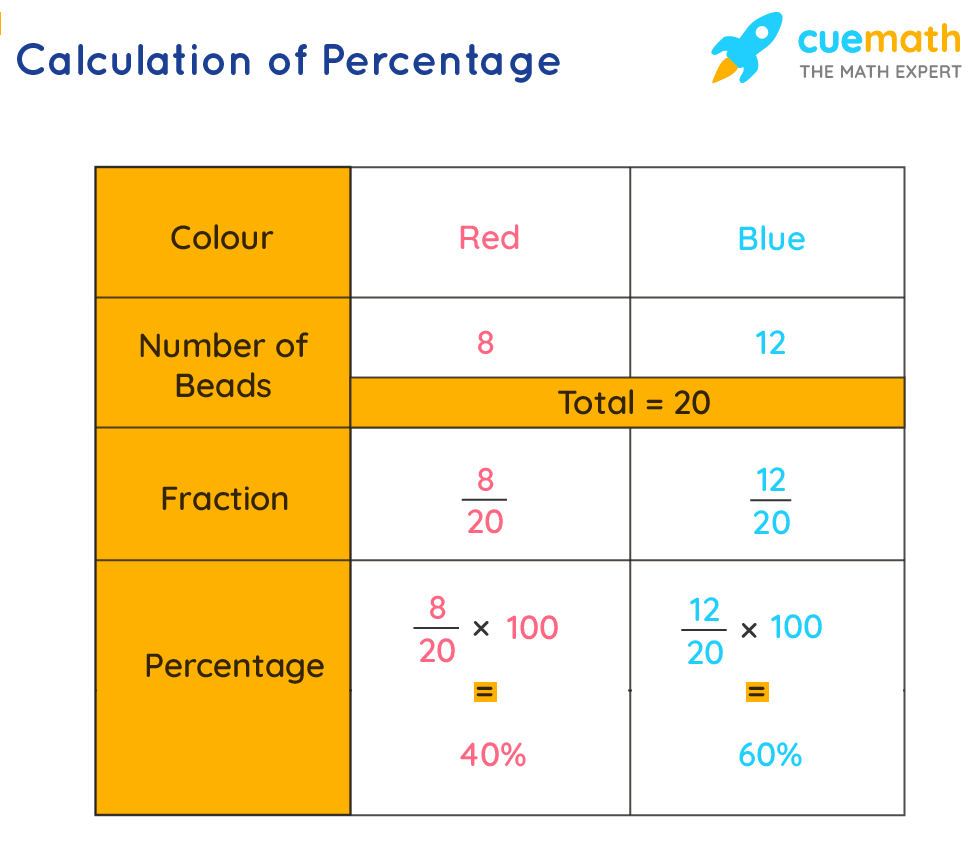
Even in personal budgeting, nested percentages play a role. For example, if you allocate 10% of your income to savings, and then decide that 25% of that savings allocation should go specifically to an emergency fund, you’re looking at 25% of 10% of your income. This translates to 0.25 * 0.10 = 0.025, or 2.5% of your total income for the emergency fund. This detailed allocation ensures your money goes precisely where you intend.
Business Finance and Income Generation: Advanced Scenarios
In the realm of business, income generation, and financial modeling, nested percentage calculations become even more sophisticated and critical for profitability and strategic planning.
Commission Structures and Affiliate Marketing
Sales and marketing industries frequently employ multi-tiered commission structures that are prime examples of nested percentages.
- Tiered Sales Commissions: A salesperson might earn a 5% commission on their total sales. If their manager then earns a 1% “override” commission on the sales of their team, the manager is effectively earning 1% of the sales that already had 5% deducted for the salesperson.
- Multi-Level Marketing (MLM) and Affiliate Programs: Many of these models pay a percentage on direct sales, and then a smaller percentage on sales made by individuals recruited by the direct seller (a “downline”). This creates a chain of percentages where each level earns a percentage of the percentage generated by the level below them. For example, you might earn 10% on direct sales, and 2% on the sales of people you recruit. If your recruit sells $100, you get 2% of their $100 sale ($2), which is also a percentage (20%) of the 10% they earned ($10).
- Referral Bonuses: A common practice where you might earn a percentage of the revenue generated by a referred client, where that revenue itself is a percentage of a larger project fee.
Profit Margins and Multi-Level Pricing
Businesses need to meticulously calculate costs, markups, and profit margins, often involving several percentage calculations.
- Wholesale and Retail Markups: A manufacturer might sell an item to a wholesaler at a 30% markup, and the wholesaler then sells it to a retailer at a 20% markup on their cost, and finally, the retailer applies a 40% markup for the consumer. Each markup is a percentage applied to the previous stage’s cost.
- Net Profit After Expenses and Taxes: A company’s gross profit is a percentage of revenue. Then, operating expenses (often a percentage of gross profit or revenue) are deducted, leading to operating profit. Finally, income tax (a percentage of taxable income) is applied, resulting in net profit. This entire sequence is a series of nested percentage calculations determining the ultimate take-home profit.
Revenue Share and Royalties
Complex agreements for intellectual property, partnerships, or creative works often involve nested revenue-sharing models.
- Publishing Royalties: An author might receive a 10% royalty on the net sales price of a book. The publisher’s net sales price is usually a percentage of the cover price after retailer discounts and distribution costs. Thus, the author’s royalty is a percentage of a percentage of the initial cover price.
- Software as a Service (SaaS) Partnerships: A partner might get a percentage of the subscription revenue they bring in. If that subscription revenue is further split with a platform provider as a percentage of the total, the partner’s share becomes a percentage of a percentage.
Analyzing Business Growth and Market Share
Strategic business analysis often involves nested percentages to understand relative growth and market penetration.
- Growth of Market Share: A company might have 15% of a particular market. If that market segment itself grows by 10% year-over-year, and the company maintains its 15% share, its absolute market footprint grows. Conversely, if the market shrinks, maintaining market share means its actual value also shrinks. Analyzing how a percentage of a market changes within a changing market size is a nested calculation.
Tools and Strategies for Accurate Calculation
Given the pervasive nature and potential complexity of nested percentage calculations, leveraging the right tools and strategies is crucial for accuracy and efficiency.
Leveraging Spreadsheets for Complex Scenarios
For any professional or personal finance enthusiast, spreadsheet software like Microsoft Excel or Google Sheets is an indispensable tool.
- Step-by-Step Formulas: Spreadsheets allow you to break down complex calculations into manageable steps. For instance, in Excel, if your initial value is in A1, a 20% discount could be
=A1*(1-0.20)in cell B1. A subsequent 10% discount on that result would be=B1*(1-0.10)in cell C1. This explicit sequencing helps track each percentage application. - Chaining Calculations: You can also chain the operations within a single formula:
=A1*(1-0.20)*(1-0.10). This approach is more concise but requires careful thought about the order of operations. - What-If Scenarios: Spreadsheets excel at “what-if” analysis. You can easily change initial values or percentage rates to see the immediate impact on the final result, invaluable for financial planning, budgeting, and negotiating.
- Named Ranges and Templates: For recurring calculations (e.g., monthly budget allocations with nested savings goals), create templates with named ranges for clarity and error reduction.
Online Calculators and Financial Software
While spreadsheets offer flexibility, dedicated online calculators and financial software can simplify specific nested percentage scenarios.
- Compound Interest Calculators: These are readily available online and quickly show the exponential growth of investments, often factoring in regular contributions and different compounding frequencies.
- Loan and Mortgage Calculators: These tools typically factor in interest rates, principal, and payment schedules, performing complex nested calculations behind the scenes to show total interest paid over time.
- Tax Software: Modern tax software automatically handles numerous nested tax calculations, such as deductions that are a percentage of adjusted gross income, and credits that are a percentage of specific expenses, ensuring compliance and accuracy.
- Budgeting Apps: Many personal finance apps allow you to set up budget categories and sub-categories, often translating into nested percentage allocations of your income.
Avoiding Common Mistakes: Order of Operations and Base Values
The most common errors in dealing with nested percentages stem from two critical issues:
- Incorrect Order of Operations: As demonstrated, you cannot simply add or subtract percentages that are applied sequentially unless they are applied to the exact same base. Always perform calculations in the correct sequence.
- Misidentifying the Base Value: Each percentage must be applied to the correct current value. A percentage “of the original price” is different from a percentage “of the discounted price.” Always confirm what value the percentage is being calculated from.
- Rounding Errors: When dealing with multiple decimal places, especially in large-sum financial calculations, rounding prematurely can accumulate significant errors. Carry out calculations to sufficient precision before rounding the final result.
The Strategic Advantage: Making Informed Financial Decisions
Beyond mere arithmetic, mastering how to get a percentage of a percentage provides a significant strategic advantage in navigating the complexities of your financial life.
Uncovering Hidden Costs and Maximizing Returns
The ability to accurately model nested percentages allows you to see beyond surface-level figures.
- Exposing True Costs: You can identify how multiple small percentage fees (e.g., transaction fees, platform fees, management fees) can cumulatively eat into your returns or inflate your expenses. Understanding this helps you choose more cost-effective financial products or services.
- Optimizing Investment Strategies: By fully grasping compound interest and the impact of fee structures, you can make more informed decisions about asset allocation, investment horizons, and the power of consistent contributions. Even a slight difference in net percentage return due to lower fees can translate into hundreds of thousands over a lifetime.
- Smart Spending: Knowing exactly how discounts, taxes, and tips interact empowers you to accurately budget for purchases, preventing unpleasant surprises and ensuring you capitalize on promotional offers effectively.
Negotiating Better Deals and Structures
Equipped with this knowledge, you can approach financial negotiations with greater confidence and insight.
- Business Contracts: When negotiating partnership agreements, royalty structures, or commission plans, understanding the implications of nested percentages allows you to anticipate outcomes, propose advantageous terms, and avoid pitfalls.
- Personal Finance Negotiations: Whether it’s discussing payment plans, understanding loan terms, or even evaluating insurance premiums, your ability to break down complex percentage structures gives you an edge. You can ask targeted questions and challenge assumptions based on solid calculations.
Building a Robust Financial Future
Ultimately, the mastery of nested percentage calculations is a cornerstone of robust financial literacy. It moves you from passively accepting financial figures to actively understanding and manipulating them to your advantage. This foundational skill contributes to:
- Empowered Budgeting: You can create more realistic and effective budgets that account for all financial intricacies.
- Strategic Saving and Investing: Your ability to project growth and costs with precision allows for more strategic long-term planning.
- Reduced Financial Stress: Confidence in your financial calculations reduces uncertainty and helps you feel more in control of your money.
In a world increasingly driven by data and numerical analysis, the simple yet profound concept of a percentage of a percentage stands as a testament to the power of fundamental mathematical understanding. By delving into its applications across personal finance, investing, and business, you unlock a deeper level of financial insight, transforming abstract numbers into actionable strategies for wealth creation and financial well-being.
aViewFromTheCave is a participant in the Amazon Services LLC Associates Program, an affiliate advertising program designed to provide a means for sites to earn advertising fees by advertising and linking to Amazon.com. Amazon, the Amazon logo, AmazonSupply, and the AmazonSupply logo are trademarks of Amazon.com, Inc. or its affiliates. As an Amazon Associate we earn affiliate commissions from qualifying purchases.