
In the dynamic world of finance, understanding how to quantify change is not just a useful skill—it’s an essential one. Whether you’re tracking the growth of your investments, analyzing your business’s revenue, or simply trying to comprehend the impact of a recent salary raise, the ability to calculate percentage increase provides invaluable clarity and insight. This fundamental mathematical concept serves as a cornerstone for informed decision-making, allowing individuals and organizations alike to measure progress, identify trends, and strategize for the future. Without this tool, financial data would merely be a collection of numbers, lacking the context needed to truly understand performance, potential, and underlying movements.
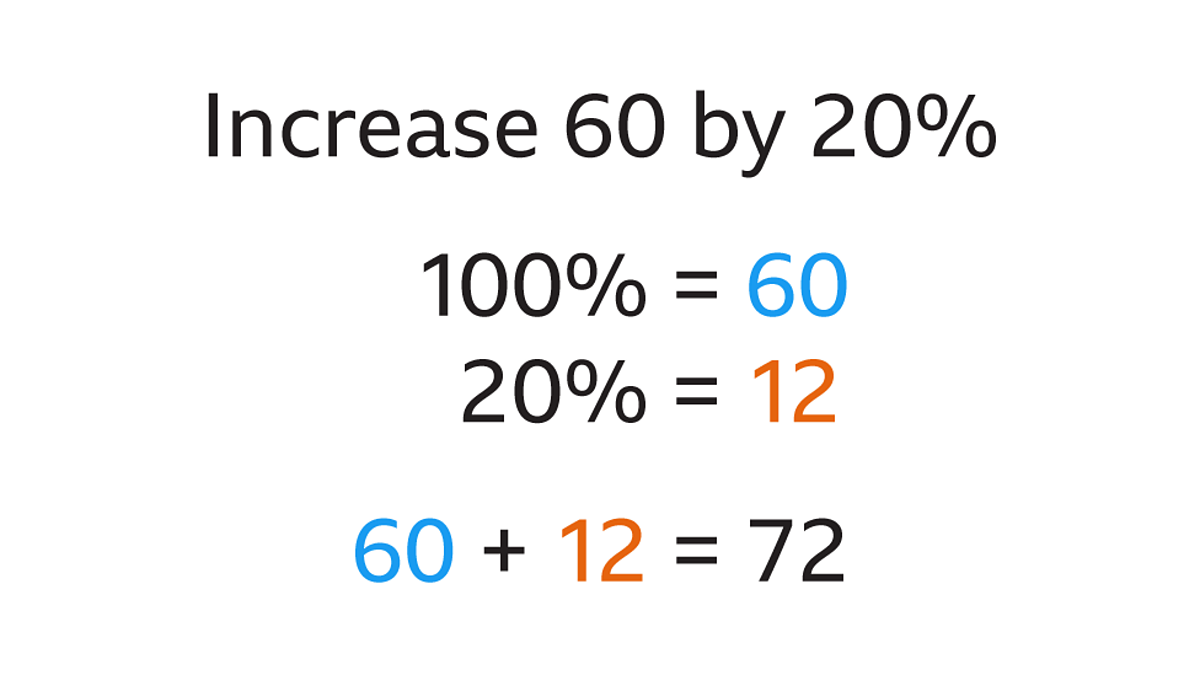
This guide will demystify the process of calculating percentage increase, offering a clear, step-by-step approach. We will explore its critical applications across various financial domains, from personal finance and investing to business analysis and economic interpretation. By the end, you’ll not only be proficient in applying the formula but also adept at leveraging this powerful metric to gain deeper financial understanding, enabling you to make more intelligent, data-driven decisions that propel you towards your financial objectives.
The Fundamental Importance of Percentage Increase in Finance
The percentage increase is more than just a number; it’s a window into the velocity and magnitude of change. In the realm of money, where growth is often the ultimate goal, this metric provides a standardized and easily comparable way to assess progress. It allows us to move beyond absolute figures and understand relative performance, which is often far more telling.
Understanding Growth in Investments and Savings
For individuals managing their personal finances, percentage increase is indispensable for evaluating the health and growth of their savings and investment portfolios. Simply knowing that your investment account increased by $1,000 doesn’t tell the whole story. Was that a good return? It depends on the initial amount. If your initial investment was $10,000, a $1,000 increase represents a 10% gain, which is significant. If your initial investment was $100,000, the same $1,000 increase is only a 1% gain, indicating a much slower growth rate. Percentage increase standardizes this comparison, enabling you to compare the performance of different investments, assess the effectiveness of your investment strategies, and set realistic expectations for future returns. It allows for apples-to-apples comparisons regardless of the initial capital, making it a critical metric for long-term wealth accumulation and retirement planning.
Analyzing Business Performance and Profitability
In the corporate world, percentage increase is a vital tool for assessing the health and trajectory of a business. Companies regularly track the percentage increase in key performance indicators (KPIs) such as revenue, profit margins, customer acquisition, and market share. An increase in revenue percentage quarter-over-quarter or year-over-year indicates sales growth, while an increasing percentage in profit margin points to improved operational efficiency. Conversely, an increasing percentage in expenses can signal areas that require cost control. Business leaders and stakeholders rely on these metrics to gauge operational effectiveness, identify growth opportunities, and make strategic decisions regarding resource allocation, market expansion, and product development. Without this metric, understanding whether a business is merely growing or truly thriving would be a qualitative guess rather than a data-backed certainty.
Tracking Personal Financial Milestones and Goals
Beyond investments and business, percentage increase helps individuals track their progress towards personal financial goals. Did your net worth increase by a satisfactory percentage this year? How much did your student loan debt decrease in percentage terms? Understanding the percentage change allows for a clearer picture of your financial journey. It helps contextualize salary raises (a 3% raise means something different on a $50k salary than on a $150k salary in absolute terms, but the percentage gain is consistent), and the impact of spending reductions or increased savings rates. This contextual understanding is crucial for maintaining motivation and making adjustments to your financial plan as needed, ensuring you remain on track to achieve objectives like buying a home, saving for a child’s education, or achieving financial independence.
The Core Formula: Calculating Percentage Increase
At its heart, calculating percentage increase is a straightforward mathematical operation. It involves comparing a new value to an old value and expressing the difference as a proportion of the old value, then converting that proportion into a percentage.
Step-by-Step Breakdown of the Calculation
The formula for percentage increase is:
Percentage Increase = ((New Value – Old Value) / Old Value) * 100
Let’s break this down:
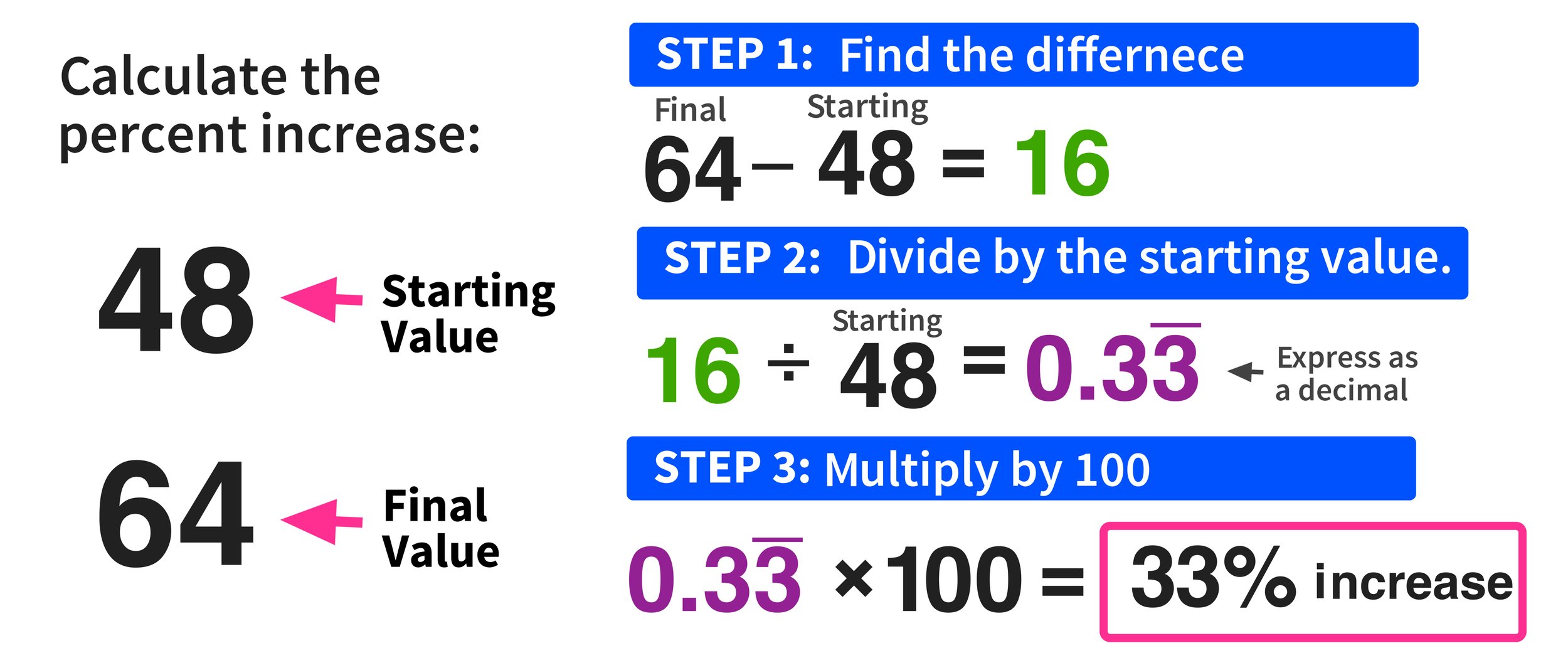
- Find the Difference: Subtract the “Old Value” (the starting point) from the “New Value” (the ending point). This gives you the absolute amount of the increase.
- Example: New Value = $110, Old Value = $100. Difference = $110 – $100 = $10.
- Divide by the Old Value: Take the difference you calculated in step 1 and divide it by the original “Old Value.” This expresses the increase as a decimal or a fraction relative to the starting point.
- Example: Difference = $10, Old Value = $100. $10 / $100 = 0.10.
- Multiply by 100: Multiply the result from step 2 by 100 to convert the decimal into a percentage.
- *Example: 0.10 * 100 = 10%.*
So, the percentage increase is 10%.
Practical Examples: From Investment Returns to Salary Hikes
Let’s illustrate with a few financial scenarios:
-
Investment Return:
- You invested $5,000 in a stock. A year later, it’s worth $6,250.
- Old Value = $5,000
- New Value = $6,250
- Difference = $6,250 – $5,000 = $1,250
- Percentage Increase = ($1,250 / $5,000) * 100 = 0.25 * 100 = 25%
-
Salary Increase:
- Your annual salary was $60,000. After a review, it’s now $63,000.
- Old Value = $60,000
- New Value = $63,000
- Difference = $63,000 – $60,000 = $3,000
- Percentage Increase = ($3,000 / $60,000) * 100 = 0.05 * 100 = 5%
-
Business Revenue Growth:
- A company’s quarterly revenue increased from $250,000 to $300,000.
- Old Value = $250,000
- New Value = $300,000
- Difference = $300,000 – $250,000 = $50,000
- Percentage Increase = ($50,000 / $250,000) * 100 = 0.20 * 100 = 20%
Common Pitfalls and How to Avoid Them
While the formula is simple, a few common errors can lead to incorrect results:
- Confusing Old and New Values: Always ensure you subtract the old value from the new value. Reversing them will give you a negative number, indicating a decrease rather than an increase.
- Dividing by the New Value: The denominator must always be the old (starting) value. Dividing by the new value will give you an incorrect percentage relative to the end point, not the starting point.
- Forgetting to Multiply by 100: After dividing, the result is a decimal. To express it as a percentage, you must multiply by 100. Forgetting this step will give you a decimal or fractional value instead of a percentage.
- Rounding Errors: When dealing with complex numbers, carry out calculations to sufficient decimal places before rounding the final percentage. Premature rounding can introduce inaccuracies.
By adhering to the correct order of operations and understanding the logic behind each step, you can accurately calculate percentage increases every time.
Applying Percentage Increase in Personal Finance
Mastering percentage increase is particularly empowering for personal financial management. It provides a clearer lens through which to view your financial landscape and make proactive decisions.
Evaluating Investment Performance and Portfolio Growth
When it comes to your investments, percentage increase is the ultimate metric for performance evaluation. It enables you to:
- Compare different assets: Did your tech stock outperform your mutual fund this year? By how much in percentage terms?
- Track long-term growth: Understand the compounded growth of your portfolio over multiple years, helping to project future wealth.
- Assess adviser performance: If you have a financial advisor, their effectiveness can largely be measured by the percentage growth of your managed assets.
- Adjust strategies: If certain investments consistently show lower percentage gains than others, it might be time to re-evaluate your allocation or investment choices.
By consistently calculating and tracking these percentages, you can refine your investment strategy, ensuring your money is working as hard as possible for you.
Assessing Salary Raises and Income Growth
A salary increase feels good, but understanding its percentage impact provides context. A 5% raise, for example, might translate to different absolute dollar amounts for different income levels, but its relative impact on your purchasing power and financial planning is consistent. This perspective is vital for:
- Negotiation: Knowing the typical percentage raises in your industry or company can inform your salary negotiations.
- Budgeting: A clear percentage increase helps you adjust your budget accurately, understanding how much more you truly have available for saving, investing, or spending.
- Career progression: Tracking your percentage income growth over your career can be a powerful indicator of your professional development and market value.
It helps you gauge if your income is keeping pace with inflation and if your career trajectory is financially advantageous.
Understanding Inflation’s Impact on Purchasing Power
Inflation, the rate at which the general level of prices for goods and services is rising, is expressed as a percentage increase. For example, if the inflation rate is 3% annually, it means that, on average, goods and services cost 3% more than they did last year. Understanding this percentage is critical because:
- Real vs. Nominal Returns: A 5% investment return doesn’t feel as good if inflation was 3%. Your “real” return (the actual increase in purchasing power) is only 2%.
- Cost of Living: Comparing your salary increase percentage to the inflation rate tells you if your standard of living is improving, stagnating, or declining. If your raise is 3% but inflation is 5%, your purchasing power has actually decreased.
- Long-term Planning: Accounting for inflation’s percentage impact is crucial for retirement planning, ensuring your future savings will still afford you the lifestyle you desire.
This analysis empowers you to make adjustments, such as seeking higher-yield investments or negotiating more substantial raises, to preserve and grow your financial well-being against the eroding force of rising prices.
Utilizing Percentage Increase in Business Finance
For businesses, percentage increase isn’t just an analytical tool; it’s a strategic compass that guides operational decisions, measures success, and forecasts future performance.
Monitoring Revenue and Profit Growth
The heartbeat of any business lies in its revenue and profit. Percentage increase allows businesses to:
- Track Sales Performance: How much did sales increase compared to the last quarter or year? A 15% increase is excellent, while a 2% increase might signal stagnation.
- Analyze Profitability: Did profit margins improve? If revenue increased by 10% but profit by 20%, it suggests improved efficiency in managing costs.
- Identify Growth Drivers: By breaking down revenue by product line or geographical region, businesses can pinpoint which areas are experiencing the highest percentage growth and allocate resources accordingly.
- Set Targets: Future revenue and profit targets are often expressed as percentage increases, providing clear goals for sales and operational teams.
This ongoing analysis ensures the business remains on a healthy growth trajectory and can quickly identify areas for improvement or opportunities for expansion.
Analyzing Expense Escalation and Cost Control
Just as important as growth is managing the costs that enable that growth. Percentage increase is vital for:
- Budget Variance Analysis: Comparing actual expenses to budgeted expenses, expressed as a percentage, helps identify overspending in specific categories.
- Supplier Negotiations: Understanding the percentage increase in raw material costs from a supplier over time can strengthen negotiation positions.
- Operational Efficiency: If a particular operational cost, such as utilities or maintenance, is consistently showing a higher percentage increase than revenue, it signals a need for cost-cutting measures or process improvements.
- Profit Protection: By meticulously tracking percentage increases in various expense categories, businesses can implement strategies to control costs, directly impacting their bottom line and maintaining profitability.
Proactive monitoring of expense percentages is key to preventing cost creep from eroding hard-earned profits.
Strategic Planning and Forecasting with Growth Metrics
Percentage increase is fundamental to strategic business planning and forecasting.
- Market Share Analysis: Businesses assess their market share’s percentage increase or decrease relative to competitors to understand their competitive position.
- Sales Forecasting: Historical percentage growth rates are often extrapolated (with adjustments for market conditions) to project future sales and revenue.
- Investment Decisions: When considering new projects or capital expenditures, businesses calculate the projected percentage return on investment (ROI) to justify the undertaking.
- Investor Relations: Public companies present percentage growth figures to investors and analysts to demonstrate financial health and future potential.
These metrics provide the quantitative basis for setting long-term goals, developing comprehensive business plans, and making informed decisions that shape the company’s future.
Advanced Considerations and Tools for Financial Analysis
While the basic formula for percentage increase is straightforward, the complexity of financial analysis often requires more nuanced applications and sophisticated tools.
Annualized Growth Rates and Compound Annual Growth Rate (CAGR)
For financial data spanning multiple periods, simply calculating year-over-year percentage increases might not paint a complete picture. This is where concepts like annualized growth rates and Compound Annual Growth Rate (CAGR) become crucial.
- Annualized Growth Rate: This standardizes growth over periods shorter or longer than a year, allowing for an “apples-to-apples” comparison. For example, if an investment gained 2% in a quarter, its annualized growth rate would be approximately 8.24% (assuming compounding).
- Compound Annual Growth Rate (CAGR): CAGR is the mean annual growth rate of an investment over a specified period longer than one year, assuming the profits are reinvested at the end of each year. It provides a smoothed, average rate of return, mitigating the volatility of year-to-year fluctuations.
- CAGR Formula: ((Ending Value / Beginning Value)^(1 / Number of Years)) – 1
CAGR is widely used in finance to compare the performance of different investments, businesses, or market indices over time, offering a more representative average growth figure than simple arithmetic averages.
- CAGR Formula: ((Ending Value / Beginning Value)^(1 / Number of Years)) – 1
The Role of Financial Software and Spreadsheets
While manual calculation is good for understanding the principle, real-world financial analysis heavily relies on technology.
- Spreadsheets (e.g., Microsoft Excel, Google Sheets): These are indispensable tools for calculating percentage increases, CAGR, and other financial metrics. Functions like
(New_Value - Old_Value) / Old_Valuecan be easily applied across large datasets, saving time and reducing error. Excel’sRATEorRRIfunctions can also help calculate growth rates. - Financial Calculators and Software: Many dedicated financial calculators (both physical and online) and sophisticated financial software packages (e.g., Bloomberg Terminal, Morningstar) integrate these calculations. They can instantly compute various growth rates, track portfolio performance, and provide visual representations of trends, making complex analysis accessible and efficient.
Leveraging these tools allows for rapid, accurate calculations and the ability to model different scenarios, which is vital for professional financial management.

Interpreting Percentage Changes in Market Data
Understanding percentage increases is crucial for interpreting broader market trends and economic indicators:
- Stock Market Movements: News reports often highlight the percentage increase (or decrease) of major indices like the S&P 500 or NASDAQ. These percentages provide a quick snapshot of market sentiment and overall economic health.
- Economic Indicators: Reports on GDP growth, employment rates, inflation, and retail sales are almost always presented as percentage increases or decreases. These figures inform policy decisions, business strategies, and investment choices.
- Currency Fluctuations: Changes in exchange rates are expressed as percentage increases or decreases, directly impacting international trade and investments.
A keen eye on these percentage changes allows investors, business owners, and economists to anticipate shifts, identify opportunities, and mitigate risks within the broader financial ecosystem. The ability to contextualize these percentages—understanding what a 0.5% GDP increase signifies versus a 2% increase—is a hallmark of financial literacy.
In conclusion, the ability to figure out percentage of increase is far more than a simple arithmetic exercise; it is a fundamental skill that underpins sound financial understanding and strategic decision-making. From meticulously tracking personal investment growth and assessing salary progression to critically analyzing business performance and deciphering complex economic trends, this metric provides the clarity needed to navigate the financial landscape effectively. By embracing the core formula, avoiding common pitfalls, and leveraging advanced tools for more sophisticated analysis, you empower yourself with a vital analytical capability. In a world driven by numbers, understanding their relative change, rather than just their absolute values, is the key to unlocking deeper insights and forging a path toward greater financial success and stability.
aViewFromTheCave is a participant in the Amazon Services LLC Associates Program, an affiliate advertising program designed to provide a means for sites to earn advertising fees by advertising and linking to Amazon.com. Amazon, the Amazon logo, AmazonSupply, and the AmazonSupply logo are trademarks of Amazon.com, Inc. or its affiliates. As an Amazon Associate we earn affiliate commissions from qualifying purchases.