
In the dynamic world of finance, where numbers dictate outcomes and trends shape decisions, understanding the nuances of quantitative analysis is not just an advantage—it’s a necessity. Among the myriad calculations that form the bedrock of financial literacy, the percentage increase stands out as particularly fundamental. Whether you’re tracking the growth of your investment portfolio, assessing the impact of a salary raise, scrutinizing business revenue growth, or simply trying to comprehend the true cost of inflation, knowing “how to count percentage increase” is an indispensable skill.
This seemingly simple calculation empowers individuals and businesses alike to make informed decisions, benchmark performance, and anticipate future trajectories. It provides a clear, standardized way to measure change, offering insights that raw numbers alone cannot. An increase from $10 to $20 is a $10 jump, but expressing it as a 100% increase immediately conveys its magnitude relative to the original value. This article will demystify the process, demonstrating its practical applications across various financial landscapes, and equipping you with the expertise to wield this powerful tool confidently.
The Foundational Formula for Financial Growth
At its core, calculating a percentage increase is a straightforward arithmetic operation designed to express the relative change between an initial value and a final, larger value. This relative measure is crucial in finance because it standardizes comparisons, allowing for meaningful analysis across different scales and timeframes. Without it, comparing a $100 profit increase on a $1,000 investment to a $10,000 profit increase on a $1,000,000 investment would be less intuitive, as the absolute numbers don’t tell the whole story of efficiency or performance.
Deconstructing the Percentage Increase Equation
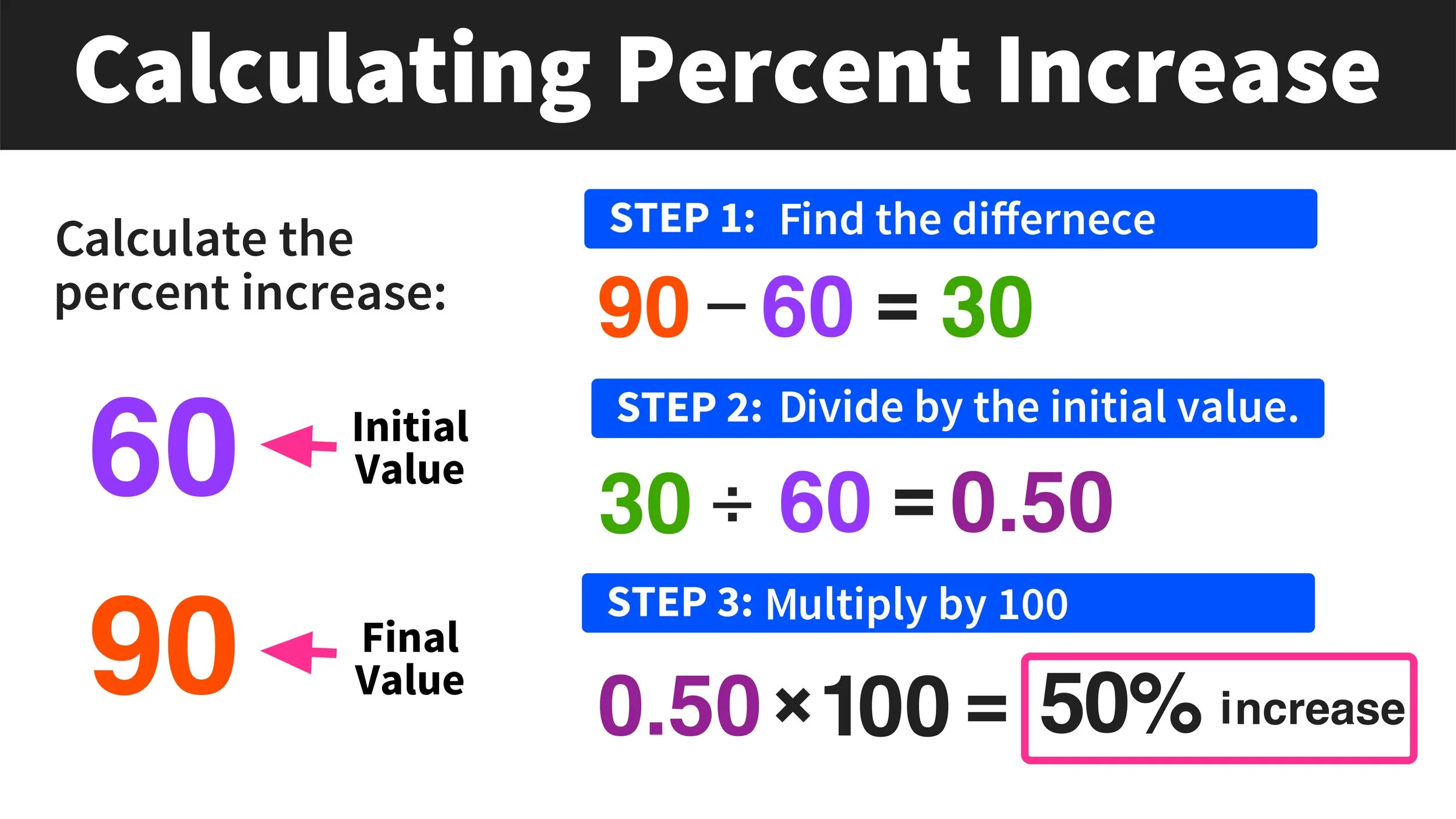
The formula for calculating percentage increase is universally applicable and surprisingly simple. It involves three key steps:
-
Find the Difference: Subtract the original (or starting) value from the new (or ending) value. This gives you the absolute increase.
- Absolute Increase = New Value – Original Value
-
Divide by the Original Value: Take the absolute increase and divide it by the original value. This step determines the proportion of the increase relative to the starting point.
- Proportional Increase = Absolute Increase / Original Value
-
Multiply by 100: To convert this decimal proportion into a percentage, multiply the result by 100.
- Percentage Increase = (Proportional Increase) × 100
Combining these steps, the complete formula is:
Percentage Increase = ((New Value – Original Value) / Original Value) × 100
Let’s illustrate with a simple financial example: If your stock investment grew from $5,000 to $6,000:
- Absolute Increase = $6,000 – $5,000 = $1,000
- Proportional Increase = $1,000 / $5,000 = 0.20
- Percentage Increase = 0.20 × 100 = 20%
This 20% increase immediately communicates the performance of your investment in a clear and comparative manner.
Common Pitfalls and Precision in Calculation
While the formula is simple, several common pitfalls can lead to inaccuracies. One frequent mistake is using the new value in the denominator instead of the original value. Remember, percentage change always relates to the starting point. Another common error is forgetting to convert the decimal to a percentage by multiplying by 100; a result of 0.20 is not 20%, but 20% as a decimal.
Precision also matters. When dealing with complex financial data, rounding too early in the calculation can introduce significant errors, especially when subsequent calculations depend on the result. It’s often best to carry calculations to several decimal places before rounding the final percentage to an appropriate number of significant figures (e.g., two decimal places for most financial reporting). Furthermore, always ensure that your original and new values are in the same units (e.g., both in dollars, not one in dollars and another in thousands of dollars) to maintain consistency and accuracy.
Real-World Applications in Personal Finance
For individuals, understanding percentage increase is akin to having a financial superpower. It transforms raw numbers into actionable insights, enabling better budgeting, smarter saving, and more effective wealth management. From tracking everyday expenses to planning for long-term financial goals, this simple calculation empowers informed decision-making.
Tracking Your Budget and Expenditure Changes
One of the most immediate applications of percentage increase in personal finance is within budgeting. As costs of living fluctuate, utilities rise, or grocery prices increase, understanding the percentage change helps you assess the true impact on your household budget. For instance, if your average monthly grocery bill increased from $400 to $450, calculating the percentage increase ( (450-400)/400 ) * 100 = 12.5% provides a clearer picture than just the $50 absolute increase. This insight can prompt you to adjust your spending habits, seek alternatives, or reallocate funds more effectively. Similarly, tracking percentage increases in discretionary spending can highlight areas where you might be overspending relative to previous periods, enabling proactive adjustments.
Analyzing Salary Raises and Net Worth Growth
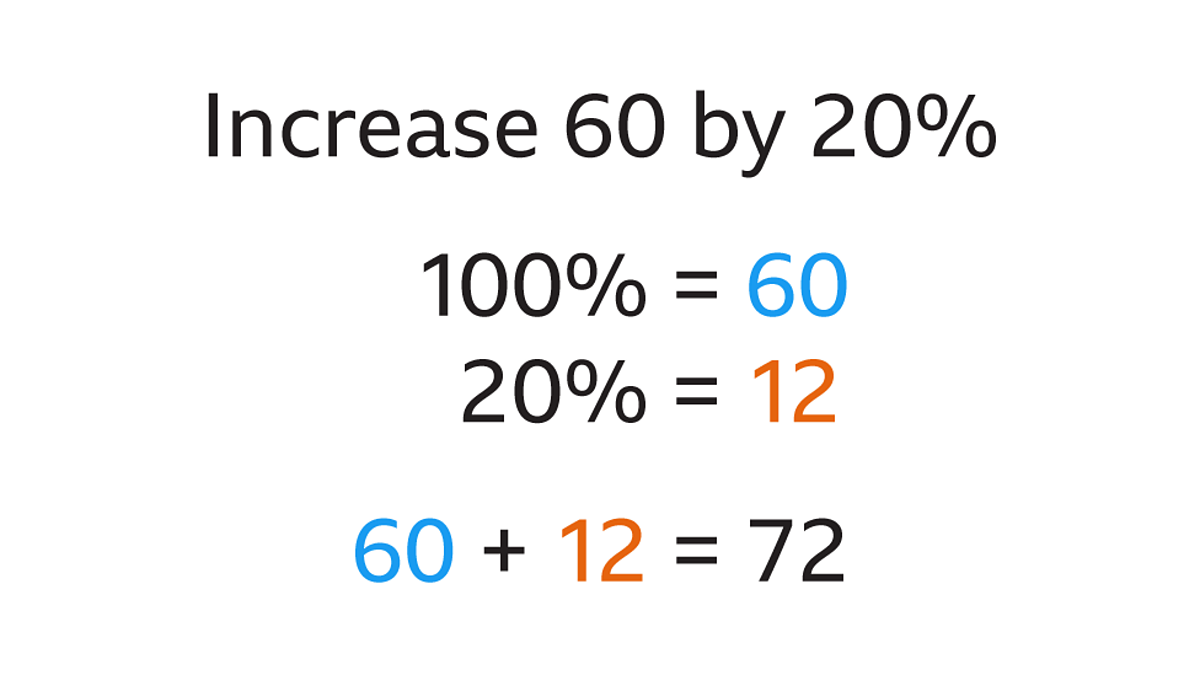
When you receive a salary raise, the percentage increase clarifies its real impact. A $5,000 raise might sound substantial, but if your original salary was $50,000, it’s a 10% increase. If your original salary was $100,000, it’s only a 5% increase. This distinction is vital for understanding your purchasing power and comparing your raise against inflation or industry benchmarks. Beyond income, percentage increase is critical for monitoring your net worth. By calculating the percentage growth of your total assets minus liabilities over time (e.g., year-over-year), you gain a powerful indicator of your financial progress and the effectiveness of your savings and investment strategies. A consistent percentage increase in net worth is a strong sign of healthy financial management.
Understanding Interest Rates and Loan Growth
While interest rates themselves are often expressed as percentages, understanding percentage increase helps in comprehending the growth of debt or savings due to interest. For instance, if you carry a credit card balance of $1,000 at a 20% annual interest rate, the calculation helps you project how much that balance will increase if you only make minimum payments and interest compounds. Similarly, in a savings account, a 2% annual interest rate signifies a 2% increase in your savings balance over the year (assuming no new deposits or withdrawals). For loans like mortgages or student loans, while the principal may decrease with payments, understanding how interest accrues as a percentage of the outstanding balance is crucial for grasping the overall cost of borrowing and planning your repayment strategy.
Strategic Insights for Investing and Business Finance
Beyond personal budgets, percentage increase is the lingua franca of investment analysis and business performance metrics. It allows investors to gauge returns and risks, and businesses to monitor growth, profitability, and operational efficiency, thereby guiding strategic decisions.
Evaluating Investment Returns and Portfolio Performance
For investors, the ability to calculate percentage increase is paramount. It forms the basis for measuring the return on investment (ROI) for individual assets like stocks or bonds, as well as the overall performance of an entire portfolio. If you purchased shares for $100 and sold them for $125, that’s a 25% increase, offering a clear metric of your investment’s success. This allows for direct comparison of different investment opportunities, even if their initial costs and absolute gains vary wildly. For long-term investments, concepts like Compound Annual Growth Rate (CAGR) heavily rely on percentage increase to smooth out volatile returns and provide an annualized growth figure, crucial for assessing the true long-term performance of an asset or fund. Understanding these percentages helps investors make informed decisions about allocation, rebalancing, and future investment choices.
Measuring Business Revenue and Profit Growth
In the realm of business, percentage increase is a key performance indicator (KPI) for assessing financial health and strategic success. Businesses constantly track year-over-year (YOY) or quarter-over-quarter (QOQ) percentage increases in revenue, gross profit, and net profit. A 15% increase in revenue might signal successful marketing campaigns or market expansion, while a 5% increase in profit margin could indicate improved operational efficiency or cost controls. This allows stakeholders, from management to investors, to quickly grasp the trajectory of the business, identify areas of strength or weakness, and make data-driven decisions regarding expansion, investment, or restructuring. Furthermore, percentage increases are vital for comparing a company’s performance against industry benchmarks and competitors, providing context for its growth narrative.
Assessing Inflation’s Impact on Purchasing Power
Inflation, the rate at which the general level of prices for goods and services is rising, is almost always expressed as a percentage increase. Understanding this percentage is critical for both personal and business finance. If inflation is 3% annually, it means that, on average, the cost of living has increased by 3% in that year. For individuals, this directly impacts purchasing power; your $100 saved last year is now effectively worth $97 in terms of what it can buy. For businesses, rising inflation means increased costs for raw materials, labor, and transportation, potentially eroding profit margins if these costs cannot be passed on to consumers. By tracking the percentage increase in inflation, financial planners and business strategists can adjust their forecasts, savings targets, and pricing strategies to mitigate its adverse effects and preserve real value.
Leveraging Tools and Technology for Accuracy
While the manual calculation of percentage increase is straightforward, the complexity and volume of financial data in today’s world often necessitate the use of technological tools. These tools not only enhance accuracy by minimizing human error but also streamline the process, allowing for quicker analysis and more sophisticated modeling.
Spreadsheet Software for Complex Financial Models
Programs like Microsoft Excel, Google Sheets, or Apple Numbers are indispensable for anyone regularly working with financial data. They offer built-in functions that automate percentage increase calculations, making it easy to apply the formula across large datasets. For example, if you have a column for “Original Value” and another for “New Value,” a simple formula like =(B2-A2)/A2*100 (assuming B2 is New Value and A2 is Original Value) can be dragged down thousands of rows, instantly calculating percentage increases for an entire financial statement or investment portfolio. These tools are particularly powerful for building complex financial models, scenario planning, and conducting sensitivity analysis, where understanding percentage changes in various inputs can reveal critical insights into potential outcomes.
Online Calculators and Financial Apps
For quick, on-the-go calculations or for those who don’t regularly work with spreadsheets, a plethora of online percentage increase calculators and financial apps are available. Websites often feature dedicated calculators where you simply input the original and new values, and the percentage increase is displayed instantly. Many personal finance management apps also incorporate features that track your financial growth, automatically calculating percentage increases for your net worth, investment accounts, or spending categories over user-defined periods. While these tools simplify the process, it’s always beneficial to understand the underlying formula to interpret the results correctly and troubleshoot any discrepancies. They serve as excellent companions for quick checks and verification, allowing you to focus more on the implications of the change rather than the mechanics of the calculation.

Conclusion
The ability to count percentage increase is far more than a mere mathematical exercise; it is a vital lens through which we interpret financial change and opportunity. From the personal realm of budgeting and salary negotiations to the intricate landscapes of investment analysis and corporate finance, this simple calculation underpins informed decision-making. It empowers individuals to better manage their money, helps investors evaluate performance, and guides businesses toward sustainable growth.
By mastering the foundational formula, understanding its real-world applications across personal finance, investing, and business, and leveraging available technological tools for efficiency and accuracy, you gain a significant advantage. In a world increasingly driven by data and financial metrics, the insights gleaned from understanding percentage increase are invaluable. Embrace this essential skill, and you will not only clarify your financial past but also confidently chart a more prosperous financial future.
aViewFromTheCave is a participant in the Amazon Services LLC Associates Program, an affiliate advertising program designed to provide a means for sites to earn advertising fees by advertising and linking to Amazon.com. Amazon, the Amazon logo, AmazonSupply, and the AmazonSupply logo are trademarks of Amazon.com, Inc. or its affiliates. As an Amazon Associate we earn affiliate commissions from qualifying purchases.