
In the intricate world of personal finance, business operations, and investment strategies, numbers reign supreme. Yet, among the vast array of mathematical concepts, one stands out as an indispensable tool for analysis, comparison, and informed decision-making: the percentage. Far from being a mere academic exercise, understanding how to find, interpret, and apply percentages is the bedrock of financial literacy and a critical skill for anyone aiming to build wealth, manage debt, or grow a business.
For me, mastering percentages isn’t just about crunching numbers; it’s about gaining clarity, spotting opportunities, and avoiding costly mistakes. Whether I’m evaluating an investment’s return, dissecting my monthly budget, or assessing the profitability of a side hustle, percentages provide a universal language that distills complex financial information into digestible, actionable insights. This article delves into how I approach the concept of “finding percentage” across various financial domains, transforming raw data into powerful knowledge that drives my financial success.

The Foundational Role of Percentages in Personal Finance
Personal finance is the bedrock of individual wealth building, and percentages are the mortar that holds it all together. From the most basic budget to complex debt repayment plans, a solid grasp of percentage calculations empowers smarter choices and clearer financial pathways.
Budgeting and Expense Management
My financial journey always begins with a budget, and percentages are central to its construction and analysis. Instead of just looking at raw dollar amounts, I categorize my spending and allocate specific percentages of my net income to different categories. For instance, I might aim for a 50/30/20 rule: 50% for needs, 30% for wants, and 20% for savings and debt repayment.
- Identifying Spending Habits: By calculating what percentage of my income goes to housing, food, transportation, or entertainment, I can quickly identify areas of overspending or opportunities for saving. If 35% of my income is going to discretionary spending, and my goal is 30%, I know exactly where adjustments need to be made. This granular view, facilitated by percentages, provides far more insight than just knowing I spent “$500 on dining out” without context.
- Tracking Progress Towards Goals: Similarly, I calculate the percentage of my income saved each month. If my goal is to save 15% of every paycheck, I regularly check if I’m hitting that target. This percentage acts as a clear, consistent benchmark, making it easier to track progress and stay motivated. It’s not just about saving ‘$X’ but about consistently saving ‘X%,’ which adapts automatically if my income changes.
Debt Management and Interest Rates
Debt can be a significant obstacle to financial freedom, and percentages are the key to understanding its true cost and managing it effectively.
- Understanding APR (Annual Percentage Rate): Every loan, from credit cards to mortgages, comes with an APR. This percentage tells me the annual cost of borrowing money. Comparing APRs across different lenders is crucial for finding the most affordable debt. A seemingly small difference in APR can translate to thousands of dollars over the life of a loan. I meticulously calculate the interest paid as a percentage of the principal to grasp the real financial burden.
- Calculating Interest Accrual: Knowing how much interest accrues daily or monthly on various debts allows me to prioritize payments. High-interest debt, often expressed as a high percentage, becomes my primary target for accelerated repayment. I frequently calculate what percentage of my monthly payment goes towards the principal versus interest, especially on amortizing loans like mortgages, to track how much equity I’m actually building.
- The Power of Small Percentage Reductions: Even a 1% or 2% reduction in an interest rate, achieved through refinancing or negotiation, can save a substantial amount over time. Understanding these percentage impacts drives my decision-making when considering debt consolidation or refinancing options.
Savings and Financial Goals
Saving is about more than just putting money aside; it’s about strategic allocation and growth. Percentages help quantify both.
- Savings Rate: My personal savings rate—the percentage of my income I save—is a primary metric for my financial health. A higher savings rate accelerates my journey towards financial independence. I regularly monitor this percentage to ensure I’m on track.
- Goal Tracking: Whether it’s a down payment for a house, retirement, or a child’s education, I break down my large financial goals into smaller, manageable percentages. “I’ve saved 25% of my down payment goal” gives a clearer, more motivating picture than just “I’ve saved $15,000.” This keeps the goal tangible and progress measurable.
- Emergency Fund: Maintaining an emergency fund covering 3-6 months of living expenses is often expressed as a percentage of annual expenses. I regularly assess if I’m meeting this critical percentage benchmark to ensure financial security.
Navigating the Investment Landscape with Percentages
Investing is inherently quantitative, and percentages are the lingua franca of performance, risk, and cost analysis. Without a clear understanding of these metrics, making informed investment decisions becomes a perilous guessing game.
Understanding Returns on Investment (ROI)
The core of investment analysis for me lies in understanding ROI, which is almost exclusively expressed as a percentage.
- Calculating Gains and Losses: The most fundamental application is calculating the percentage gain or loss on an investment. If I invest $10,000 and it grows to $11,500, that’s a 15% return. This simple calculation allows for direct comparison across different investments, regardless of their initial principal amounts. It helps answer the crucial question: “How well did this investment perform relative to its cost?”
- Annualized Returns: For investments held over varying periods, I always annualize returns to compare them on an apples-to-apples basis. A 5% return over six months isn’t the same as a 5% return over a year. Annualized percentages provide the necessary standardization.
- Total Return vs. Price Return: I differentiate between a simple price change and total return, which includes dividends or interest paid out, also expressed as a percentage yield. This comprehensive view gives a more accurate picture of an investment’s true performance.
Risk Assessment and Diversification
Percentages are crucial for managing risk and constructing a diversified portfolio.
- Portfolio Allocation: A cornerstone of my investment strategy is asset allocation, which is entirely percentage-based. I decide what percentage of my portfolio should be in stocks, bonds, real estate, or other asset classes based on my risk tolerance and time horizon. A common strategy might be 70% stocks, 20% bonds, and 10% cash, for example. These percentages are not arbitrary; they are carefully chosen to balance potential growth with downside protection.
- Understanding Volatility: While not always a direct percentage, metrics like standard deviation (often understood as percentage deviation from the mean) inform me about an investment’s volatility. A stock that historically swings by ±20% in a year is riskier than one that typically moves by ±5%.
- Rebalancing: As market values shift, my desired asset allocation percentages can get out of alignment. Regularly, I rebalance my portfolio to bring it back to the target percentages. If stocks have performed exceptionally well, their percentage in my portfolio might have grown to 80% instead of 70%, signaling it’s time to sell some stocks and buy other assets to restore balance.
Fees and Expense Ratios
One of the most insidious threats to long-term investment growth comes from fees, almost universally expressed as percentages.
- Expense Ratios of Funds: For mutual funds and Exchange Traded Funds (ETFs), the expense ratio is a critical percentage to scrutinize. A fund with a 1.00% expense ratio compared to one with 0.10% might seem small, but over decades, that 0.90% difference can erode a significant portion of potential returns due to compounding. I prioritize funds with low expense ratios.
- Advisory Fees: If I use a financial advisor, their fees are often a percentage of assets under management (AUM), typically ranging from 0.50% to 1.50%. Understanding this percentage and its long-term impact on my net worth is paramount.
- Transaction Costs: Brokerage fees, although becoming less common for basic trades, were historically expressed as a percentage of the trade value. Even today, understanding foreign exchange fees or certain niche investment costs, often percentage-based, is vital. I always account for these small percentages because they add up.
Percentages in Business and Online Income
For those venturing into entrepreneurship or leveraging online platforms for income, percentages shift from personal management to strategic business metrics, driving profitability, growth, and operational efficiency.
Profit Margins and Pricing Strategies
Understanding profit margins is non-negotiable for any business, and they are always expressed as percentages.
- Gross vs. Net Profit Margins: I meticulously calculate both gross profit margin (gross profit as a percentage of revenue) and net profit margin (net profit as a percentage of revenue). Gross margin tells me the profitability of my products or services before overhead, while net margin reflects the overall efficiency of my business. These percentages guide my pricing strategies and cost-cutting efforts.
- Break-Even Analysis: Determining the sales volume needed to cover all costs often involves calculating the contribution margin percentage—the percentage of revenue available to cover fixed costs after variable costs are paid.
- Pricing for Profit: When setting prices, I reverse-engineer using desired profit percentages. If I want a 30% gross profit margin on a product, and I know my cost of goods, I can easily calculate the optimal selling price.

Sales Growth and Market Share Analysis
Percentages are fundamental to evaluating a business’s performance and its position in the market.
- Revenue Growth Rate: Measuring the percentage increase in revenue over a specific period (e.g., month-over-month, year-over-year) provides a clear indicator of business expansion. A consistent high percentage growth rate is a strong sign of a healthy, scaling business.
- Market Share: Understanding what percentage of the total market my business captures helps assess its competitive standing and identify opportunities for expansion. If my market share is 5% in a rapidly growing industry, I know there’s significant room for growth.
- Customer Retention Rate: The percentage of customers who return over a given period is a powerful metric for long-term business viability. A high retention percentage indicates customer satisfaction and loyalty, which are crucial for sustainable income.
Conversion Rates and Marketing ROI
For online businesses and digital marketers, percentages are the lifeblood of campaign optimization and revenue generation.
- Conversion Rates: Whether it’s website visitors to leads, or leads to paying customers, conversion rates (the percentage of people who complete a desired action) are critical. A low conversion rate indicates a need for optimization in the marketing funnel, website design, or sales process. I continuously test and iterate to improve these percentages.
- Click-Through Rates (CTR): In online advertising, CTR (the percentage of people who click on an ad after seeing it) is a key indicator of ad effectiveness. A higher CTR often means lower ad costs and better campaign performance.
- Return on Ad Spend (ROAS): This powerful metric, often expressed as a ratio or percentage, tells me how much revenue I generate for every dollar spent on advertising. It’s essential for allocating marketing budgets effectively and scaling profitable campaigns. A ROAS of 300% means I’m getting $3 back for every $1 spent.
Practical Tools and Strategies for Percentage Mastery
While the underlying concepts are universal, the application of percentage calculations can be streamlined with the right tools and mindset.
The Power of Simple Formulas
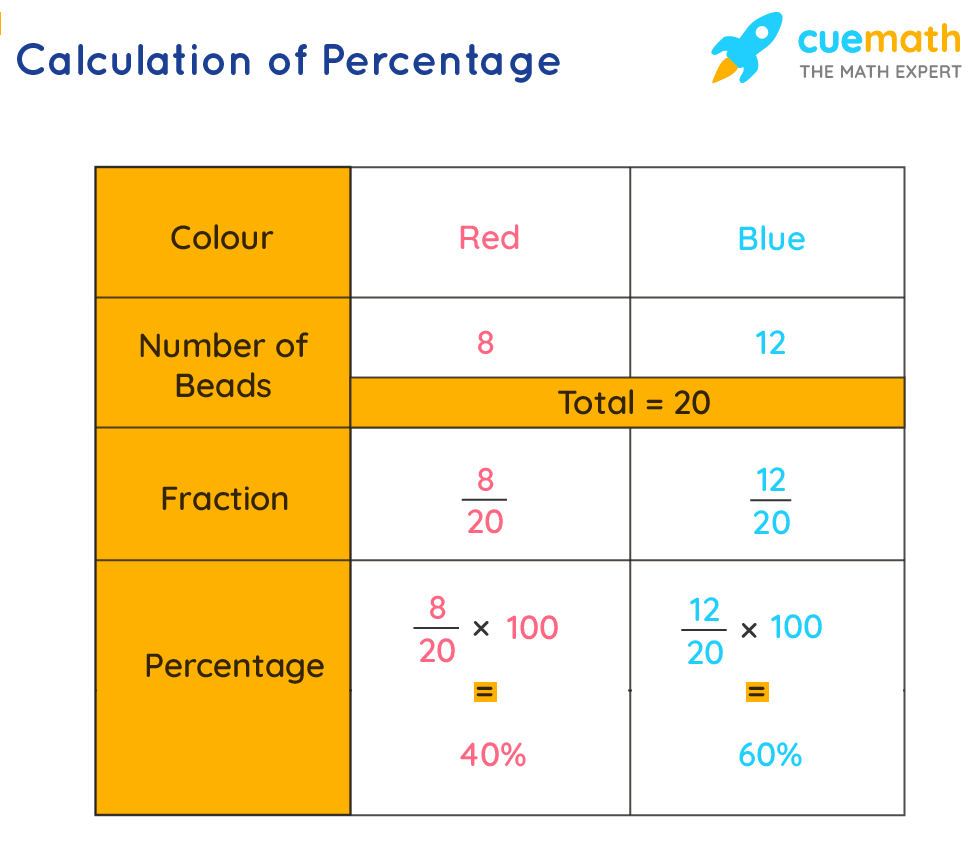
At its core, finding a percentage involves a simple formula: (Part / Whole) x 100.
- Basic Calculations: Whether I’m finding “X is what percentage of Y?” or “What is X% of Y?”, these foundational calculations are my starting point. For example, if I spent $500 on groceries from an income of $4,000, then ($500 / $4,000) * 100 = 12.5%.
- Percentage Change: To calculate a percentage increase or decrease, the formula is ((New Value – Old Value) / Old Value) * 100. This is invaluable for tracking investment growth, expense changes, or revenue shifts. If my investment went from $10,000 to $10,500, that’s (($10,500 – $10,000) / $10,000) * 100 = 5%.
Leveraging Spreadsheets and Financial Calculators
While mental math or a basic calculator suffices for simple percentages, efficiency and accuracy become paramount when dealing with numerous data points or complex scenarios.
- Spreadsheet Software (Excel, Google Sheets): These are indispensable tools. I set up templates for budgeting, investment tracking, and business analytics, where percentage calculations are automated. Functions like
PERCENTAGE,RATE,PMT, and custom formulas allow for dynamic analysis. For example, setting up a column to automatically calculate the percentage of each expense category against total income. - Online Financial Calculators: For specific tasks like mortgage interest, compound interest, or retirement planning, dedicated online calculators provide quick and reliable percentage-based results without requiring manual formula input.
- Financial Software: Personal finance apps and business accounting software often have built-in dashboards that display key metrics as percentages, such as “current asset allocation” or “profit margin.”
Cultivating a Percentage-Minded Approach
Beyond the tools, it’s about developing a mindset that naturally thinks in percentages.
- Relative Thinking: Instead of asking “Did I save enough?”, I ask “Did I save a sufficient percentage of my income?” This relative perspective standardizes comparisons and prevents skewed interpretations based on absolute dollar figures that might fluctuate with income.
- Contextualizing Numbers: A $1,000 expense looks different as 2% of a $50,000 income versus 20% of a $5,000 income. Percentages provide that essential context.
- Continuous Learning: Financial markets and products evolve, and so too must my understanding of the percentages associated with them. Staying updated on new financial metrics and their percentage implications is an ongoing commitment.
Common Percentage Pitfalls to Avoid
Even with a solid understanding, certain percentage nuances can lead to misinterpretations and poor financial decisions. Awareness of these pitfalls is as crucial as knowing how to calculate the percentages themselves.
Misinterpreting Percentage Points vs. Percent Change
This is a common and significant error that can lead to dramatically different conclusions.
- Percentage Points: This refers to the arithmetic difference between two percentages. If an interest rate increases from 5% to 7%, that’s a 2 percentage point increase.
- Percent Change: This refers to the relative change. An increase from 5% to 7% is a ((7-5)/5) * 100 = 40% percent change.
- Why it Matters: Misinterpreting these can lead to underestimating or overestimating the impact of changes in interest rates, investment returns, or economic indicators. A 1% increase in a mortgage rate from 4% to 5% might sound small (1 percentage point), but it’s a 25% increase in the interest rate itself, significantly impacting monthly payments.
The Compounding Effect
The power of compounding is often discussed, but its percentage implications are frequently underestimated, both positively and negatively.
- Compounding Growth: A seemingly modest 7% annual return on an investment grows exponentially over time. Understanding how this percentage compounds helps visualize the long-term wealth-building potential. It’s not just 7% of the principal each year; it’s 7% of the principal plus accumulated interest.
- Compounding Debt: Conversely, high-interest debt compounds rapidly. A credit card with 20% APR means the interest charges themselves start accruing interest if not paid off. Understanding this percentage effect highlights the urgency of eliminating high-interest debt.
Ignoring Hidden Fees
As discussed with investments, seemingly small percentage fees can decimate wealth over time. This applies beyond investing too.
- Banking Fees: Overdraft fees, foreign transaction fees, or monthly maintenance fees are often small percentages of a transaction or balance but can quickly accumulate.
- Product Markups: While not “fees,” understanding the percentage markup on products can help identify value. A massive markup percentage might indicate an opportunity to find a more cost-effective alternative.
- Inflation: While not a “fee,” inflation is a percentage decrease in purchasing power over time. Ignoring a 2-3% annual inflation rate means your “flat” investment is actually losing value in real terms.
Conclusion
The ability to “find percentage” is not merely a mathematical skill; it is a fundamental pillar of financial literacy and empowerment. From the intimate details of a personal budget to the expansive strategies of global investing and the nuanced operations of a business, percentages provide clarity, context, and the power to make informed decisions.
By embracing a percentage-minded approach, leveraging readily available tools, and diligently avoiding common interpretive pitfalls, I transform raw financial data into actionable intelligence. This mastery isn’t just about maximizing returns or minimizing costs; it’s about building confidence, achieving financial independence, and navigating the complex financial world with insight and strategic intent. Ultimately, understanding how to find, interpret, and apply percentages is the key to unlocking true financial success.
aViewFromTheCave is a participant in the Amazon Services LLC Associates Program, an affiliate advertising program designed to provide a means for sites to earn advertising fees by advertising and linking to Amazon.com. Amazon, the Amazon logo, AmazonSupply, and the AmazonSupply logo are trademarks of Amazon.com, Inc. or its affiliates. As an Amazon Associate we earn affiliate commissions from qualifying purchases.