
In the intricate world of personal finance, where every dollar counts and informed decisions pave the way to financial freedom, understanding percentages is not just a mathematical nicety – it’s an indispensable superpower. Among all percentage calculations, finding 10 percent of a number stands out as a particularly potent tool. It’s a quick, mental math trick that can instantly clarify everything from discounts and tips to savings goals and investment returns. This seemingly simple calculation is, in fact, a cornerstone of financial literacy, empowering individuals to make smarter, faster decisions without needing a calculator for every small transaction.
For many, the mere mention of percentages conjures images of complex equations and head-scratching moments. However, finding 10 percent of any number is remarkably straightforward, offering a gateway to greater confidence and control over your money. This article will demystify the process, highlight its pervasive applications in the realm of finance, and demonstrate how mastering this one skill can profoundly impact your financial journey.
The Fundamental Principle: Simplifying Percentage Calculation
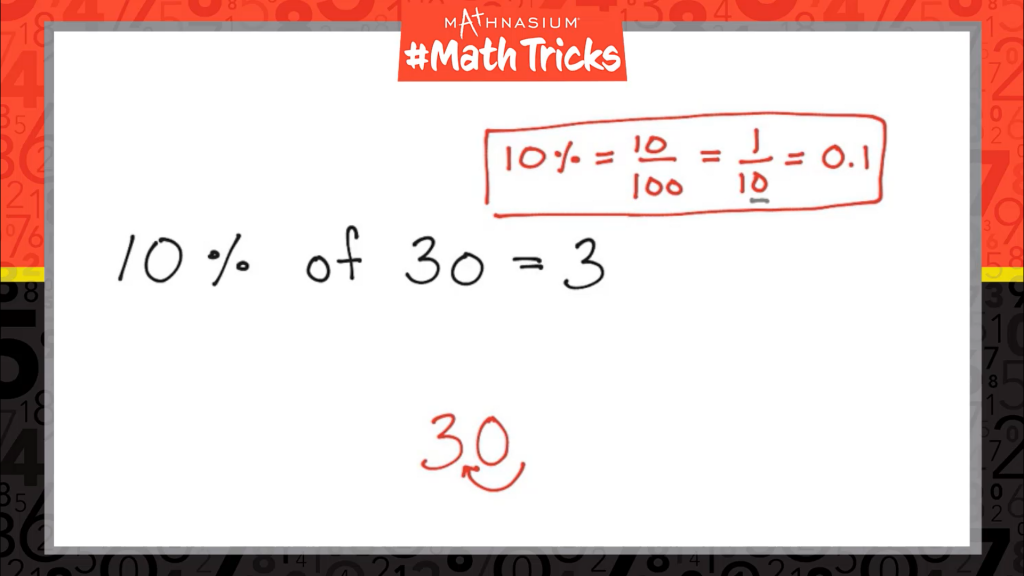
At its heart, finding 10 percent of a number is about understanding what a percentage truly represents: a fraction of a whole, specifically a part out of one hundred. When we talk about 10 percent, we are referring to ten parts out of every one hundred, or 10/100, which simplifies to 1/10. This fraction is the key to unlocking the calculation’s simplicity.
The Decimal Shift Method
The easiest and most widely applicable method for calculating 10 percent is the decimal shift. Every number, whether it appears to have one or not, has a decimal point. For whole numbers, it’s implicitly at the end (e.g., 100 is 100.00). To find 10 percent of any number using this method, all you need to do is move the decimal point one place to the left.
-
Example 1: Find 10% of $500.
- Start with 500. The decimal point is after the last zero: 500.00.
- Move the decimal one place to the left: 50.00.
- So, 10% of $500 is $50.
-
Example 2: Find 10% of $75.
- Start with 75. The decimal point is after the 5: 75.0.
- Move the decimal one place to the left: 7.5.
- So, 10% of $75 is $7.50.
-
Example 3: Find 10% of $1,234.56.
- Start with 1234.56.
- Move the decimal one place to the left: 123.456.
- So, 10% of $1,234.56 is approximately $123.46 (rounded to two decimal places for currency).
The Division by Ten Approach
Alternatively, if you prefer working with fractions or have a mental block with decimals, you can think of finding 10 percent as simply dividing the number by 10. Since 10% is equivalent to 1/10, taking 1/10 of a number is the same as dividing that number by 10. This method yields the exact same results as the decimal shift but might resonate better with some learners.
-
Example 1: Find 10% of $500.
- $500 / 10 = $50.
-
Example 2: Find 10% of $75.
- $75 / 10 = $7.50.
Both methods are incredibly efficient and accurate, making them perfect for quick mental calculations in everyday financial scenarios.
Why 10 Percent is Your Financial Shortcut
The ability to quickly calculate 10 percent is more than just a math trick; it’s a vital component of financial agility. This simple calculation provides a powerful shortcut in numerous financial situations, allowing for on-the-spot estimations and informed decision-making.
Budgeting and Savings: The Power of the 10% Rule
One of the most frequently cited pieces of financial advice is the “pay yourself first” principle, often recommending saving a certain percentage of your income. The 10% rule is a popular starting point for many individuals embarking on their savings journey. If you earn $3,000 per month, knowing that 10% is $300 immediately tells you how much you should aim to tuck away for your future, an emergency fund, or a specific financial goal. This simple calculation brings abstract financial targets into concrete, manageable figures.
Discounts, Sales, and Bargain Hunting
Whether you’re shopping for groceries, clothes, or a new appliance, sales and discounts are ubiquitous. Knowing how to quickly calculate 10% can help you rapidly assess the true value of a deal. Is that $250 jacket 10% off? That’s $25 off, making it $225. Is it a good deal? This mental calculation helps you compare prices and make instant purchasing decisions, potentially saving you significant money over time by recognizing genuine savings versus inflated “discounts.”
Gratuities and Tipping Made Easy
In many service industries, tipping is customary. Quickly calculating 10% of your bill provides a baseline for your gratuity. If your restaurant bill is $65, 10% is $6.50. You can then easily adjust this up or down to 15%, 18%, or 20% by adding half of 10% (for 15%) or doubling 10% (for 20%). This not only simplifies an often-awkward social custom but also ensures you’re tipping fairly and within your budget.

Estimating Taxes and Financial Charges
From sales tax to income tax deductions, percentages are woven into the fabric of taxation. While exact figures require more precise calculations or professional tools, knowing how to find 10% allows for rapid estimation. If your state has a 7% sales tax, approximating it as 10% for a quick mental check can give you a rough idea of the final cost before you reach the register. Similarly, when looking at investment fees or banking charges expressed as a percentage, a quick 10% calculation provides a tangible cost estimate.
Real-World Money Applications: Putting 10% to Work
The practical applications of knowing how to calculate 10% extend far beyond simple discounts or tips. It’s a foundational skill that supports more complex financial planning and decision-making.
Investment Growth and Return Estimates
When reviewing investment portfolios or considering new opportunities, you’ll often encounter discussions about percentage returns. A quick estimate of 10% growth on an investment can give you a ballpark figure of your potential earnings. If you have $10,000 invested and anticipate a 10% annual return, you can quickly estimate an additional $1,000 in gains. While actual returns fluctuate, this provides a vital mental framework for understanding investment potential and setting realistic expectations.
Debt Management and Interest Quick Checks
Understanding the cost of debt is crucial for effective financial management. Whether it’s a loan, credit card balance, or mortgage, interest rates are expressed as percentages. While exact interest calculations can be complex due to compounding, finding 10% of your principal balance can give you a quick estimate of a significant chunk of what you might pay in interest over a period, especially when dealing with high-interest debts. This awareness can motivate more aggressive debt repayment strategies.
Understanding Salary Increases and Deductions
When you receive a salary increase or evaluate your paycheck for deductions (like retirement contributions, health insurance premiums, or taxes), knowing how to calculate 10% helps you quickly grasp the impact. A 10% raise on a $60,000 salary is an extra $6,000 per year – a substantial figure you can easily plan for. Similarly, understanding that 10% of your gross pay goes towards your 401(k) provides clarity on your financial commitments and future planning.
Beyond 10%: Leveraging This Skill for Other Percentages
The beauty of mastering the 10% calculation is that it serves as a springboard for quickly estimating many other common percentages, transforming you into a financial mental math wizard.
Deriving 1%, 5%, and 20% with Ease
- To find 1%: First find 10%, then divide that result by 10 (or move the original decimal two places to the left). If 10% of $500 is $50, then 1% of $500 is $5 ($50 / 10).
- To find 5%: First find 10%, then divide that result by 2 (or find half of 10%). If 10% of $500 is $50, then 5% of $500 is $25 ($50 / 2). This is especially useful for sales tax or discounts.
- To find 20%: First find 10%, then multiply that result by 2 (or double 10%). If 10% of $500 is $50, then 20% of $500 is $100 ($50 x 2). This is great for larger discounts or quick budget allocations.
By understanding the relationship between these percentages and 10%, you can confidently estimate a wide array of financial scenarios without fumbling for a calculator.
Mental Math for Complex Financial Scenarios
Imagine you need to figure out 23% of $400. While not an exact calculation, you can use your 10% knowledge to get a very close estimate:
- 10% of $400 is $40.
- 20% of $400 is $80 (double $40).
- 1% of $400 is $4.
- So, 23% is roughly 20% + 3% = $80 + ($4 * 3) = $80 + $12 = $92.
This approach empowers you to break down complex percentage problems into more manageable, understandable chunks, granting you a greater intuitive grasp of your financial figures.
Mastering Financial Literacy Through Simple Math
The ability to quickly calculate 10 percent of a number is more than just a convenient trick; it’s a foundational building block for robust financial literacy. It enhances your financial intuition and empowers you to navigate the monetary landscape with greater confidence and independence.
Building Confidence in Your Financial Decisions
When you can perform quick financial calculations in your head, you gain a sense of control and understanding that simply relying on apps or calculators cannot replicate. This confidence translates into more proactive budgeting, smarter purchasing decisions, and a deeper engagement with your investments and savings. You’re not just accepting numbers; you’re actively understanding them.

Tools for Accuracy: When to Use Calculators
While mental math with 10% is invaluable for estimations and quick checks, it’s important to know when to reach for a calculator or financial tool. For critical financial planning, tax preparation, complex investment analysis, or any situation where precise figures are non-negotiable, leverage digital tools. Modern calculators, spreadsheet software, and financial apps are designed for accuracy and can handle intricate calculations with ease. However, your mental 10% skill ensures you can verify the outputs or quickly sense-check whether a calculated figure seems reasonable. It acts as your internal financial auditor.
In conclusion, finding 10 percent of a number is an essential skill for anyone serious about managing their money effectively. It’s a simple technique with profound implications, serving as a gateway to understanding more complex financial concepts, making informed decisions on the fly, and ultimately fostering a greater sense of financial control and empowerment. Embrace this fundamental calculation, and watch your financial acumen flourish.
aViewFromTheCave is a participant in the Amazon Services LLC Associates Program, an affiliate advertising program designed to provide a means for sites to earn advertising fees by advertising and linking to Amazon.com. Amazon, the Amazon logo, AmazonSupply, and the AmazonSupply logo are trademarks of Amazon.com, Inc. or its affiliates. As an Amazon Associate we earn affiliate commissions from qualifying purchases.