
In the intricate world of personal finance, investing, and business, percentages are the universal language. From calculating the interest on a loan to understanding your investment returns, deciphering discounts, or analyzing profit margins, the ability to find the percentage of two numbers is not just a mathematical skill; it’s a fundamental pillar of financial literacy. Without this essential understanding, making informed financial decisions becomes significantly more challenging, leaving you vulnerable to miscalculations and missed opportunities.
This comprehensive guide aims to demystify percentages, specifically within a financial context. We’ll break down the core concepts, demonstrate practical applications, and equip you with the knowledge and tools to confidently navigate any financial scenario requiring percentage calculations. Whether you’re a beginner trying to understand your budget or an aspiring investor tracking portfolio performance, mastering this skill is your first step towards greater financial empowerment.

The Core Concept: What is a Percentage and Why Does it Matter Financially?
Before we dive into the “how-to,” it’s crucial to grasp the “what” and “why.” A percentage is more than just a number; it’s a powerful comparative tool that allows us to understand proportions and changes in a standardized way, making financial data universally comparable and comprehensible.
Deciphering the Basics: Percentage Definition
At its heart, “percent” literally means “per hundred.” When we talk about a percentage, we are expressing a part of a whole as a fraction of 100. So, 25% means 25 out of 100, or 25/100. This standardization is what makes percentages so incredibly useful, as it provides a common benchmark for comparing values that might otherwise be disparate.
The foundational formula for finding what percentage one number (the part) is of another number (the whole) is simple:
Percentage = (Part / Whole) * 100
For instance, if you spent $30 out of your $100 budget, the percentage spent would be ($30 / $100) * 100 = 30%. This simple calculation transforms raw numbers into easily digestible insights.
Everyday Financial Relevance
The financial world speaks in percentages because they provide context and facilitate comparison like no other metric. Consider these common financial scenarios where percentages are indispensable:
- Interest Rates: Whether it’s the annual percentage rate (APR) on your credit card, the interest you earn on a savings account, or the mortgage rate on your home, percentages dictate the cost of borrowing and the reward for saving.
- Discounts & Sales: “20% off!” “Save 15% today!” These common phrases rely entirely on percentage calculations to tell you how much money you’ll save.
- Taxes: Sales tax, income tax brackets, property tax rates—all are expressed as percentages, directly impacting your purchasing power and disposable income.
- Budgeting & Spending: Allocating a certain percentage of your income to housing, food, entertainment, or savings helps you manage your money effectively and achieve financial goals.
- Investing Returns: The success or failure of your investments is almost always measured in percentage gains or losses, providing a clear picture of portfolio performance.
- Business Finance: Profit margins, markups, employee salary increases, market share analysis, and sales growth are all critically evaluated through percentage metrics, guiding strategic decisions.
Understanding how to calculate and interpret these percentages empowers you to make smarter financial choices, negotiate better deals, and plan more effectively for your future.
Mastering the Fundamental Percentage Calculations for Your Money
With the “why” firmly established, let’s delve into the “how.” There are three primary types of percentage calculations you’ll encounter regularly in your financial life. Mastering these will give you a significant edge.
Finding a Percentage of a Number (e.g., sales tax, discount)
This calculation helps you determine a specific portion of a larger amount. It’s essential for understanding sales, calculating taxes, or determining a tip.
Formula: Amount = (Percentage / 100) * Whole Number
Example 1: Calculating a Discount
You want to buy a jacket that costs $150, and it’s on sale for 25% off. How much is the discount?
Discount Amount = (25 / 100) * $150
Discount Amount = 0.25 * $150 = $37.50
The jacket is discounted by $37.50, meaning you’ll pay $150 – $37.50 = $112.50.
Example 2: Calculating Sales Tax
You purchase an item for $75, and the sales tax rate is 8%. How much sales tax will you pay?
Sales Tax Amount = (8 / 100) * $75
Sales Tax Amount = 0.08 * $75 = $6
Your total cost will be $75 + $6 = $81.
Expressing One Number as a Percentage of Another (e.g., budget allocation, portfolio composition)
This calculation allows you to understand the proportion one value represents within a larger whole. It’s vital for analyzing budget categories, understanding asset allocation in investments, or determining a product’s cost percentage in a business.
Formula: Percentage = (Part / Whole) * 100
Example 1: Budget Allocation
Your monthly income is $4,000, and you spend $1,200 on rent. What percentage of your income goes to rent?
Percentage for Rent = ($1,200 / $4,000) * 100
Percentage for Rent = 0.3 * 100 = 30%
30% of your income is allocated to rent.
Example 2: Investment Portfolio
You have a total investment portfolio of $50,000, and $20,000 is invested in stocks. What percentage of your portfolio is in stocks?
Percentage in Stocks = ($20,000 / $50,000) * 100
Percentage in Stocks = 0.4 * 100 = 40%
40% of your portfolio is allocated to stocks.
Calculating Percentage Increase or Decrease (e.g., investment growth, salary change, inflation)
This is one of the most frequently used financial calculations, helping you measure growth, decline, or change over time. It’s crucial for understanding investment performance, inflation rates, or changes in your income.
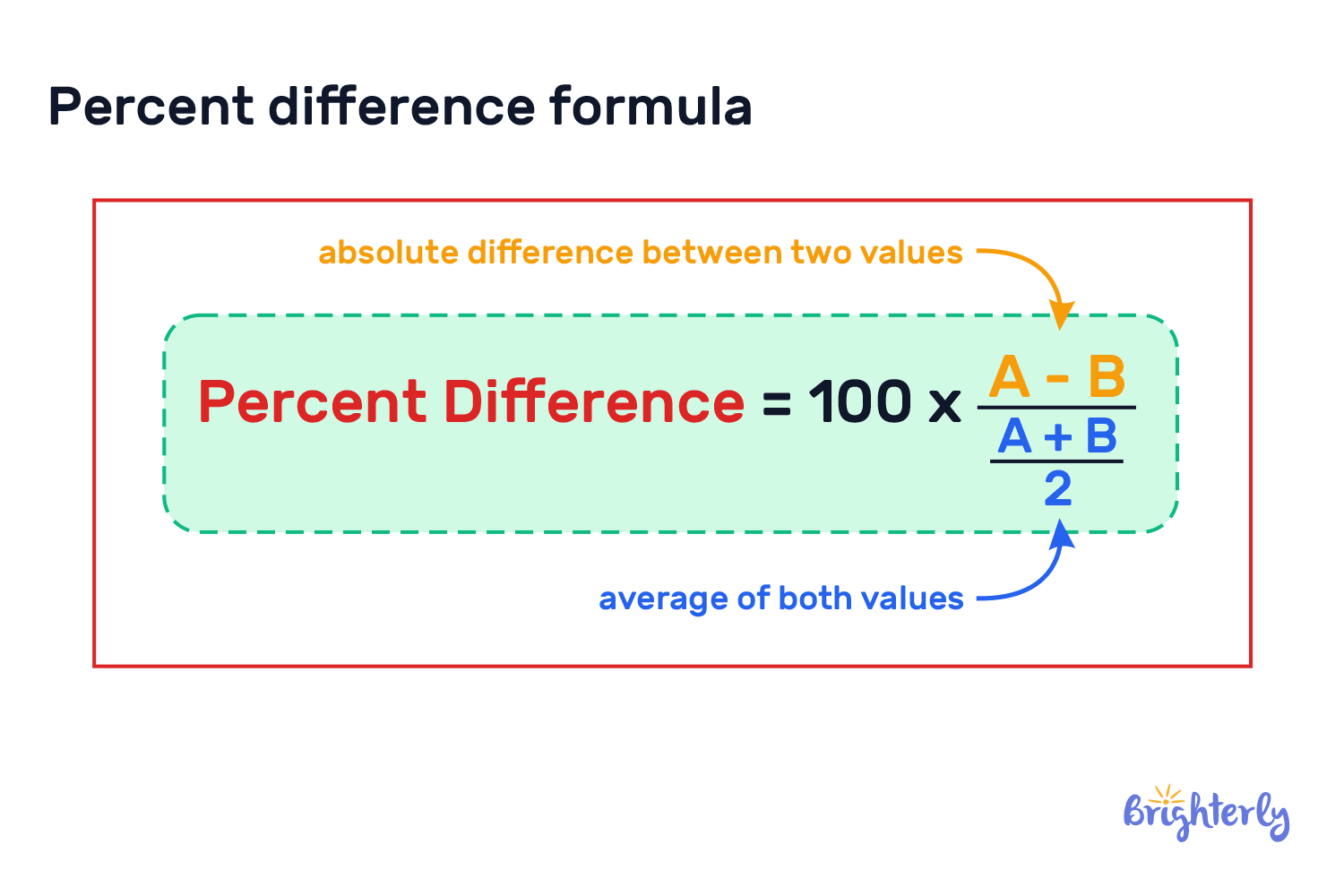
Formula: Percentage Change = ((New Value - Old Value) / Old Value) * 100
A positive result indicates an increase, while a negative result indicates a decrease.
Example 1: Investment Growth
You invested $10,000, and it grew to $12,500 over a year. What is the percentage increase?
Percentage Increase = (($12,500 - $10,000) / $10,000) * 100
Percentage Increase = ($2,500 / $10,000) * 100
Percentage Increase = 0.25 * 100 = 25%
Your investment grew by 25%.
Example 2: Salary Decrease
Due to unforeseen circumstances, your monthly salary decreased from $3,500 to $3,000. What is the percentage decrease?
Percentage Decrease = (($3,000 - $3,500) / $3,500) * 100
Percentage Decrease = (-$500 / $3,500) * 100
Percentage Decrease ≈ -0.1428 * 100 ≈ -14.29%
Your salary decreased by approximately 14.29%.
Practical Applications: Leveraging Percentages for Smarter Financial Decisions
Understanding these fundamental calculations unlocks a deeper understanding of your financial landscape, enabling more strategic planning and decision-making.
Personal Budgeting & Saving Goals
Percentages are the backbone of effective personal budgeting. The popular 50/30/20 rule, for example, dictates that 50% of your after-tax income should go to needs, 30% to wants, and 20% to savings and debt repayment. Using percentages allows you to easily adjust these allocations based on your income level and financial priorities. Tracking your progress towards a savings goal by monitoring what percentage of the total you’ve accumulated keeps you motivated and informed.
Investing & Wealth Building
From evaluating stock performance to understanding portfolio diversification, percentages are critical for investors. Compound interest, often called the “eighth wonder of the world,” relies entirely on percentage growth where your interest earns interest. Analyzing your portfolio’s asset allocation (e.g., 60% stocks, 30% bonds, 10% cash) helps you manage risk and align with your investment strategy. Furthermore, comparing the percentage returns of different investments over various periods helps you make informed choices about where to allocate your capital.
Business Finance & Entrepreneurship
For entrepreneurs and business owners, percentages are integral to profitability and growth. Calculating gross profit margin (gross profit as a percentage of revenue) and net profit margin (net profit as a percentage of revenue) provides crucial insights into a business’s efficiency. Understanding percentage markups helps in pricing products competitively, while analyzing sales growth or decline in percentage terms helps identify trends and adjust strategies. Everything from employee raises (percentage increase) to inventory turnover rates (percentage of sales) is viewed through a percentage lens.
Debt Management & Loans
Navigating loans and credit cards without understanding percentages is akin to sailing blind. The interest rate on your mortgage, car loan, or credit card is expressed as an annual percentage rate (APR), directly influencing the total cost of borrowing. Understanding how quickly interest compounds (especially on high-interest credit cards) and how minimum payments (often a small percentage of your balance) can prolong debt repayment is essential for effective debt management strategies. It empowers you to prioritize high-interest debt and accelerate repayment.
Tools and Tips for Accurate Percentage Calculations
While the formulas are straightforward, using the right tools and being aware of common pitfalls can ensure accuracy and efficiency in your financial calculations.
Everyday Calculators & Smartphone Apps
For quick, on-the-go calculations, your basic calculator (physical or on your smartphone) is perfectly sufficient. Most calculators have a dedicated “%” button, which can simplify some operations, though understanding the manual calculation is always best for clarity. Many financial apps also integrate percentage functions for budgeting, tip calculation, or splitting bills.
Spreadsheet Software (Excel, Google Sheets)
For more complex financial tracking, budgeting, or investment analysis, spreadsheet software like Microsoft Excel or Google Sheets is indispensable. They automate calculations and allow you to build dynamic financial models.
- To express a part as a percentage of a whole: If “Part” is in cell A2 and “Whole” is in cell B2, simply enter
=(A2/B2)and then format the cell as a percentage. To show two decimal places, it would be=(A2/B2)*100if you want the number value. - To find a percentage of a number: If the “Whole Number” is in A2 and the “Percentage” (e.g., 25 for 25%) is in B2, enter
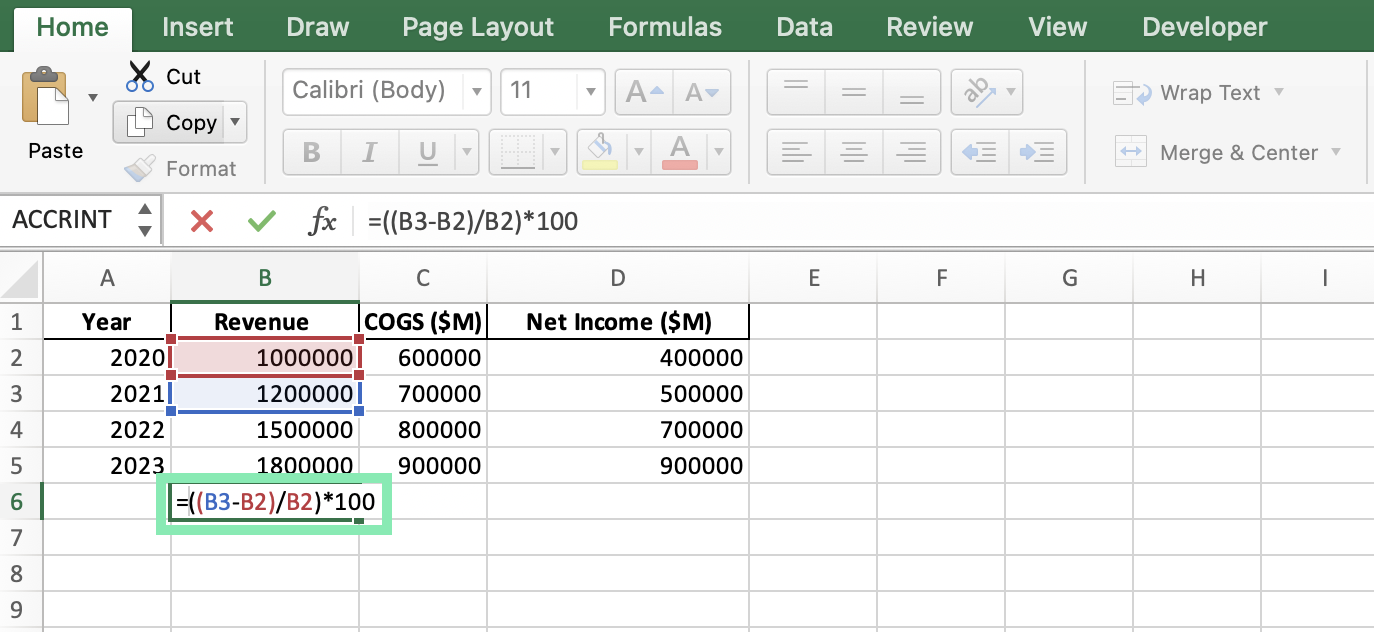
=(B2/100)*A2. - To calculate percentage change: If “Old Value” is in A2 and “New Value” is in B2, enter
=( (B2-A2)/A2 )and format as a percentage.
Spreadsheets are powerful for managing large datasets and performing multiple calculations simultaneously.
Online Calculators & Financial Websites
For specific financial scenarios, numerous online calculators can be invaluable. Websites offer dedicated tools for mortgage payments, compound interest, retirement planning, savings goals, and more. These tools often integrate percentage calculations seamlessly, allowing you to input raw numbers and receive instant, precise results for complex scenarios, such as how long it will take to pay off a loan at a certain interest rate.
Common Pitfalls to Avoid
- Misinterpreting the “Whole”: Always be clear about what constitutes the “whole” or the “base” number from which you are calculating a percentage. This is especially critical in percentage increase/decrease, where the “old value” is the base.
- Rounding Errors: Be mindful of rounding, especially in financial calculations where small differences can accumulate. It’s often best to keep more decimal places during intermediate steps and only round at the final answer.
- Percentage Points vs. Percentage Change: Understand the difference. If an interest rate goes from 5% to 7%, that’s a 2 percentage point increase. However, the percentage change is ((7-5)/5)*100 = 40%, a much larger number. This distinction is crucial in financial reporting and analysis.
Conclusion
The ability to find the percentage of two numbers is far more than a simple arithmetic exercise; it’s a critical component of financial literacy and a prerequisite for sound financial decision-making. From managing your daily budget and understanding consumer discounts to evaluating complex investment opportunities and running a profitable business, percentages are the lens through which financial health and growth are accurately perceived.
By mastering the basic formulas for finding a percentage of a number, expressing one number as a percentage of another, and calculating percentage increase or decrease, you gain a powerful toolset. Coupled with an understanding of where these calculations apply in your financial life and how to leverage modern tools, you are well on your way to taking confident control of your financial destiny. Embrace percentages, practice these calculations, and watch as your financial insights deepen and your financial future brightens.
aViewFromTheCave is a participant in the Amazon Services LLC Associates Program, an affiliate advertising program designed to provide a means for sites to earn advertising fees by advertising and linking to Amazon.com. Amazon, the Amazon logo, AmazonSupply, and the AmazonSupply logo are trademarks of Amazon.com, Inc. or its affiliates. As an Amazon Associate we earn affiliate commissions from qualifying purchases.