
In the intricate world of finance, where numbers dictate decisions and shape destinies, understanding percentages isn’t just a useful skill—it’s an absolute necessity. From managing your personal budget and evaluating investment returns to setting profitable business prices and understanding loan interest, percentages serve as the universal language of financial literacy. They transform raw figures into meaningful insights, allowing you to compare, assess, and strategize with clarity and confidence. Without a firm grasp of how to calculate and interpret percentages, you’re navigating a significant portion of your financial life with a critical blind spot.

This article aims to demystify percentage calculations, particularly within the realm of money. We’ll explore why this fundamental mathematical concept is so crucial for financial success, break down the core formulas you need, and then dive into a myriad of practical applications across personal finance, investing, and business. By the end, you’ll not only know how to figure out the percentage of something but also why that skill is indispensable for making informed financial choices.
The Indispensable Role of Percentages in Financial Acumen
Percentages are far more than just mathematical notations; they are powerful tools that translate complex financial data into digestible, comparable insights. In a landscape brimming with figures, ratios, and rates, percentages provide the context necessary to make sound judgments.
Percentages as the Universal Language of Finance
Think of percentages as the lingua franca of financial communication. They allow for standardized comparisons across different scales and contexts. For instance, knowing a company’s profit margin is 10% tells you more about its efficiency than simply stating its profit was $1 million, especially if you don’t know its total revenue. Similarly, comparing interest rates on loans becomes straightforward when expressed as annual percentage rates (APR), regardless of the loan amount or term. This universal metric simplifies financial analysis, making it accessible and actionable for individuals and institutions alike.
Driving Everyday Decisions: From Discounts to Debt
Our daily financial lives are saturated with percentages. Whether it’s the 20% discount on your favorite store item, the 7% sales tax added to your purchase, or the 18% annual interest rate on your credit card, percentages directly impact your purchasing power and financial obligations. Understanding how these figures are derived and what they represent empowers you to make smarter spending decisions, identify genuine savings, and critically evaluate the true cost of debt. It’s the difference between blindly accepting a number and fully comprehending its financial implications.
Gauging Performance and Potential: Investments and Business Metrics
In the world of investing and business, percentages are the yardsticks by which performance is measured and potential is assessed. Investors rely on percentages to calculate return on investment (ROI), track portfolio growth, and understand asset allocation. Businesses use them to analyze sales growth, market share, profit margins, and employee performance. These metrics provide critical insights into the health and trajectory of an entity, guiding strategic planning, operational adjustments, and future investment decisions. Without percentages, evaluating financial success or identifying areas for improvement would be a significantly more ambiguous task.
Demystifying Core Percentage Calculations
At its heart, calculating a percentage is about understanding a part in relation to a whole. While the applications are vast, the fundamental mathematical principles remain consistent. Mastering these core calculations is the bedrock of financial literacy.
The Foundational Formula: Understanding Part, Whole, and Rate
The most fundamental percentage formula is elegantly simple: (Part / Whole) × 100 = Percentage.
Here, “Part” represents a specific portion or amount, “Whole” is the total quantity or base figure, and multiplying by 100 converts the decimal ratio into a percentage. For example, if you earned $20 profit on a $100 item, your profit (part) is 20, the cost (whole) is 100. (20 / 100) × 100 = 20%. This core relationship underpins all other percentage calculations.
Calculating a Percentage of a Given Number
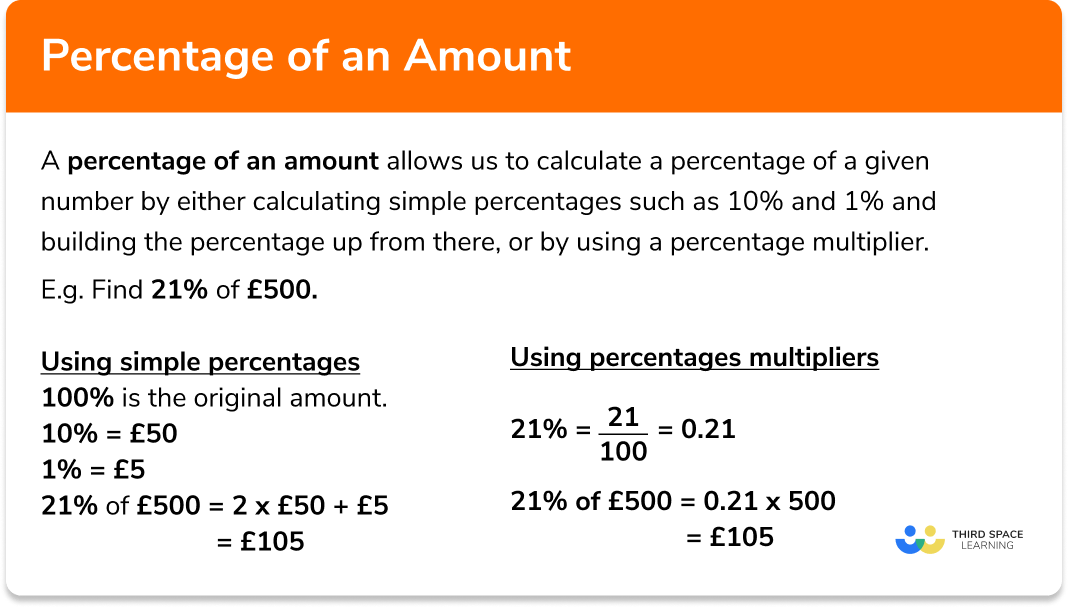
This is arguably the most common daily application. You want to find what a certain percentage is of a specific amount. The formula is: Percentage (as a decimal) × Whole = Part.
To convert a percentage to a decimal, simply divide it by 100 (e.g., 25% becomes 0.25).
Example: To find 15% of $300: 0.15 × $300 = $45. This applies to calculating discounts, sales tax, tips, or even commission earnings. If your commission rate is 10% on a $1,000 sale, you earn 0.10 × $1,000 = $100.
Determining Percentage Change: Growth, Loss, and Fluctuations
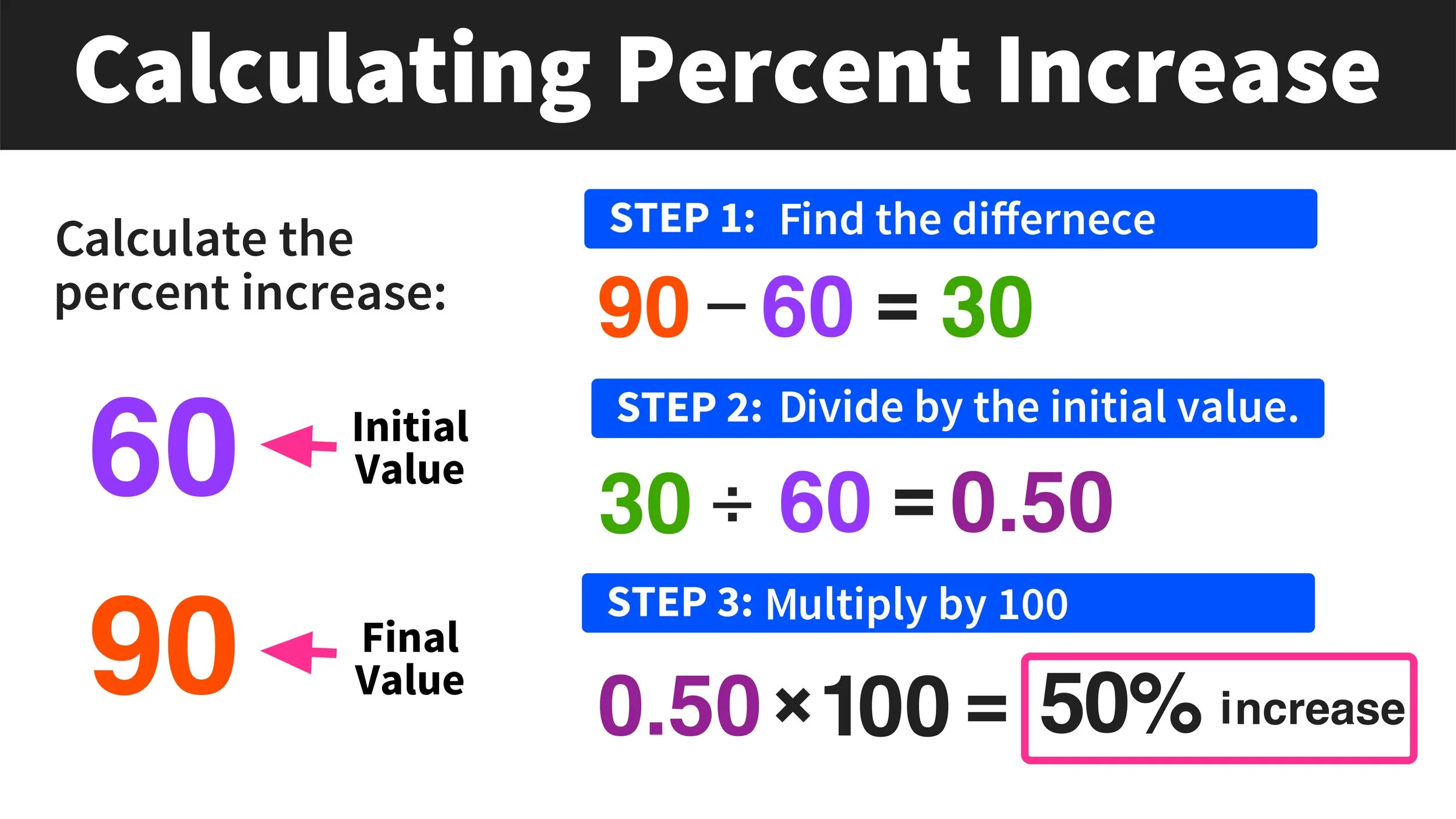
When tracking financial performance, whether it’s investment growth, inflation, or a change in sales, you often need to calculate the percentage increase or decrease. The formula for percentage change is: ((New Value – Old Value) / Old Value) × 100.
Example: If an investment grew from $500 to $650: (($650 – $500) / $500) × 100 = ($150 / $500) × 100 = 0.30 × 100 = 30% increase.
If a value decreased, the result will be negative, indicating a percentage decrease. For instance, if a stock dropped from $100 to $80: (($80 – $100) / $100) × 100 = (-$20 / $100) × 100 = -0.20 × 100 = -20% decrease.
Finding What Percentage One Number Is of Another
This calculation is useful for determining ratios like profit margins, completion rates, or the proportion of one expense to total income. It directly uses the foundational formula.
Example: If your total monthly income is $4,000 and your rent is $1,200, what percentage of your income goes to rent? ($1,200 / $4,000) × 100 = 0.30 × 100 = 30%.
This method helps in understanding how individual components contribute to a larger whole, critical for budgeting and financial analysis.
Practical Applications: Percentages Across Your Financial Landscape
The theoretical understanding of percentage calculations truly comes alive when applied to real-world financial scenarios. From the personal realm of budgeting to the strategic decisions in business, percentages are the unseen gears driving financial management.
Personal Budgeting and Expense Management
For robust personal finance, percentages are invaluable. They help you allocate your income effectively, following rules like the popular 50/30/20 guideline (50% for needs, 30% for wants, 20% for savings and debt repayment). By calculating what percentage each expense category (housing, food, transportation) represents of your total income, you gain a clear picture of where your money is actually going. This allows you to identify areas for potential savings, adjust spending habits, and ensure your financial resources align with your goals. For example, if 45% of your income goes to housing, you might realize it’s time to find a more affordable living situation to free up funds for other priorities.
Investment Strategies and Wealth Building
In the investment world, percentages are the lingua franca. Return on Investment (ROI) is calculated as a percentage, indicating the profitability of an investment relative to its cost. Compound interest, often touted as the “eighth wonder of the world,” relies heavily on percentage growth over time. Understanding your portfolio’s asset allocation (e.g., 60% stocks, 30% bonds, 10% cash) is also percentage-based, allowing you to manage risk and align with your financial objectives. Furthermore, tracking annual percentage yields (APY) on savings accounts or certificates of deposit enables you to compare growth potential across different financial products.
Business Finance and Income Optimization
For entrepreneurs and business owners, percentages are fundamental to operational efficiency and profitability. Gross profit margin (Gross Profit / Revenue × 100) and net profit margin (Net Profit / Revenue × 100) are critical health indicators, revealing how much profit is generated from each dollar of sales. Businesses also use percentages to set pricing strategies, calculate markups, and determine appropriate discounts to attract customers while maintaining profitability. Analyzing sales growth rates (percentage increase in sales over a period) helps businesses gauge market reception and plan for future expansion or contraction.
Navigating Loans, Interest, and Debt Management
Debt, for many, is a significant financial reality, and percentages are at its core. Annual Percentage Rate (APR) tells you the true cost of borrowing money, encompassing interest and other fees, expressed as a yearly rate. Understanding how interest percentages accumulate on mortgages, car loans, or credit cards is vital for effective debt management. Calculating the percentage of your income dedicated to debt payments (debt-to-income ratio) is a key indicator for lenders and a personal benchmark for financial health. Strategically paying down high-interest debt first is a percentage-driven decision that can save you significant money over time.
Enhancing Your Efficiency: Tools and Best Practices
While the core concepts are straightforward, consistently and accurately working with percentages in various financial contexts requires efficiency and a keen eye for detail. Fortunately, a range of tools and best practices can simplify the process and minimize errors.
Leveraging Digital Tools: Calculators, Spreadsheets, and Apps
In today’s digital age, manual calculations are often unnecessary. Basic scientific calculators can handle most percentage tasks, but spreadsheets like Microsoft Excel or Google Sheets are incredibly powerful for more complex financial analysis. They allow you to set up formulas once and apply them to vast datasets, automating calculations for budgeting, investment tracking, and business projections. Dedicated financial apps and online calculators (e.g., mortgage calculators, ROI calculators) further streamline specific percentage-based computations, often providing visual breakdowns and scenario analyses. Embracing these tools not only saves time but also significantly reduces the likelihood of human error.
Mental Math Shortcuts and Estimation Techniques
While digital tools are indispensable, developing some mental math shortcuts can provide quick estimates and a strong intuition for numbers. A common trick is to find 10% of a number by simply moving the decimal point one place to the left (e.g., 10% of $250 is $25). From 10%, you can easily derive 5% (half of 10%) or 1% (one-tenth of 10%). For example, to estimate 17% of $300, you might think: 10% is $30, 5% is $15, 2% is $6. Add them up: $30 + $15 + $6 = $51. While not perfectly precise, these estimations are excellent for on-the-spot decisions, quickly verifying figures, or checking if a quoted percentage sounds reasonable.
The Importance of Accuracy and Verification
When dealing with financial figures, accuracy is paramount. A small error in a percentage calculation can lead to significant financial missteps, whether it’s miscalculating interest payments, underestimating taxes, or making poor investment decisions. Always double-check your work, especially for critical calculations. If using a calculator, input the numbers twice. In spreadsheets, review your formulas. If possible, use different methods or tools to cross-verify results. For instance, if you calculate a discount, also calculate the original price minus the discount to ensure the final amount makes sense. This diligent approach ensures that your financial decisions are based on reliable and precise data.
Conclusion
Understanding “how do I figure out the percentage of something” is more than just a mathematical exercise; it’s a fundamental pillar of financial literacy. From navigating the daily nuances of personal spending and savings to strategizing complex investment portfolios and optimizing business operations, percentages are the critical lens through which financial information becomes clear, comparable, and actionable.
By mastering the basic formulas for calculating a percentage of a number, percentage change, and the part-to-whole relationship, you equip yourself with an invaluable skill. When coupled with the practical application of these calculations across budgeting, investing, business finance, and debt management, you gain an unparalleled ability to make informed, strategic financial decisions. Leverage modern tools like calculators and spreadsheets, and cultivate the habit of mental estimation, but always prioritize accuracy. With percentages as your guide, you’re not just crunching numbers; you’re building a more secure, prosperous financial future.
aViewFromTheCave is a participant in the Amazon Services LLC Associates Program, an affiliate advertising program designed to provide a means for sites to earn advertising fees by advertising and linking to Amazon.com. Amazon, the Amazon logo, AmazonSupply, and the AmazonSupply logo are trademarks of Amazon.com, Inc. or its affiliates. As an Amazon Associate we earn affiliate commissions from qualifying purchases.