
In the intricate world of finance, numbers tell a story, and percentages are the crucial narrative devices that reveal the true plot. From understanding the growth of your investments to dissecting your monthly budget, and from evaluating loan interest rates to calculating business profit margins, the ability to accurately calculate percentages between two numbers is not just a mathematical skill – it’s a fundamental pillar of financial literacy and empowerment. For anyone looking to make smarter decisions about their money, whether personally or professionally, mastering this seemingly simple calculation unlocks a deeper understanding of financial dynamics.
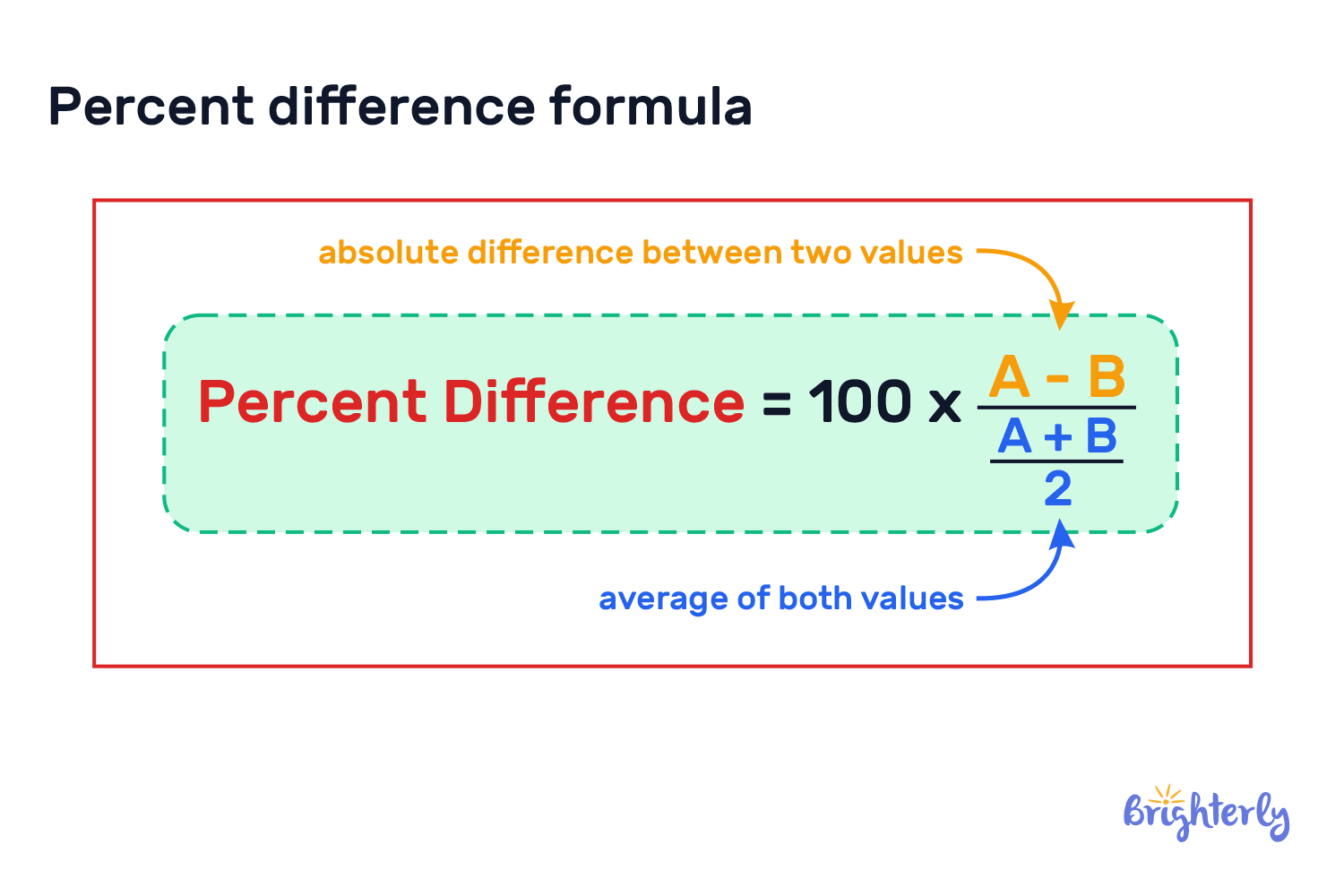
This guide will demystify percentage calculations, placing them squarely within the context of personal finance, investing, and business operations. We’ll move beyond the basic arithmetic to explore how these calculations provide invaluable insights, helping you to assess financial health, track performance, and ultimately, achieve your monetary goals. By the end, you’ll not only know how to calculate percentages but also why they are indispensable tools in your financial toolkit.
The Foundational Formulas: Understanding Percentage Basics in Finance
At its core, a percentage represents a part of a whole, expressed as a fraction of 100. The term “percent” literally means “per hundred.” In finance, this concept allows us to standardize comparisons, making it easier to evaluate performance, growth, or decline across different scales.
The Core Percentage Formula: Part/Whole * 100
The most fundamental percentage calculation involves determining what percentage one number (the “part”) is of another number (the “whole”). The formula is straightforward:
Percentage = (Part / Whole) * 100
Example in Finance:
Let’s say your monthly income (whole) is $5,000, and you spend $1,500 (part) on rent.
Percentage of income spent on rent = ($1,500 / $5,000) * 100 = 0.3 * 100 = 30%
This formula is versatile. It can tell you what percentage of your portfolio is allocated to a specific asset, what percentage of your budget goes to dining out, or what percentage of sales a particular product represents.
Calculating Percentage Change: Increase or Decrease
One of the most frequently used percentage calculations in finance is determining the percentage change between two numbers over time. This is critical for evaluating investment returns, tracking expense fluctuations, or monitoring revenue growth.
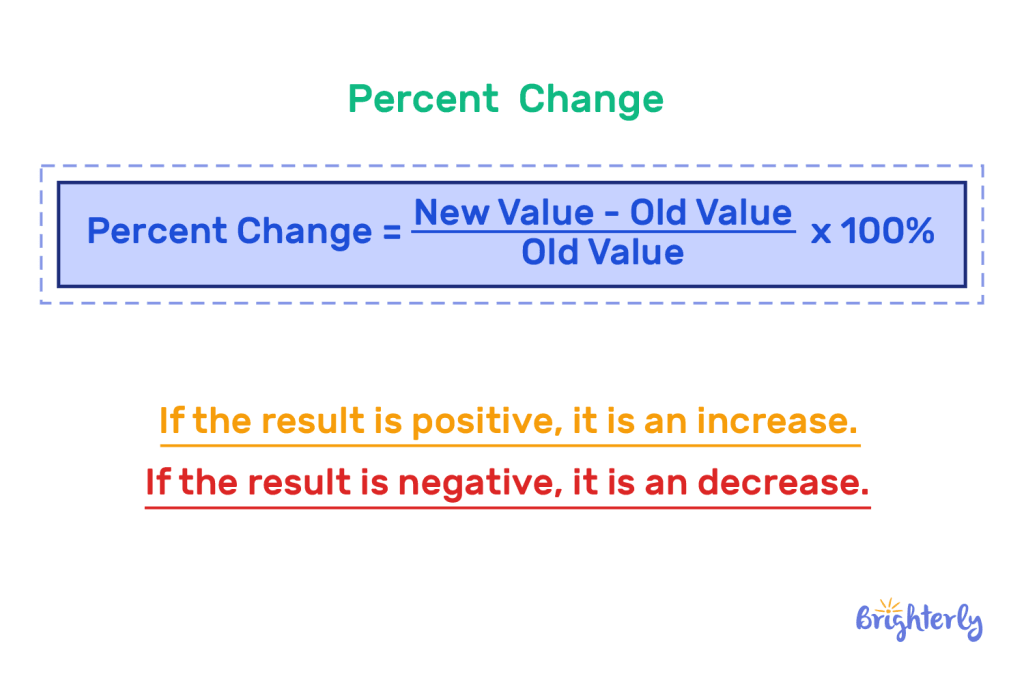
The formula for percentage change is:
Percentage Change = ((New Value – Old Value) / Old Value) * 100
- If the result is positive, it’s a percentage increase.
- If the result is negative, it’s a percentage decrease.
Example for Financial Growth:
Your investment portfolio was worth $10,000 at the start of the year (Old Value) and is now worth $12,500 (New Value).
Percentage Increase = (($12,500 – $10,000) / $10,000) * 100 = ($2,500 / $10,000) * 100 = 0.25 * 100 = 25% increase
Example for Financial Decline:
Your monthly utility bill was $150 last month (Old Value) and is $120 this month (New Value).
Percentage Decrease = (($120 – $150) / $150) * 100 = (-$30 / $150) * 100 = -0.2 * 100 = -20% decrease
Understanding percentage change allows you to quickly grasp the magnitude of financial shifts, rather than just the absolute dollar amounts, which can be misleading without context.
Finding a Part from a Whole Percentage
Sometimes, you know the whole and a percentage, and you need to find the specific “part.” This is common when calculating discounts, sales tax, or interest payments.
The formula is:
Part = (Percentage / 100) * Whole
Example for Discounts:
You’re buying an item that costs $200 (Whole), and there’s a 15% discount (Percentage).
Discount amount = (15 / 100) * $200 = 0.15 * $200 = $30
Final price = $200 – $30 = $170
This calculation is vital for smart shopping, budgeting for variable expenses, or calculating the exact cost of borrowing money.
Everyday Financial Applications of Percentages
The beauty of percentages in finance lies in their practical, everyday utility. They translate complex financial scenarios into easily digestible metrics that inform better decision-making.
Budgeting and Expense Tracking
Percentages are indispensable for creating and adhering to a sound budget. They help you visualize how your income is distributed across various spending categories and identify areas where you might be overspending.
Example: The 50/30/20 rule of budgeting suggests allocating 50% of your income to needs, 30% to wants, and 20% to savings and debt repayment. To apply this, you’d calculate:
- Needs = 0.50 * Net Income
- Wants = 0.30 * Net Income
- Savings/Debt = 0.20 * Net Income
By tracking your actual spending, you can then calculate what percentage of your income you actually spend on housing, food, transportation, or entertainment, comparing it to your target percentages. This comparison highlights where adjustments are needed to meet your financial goals.
Discounts, Sales Tax, and Tips
From the grocery store to a restaurant, percentages are constantly influencing the final price you pay.
- Discounts: Knowing how to calculate a 25% off discount ($50 off a $200 item) helps you quickly determine the final price and assess the true savings.
- Sales Tax: Sales tax is a percentage added to the price of goods and services. If an item is $100 and the sales tax is 7%, you’ll pay an additional $7 (0.07 * $100), for a total of $107.
- Tips: Tipping in restaurants typically ranges from 15% to 20% of the bill. If your bill is $60, a 18% tip would be $10.80 (0.18 * $60).
These small, frequent calculations add up, impacting your daily spending and overall budget.
Interest Rates: Loans, Savings, and Credit Cards
Interest rates are perhaps the most pervasive and impactful application of percentages in personal finance. Whether you’re earning interest on savings or paying interest on loans and credit cards, understanding the percentages involved is paramount.
- Savings Accounts: A 1.5% annual interest rate on $1,000 means you earn $15 in interest over a year (0.015 * $1,000).
- Loans (Mortgages, Car Loans): A 5% interest rate on a $20,000 car loan means a significant portion of your monthly payment goes towards interest, especially early in the loan term. While the full calculation involves amortization schedules, understanding the percentage helps you grasp the cost of borrowing.
- Credit Cards: Credit card interest rates, often in the double digits (e.g., 20%), highlight the high cost of carrying a balance. A 20% APR on a $1,000 balance means you’re accruing roughly $200 in interest per year if not paid off.
Grasping these percentages empowers you to compare financial products, negotiate better terms, and minimize borrowing costs while maximizing savings.
Percentages in Investing and Business Finance

Beyond personal spending, percentages are the universal language of investment performance, business health, and economic indicators.
Investment Returns and Portfolio Growth
Investors rely heavily on percentages to gauge the success of their holdings and compare different investment opportunities.
- Return on Investment (ROI): This measures the profitability of an investment relative to its cost.
ROI = ((Current Value – Initial Cost) / Initial Cost) * 100
If you bought a stock for $1,000 and sold it for $1,200, your ROI is (($1,200 – $1,000) / $1,000) * 100 = 20%. - Compound Annual Growth Rate (CAGR): For investments over multiple years, CAGR provides a smoothed annual growth rate, making it easier to compare investments with different time horizons. While more complex, it’s rooted in percentage change calculations.
- Portfolio Allocation: Managing risk often involves allocating your investments across different asset classes (stocks, bonds, real estate) as percentages. For example, a “60/40 portfolio” means 60% stocks and 40% bonds.
These percentage metrics are essential for evaluating past performance and making informed decisions about future investments.
Profit Margins and Business Performance
For businesses, percentages are vital for understanding profitability and operational efficiency.
- Gross Profit Margin: (Gross Profit / Revenue) * 100. This tells a business what percentage of its revenue is left after accounting for the cost of goods sold. A 30% gross margin means $0.30 of every dollar of revenue is left to cover operating expenses and profit.
- Net Profit Margin: (Net Profit / Revenue) * 100. This is the ultimate measure of a company’s profitability, showing what percentage of revenue remains after all expenses, including taxes, have been deducted. A higher net profit margin generally indicates a more efficient and profitable business.
- Operating Margin: (Operating Income / Revenue) * 100. This indicates how much profit a company makes from its core operations before interest and taxes.
By comparing these percentages over time or against industry benchmarks, businesses can identify trends, areas for improvement, and assess their competitive standing.
Debt-to-Income Ratios and Financial Health Metrics
Lenders and financial advisors use percentage-based ratios to assess an individual’s or business’s financial health and creditworthiness.
- Debt-to-Income (DTI) Ratio: (Total Monthly Debt Payments / Gross Monthly Income) * 100. A lower DTI (e.g., below 36%) is generally favorable, indicating that you have sufficient income to manage your debts. Lenders use this to determine eligibility for mortgages and other loans.
- Current Ratio: (Current Assets / Current Liabilities). While not a percentage, it’s a critical ratio where numbers are compared to assess liquidity.
- Return on Equity (ROE): (Net Income / Shareholder Equity) * 100. For investors, ROE indicates how efficiently a company is using shareholder investments to generate profits.
These ratios offer a snapshot of financial stability and operational efficiency, guiding decisions for both individuals seeking credit and investors evaluating companies.
Leveraging Financial Tools for Percentage Calculations
While understanding the manual formulas is crucial, modern financial management often involves leveraging tools to automate and streamline these calculations, reducing errors and saving time.
Spreadsheets (Excel, Google Sheets) for Automation
Spreadsheets are the ultimate Swiss Army knife for financial calculations, offering powerful functions to handle percentages effortlessly.
- Basic Calculations: Simply enter your “part” in one cell, your “whole” in another, and use the formula
=(A1/B1)*100(assuming A1 is part, B1 is whole) to get the percentage. - Percentage Change:
=( (B1 - A1) / A1 ) * 100(A1 = Old Value, B1 = New Value). - Dynamic Budgeting: You can set up an entire budget tracking system where as you input expenses, percentages of income spent are automatically calculated and updated, often with conditional formatting to flag overspending.
- Investment Tracking: Track your portfolio’s performance, ROI, and allocation percentages in real-time by linking to financial data sources.
The ability of spreadsheets to handle large datasets and perform complex calculations automatically makes them invaluable for comprehensive financial analysis.
Online Calculators and Financial Apps
For quick, specific percentage calculations, a multitude of online calculators and financial apps are available.
- Percentage Calculators: Dedicated websites and app features allow you to input two numbers and instantly get various percentage relationships (e.g., what % is X of Y, X is what % more/less than Y).
- Loan Calculators: These often incorporate interest rate percentages to project monthly payments, total interest paid, and amortization schedules.
- Tip Calculators: Automatically calculate tip amounts based on a percentage of your bill.
- Budgeting Apps: Many personal finance apps automatically categorize your spending and display it as percentages of your income or budget categories, providing visual insights into your financial habits.
These tools offer convenience and immediate results, making it easier to perform calculations on the go.
The Power of Estimation and Mental Math
While precise calculations are often necessary, developing an intuition for percentages through mental math and estimation can be incredibly beneficial for quick assessments.
- Estimating Discounts: If an item is $80 and 25% off, you can quickly think: 25% is 1/4, so 1/4 of $80 is $20. Discount is $20.
- Rough ROI: If you invested $5,000 and it’s now $6,000, you’ve gained $1,000. $1,000 out of $5,000 is 1/5, or 20%.
These rapid estimations allow you to make swift financial judgments, such as deciding if a sale is truly a good deal or if an investment return seems reasonable.
Mastering Percentages for Smarter Financial Decisions
The journey to financial mastery is paved with understanding numbers, and percentages are perhaps the most frequently encountered and influential of them. Moving beyond mere calculation, applying these insights critically transforms raw data into actionable intelligence.
Avoiding Common Percentage Pitfalls
Even with the correct formulas, misinterpreting or misapplying percentages can lead to costly errors.
- Confusing Basis Points with Percentages: In finance, a “basis point” is 0.01 percentage point. So, a change of 50 basis points is 0.5%. Not understanding this can lead to significant miscalculations, especially with interest rates.
- Successive Percentage Changes: A 10% increase followed by a 10% decrease does not result in the original amount. If you start with $100, a 10% increase is $10 ($110). A 10% decrease on $110 is $11, resulting in $99. Always apply percentages to the current base, not the original.
- Context is Key: A 5% investment return might seem low, but if it’s in a low-risk bond during a recession, it could be excellent. Conversely, a 5% increase in a credit card interest rate on a large balance is financially painful. Always consider the context.
Awareness of these pitfalls ensures that your percentage calculations truly inform, rather than mislead, your financial decisions.
Empowering Your Financial Literacy
Ultimately, calculating the percentage between two numbers is more than just arithmetic; it’s a cornerstone of financial literacy. It allows you to:
- Critically Evaluate Information: Dissect financial news, product offers, and economic reports with a discerning eye.
- Negotiate More Effectively: Understand the true costs and benefits behind percentages in contracts, loans, and sales.
- Set Realistic Goals: Quantify your financial aspirations and track your progress towards them with precision.
- Identify Opportunities and Risks: Spot trends in your spending, income, or investments that might otherwise go unnoticed.
By consistently applying these percentage calculations to your financial life, you move from passively observing your money to actively managing and optimizing it.
Conclusion
Calculating the percentage between two numbers is an elemental skill that transcends simple mathematics, becoming a powerful lens through which to view and interpret your financial world. Whether you’re tracking your personal budget, evaluating an investment opportunity, or analyzing business performance, percentages provide the standardized metrics necessary for clear comparisons and informed decisions.
From the foundational formulas for simple percentages and percentage change to their pervasive applications in budgeting, interest rates, investment returns, and business profitability, mastering these calculations empowers you with confidence and control. By leveraging modern financial tools and developing a keen sense for estimation, you can integrate percentage analysis seamlessly into your daily financial habits. Embrace the power of percentages, and transform your relationship with money from one of uncertainty to one of strategic insight and assured financial success.
aViewFromTheCave is a participant in the Amazon Services LLC Associates Program, an affiliate advertising program designed to provide a means for sites to earn advertising fees by advertising and linking to Amazon.com. Amazon, the Amazon logo, AmazonSupply, and the AmazonSupply logo are trademarks of Amazon.com, Inc. or its affiliates. As an Amazon Associate we earn affiliate commissions from qualifying purchases.