
Investing in the stock market can seem daunting to the uninitiated, a complex world of charts, jargon, and volatile movements. Yet, at its core, buying stock is a fundamental mechanism that allows individuals to participate in the growth and success of companies, build wealth over time, and secure their financial future. Understanding how this process works demystifies it, transforming a seemingly exclusive realm into an accessible tool for personal finance. This comprehensive guide will break down the mechanics of buying stock, from fundamental concepts to practical steps, empowering you to navigate the market with confidence and insight.
Understanding the Fundamentals of Stock Ownership
Before delving into the how-to, it’s crucial to grasp what a stock truly represents and why companies issue them. This foundational knowledge will illuminate the rationale behind stock investing and its potential benefits.
What is a Stock?
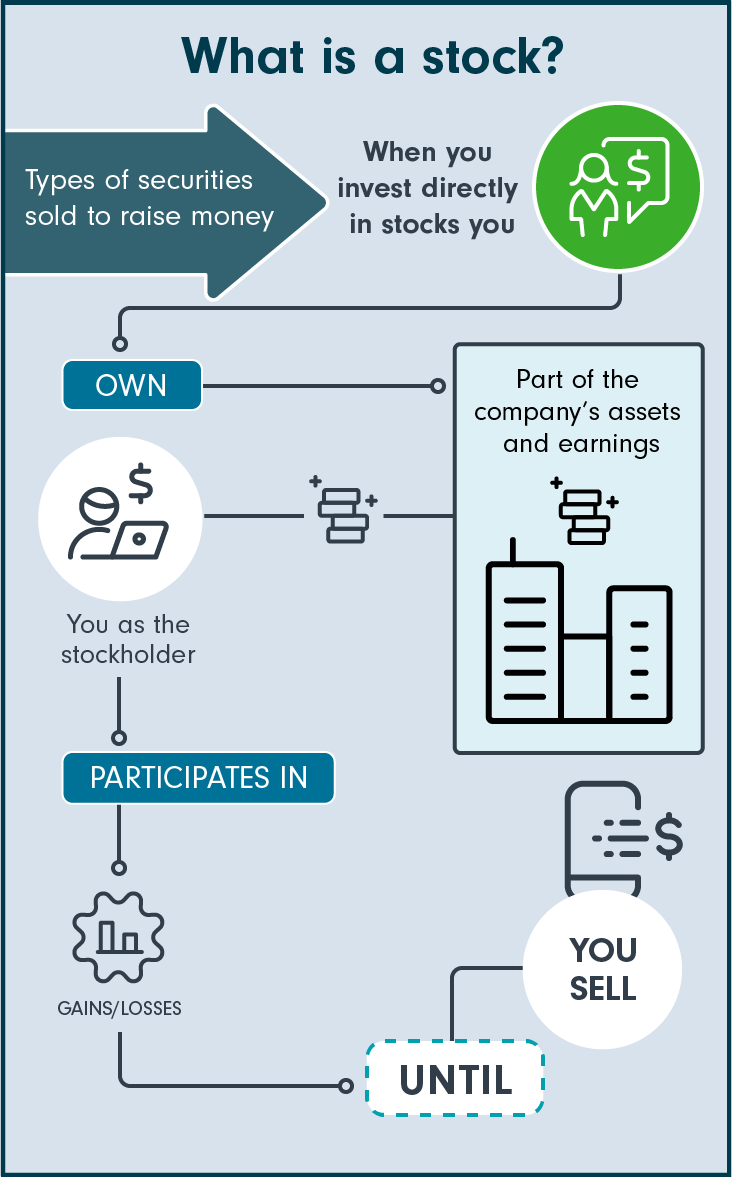
At its most basic, a stock, also known as equity, represents a fractional ownership interest in a company. When you buy a share of stock, you become a part-owner of that company. Your ownership percentage is proportionate to the number of shares you hold relative to the total number of shares outstanding. This ownership grants you certain rights, typically including the right to vote on certain company matters (like electing the board of directors) and a claim on the company’s earnings and assets.
Stocks are traded on exchanges, which are organized marketplaces where buyers and sellers meet. The price of a stock is determined by supply and demand, influenced by factors such as the company’s financial performance, industry trends, economic conditions, and investor sentiment.
Why Do Companies Issue Stock?
Companies issue stock primarily to raise capital. When a private company decides to “go public” through an Initial Public Offering (IPO), it sells shares to the public for the first time. This infusion of cash can be used for various purposes: funding research and development, expanding operations, paying off debt, or acquiring other businesses. For established public companies, issuing additional shares (a secondary offering) can also be a way to raise capital for specific projects or growth initiatives.
From an investor’s perspective, buying stock allows you to potentially profit from the company’s success. As the company grows and becomes more profitable, the value of its shares typically increases, leading to capital appreciation.
The Basics of Return: Capital Gains and Dividends
Investors primarily seek two types of returns from stock ownership:
- Capital Gains: This is the profit made when you sell a stock for a higher price than you paid for it. For example, if you buy a share at $50 and sell it at $75, you realize a capital gain of $25 per share. Capital gains are a primary driver for wealth accumulation in the stock market.
- Dividends: Some companies choose to distribute a portion of their profits directly to shareholders in the form of dividends. Dividends are typically paid out quarterly and can be a significant source of income, particularly for investors focused on generating regular cash flow. Not all companies pay dividends; growth companies, for instance, often reinvest all their earnings back into the business to fuel further expansion.
The Mechanics of Buying Stock: A Step-by-Step Guide
With a firm understanding of the fundamentals, let’s explore the practical steps involved in purchasing stock.
Step 1: Choosing a Brokerage Account
To buy stocks, you first need an intermediary. You can’t directly buy shares from a stock exchange or a company; you need a brokerage account.
- Full-Service vs. Discount Brokers:
- Full-service brokers offer a wide range of services, including personalized financial advice, portfolio management, research, and estate planning. They typically charge higher fees or commissions but can be beneficial for those who desire hands-on guidance.
- Discount brokers (including most online platforms) offer lower fees and commissions but provide less personalized advice. They are ideal for self-directed investors who prefer to conduct their own research and make their own investment decisions.
- Online Brokerage Platforms: The vast majority of individual investors today use online brokerage platforms. These platforms offer user-friendly interfaces, extensive research tools, educational resources, and often commission-free trading for stocks and ETFs. Popular examples include Fidelity, Charles Schwab, E*TRADE, Vanguard, and Robinhood. When choosing one, consider factors like fees, minimum deposit requirements, available investment products, research tools, and customer service.
Step 2: Funding Your Account
Once your brokerage account is open, you’ll need to fund it. Common methods include:
- Electronic Funds Transfer (EFT): Linking your bank account allows you to transfer money digitally. This is usually the quickest and most common method.
- Wire Transfer: For larger sums, wire transfers are an option, though they may incur fees.
- Check Deposit: You can mail a physical check, though this takes longer to process.
- Transfer from another brokerage account: If you’re moving from a different broker, you can initiate an account transfer.
Step 3: Researching and Selecting Stocks
This is arguably the most crucial step, as it determines which companies you’ll invest in. Never invest in a company you don’t understand.
- Fundamental Analysis: This involves evaluating a company’s intrinsic value by examining its financial statements (income statement, balance sheet, cash flow statement), management quality, industry position, competitive advantages, and macroeconomic factors. Key metrics include earnings per share (EPS), price-to-earnings (P/E) ratio, revenue growth, debt levels, and profit margins. The goal is to identify undervalued companies with strong growth potential.
- Technical Analysis: This approach involves studying past market data, primarily price and volume charts, to identify patterns and predict future price movements. Technical analysts use indicators like moving averages, relative strength index (RSI), and MACD to make trading decisions. While popular among short-term traders, long-term investors often combine it with fundamental analysis.
- Diversification and Risk Management: A fundamental principle of investing is diversification – spreading your investments across various assets, industries, and geographies to reduce risk. Don’t put all your eggs in one basket. Investing in a mix of stocks, bonds, and other assets helps mitigate the impact of poor performance by any single investment. Consider your risk tolerance before making any investment decisions.
Step 4: Placing an Order
Once you’ve chosen a stock, you’re ready to place an order through your brokerage platform.
- Market Orders vs. Limit Orders:
- Market Order: This is an instruction to buy or sell a stock immediately at the best available current price. Market orders prioritize execution speed over price. While usually executed quickly, the actual price you pay or receive might be slightly different from the last quoted price, especially in volatile markets.
- Limit Order: This is an instruction to buy or sell a stock at a specified price or better. A buy limit order will only execute if the stock price falls to or below your specified limit price. A sell limit order will only execute if the stock price rises to or above your specified limit price. Limit orders give you more control over the price you pay but may not execute if the market never reaches your specified price.
- Other Order Types: Brokers offer various other order types like stop-loss orders (to limit potential losses), stop-limit orders, and trailing stop orders, each designed for specific trading strategies and risk management.
After placing an order, it will be sent to the market for execution. Once executed, the shares will appear in your brokerage account, typically within one to two business days (settlement period).
Navigating the Stock Market Landscape
Beyond the transactional steps, understanding the broader context of the stock market is vital for informed investing.
The Role of Exchanges and Market Makers

Stock exchanges, like the New York Stock Exchange (NYSE) and NASDAQ, are central marketplaces where stocks are bought and sold. They provide the infrastructure for trading, ensuring transparency and efficient price discovery.
Market makers are financial institutions or individuals that facilitate trading by providing liquidity. They stand ready to buy or sell a particular stock, quoting both a bid price (the price they’re willing to buy at) and an ask price (the price they’re willing to sell at). This ensures that there is always a buyer and a seller, making it easier for investors to execute their orders.
Understanding Market Volatility and Risk
The stock market is inherently volatile. Prices can fluctuate significantly due to a myriad of factors, including economic news, company performance, geopolitical events, and investor sentiment. While volatility can present opportunities for savvy investors, it also carries risk.
Key risks include:
- Market Risk: The risk that the overall market will decline, impacting all stocks.
- Company-Specific Risk (Idiosyncratic Risk): The risk associated with a particular company’s performance.
- Liquidity Risk: The risk that you may not be able to sell your shares quickly at a fair price.
- Inflation Risk: The risk that inflation erodes the purchasing power of your investment returns.
A thorough understanding of these risks and a well-diversified portfolio are crucial for long-term success.
Beyond Individual Stocks: ETFs, Mutual Funds, and Index Funds
For many investors, especially beginners, directly picking individual stocks can be challenging and time-consuming. Exchange-Traded Funds (ETFs), Mutual Funds, and Index Funds offer excellent alternatives:
- ETFs (Exchange-Traded Funds): These are baskets of securities (like stocks, bonds, commodities) that trade like individual stocks on an exchange. They offer instant diversification and often have lower expense ratios than traditional mutual funds.
- Mutual Funds: These are professionally managed portfolios of stocks, bonds, or other investments. Investors buy shares in the fund, and the fund manager makes investment decisions. They offer diversification and professional management but typically have higher fees.
- Index Funds: A type of mutual fund or ETF that aims to replicate the performance of a specific market index (e.g., S&P 500). They offer broad market exposure, low costs, and generally outperform actively managed funds over the long term. They are an excellent choice for passive investors.
Essential Considerations for Beginner Investors
Embarking on your investment journey requires more than just understanding the mechanics; it demands a strategic mindset.
Developing an Investment Strategy
Before you buy your first stock, define your investment goals (e.g., retirement, down payment for a house, wealth growth), time horizon (short-term vs. long-term), and risk tolerance. Your strategy should align with these factors. Are you a growth investor seeking high-potential companies, a value investor looking for undervalued assets, or an income investor focused on dividends? Having a clear strategy prevents impulsive decisions.
The Importance of Long-Term Perspective
The stock market has historically generated substantial returns over the long term. However, it’s prone to short-term fluctuations. Panic selling during downturns is a common mistake. Adopting a long-term perspective (5+ years) allows your investments time to recover from dips and benefit from compounding returns, where your earnings generate further earnings.
Fees and Commissions: What to Watch For
While many online brokers now offer commission-free trading for stocks and ETFs, other fees can still apply. Be aware of:
- Expense Ratios: For ETFs and mutual funds, this is the annual fee charged as a percentage of your investment. Lower is generally better.
- Account Maintenance Fees: Some brokers charge a fee if your account balance falls below a certain threshold or if you don’t make a minimum number of trades.
- Trading Fees: For certain types of securities or advanced orders, fees might still apply.
- Transfer Fees: If you decide to move your account to another broker.
Always read the fee schedule carefully.
Tax Implications of Stock Investing
The profits from your investments are subject to taxes.
- Capital Gains Tax: If you sell a stock for a profit, you’ll owe capital gains tax. This is categorized as short-term (for assets held one year or less, taxed at your ordinary income rate) or long-term (for assets held over a year, taxed at a preferential rate, usually lower).
- Dividend Tax: Dividends are generally taxed as ordinary income or at the lower qualified dividend tax rates, depending on how long you held the stock.
- Tax-Advantaged Accounts: Consider investing through tax-advantaged accounts like IRAs (Individual Retirement Accounts) or 401(k)s. These accounts offer tax benefits (like tax-deductible contributions or tax-free growth/withdrawals in retirement) that can significantly boost your long-term returns.
Common Pitfalls and How to Avoid Them
Even with the right knowledge, investors can fall prey to common mistakes. Awareness is the first step to avoidance.
Emotional Investing
One of the biggest pitfalls is letting emotions, particularly fear and greed, dictate investment decisions. Buying into a hype cycle or selling during a market downturn due to panic can lead to significant losses. Stick to your predefined strategy and avoid impulsive reactions to market noise.
Lack of Diversification
As mentioned earlier, putting all your capital into one or two stocks is extremely risky. A single piece of bad news for that company or industry can decimate your portfolio. Diversification across different companies, sectors, and asset classes is paramount for mitigating risk.
Chasing Hot Tips
The allure of a “get rich quick” scheme or a friend’s “guaranteed winner” can be strong. However, investing based on unverified tips or speculative rumors often leads to disappointment. Always conduct your own research and due diligence before committing your money.
Not Doing Your Due Diligence
Every investment decision should be backed by thorough research. Understand the company, its financials, its competitive landscape, and its growth prospects. Relying solely on headlines or general sentiment is a recipe for poor outcomes.

Empowering Your Investment Journey
Buying stock is a powerful way to participate in economic growth and build wealth. While it involves inherent risks, understanding the mechanics, performing diligent research, and adopting a disciplined, long-term approach can significantly increase your chances of success. Start small, educate yourself continuously, and remember that successful investing is a marathon, not a sprint. By demystifying the process and focusing on sound principles, you can embark on an informed and potentially very rewarding investment journey.
aViewFromTheCave is a participant in the Amazon Services LLC Associates Program, an affiliate advertising program designed to provide a means for sites to earn advertising fees by advertising and linking to Amazon.com. Amazon, the Amazon logo, AmazonSupply, and the AmazonSupply logo are trademarks of Amazon.com, Inc. or its affiliates. As an Amazon Associate we earn affiliate commissions from qualifying purchases.