
The phrase “what a stock market!” often comes as an exclamation — sometimes of awe at its seemingly limitless potential, other times of frustration at its unpredictable volatility. Far from a simple marketplace, the stock market is a vibrant, complex ecosystem that stands as one of the most powerful engines of global finance. It is where dreams of entrepreneurial growth meet the aspirations of individual wealth creation, all while navigating a constant tide of economic indicators, geopolitical shifts, and human psychology.
At its core, the stock market facilitates the buying and selling of shares in publicly traded companies. But its influence extends far beyond mere transactions. It’s a barometer of economic health, a mechanism for capital allocation, and a primary avenue for both corporations and individuals to secure their financial futures. For the uninitiated, it can appear daunting, a labyrinth of tickers, charts, and jargon. Yet, for those who seek to understand its fundamental principles, the stock market reveals itself as a cornerstone of modern capitalism, offering profound insights into economic trends and unparalleled opportunities for financial growth. This article will delve into the intricacies of the stock market, exploring its structure, its significance, the forces that shape its movements, and the strategies individuals can employ to navigate its ever-changing landscape.
The Essence of the Stock Market: A Fundamental Overview
To truly appreciate the stock market, one must first grasp its foundational elements. It is more than just a place; it’s a network of exchanges, brokers, investors, and regulatory bodies, all working together to facilitate the transfer of ownership in publicly traded entities.
Defining the Stock Market
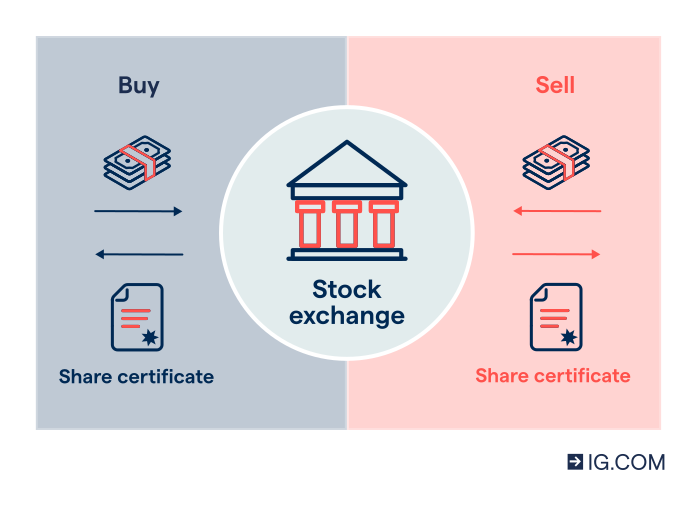
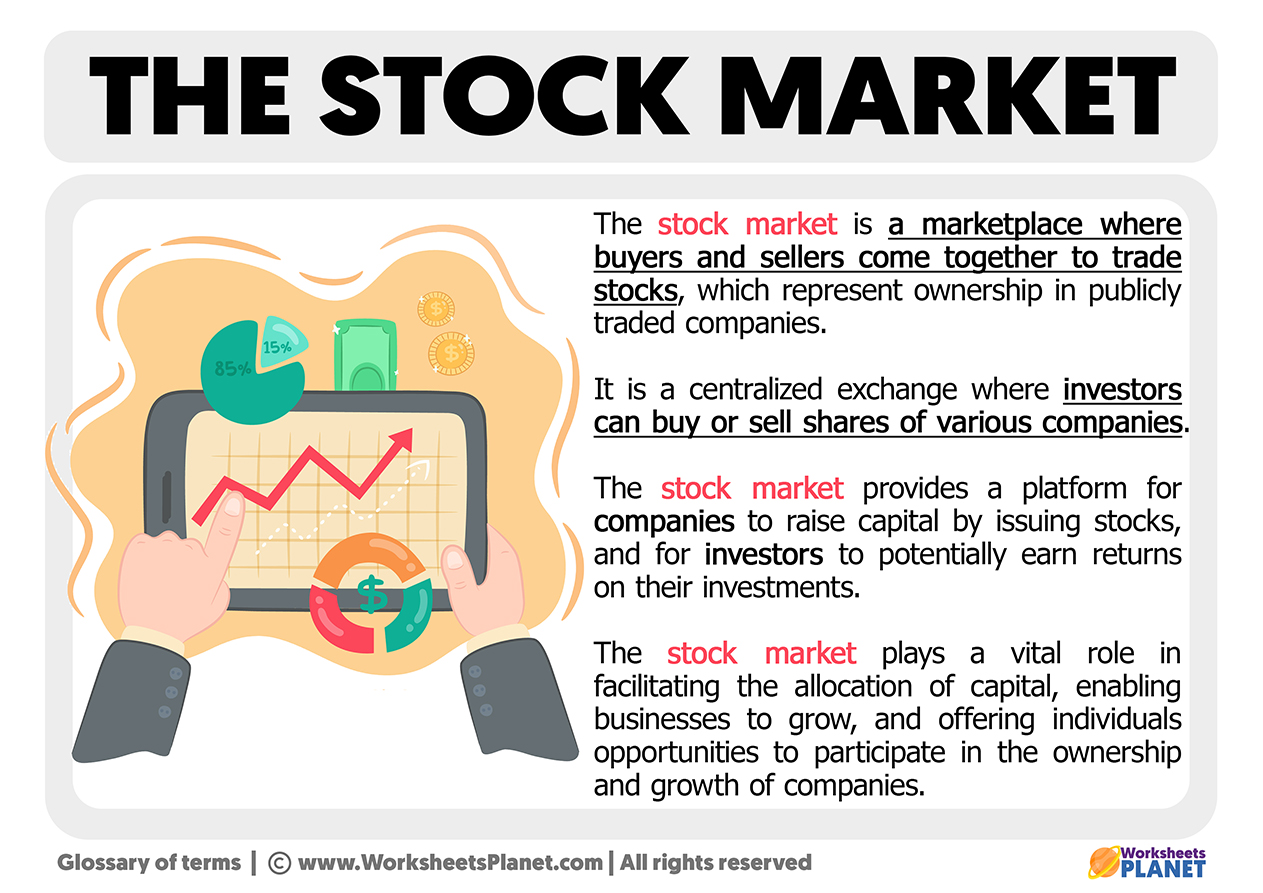
In simple terms, the stock market is a public market for the trading of company stocks and derivatives. Stocks, also known as shares or equities, represent a fractional ownership in a company. When you buy a company’s stock, you become a shareholder, meaning you own a tiny piece of that business. This ownership comes with potential benefits, such as a share in the company’s profits (dividends) and the potential for capital appreciation if the company’s value increases.
The stock market provides a transparent and regulated environment for buyers and sellers to meet. This continuous interaction allows for the efficient pricing of assets based on supply and demand, company performance, economic outlook, and investor sentiment. Major stock exchanges worldwide, such as the New York Stock Exchange (NYSE), NASDAQ, London Stock Exchange (LSE), and Tokyo Stock Exchange (TSE), serve as the primary venues for these transactions, often operating digitally in the modern era.
Primary vs. Secondary Markets
The journey of a stock begins in the primary market. This is where companies first issue new shares to the public to raise capital, typically through an Initial Public Offering (IPO). In an IPO, a company sells its shares for the first time, transforming from a private entity to a public one. The funds raised through IPOs are crucial for business expansion, debt repayment, research and development, and other corporate initiatives. Investment banks play a critical role in underwriting these offerings, helping companies determine share prices and find initial investors.
Once shares have been issued in the primary market, they are then traded among investors in the secondary market. This is what most people refer to when they talk about the “stock market.” No new capital goes to the issuing company in the secondary market; instead, existing shares change hands between investors. The secondary market’s efficiency and liquidity are vital because they provide existing shareholders with a way to sell their stocks easily and potential investors with a way to buy them. This liquidity is what makes stocks an attractive investment, as investors know they can convert their holdings into cash relatively quickly.
Key Players and Participants
The stock market is a bustling arena with a diverse cast of characters, each playing a crucial role.
- Issuers: These are the companies that raise capital by selling shares to the public. Their performance and prospects are the ultimate drivers of stock value.
- Investors: Ranging from individual retail investors to large institutional investors (like pension funds, mutual funds, hedge funds, and insurance companies), investors provide the capital, seeking returns in exchange. Institutional investors, due to their sheer volume of trades, often have a significant impact on market movements.
- Brokers and Dealers: These intermediaries facilitate transactions. Brokers execute trades on behalf of clients, while dealers trade for their own accounts. Online brokerage platforms have democratized access for individual investors, allowing them to trade directly from their computers or smartphones.
- Regulators: Bodies like the Securities and Exchange Commission (SEC) in the U.S. or the Financial Conduct Authority (FCA) in the UK oversee the market to ensure fairness, transparency, and investor protection. They establish rules for trading, disclosure, and corporate governance.
- Market Makers: These entities provide liquidity by continuously quoting both bid (buy) and ask (sell) prices for a given stock, standing ready to buy or sell. This ensures that investors can always find a counterparty for their trades.
Why the Stock Market Matters: Its Multifaceted Impact
Beyond its operational mechanics, the stock market serves several critical functions that underpin modern economies and impact individuals worldwide. Its importance extends to economic development, wealth distribution, and corporate accountability.
Fueling Economic Growth and Innovation
The stock market is a primary conduit for capital formation, channeling savings from investors into productive investments for businesses. When companies issue stocks, they raise funds necessary for expansion, hiring, research and development, and innovation. This influx of capital allows businesses to grow, create jobs, develop new products and services, and ultimately contribute to the broader economic output. Without a robust stock market, businesses would struggle to access the large pools of capital needed to scale operations, stifling innovation and economic progress. Therefore, a healthy stock market is often seen as a prerequisite for a dynamic and growing economy.
Wealth Creation and Personal Investment
For individuals, the stock market offers one of the most powerful avenues for wealth creation and achieving financial independence. By investing in stocks, individuals can participate in the growth and profitability of leading companies, often earning returns that outpace inflation and other traditional savings vehicles. Over the long term, historical data suggests that equity investments have provided significant returns, making them an essential component of retirement planning, college savings, and other long-term financial goals. Through compounding returns and capital appreciation, even modest initial investments can grow substantially over decades, transforming individuals’ financial futures.
Price Discovery and Corporate Governance
The stock market also plays a vital role in price discovery. The constant interplay of buying and selling pressure, driven by available information and expectations, allows for the efficient valuation of companies. A company’s stock price reflects the market’s collective assessment of its current health, future prospects, and intrinsic value. This real-time valuation is crucial for mergers and acquisitions, capital budgeting decisions, and providing a benchmark for performance.
Furthermore, being a publicly traded company comes with increased scrutiny and demands for transparency. Shareholders, especially institutional investors, often exert influence on corporate management, advocating for sound business practices, ethical conduct, and strategic decisions that enhance shareholder value. This mechanism of corporate governance encourages accountability, ensuring that companies operate in the best interests of their owners (the shareholders) and promoting better management practices across the board.
Navigating the Market: Understanding Investment Vehicles and Strategies
Engaging with the stock market requires an understanding of the various investment vehicles available and the fundamental strategies employed by successful investors. It’s not just about picking a single stock; it’s about building a diversified portfolio aligned with personal financial goals and risk tolerance.
Stocks, Bonds, ETFs, and Mutual Funds
While “stock market” primarily refers to equities, investors often combine different asset classes to manage risk and optimize returns.
- Stocks: As discussed, these represent ownership in a company, offering potential for high returns but also carrying higher risk due to price volatility.
- Bonds: These are debt instruments where an investor lends money to a government or corporation for a defined period at a fixed interest rate. Bonds are generally considered less volatile than stocks and provide a stable income stream, making them a cornerstone of conservative portfolios.
- Exchange-Traded Funds (ETFs): ETFs are baskets of securities (like stocks, bonds, or commodities) that trade on exchanges like individual stocks. They offer diversification across various assets or sectors with the ease of stock trading. Many ETFs track specific market indices, providing broad market exposure at a low cost.
- Mutual Funds: Similar to ETFs, mutual funds pool money from multiple investors to invest in a diversified portfolio of securities. They are professionally managed, and investors buy units or shares of the fund. Unlike ETFs, mutual funds are typically bought and sold once a day at their Net Asset Value (NAV).
Common Investment Strategies
Investors adopt various strategies based on their financial objectives, risk appetite, and time horizon.
- Value Investing: Pioneered by Benjamin Graham and championed by Warren Buffett, this strategy involves identifying undervalued stocks – companies trading below their intrinsic worth. Value investors seek out companies with strong fundamentals, good management, and a sustainable competitive advantage, believing the market will eventually recognize their true value.
- Growth Investing: This strategy focuses on companies that are expected to grow at an above-average rate compared to the market. Growth stocks often reinvest their earnings back into the business, leading to rapid expansion, but they can be more volatile and typically trade at higher valuations.
- Dividend Investing: Investors pursuing this strategy focus on companies that regularly pay out a portion of their earnings to shareholders in the form of dividends. This provides a steady income stream, and reinvesting these dividends can significantly boost long-term returns through compounding.
- Index Investing (Passive Investing): This popular strategy involves investing in funds (like index ETFs or mutual funds) that track a specific market index, such as the S&P 500. The goal is to match the market’s performance rather than trying to beat it, often at lower costs and with less active management.
The Role of Risk and Diversification
Investing in the stock market inherently involves risk. Stock prices can fluctuate dramatically due to company-specific news, industry trends, or broader economic conditions. Understanding and managing this risk is paramount.
- Diversification: The golden rule of investing, diversification involves spreading investments across different asset classes, industries, geographic regions, and company sizes. This strategy helps reduce overall portfolio risk, as the poor performance of one asset may be offset by the strong performance of another. “Don’t put all your eggs in one basket” is the core principle.
- Risk Tolerance: Each investor has a unique capacity and willingness to take on investment risk. Understanding one’s own risk tolerance is crucial for building a portfolio that allows for comfortable long-term holding without panicking during market downturns.
- Time Horizon: The length of time an investment is held significantly impacts risk. Longer time horizons allow investors to ride out short-term market volatility and benefit from the long-term upward trend of equities.
Factors Influencing Market Movements: A Complex Interplay
The stock market is a dynamic entity, constantly reacting to a multitude of forces. Understanding these influences is key to comprehending market behavior and making informed investment decisions. No single factor dictates market direction; rather, it’s a complex interplay of various elements.
Economic Indicators and Monetary Policy
Macroeconomic data provides a crucial backdrop for market performance.
- Gross Domestic Product (GDP): A measure of a nation’s economic output, a strong GDP growth signals a healthy economy, which generally bodes well for corporate earnings and stock prices.
- Inflation: Rising inflation erodes purchasing power and can lead central banks to raise interest rates, which increases borrowing costs for companies and makes bonds more attractive relative to stocks.
- Employment Data: Low unemployment rates indicate a strong labor market and consumer spending, positive signs for corporate revenues.
- Consumer Confidence: When consumers feel secure about their economic future, they are more likely to spend, boosting corporate sales.
Monetary Policy, set by central banks (like the Federal Reserve in the U.S. or the European Central Bank), profoundly impacts the market.
- Interest Rates: Lower interest rates encourage borrowing and investment, stimulating economic growth and making stocks more appealing. Higher rates have the opposite effect.
- Quantitative Easing/Tightening: These policies involve central banks buying or selling government bonds to inject or withdraw money from the financial system, influencing liquidity and market sentiment.
Geopolitical Events and Corporate Earnings
Beyond economic statistics, external events can trigger significant market shifts.
- Geopolitical Instability: Wars, trade disputes, political upheavals, and international crises can introduce uncertainty, leading to investor fear and market sell-offs. Conversely, resolutions to such conflicts can spark rallies.
- Technological Disruptions: Breakthroughs or shifts in technology can create new industries, propel certain companies to dominance, and render others obsolete, causing sector-specific or broader market revaluations.
- Corporate Earnings: The most direct driver of individual stock prices is a company’s financial performance, particularly its earnings per share (EPS). Strong earnings growth, especially when exceeding analyst expectations, typically leads to higher stock prices. Conversely, disappointing results can trigger sharp declines. Investors constantly analyze earnings reports, revenue figures, and future guidance provided by companies.
Investor Sentiment and Behavioral Finance
While fundamental economic data and corporate performance are critical, the human element — investor sentiment — often plays a powerful role in short-term market movements.
- Fear and Greed: These two emotions are powerful forces in the market. Greed can lead to irrational exuberance and asset bubbles, while fear can trigger panic selling and market crashes, often detached from underlying fundamentals.
- Herding Behavior: Investors sometimes tend to follow the crowd, buying what others are buying or selling what others are selling, regardless of their own analysis. This can amplify market trends.
- Cognitive Biases: Behavioral finance explores how psychological biases (e.g., confirmation bias, loss aversion, anchoring) influence investor decisions, often leading to suboptimal outcomes. Understanding these biases can help investors make more rational choices.
The Future of the Stock Market: Trends and Transformations
The stock market is not static; it continually evolves, shaped by technological advancements, changing societal values, and shifting economic paradigms. Several key trends are poised to redefine its landscape in the coming decades.
Technological Advancements and Algorithmic Trading
Technology has already transformed the stock market, moving from physical trading floors to sophisticated electronic systems. This evolution continues at a rapid pace.
- High-Frequency Trading (HFT): Algorithms execute trades in milliseconds, often accounting for a significant portion of daily trading volume. While increasing liquidity, HFT also raises questions about market fairness and stability during volatile periods.
- Artificial Intelligence (AI) and Machine Learning (ML): AI is increasingly being used for predictive analytics, risk management, sentiment analysis from news and social media, and even automated portfolio management (robo-advisors). These tools promise greater efficiency and potentially superior insights.
- Blockchain Technology: While still in its nascent stages for traditional securities, blockchain holds the potential to revolutionize settlement processes, increase transparency, and reduce costs through distributed ledger technology. Tokenized assets could also open new avenues for investment.
ESG Investing and Sustainable Finance
A growing awareness of environmental, social, and governance (ESG) factors is reshaping investment priorities.
- ESG Integration: Investors are increasingly considering a company’s performance on environmental (e.g., carbon footprint, resource management), social (e.g., labor practices, community relations), and governance (e.g., board diversity, executive compensation) metrics alongside traditional financial analysis.
- Impact Investing: This goes a step further, specifically seeking investments that generate positive, measurable social and environmental impact alongside a financial return. This trend reflects a broader shift towards sustainable finance, where capital is directed towards companies and projects that align with a more sustainable and equitable future. Financial products and indices catering to ESG criteria are proliferating rapidly.
Democratization of Investment Access
The barriers to entry for individual investors have significantly diminished, thanks to technological innovation.
- Zero-Commission Trading: Many online brokerage platforms now offer commission-free trading, making it more affordable for individuals to buy and sell stocks and ETFs.
- Fractional Shares: The ability to buy fractions of a share allows investors to own a piece of high-priced stocks (like Amazon or Google) with a small amount of capital, making diversification more accessible.
- Financial Literacy Tools: A plethora of online resources, educational platforms, and user-friendly apps are empowering individuals with the knowledge and tools to manage their own investments. This democratization promises to bring more individuals into the stock market, fostering broader participation in wealth creation.
Conclusion
“What a stock market!” is an apt reflection of an entity that is simultaneously bewildering and brilliant, challenging and immensely rewarding. It is a critical component of global capitalism, serving as the primary mechanism for capital allocation, economic growth, and individual wealth creation. From the bustling IPOs of innovative startups to the quiet dividends received by long-term investors, the market is a testament to human ingenuity, ambition, and the constant quest for financial progress.
Navigating its complexities requires a blend of fundamental understanding, strategic thinking, and emotional discipline. By grasping its basic functions, recognizing the myriad forces that influence it, and adopting a disciplined approach to investment, individuals can harness the stock market’s immense power to build enduring wealth and secure their financial futures. As technology continues to evolve and societal values shift, the stock market will undoubtedly transform further, but its fundamental role as the engine of global finance will remain as vital as ever. For those willing to learn and engage, the opportunities it presents are truly profound.
aViewFromTheCave is a participant in the Amazon Services LLC Associates Program, an affiliate advertising program designed to provide a means for sites to earn advertising fees by advertising and linking to Amazon.com. Amazon, the Amazon logo, AmazonSupply, and the AmazonSupply logo are trademarks of Amazon.com, Inc. or its affiliates. As an Amazon Associate we earn affiliate commissions from qualifying purchases.