
Beyond a mere list of cities, an airline’s route map serves as a profound narrative of its brand strategy, market positioning, and core value proposition. For Frontier Airlines, a prominent ultra-low-cost carrier (ULCC) in the United States, the intricate web of where it chooses to fly is intrinsically linked to its brand identity. Understanding “where Frontier flies” is not just about geography; it’s about dissecting the brand’s strategic decisions, its target audience, competitive stance, and how it delivers on its promise of affordability and accessibility in a highly competitive industry. Every new destination and every discontinued route tells a story about Frontier’s evolving brand mission and its disciplined approach to carving out a distinct niche.
The Core Brand Identity: Ultra-Low-Cost and Targeted Expansion
Frontier Airlines has meticulously crafted its brand around the promise of ultra-low fares, making air travel accessible to a broader demographic. Its route network is the physical manifestation of this brand promise, designed to facilitate cost efficiency and cater to specific market segments.
Brand Promise: Affordability and Accessibility
At the heart of Frontier’s brand is the commitment to providing the lowest possible fares. This isn’t just a marketing slogan; it dictates every operational decision, including where the airline flies. Frontier’s route network is strategically designed to support this low-cost model by focusing predominantly on point-to-point travel, rather than complex hub-and-spoke systems. This approach often involves utilizing secondary or smaller airports, which typically incur lower landing fees and operational costs compared to major hub airports. By minimizing these fixed costs, Frontier can pass the savings onto its customers, reinforcing its brand as the go-to option for budget-conscious travelers. The decision to fly to specific, often less congested, airports allows for quicker turnarounds, improved on-time performance, and ultimately, a more efficient use of aircraft and crew, all contributing to the low-fare brand promise.
Target Audience & Market Segmentation
Frontier’s brand, through its route selection, clearly targets leisure travelers, families on vacation, and individuals seeking direct, non-stop flights to popular vacation spots or to visit friends and relatives. Unlike legacy carriers that often prioritize business travel and connecting international routes, Frontier’s network is optimized for destinations that resonate with leisure demand. This strategic segmentation means the airline focuses on markets with high seasonal demand for recreation – think Florida beaches, Las Vegas entertainment, or sun-drenched destinations in Mexico and the Caribbean. By concentrating its efforts on these segments, Frontier avoids direct, head-on competition with full-service carriers on their most lucrative business routes, instead creating and serving demand for accessible leisure travel. The route map essentially illustrates the demographics and travel patterns of Frontier’s ideal customer, visually representing its commitment to serving their specific needs.
Operational Efficiency as a Brand Pillar
Every route choice Frontier makes is a testament to its brand pillar of operational efficiency. The airline’s fleet, primarily consisting of Airbus A320 family aircraft, is known for its fuel efficiency and standardized maintenance, further reducing costs. When Frontier decides where to fly, it’s not just about passenger demand, but also about maximizing the utilization of these assets. Routes are optimized to ensure aircraft spend as little time as possible on the ground, flying more hours per day. This high utilization directly contributes to the ability to offer lower fares. Furthermore, by opting for less congested airports, Frontier minimizes potential delays, which, while beneficial for the customer experience, primarily serves to reduce operational expenses associated with crew duty limits, fuel burn from holding patterns, and missed connections – costs that would inevitably impact its low-fare brand. The operational strategy underpinning its route network is thus a fundamental component of how the Frontier brand delivers on its promise.
Strategic Network Development: Beyond Just Dots on a Map
Frontier’s network development is a dynamic process, reflecting a sophisticated understanding of market opportunities, competitive pressures, and the evolving demands of its target brand segment. Its route map is a living document of strategic brand positioning.
Hub-and-Spoke vs. Point-to-Point Branding
Frontier’s predominantly point-to-point operational model is a defining feature of its brand, fundamentally differentiating it from legacy carriers that rely on complex hub-and-spoke networks. While hub-and-spoke systems allow airlines to serve a vast number of destinations by funneling passengers through central airports, they also introduce complexity, potential for delays, and higher operational costs. Frontier’s brand, in contrast, thrives on simplicity and directness. By offering non-stop flights between specific city pairs, it minimizes ground time, reduces the chance of missed connections, and streamlines the travel process. This approach aligns perfectly with its ULCC brand, as it reduces operational overhead and simplifies the customer journey, reinforcing the idea that flying Frontier is about getting directly to your destination affordably and with minimal fuss. The point-to-point strategy is, therefore, not just an operational choice but a core tenet of its brand identity.
Leisure Destinations and High-Demand Corridors
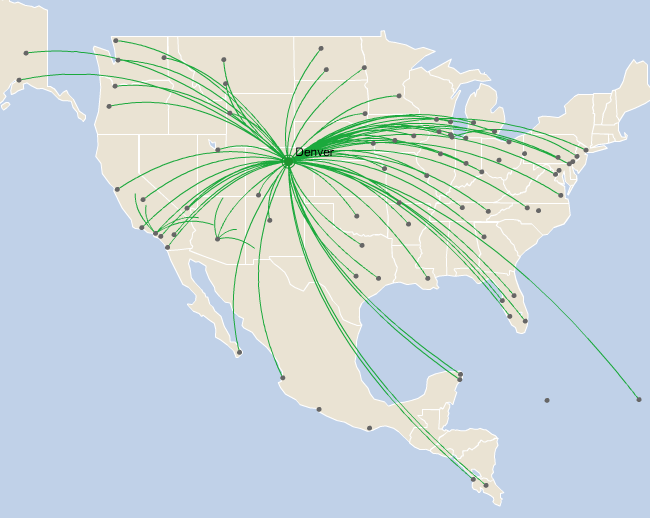
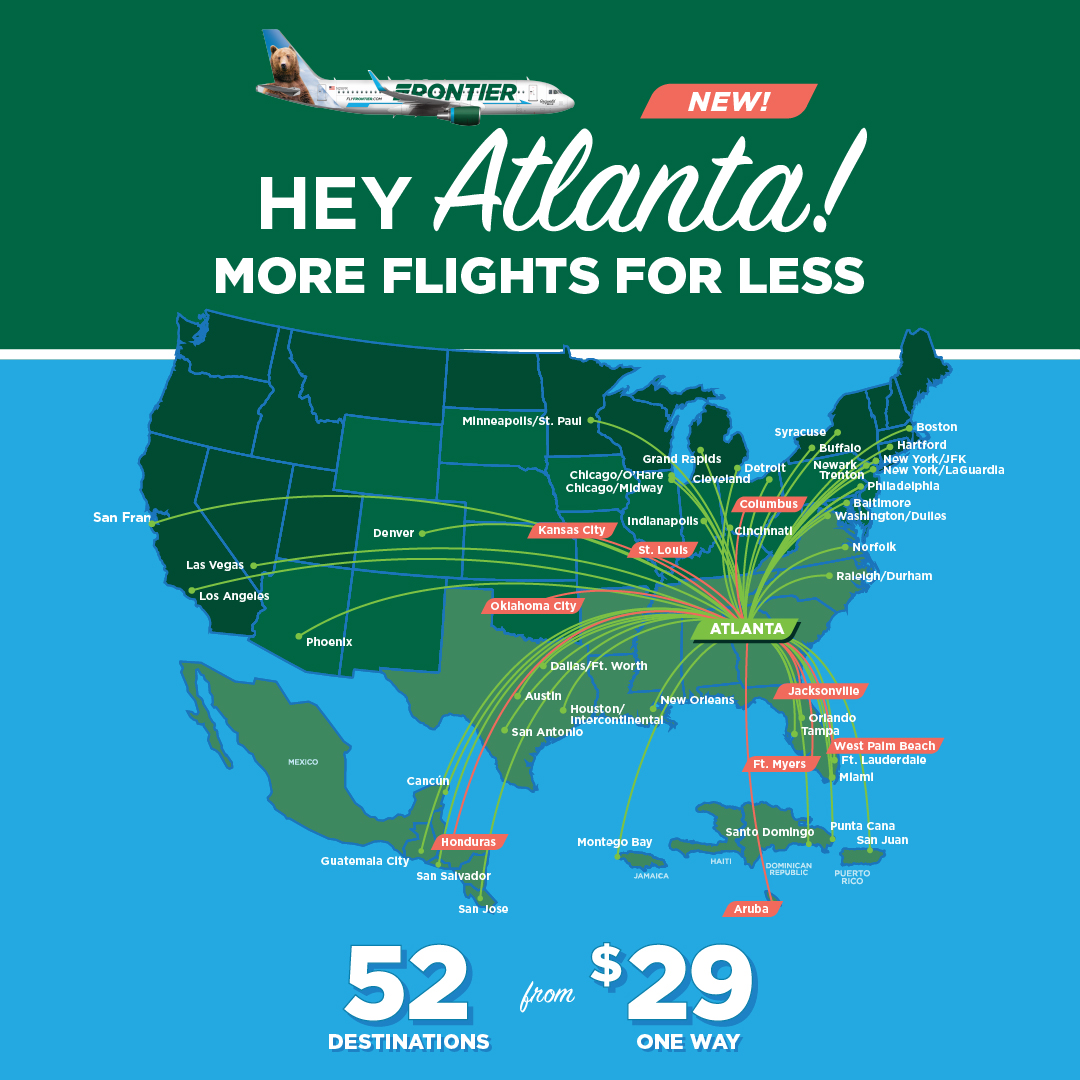
A close examination of Frontier’s route map reveals a strategic concentration on key leisure destinations and high-demand corridors. Cities like Orlando, Miami, Las Vegas, Denver (its operational base), and various spots in California feature prominently, alongside an expanding presence in Mexico and the Caribbean. These are markets characterized by strong inbound and outbound leisure travel, fitting perfectly with Frontier’s brand focus. The airline often identifies underserved routes within these corridors or launches service where incumbent carriers charge higher fares, creating new demand or capturing existing demand by offering a compelling low-cost alternative. This targeted expansion demonstrates a disciplined brand strategy: rather than attempting to be all things to all travelers, Frontier focuses its resources on markets where its low-fare model is most attractive and where it can secure a competitive advantage.
Competitive Dynamics and Brand Differentiation
Frontier’s route expansion is often a calculated move within the broader competitive landscape. It frequently enters markets where it can directly challenge legacy carriers on specific routes or where it can preempt other ULCCs. By introducing highly competitive fares on routes that previously had fewer low-cost options, Frontier effectively disrupts the market and reinforces its brand as the value leader. Its ability to quickly pivot and adapt its network, adding or removing routes with relative agility, allows it to respond to changing market conditions and competitive threats. This responsiveness is a key brand attribute, signaling flexibility and an unwavering commitment to maintaining its cost advantage. In essence, Frontier uses its route network as a strategic weapon to differentiate itself and assert its brand dominance in the low-fare segment.
Seasonal Adjustments and Brand Flexibility
The leisure-focused nature of Frontier’s brand also means its route network is inherently dynamic and often subject to seasonal adjustments. During peak travel seasons like winter holidays or summer vacations, the airline expands its service to popular warm-weather destinations or increases frequencies on existing routes. Conversely, during off-peak periods, some routes might be scaled back or temporarily suspended. This brand flexibility allows Frontier to maximize revenue opportunities during high-demand periods while efficiently managing capacity during leaner times. This adaptability further reinforces its brand promise of efficiency and smart resource allocation, ensuring that it can consistently offer competitive fares by aligning its operations with market demand. It’s a clear demonstration of how the brand actively manages its inventory and service offerings to maintain profitability while staying true to its core value proposition.
The Impact of Route Decisions on Customer Perception and Brand Loyalty
Frontier’s choices about where it flies are not just operational; they deeply influence customer perception, manage expectations, and contribute to building a distinct form of brand loyalty.
The “Bare Fares” Brand Experience
Frontier’s route simplicity and directness perfectly align with its “bare fares” model. The brand explicitly communicates that its low prices come from an unbundled service – passengers pay for the seat, and everything else (checked bags, carry-on bags, seat selection, refreshments) is an add-on. By primarily serving point-to-point leisure markets, Frontier caters to customers who are generally willing to forgo amenities for a lower price. The routes chosen reinforce this expectation: if you’re flying a quick, direct flight for a vacation, the primary goal is often just to get there affordably. This congruence between the route network and the service model helps to manage customer expectations effectively, ensuring that those who choose Frontier understand and accept the brand’s value proposition, fostering loyalty among those who prioritize cost above all else.
Expanding Brand Reach and Awareness
Each new destination Frontier adds to its network represents a new market for its brand. When Frontier launches a new route, it doesn’t just open a new travel option; it introduces the Frontier brand to a fresh segment of the population in both the originating and destination cities. This expansion significantly increases brand recognition and broadens the potential customer base. Marketing campaigns accompany new route announcements, further embedding the Frontier name and its value proposition into local consciousness. Over time, a continually expanding and strategically chosen route map contributes to a stronger, more recognizable national (and increasingly international) brand presence, allowing Frontier to compete more effectively with larger, more established airlines.
Managing Expectations Through Route Selection
By focusing its route network on specific types of travel – predominantly leisure and point-to-point – Frontier proactively manages customer expectations. Passengers booking a flight with Frontier to a vacation destination are generally not expecting the frills of a full-service, business-class experience. Instead, they expect an affordable, direct way to reach their holiday. This clarity in brand messaging, supported by the specific routes offered, helps to prevent disconnects between customer expectations and the actual service delivered. It builds a distinct type of brand loyalty where customers return because Frontier consistently meets their specific need for cost-effective, direct travel, rather than promising (and potentially failing to deliver) a premium experience.
Marketing the Map: Communicating the Brand Through Destinations
The route map is a powerful, dynamic marketing tool for Frontier Airlines, visually communicating its brand value and reach.
Visualizing Value: The Route Map as a Marketing Tool
Frontier frequently uses its route map in its advertising and on its website to visually communicate value and accessibility. A growing network of green dots (often paired with its signature animal tails) instantly conveys that “you can fly to more places for less.” This visual representation is incredibly effective in showcasing the breadth of its offerings and reinforcing the brand’s core promise. The map becomes a tangible representation of savings and opportunity, encouraging potential customers to explore new destinations through Frontier’s low-cost gateway.
Targeted Promotions and Regional Brand Building
Each new route launch or increase in frequency allows for highly targeted marketing campaigns. Frontier can tailor its promotions to specific regional interests and travel patterns, fostering local brand affinity. For instance, a new route from Milwaukee to Orlando can be marketed directly to Milwaukee families seeking affordable Disney vacations, creating a strong, localized brand connection. This granular approach to marketing, driven by its evolving route network, allows Frontier to build a loyal customer base city by city.
Emphasizing Directness and Convenience
Marketing messages around Frontier’s destinations often highlight the “non-stop” aspect of its flights, reinforcing the brand’s commitment to convenience and efficiency for its target demographic. In a world where many travelers dread layovers, the directness offered by Frontier’s point-to-point network is a significant selling point. This emphasis aligns with the brand’s overall promise of simplifying air travel and making it more accessible, allowing passengers to focus on their destination rather than the journey’s complexities.

Conclusion
Frontier Airlines’ route network is far more than an operational chart; it is a living, breathing manifestation of its brand strategy. Every destination, every flight path, and every seasonal adjustment reinforces its identity as an ultra-low-cost carrier committed to making air travel accessible and affordable. By strategically selecting where it flies, Frontier effectively communicates its value proposition, differentiates itself in a crowded market, and continues to build a brand synonymous with budget-friendly, point-to-point leisure travel. The airline’s disciplined approach to network development, aligned with its core brand pillars of affordability, efficiency, and targeted service, ensures that its operational choices consistently reinforce its brand promise. Understanding Frontier’s flight paths is truly understanding the carefully plotted flight path of its brand in the competitive airline industry.
aViewFromTheCave is a participant in the Amazon Services LLC Associates Program, an affiliate advertising program designed to provide a means for sites to earn advertising fees by advertising and linking to Amazon.com. Amazon, the Amazon logo, AmazonSupply, and the AmazonSupply logo are trademarks of Amazon.com, Inc. or its affiliates. As an Amazon Associate we earn affiliate commissions from qualifying purchases.