
The daily gyrations of the stock market can often feel like a perplexing enigma, a complex dance of numbers and sentiment that leaves investors wondering, “Why is the market down today?” While pinpointing a single definitive cause for every daily dip is often an oversimplification, understanding the confluence of factors that typically contribute to market downturns is crucial for any investor. Today’s market decline, like many others, is likely a reflection of a dynamic interplay between macroeconomic trends, corporate performance, geopolitical developments, and investor psychology. Delving into these underlying forces offers not just an explanation for current events but also a broader perspective on the inherent volatility of financial markets. This article will explore the principal drivers behind market corrections, providing insights into the economic indicators, global events, and sentiment shifts that often dictate market direction.
Decoding Economic Indicators: The Pulse of the Market
Economic data serves as the bedrock upon which market valuations are built. When these indicators signal potential headwinds, investors often react by re-evaluating asset prices, leading to sell-offs. Understanding which data points hold the most sway is key to interpreting market movements.
Inflationary Pressures and Interest Rate Hikes
One of the most potent forces influencing market sentiment is inflation. When the cost of goods and services rises persistently, central banks, like the Federal Reserve in the United States, typically respond by increasing interest rates. The rationale is to cool down an overheating economy by making borrowing more expensive, thereby reducing demand and bringing inflation back to target levels. However, higher interest rates have a multifaceted impact on the stock market. Firstly, they increase the cost of capital for businesses, which can reduce their profitability and slow down expansion plans. Secondly, higher rates make fixed-income investments, such as bonds, more attractive, drawing capital away from equities. Thirdly, for growth companies that rely heavily on future earnings, higher discount rates used in valuation models reduce the present value of those future profits, making their stocks less appealing. Today’s market downturn could very well be a direct consequence of persistent inflation data or expectations of aggressive future rate hikes, signaling a tighter monetary policy environment that typically weighs on equity valuations.
Employment Data and Consumer Spending Trends
The health of the labor market and consumer spending are critical barometers of economic vitality. Strong employment figures, characterized by low unemployment rates and robust wage growth, generally indicate a healthy economy with resilient consumer purchasing power. Conversely, signs of a weakening labor market—such as rising unemployment claims, slower job creation, or stagnant wages—can trigger concerns about future consumer spending, which is a significant component of most economies. When consumers cut back on spending, corporate revenues and profits suffer, directly impacting stock prices. Similarly, retail sales data, consumer confidence surveys, and personal consumption expenditures (PCE) provide direct insights into consumer behavior. A market downturn might be reflecting recent disappointing retail sales figures, a dip in consumer confidence, or an unexpected rise in unemployment, all suggesting a potential slowdown in economic activity that could hurt corporate earnings.
Corporate Earnings and Future Outlook
Ultimately, stock valuations are intrinsically linked to the profitability and growth prospects of the underlying companies. When companies report earnings that fall short of analyst expectations, or worse, issue a pessimistic outlook for future quarters, investors often react by selling off shares. This is because lower-than-expected earnings can signal weakening demand, increased competition, rising costs, or inefficiencies within a company. Furthermore, management’s forward guidance is often more impactful than past results. If a significant number of bellwether companies across various sectors revise their earnings forecasts downwards, it can trigger a broader market sell-off as investors anticipate a widespread deceleration in corporate profitability. A “market down today” scenario could stem from a recent flurry of negative corporate earnings reports or a collective downgrade of future earnings expectations across key industries, signaling a challenging operating environment ahead.
Geopolitical Dynamics and Global Market Sentiment
Beyond domestic economic factors, the intricate web of international relations and geopolitical events plays an increasingly significant role in shaping market sentiment and direction. Instability in one region can have ripple effects across global financial markets.
International Conflicts and Trade Wars
Geopolitical tensions, ranging from regional conflicts to large-scale international disputes, introduce a layer of uncertainty that financial markets inherently dislike. Conflicts can disrupt global supply chains, drive up commodity prices (especially oil and gas), and create unpredictable shifts in alliances and trade relationships. For instance, an escalation in a conflict involving major commodity producers can directly impact energy costs for businesses and consumers worldwide, fueling inflation and squeezing profit margins. Similarly, trade wars, characterized by tariffs and protectionist policies, can stifle international trade, increase costs for importers and exporters, and reduce global economic growth. The mere threat of such events can lead to a risk-off sentiment, prompting investors to divest from riskier assets like stocks and seek refuge in safer havens such as government bonds or gold. Today’s market dip might be a reaction to escalating tensions in a critical geopolitical region or new developments in international trade negotiations that signal potential disruptions to global commerce.
Political Instability and Policy Uncertainty
Domestic and international political stability is a cornerstone of investor confidence. When governments face internal strife, policy paralysis, or unexpected leadership changes, it creates an environment of uncertainty that can deter investment. Investors prefer predictability and clarity in regulations, taxation, and economic policy. Political instability can lead to inconsistent policy-making, increased regulatory burdens, or even nationalization threats in extreme cases, all of which are detrimental to business planning and investment returns. Similarly, upcoming elections or referendums can introduce uncertainty about future economic direction, causing markets to pause or retract as investors await clarity. If a significant political event has recently unfolded or is anticipated—such as an unexpected election result, a government crisis, or a major policy shift—it could easily be contributing to a cautious or bearish sentiment in the market today, as investors weigh the potential implications for businesses and the broader economy.
Market Dynamics and Investor Psychology
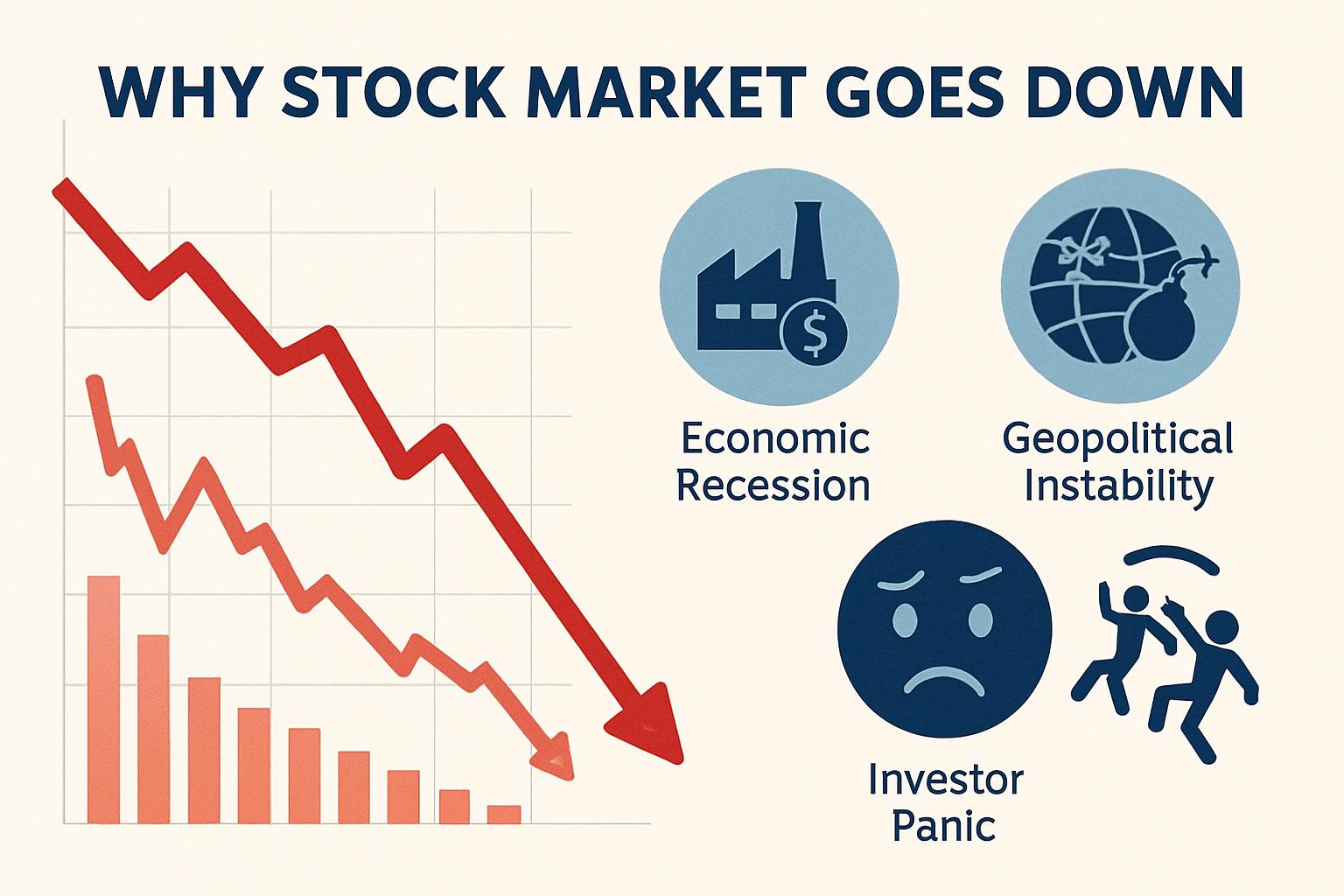
While economic fundamentals and geopolitical events provide the ‘what’ and ‘why’ for market movements, the ‘how’ often involves the complex dynamics of market structure and the often-irrational behaviors driven by investor psychology.
Algorithmic Trading and Market Liquidity
In modern financial markets, a significant portion of trading activity is driven by high-frequency trading algorithms. These automated systems execute trades at lightning speed based on predefined rules, often reacting instantly to news headlines, economic data releases, or technical indicators. While they contribute to market efficiency, they can also exacerbate volatility, especially during periods of stress. A sudden influx of sell orders triggered by algorithms reacting to a negative headline, combined with thin market liquidity (meaning fewer buyers for available sellers), can lead to rapid and sharp price declines, creating a cascade effect. What might appear as a fundamental downturn could, in part, be amplified by the immediate, often unemotional, reactions of these trading systems. Furthermore, market liquidity—the ease with which an asset can be bought or sold without significantly affecting its price—can play a crucial role. In periods of uncertainty, liquidity can dry up as buyers step back, making even small selling pressures lead to larger price drops.
Investor Sentiment and Herd Behavior
Beyond the cold logic of algorithms, human emotion remains a powerful, often irrational, force in financial markets. Investor sentiment, the collective mood of market participants, can shift rapidly from optimism (greed) to pessimism (fear). Fear, in particular, can be a potent catalyst for market downturns. When negative news breaks, or a market begins to dip, a phenomenon known as “herd behavior” can take hold. Investors, seeing others sell, may panic and liquidate their holdings to avoid further losses, irrespective of the underlying fundamentals. This self-reinforcing cycle of selling can accelerate a downturn. Media narratives, social media discussions, and the pronouncements of influential analysts can all play a role in shaping and amplifying collective sentiment. A market decline today might not be solely due to new fundamental data, but rather an acceleration of negative sentiment, a loss of confidence, or a widespread fear of missing out on selling before prices drop further. The market, after all, is not just a reflection of economic reality but also a mirror of human expectations and anxieties.
Technical Indicators and Support/Resistance Levels
Many investors, particularly short-term traders, heavily rely on technical analysis, which involves studying past market data, primarily price and volume, to identify patterns and predict future price movements. Key technical indicators include moving averages, relative strength index (RSI), and Bollinger Bands. When the market breaks below significant “support levels” (price points where buying interest has historically been strong enough to prevent further declines) or fails to hold above “resistance levels” (price points where selling pressure has historically been strong enough to halt further increases), it can trigger further selling. This is because a breach of a support level is often interpreted as a bearish signal, indicating that the downward momentum is gaining strength and that more sellers are likely to emerge. Today’s market dip could be exacerbated by the breaking of key technical support levels, triggering automated sell orders or prompting technically-minded investors to liquidate positions, reinforcing the downward trend.
Navigating Downturns: Strategies for Investors
Understanding why the market is down is only half the battle; knowing how to respond is equally important for long-term financial health. Rather than succumbing to panic, prudent investors view downturns as a normal, albeit uncomfortable, part of the investment cycle.
The Importance of Diversification
A well-diversified portfolio is the first line of defense against market volatility. By spreading investments across various asset classes (equities, bonds, real estate, commodities), different industries, geographies, and company sizes, investors can mitigate the impact of a downturn in any single segment. While a broad market decline will affect most assets to some degree, diversification helps cushion the blow. For example, during equity downturns, government bonds often act as a safe haven, providing some stability. Rebalancing a diversified portfolio during a downturn can also present opportunities to buy assets that have become undervalued, realigning the portfolio with its intended risk profile and long-term objectives.
Long-Term Perspective vs. Short-Term Noise
One of the greatest challenges during a market downturn is resisting the urge to react impulsively to short-term fluctuations. History consistently shows that markets recover from corrections and bear markets over time. Focusing on long-term financial goals and maintaining a consistent investment strategy, such as dollar-cost averaging (investing a fixed amount regularly, regardless of market conditions), can help investors ride out the storm. Trying to time the market—selling at the bottom and buying at the top—is notoriously difficult and often leads to missed opportunities during the recovery phase. A professional, insightful approach emphasizes patience and discipline, understanding that market downturns are temporary phenomena within a longer-term growth trajectory.
Rebalancing and Opportunity Amidst Volatility
While market downturns can be unsettling, they also present unique opportunities for astute investors. When prices fall, quality assets can become available at a discount. A market correction allows investors to re-evaluate their portfolios, identify fundamentally strong companies that may have been oversold, and potentially increase their positions at lower prices. This “buy the dip” strategy, when applied judiciously to well-researched investments, can significantly enhance long-term returns. Rebalancing involves adjusting the portfolio back to its target asset allocation. For instance, if stocks have fallen significantly, they might now represent a smaller percentage of the portfolio than desired. Rebalancing would involve selling some assets that have performed relatively well (e.g., bonds) and buying more of the undervalued stocks, essentially buying low and selling high.
Conclusion
Today’s market downturn, like all others, is a multifaceted event, a complex interplay of economic fundamentals, global political developments, and the intricate psychology of market participants. From inflation worries and interest rate hikes to geopolitical tensions, corporate earnings disappointments, and the amplified effects of algorithmic trading and investor sentiment, numerous threads contribute to the market’s daily narrative. Rather than succumbing to the immediate anxieties of a downward trend, a professional and insightful approach requires investors to understand these underlying forces, maintain a long-term perspective, and adhere to a disciplined investment strategy. While predicting daily movements is a fool’s errand, comprehending the drivers of market volatility empowers investors to make informed decisions, mitigate risks, and even identify opportunities amidst the turbulence, ultimately fostering greater financial resilience and success.
aViewFromTheCave is a participant in the Amazon Services LLC Associates Program, an affiliate advertising program designed to provide a means for sites to earn advertising fees by advertising and linking to Amazon.com. Amazon, the Amazon logo, AmazonSupply, and the AmazonSupply logo are trademarks of Amazon.com, Inc. or its affiliates. As an Amazon Associate we earn affiliate commissions from qualifying purchases.