
Understanding the ebbs and flows of financial markets is crucial for investors, businesses, and policymakers alike. When the market experiences a significant downturn, the immediate question on everyone’s mind is often, “Why is the market falling today?” While short-term fluctuations can be attributed to a myriad of factors, sustained declines typically stem from a confluence of macroeconomic, geopolitical, and sentiment-driven forces. Pinpointing the exact trigger can be challenging, as markets are complex adaptive systems where various elements interact and amplify each other. However, by dissecting the primary drivers, we can gain valuable insight into the underlying dynamics at play and better position ourselves for future market movements. Today’s market decline, like many before it, is likely a response to an accumulation of concerns, ranging from inflationary pressures to geopolitical instabilities, all impacting investor confidence and corporate outlooks.
Macroeconomic Headwinds: The Unseen Forces
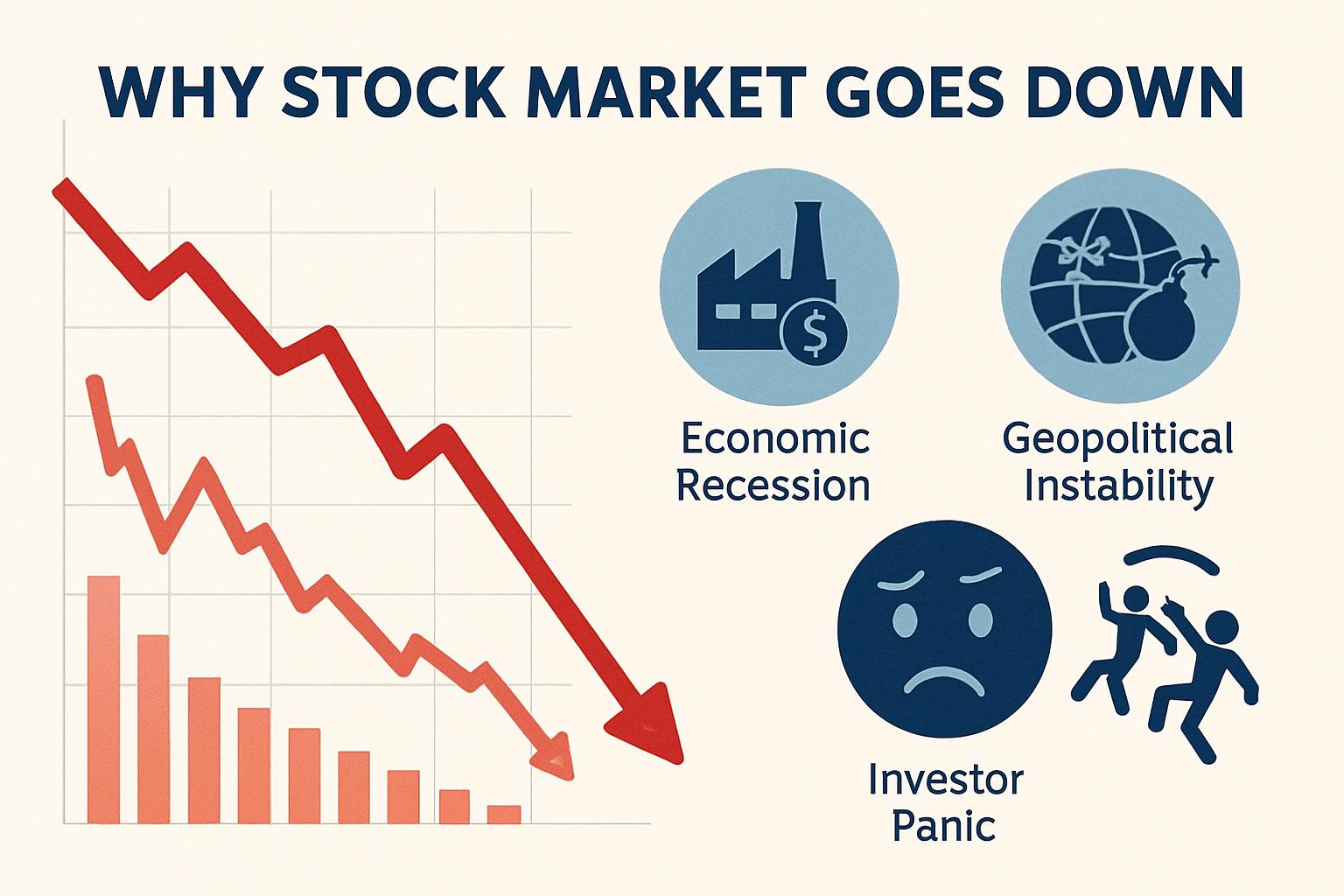
The health of the global economy serves as the foundational backdrop for market performance. When key economic indicators signal trouble, markets tend to react swiftly and negatively. Today’s market fall is heavily influenced by several significant macroeconomic headwinds that are creating an environment of uncertainty and caution among investors.
Inflationary Pressures and Interest Rate Hikes
Perhaps the most potent force currently weighing on markets is persistent inflation. Across major economies, the cost of goods and services has risen sharply, eroding purchasing power and increasing the cost of doing business. Central banks, tasked with maintaining price stability, have responded aggressively by raising interest rates. While necessary to curb inflation, higher interest rates have several detrimental effects on financial markets:
- Increased Borrowing Costs: Businesses face higher costs for debt financing, which can stifle investment, reduce profitability, and slow expansion plans. This often leads to lower earnings projections, making company stocks less attractive.
- Reduced Consumer Spending: Higher interest rates translate to more expensive mortgages, car loans, and credit card debt for consumers. This reduces discretionary income, leading to a slowdown in consumer spending, a critical component of economic growth.
- Discounting Future Earnings: In investment valuation models, future earnings are discounted back to their present value using an interest rate (often the risk-free rate plus a premium). When interest rates rise, the present value of future earnings decreases, particularly for growth stocks that promise significant future profits, making them less valuable today.
- Shift from Equities to Bonds: Higher interest rates make fixed-income investments, such as government bonds, more attractive as they offer better returns with less risk compared to equities. This can lead to a capital outflow from the stock market as investors seek safer havens.
Geopolitical Tensions and Supply Chain Disruptions
Global political instability and conflicts continue to cast a long shadow over economic forecasts and market sentiment. Geopolitical events, such as ongoing conflicts or trade disputes between major powers, introduce an element of unpredictability that markets abhor.
- Commodity Price Volatility: Conflicts in key regions can disrupt the supply of essential commodities like oil, natural gas, and agricultural products. This volatility directly impacts production costs for businesses and consumer prices, exacerbating inflationary pressures. For instance, disruptions in energy supply can send crude oil prices soaring, increasing transportation and manufacturing costs across the board.
- Supply Chain Vulnerabilities: The interconnected nature of the global economy means that disruptions in one part of the world can have ripple effects globally. Lockdowns, geopolitical tensions, or natural disasters can cripple supply chains, leading to shortages, delays, and increased costs for businesses. Companies struggle to source components or deliver finished goods, impacting their revenues and profitability. This vulnerability makes investors wary of companies with extensive global supply networks.
- Reduced Global Trade and Investment: Geopolitical tensions can lead to protectionist policies, tariffs, and restrictions on trade and foreign investment. This reduces global economic integration, shrinks market opportunities for multinational corporations, and can dampen overall economic growth, making investors cautious about exposure to international markets.
Slowing Global Economic Growth
Beyond inflation and geopolitical events, there’s a growing consensus that global economic growth is decelerating. Factors contributing to this slowdown include the lingering effects of the pandemic, reduced consumer demand due to inflation, and the impact of tighter monetary policies.
- Recession Fears: Persistent inflation coupled with aggressive interest rate hikes raises the specter of a recession – a significant and prolonged downturn in economic activity. The fear of an impending recession often triggers a sell-off in equity markets as investors anticipate lower corporate earnings and higher unemployment rates.
- Weakening Demand: As economic growth slows, consumer and business demand for goods and services tends to decline. Companies respond by cutting production, reducing inventories, and potentially laying off staff, further contributing to the downturn cycle.
- Corporate Profitability Concerns: A slowing economy directly impacts corporate revenues and profits. Companies face reduced sales volumes, while still grappling with elevated input costs. This dual pressure on the top and bottom lines leads to lower earnings expectations, which is a primary driver for stock price declines.
Investor Sentiment and Behavioral Factors
Markets are not purely rational entities; they are profoundly influenced by human psychology. Investor sentiment, often a reflection of collective fear or greed, plays a significant role in determining short-to-medium term market movements. When fear takes hold, it can lead to rapid and sometimes irrational sell-offs.
Fear, Uncertainty, and Doubt (FUD)
In times of economic uncertainty, a pervasive sense of fear, uncertainty, and doubt (FUD) can sweep through financial markets. This emotional state often overrides fundamental analysis and rational decision-making.
- Contagion Effect: When a significant market event occurs, fear can spread rapidly, leading other investors to panic and sell their holdings, even if their underlying investments remain sound. This “herd mentality” can accelerate declines, turning a measured correction into a full-blown market downturn.
- Loss Aversion: Investors often feel the pain of a loss more acutely than the pleasure of an equivalent gain. This psychological bias, known as loss aversion, can compel investors to sell quickly during a downturn to prevent further losses, even if it means crystallizing a loss that might have otherwise recovered.
- Lack of Clear Signals: When there is no clear direction from central banks, governments, or corporate leaders regarding economic stability or future growth, uncertainty reigns. This ambiguity fuels investor anxiety, making them more prone to pulling capital out of risky assets.
Liquidation and Margin Calls
A falling market can trigger a cascading effect, especially for investors who have used leverage or taken on significant risk.
- Forced Selling: As asset prices decline, investors who borrowed money to purchase securities (i.e., bought on margin) may receive a “margin call” from their brokers. A margin call demands that the investor deposit additional funds or sell off existing securities to meet the minimum equity requirements in their account. This forced selling adds further downward pressure on market prices.
- Deleveraging Cycle: In a broad market downturn, institutions and large investors may also engage in deleveraging – reducing their overall exposure to risky assets. This systematic selling across portfolios can amplify market declines, as large blocks of shares are offloaded simultaneously.
Impact of Media and Social Media Narratives
In the digital age, information (and misinformation) spreads at lightning speed. Media headlines and social media discussions can significantly influence investor sentiment, sometimes creating self-fulfilling prophecies.
- Amplification of Negative News: Negative economic news, corporate earnings warnings, or geopolitical developments are often amplified by financial news outlets and social media. This constant barrage of bad news can contribute to a climate of pessimism and encourage further selling.
- “Doom Scrolling” and Panic: The accessibility of market data and financial commentary through smartphones and social media can lead to continuous monitoring of declines. This “doom scrolling” can heighten anxiety and contribute to panic selling, as investors feel pressured to act immediately based on real-time, often negative, updates.
- Algorithmic Trading Reactions: While not purely “behavioral,” the algorithms used by institutional traders often react to news sentiment and market momentum. If media narratives turn overwhelmingly negative, these algorithms can trigger large-scale automated selling orders, accelerating market declines beyond what human sentiment alone might cause.
Sector-Specific Challenges and Corporate Earnings
While macroeconomic factors affect the entire market, specific sectors and individual companies can face unique challenges that contribute to an overall market downturn. Poor corporate performance or structural issues within key industries can drag down broader indices.
Tech Sector Correction
The technology sector, which experienced phenomenal growth over the past decade, has been particularly vulnerable in the current environment.
- Valuation Concerns: Many tech companies, especially those in high-growth but unprofitable stages, were valued based on future growth potential rather than current earnings. With rising interest rates, these future earnings are discounted more heavily, making their present valuations seem inflated. Investors are shifting away from “growth” stocks towards more stable, “value” stocks.
- Increased Competition and Regulatory Scrutiny: The tech industry is also facing increased competition, maturing markets, and heightened regulatory scrutiny concerning data privacy, antitrust, and content moderation. These factors can limit growth prospects and increase operational costs, dampening investor enthusiasm.
- Sensitivity to Economic Slowdown: While some tech services are resilient, many are tied to discretionary consumer spending or corporate investment. A slowing economy can reduce demand for new gadgets, software licenses, or advertising services, impacting tech companies’ revenues.
Energy Market Volatility
Despite high oil prices, the energy sector still experiences significant volatility, which can have broader market implications.
- Supply-Demand Imbalances: Geopolitical events and OPEC+ decisions can create sudden supply-demand imbalances, leading to wild swings in energy prices. While high prices can boost energy companies’ profits, extreme volatility makes future earnings unpredictable and can cause widespread inflation, hurting other sectors.
- Transition Risks: The long-term transition towards renewable energy sources also presents risks. Investors are increasingly evaluating the sustainability of traditional fossil fuel companies, and policy changes or technological advancements can impact their long-term viability, leading to investment uncertainty.
Disappointing Earnings Reports and Future Guidance
The bedrock of equity valuation is corporate earnings. When companies fail to meet analyst expectations or, more critically, provide a pessimistic outlook for future performance, it often triggers a sell-off in their stock and can ripple across the market.
- Impact on Investor Confidence: Poor earnings reports signal that companies are struggling to generate profits, perhaps due to higher costs, weaker demand, or operational inefficiencies. This erodes investor confidence in the company’s management and its ability to navigate challenging economic conditions.
- Downward Revisions of Estimates: When a major company issues disappointing guidance for future quarters, it often leads analysts to revise their earnings estimates downwards for the entire sector or even the broader market. This re-evaluation of earnings potential contributes significantly to market declines.
- Ripple Effect on Suppliers and Competitors: A negative earnings report from a large company can indicate broader problems within an industry, affecting its suppliers, customers, and even competitors. For example, if a major retailer reports weak sales, it can signal trouble for its consumer goods suppliers.
The Role of Technical Factors and Market Structure
Beyond fundamental and behavioral drivers, certain technical aspects of market structure and trading dynamics can exacerbate or even initiate market falls. These factors are often self-reinforcing.
Support and Resistance Levels
In technical analysis, support and resistance levels are price points on charts that historically prevent the price of an asset from falling below or rising above them, respectively.
- Breakdown of Support: When a market price falls below a significant support level, it often signals a weakening trend and can trigger further selling. Many traders use these technical breaches as signals to liquidate positions, adding momentum to the downward move.
- Algorithmic Trading on Technicals: A large portion of daily trading volume is now executed by algorithmic trading systems. These algorithms are often programmed to identify and react to technical levels, initiating sell orders when support is broken, thereby accelerating declines.
Algorithmic Trading and High-Frequency Trading
The proliferation of high-frequency trading (HFT) and complex algorithms has fundamentally changed market dynamics.
- Speed and Volume: HFT firms execute trades in microseconds, accounting for a substantial portion of market volume. While they often provide liquidity, their rapid, automated reactions to market signals or news can amplify volatility, turning small declines into swift crashes.
- Flash Crashes: In some extreme cases, HFT algorithms can create “flash crashes” – sudden, severe, and brief market declines that occur with little warning, often recovering quickly. These events, though short-lived, underscore the potential for automated systems to trigger rapid sell-offs.
Derivatives and Leverage
The use of derivatives (financial contracts whose value is derived from an underlying asset) and leverage (borrowed capital) can magnify both gains and losses in markets.
- Increased Volatility: Options, futures, and other derivatives can be used to bet on market direction or to hedge existing positions. However, their complex interplay and potential for rapid revaluation can increase overall market volatility. Large-scale unwinding of derivative positions during a downturn can lead to significant selling pressure on underlying assets.
- Amplified Losses: Leverage allows investors to control a larger position with a smaller amount of capital. While this can magnify profits, it equally magnifies losses. In a falling market, leveraged positions can quickly lead to margin calls and forced selling, intensifying the market’s descent.
Navigating Market Volatility: A Strategic Approach
Understanding why the market is falling is the first step; the next is knowing how to navigate such periods. For individual and institutional investors, a well-thought-out strategy is paramount to protect capital and position for future growth.
Diversification and Asset Allocation
The oldest and perhaps most fundamental principle of investing remains crucial: don’t put all your eggs in one basket.
- Spread Across Asset Classes: Diversifying across different asset classes – such as equities, bonds, real estate, and commodities – can help cushion the blow of a downturn in any single market. When stocks are falling, bonds might provide stability or even gains, helping to balance the overall portfolio.
- Geographic and Sectoral Diversification: Within equities, diversifying across different countries and industry sectors can reduce concentration risk. A downturn in one industry or region might be offset by resilience elsewhere.
- Regular Rebalancing: Periodically rebalancing a portfolio ensures that the asset allocation aligns with the investor’s risk tolerance and financial goals, automatically selling high-performing assets and buying underperforming ones to maintain target percentages.
Long-Term Perspective and Dollar-Cost Averaging
For most investors, especially those saving for retirement or long-term goals, resisting the urge to panic sell during a downturn is critical.
- Market History: Historically, financial markets have always recovered from downturns and gone on to reach new highs. A long-term perspective allows investors to ride out the storm, recognizing that market corrections are a normal part of the investment cycle.
- Dollar-Cost Averaging: This strategy involves investing a fixed amount of money at regular intervals, regardless of market fluctuations. When prices are high, fewer shares are purchased; when prices are low (during a market fall), more shares are acquired. This averages out the purchase price over time and can be highly effective in volatile markets, turning downturns into opportunities to buy assets at a discount.
- Avoid Emotional Decisions: Panicking and selling at the bottom locks in losses and misses the eventual recovery. A disciplined, long-term approach helps mitigate emotional decision-making.
The Importance of Financial Planning and Professional Advice
During periods of market stress, having a clear financial plan and access to expert advice can provide significant peace of mind and strategic direction.
- Goal-Oriented Planning: A comprehensive financial plan helps define investment goals, risk tolerance, and time horizons. This framework guides investment decisions, ensuring they remain aligned with personal objectives even amidst market volatility.
- Emergency Fund: Maintaining a robust emergency fund ensures that investors do not need to liquidate investments at depressed prices to cover unexpected expenses. This cash buffer provides security during tough times.
- Professional Guidance: Working with a qualified financial advisor can provide objective insights, help manage emotional responses to market swings, and tailor strategies to individual circumstances. Advisors can offer expertise in asset allocation, tax-efficient investing, and navigating complex market environments. They can help identify opportunities that emerge during downturns and ensure that portfolio adjustments are strategic rather than reactive.
In conclusion, today’s market fall is likely a complex interplay of high inflation, rising interest rates, lingering geopolitical tensions, and a general deceleration in global economic growth. These macroeconomic headwinds are compounded by negative investor sentiment, the self-reinforcing mechanisms of market structure, and specific challenges within key sectors. While the immediate impulse might be fear, a deeper understanding of these drivers, coupled with a disciplined, diversified, and long-term investment strategy, remains the most prudent path for investors to navigate the current turbulence and ultimately benefit from future market recoveries.
aViewFromTheCave is a participant in the Amazon Services LLC Associates Program, an affiliate advertising program designed to provide a means for sites to earn advertising fees by advertising and linking to Amazon.com. Amazon, the Amazon logo, AmazonSupply, and the AmazonSupply logo are trademarks of Amazon.com, Inc. or its affiliates. As an Amazon Associate we earn affiliate commissions from qualifying purchases.