
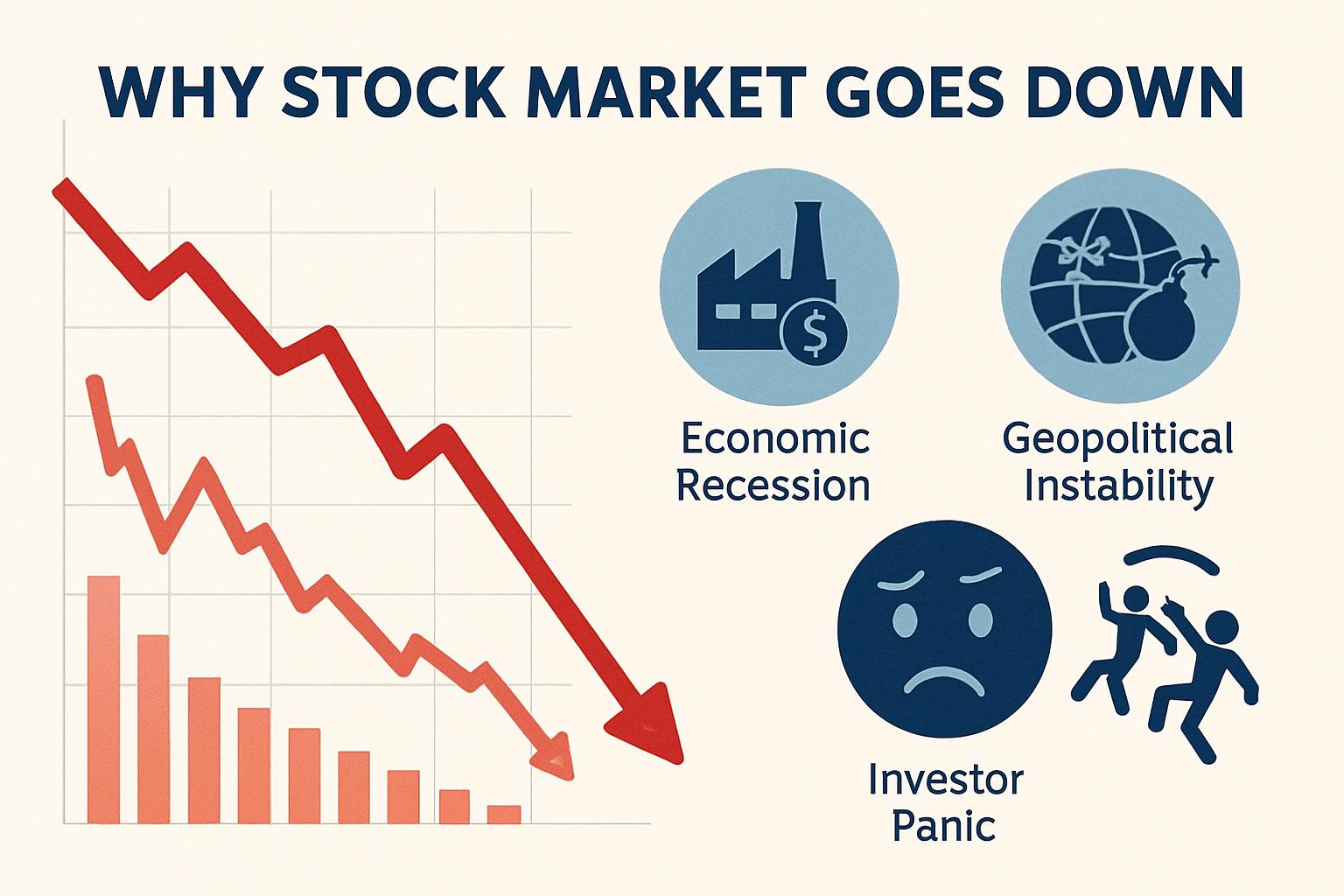
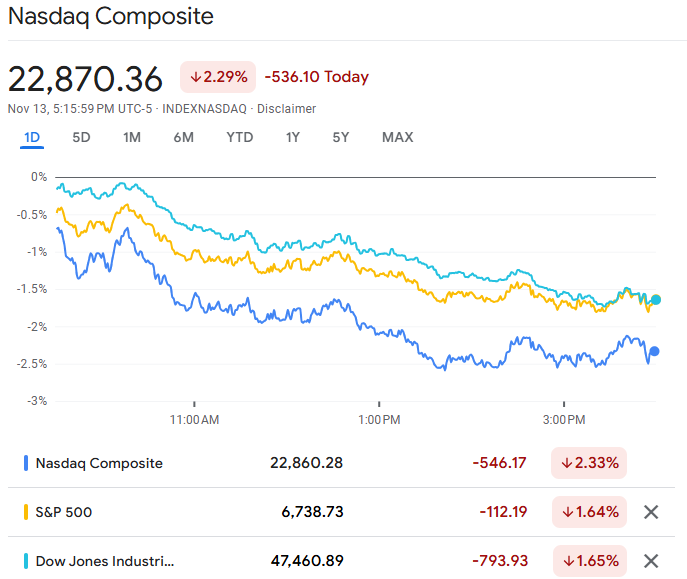
The financial markets are a complex ecosystem, constantly reacting to a myriad of forces, from the whispers of economic data to the roar of geopolitical events. A market drop, while often unsettling, is a recurring feature of this dynamic landscape, an inevitable part of the cyclical ebb and flow of investing. Today’s decline, like many before it, is unlikely to be attributed to a single, isolated cause but rather a confluence of interconnected factors that collectively sway investor sentiment and asset valuations. Understanding these forces is crucial not just for financial professionals, but for every individual navigating their personal financial journey, as market movements directly impact retirement savings, investment portfolios, and broader economic confidence.

When the market dips, the immediate instinct for many is often fear or panic. However, a professional and insightful approach demands a deeper dive into the underlying drivers. These drivers typically span macroeconomic shifts, specific corporate performance, inherent market psychology, and the impact of policy decisions. By dissecting these elements, we can move beyond mere reaction and towards a more informed perspective, preparing for future volatility and making strategic financial decisions. This article will explore the principal reasons that frequently contribute to market downturns, providing a framework for comprehending today’s events and those yet to come.
Macroeconomic Headwinds: A Broader Economic Picture
The health of the global economy serves as the foundational backdrop against which markets operate. When this foundation shows cracks, or forecasts point to stormy weather ahead, investor confidence can erode quickly, leading to broad market sell-offs.
Inflationary Pressures and Interest Rate Hikes
One of the most potent macroeconomic forces driving market sentiment is inflation. When the cost of goods and services rises persistently, it erodes the purchasing power of consumers and increases operational costs for businesses, thereby squeezing profit margins. Central banks, like the U.S. Federal Reserve, are tasked with maintaining price stability. Their primary tool to combat inflation is raising interest rates. Higher interest rates make borrowing more expensive for both consumers and businesses, which can slow down economic activity and cool demand. For investors, higher rates reduce the present value of future corporate earnings, making growth stocks less attractive and often leading to a re-evaluation of all asset prices. The anticipation or realization of aggressive rate hikes can trigger significant market corrections as investors brace for slower economic growth and potentially lower corporate profitability. Moreover, higher rates make fixed-income investments, like bonds, more appealing relative to riskier equities, prompting a shift in capital.
Geopolitical Instability and Global Supply Chain Disruptions
The intricate web of global trade and international relations means that events far removed from a country’s borders can have immediate and profound impacts on its financial markets. Geopolitical instability, whether in the form of armed conflicts, trade wars, or strained diplomatic relations, introduces uncertainty and risk. Such events can disrupt critical supply chains, leading to shortages of raw materials or finished goods, which in turn drives up production costs and consumer prices. For example, conflicts in energy-rich regions can cause oil and gas prices to skyrocket, impacting everything from transportation costs to manufacturing expenses. Similarly, trade disputes can lead to tariffs, making imports more expensive and hindering export markets for domestic companies. The unpredictability of these events creates an environment of risk aversion, prompting investors to pull back from equities and seek safer assets, contributing to a market drop. The interconnectedness of modern economies means a ripple in one part of the world can quickly become a wave across global markets.
Economic Growth Concerns and Recession Fears
Ultimately, market valuations are tied to expectations of future corporate earnings, which are heavily influenced by the overall pace of economic growth. When economic indicators such as Gross Domestic Product (GDP), manufacturing output, or consumer spending data signal a slowdown, concerns about a potential recession intensify. A recession, defined as a significant, widespread, and prolonged downturn in economic activity, typically leads to reduced consumer demand, lower corporate profits, and higher unemployment. During periods of impending or actual recession, investors often anticipate a contraction in earnings across various sectors, leading them to sell off stocks to mitigate potential losses. Headlines about declining consumer confidence, weakening retail sales, or a manufacturing slowdown can act as catalysts for market drops, as these suggest a less robust economic environment for businesses to thrive in. The yield curve inversion, where short-term bond yields rise above long-term yields, is often cited as a reliable predictor of future recessions, further fueling market anxiety.
Corporate Performance and Sector-Specific Challenges
While macroeconomic factors paint the broad picture, the specifics of corporate health and the performance of key industries play a direct role in driving market sentiment on any given day.
Disappointing Earnings Reports and Revenue Misses
At the heart of stock market valuations is the performance of individual companies. When major corporations, particularly those with significant market capitalization or bellwether status, report financial results that fall short of analyst expectations, it can send negative ripples across the broader market. A “miss” on earnings per share (EPS) or revenue projections signals that the company’s growth trajectory may be faltering or that its operational efficiency is declining. Such disappointments can lead to a reassessment of the company’s future prospects, often resulting in a sharp decline in its stock price. If several key companies report poor results around the same time, or if guidance for future quarters is significantly lowered, it can suggest a broader weakness within the economy or specific sectors, triggering a wider market sell-off as investors recalibrate their expectations for numerous firms.
Sector-Specific Headwinds (e.g., Tech Slowdown, Energy Volatility)
Not all sectors are created equal, and specific challenges facing one industry can contribute significantly to a market drop, even if other sectors remain relatively stable. For instance, the technology sector, often valued for its growth potential, can be particularly vulnerable to rising interest rates, as higher rates diminish the present value of future earnings that are further out in time. A “tech slowdown” might involve reduced consumer spending on gadgets, lower enterprise IT budgets, or increased regulatory scrutiny. Conversely, the energy sector is highly susceptible to commodity price volatility. A sudden drop in oil prices, for example, can severely impact the profitability of oil and gas companies, leading to a decline in their stock values and potentially dragging down energy-focused indices. Similarly, regulatory changes affecting industries like pharmaceuticals, banking, or utilities can create uncertainty and pressure on stock prices within those specific sectors. These sector-specific pressures can sometimes be enough to trigger a broader market correction, especially if the affected sector constitutes a significant portion of the overall market capitalization.
Debt Levels and Corporate Financial Health
In an environment of rising interest rates, the financial health of corporations becomes a heightened concern. Companies carrying substantial amounts of debt face increasing interest payments, which can eat into their profits and strain their cash flow. Investors scrutinize debt-to-equity ratios and debt service coverage ratios more closely, looking for signs of potential distress. Concerns about a company’s ability to refinance its debt at favorable terms, or even its solvency, can lead to a rapid sell-off of its shares. This risk is amplified in sectors where companies are traditionally highly leveraged, or in times of economic uncertainty when revenues might decline, making it harder to service debt. A wave of downgrades from credit rating agencies or news of a prominent company defaulting on its debt can create a contagion effect, sparking fears about the stability of the broader financial system and contributing to a market drop.
Market Sentiment and Technical Factors
Beyond fundamental economic and corporate data, the collective psychology of investors and automated trading mechanisms play a powerful, sometimes irrational, role in daily market movements.
Investor Psychology and Fear-Driven Selling
Financial markets are not purely rational entities; they are heavily influenced by human emotion. Fear, greed, and panic can significantly amplify market movements. When a market begins to decline, especially following a period of sustained growth, fear can take hold. This fear often leads to a phenomenon known as “fear-driven selling,” where investors, worried about further losses, rush to liquidate their positions. This selling begets more selling, creating a self-fulfilling prophecy that can accelerate a market drop, even if the underlying economic fundamentals haven’t drastically changed. News headlines, social media chatter, and the perceived “mood” of the market can all contribute to this psychological cascade, transforming a modest downturn into a significant correction as panic spreads.
Technical Breakdowns and Algorithmic Trading
Modern markets are also heavily influenced by technical analysis and algorithmic trading. Technical analysts identify support and resistance levels, trend lines, and other patterns based on historical price and volume data. When a major index or a widely held stock “breaks through” a key technical support level, it can trigger automated selling programs designed to execute trades based on these technical signals. A breach of a 200-day moving average, for instance, might be programmed to initiate a sell order. Algorithmic trading, which accounts for a substantial portion of daily trading volume, can rapidly exacerbate market movements. These high-frequency trading programs react instantaneously to market data and technical signals, executing trades at speeds impossible for human traders. In a volatile environment, an initial dip can trigger a cascade of automated sell orders, creating a “flash crash” or a rapid, deep market decline in a very short period, often before human investors can fully comprehend what is happening.
Futures and Options Expirations
Certain days of the trading calendar, such as “quadruple witching” days (when stock index futures, stock index options, stock options, and single-stock futures expire simultaneously), can naturally lead to increased volatility. As these derivatives contracts expire, traders must either close out their positions, roll them over, or let them expire worthless. This activity can involve large volumes of buying or selling of the underlying assets, particularly in the last hour of trading, as institutional investors and arbitrageurs adjust their portfolios. While not always leading to a drop, the concentrated trading activity can amplify existing market sentiment or create temporary dislocations, which can contribute to a downward movement if the prevailing sentiment is negative. Even regular weekly or monthly options expirations can contribute to intraday volatility as market makers hedge their positions.
The Role of Policy and Regulatory Environment
Government and central bank actions, or even the anticipation of such actions, wield immense power over financial markets. Their decisions can shift market sentiment dramatically.
Central Bank Communications and Monetary Policy Shifts
Central banks are arguably the most influential players in shaping market conditions. Their pronouncements on monetary policy—interest rates, quantitative easing or tightening, inflation targets—are scrutinized by investors worldwide. Any hint of a shift in policy, such as a more hawkish stance on interest rates to combat inflation, can send shivers through the market. For example, if the Federal Reserve signals that it will raise interest rates more aggressively than previously expected, it can lead to immediate selling pressure across equities, as higher rates increase borrowing costs for businesses and make future earnings less valuable. Conversely, unexpected dovish statements might spark a rally. The clarity, or lack thereof, in central bank communications can also contribute to market volatility, as investors struggle to price in future policy moves.
Government Fiscal Policy and Budget Concerns
Government fiscal policy, encompassing spending, taxation, and debt management, also significantly impacts market performance. Large-scale government spending programs, tax cuts, or significant increases in national debt can raise concerns about inflation, future tax burdens, or the long-term stability of public finances. For instance, if a government announces a new policy that is perceived to be inflationary or economically unsound, investors might react by selling off assets, especially if it appears to jeopardize the nation’s credit rating. Budget impasses, debates over debt ceilings, or political gridlock that hinders economic policy can also create uncertainty, leading investors to take a more cautious stance and contributing to market drops. The interplay between fiscal policy and monetary policy is also critical; conflicting signals from these two branches can amplify market anxiety.
New Regulations and Industry Scrutiny
Regulatory changes can significantly alter the operating environment and profitability of specific industries, with ripple effects across the market. New environmental regulations, stricter financial oversight, anti-trust investigations into tech giants, or changes in healthcare policy can all create uncertainty and potentially increased compliance costs or reduced revenue opportunities for affected companies. The announcement of such regulations, or even the heightened scrutiny of certain business practices (e.g., data privacy, market concentration), can lead to a sell-off in the stocks of the companies and sectors most impacted. Investors price in the potential for reduced earnings or increased operational hurdles, leading to a re-evaluation of valuations and contributing to a market downturn, particularly if the sector is a large component of the overall market index.
What Investors Should Do Amidst Volatility
Market drops, while challenging, are an inherent part of investing. How individual investors respond can make a significant difference in their long-term financial outcomes. Panic and emotional decisions are often the biggest threats to wealth.
Maintain a Long-Term Perspective
One of the most crucial pieces of advice during a market downturn is to remember that investing is a long-term endeavor. Historical data consistently shows that markets recover from corrections and bear markets over time. Short-term volatility is noise; long-term growth is the signal. Focusing on your financial goals—retirement, buying a home, education—which are often years or decades away, helps to put daily market fluctuations into perspective. Avoid checking your portfolio obsessively during downturns, as this can amplify anxiety. Instead, focus on your long-term investment plan and trust in the power of compounding returns over time.
Reassess Your Portfolio and Risk Tolerance
A market drop provides an opportune moment to review your portfolio, not with the intent to panic sell, but to ensure it still aligns with your financial goals and risk tolerance. Ask yourself if your asset allocation (the mix of stocks, bonds, and other investments) is still appropriate for your age, time horizon, and comfort level with risk. If you find yourself losing sleep over the market’s decline, it might be a sign that your portfolio is too aggressively positioned. This is a time to rebalance if necessary, perhaps by trimming positions that have become overgrown or adding to those that are now undervalued relative to your target allocation. However, any adjustments should be deliberate and based on your overall financial plan, not driven by immediate fear.
Avoid Panic Selling and Consider Dollar-Cost Averaging
Selling all your investments during a market drop almost guarantees that you will lock in losses and miss out on the subsequent recovery. “Timing the market” by selling at the bottom and buying back at the top is notoriously difficult, even for professional investors. Instead of panic selling, consider the strategy of dollar-cost averaging. This involves investing a fixed amount of money at regular intervals, regardless of market conditions. When prices are low during a downturn, your fixed investment buys more shares, effectively lowering your average cost per share over time. This systematic approach removes emotion from the investment process and allows you to capitalize on lower prices without trying to predict the market’s bottom.
Diversify and Stay Informed
Diversification remains a cornerstone of prudent investing. Spreading your investments across various asset classes (equities, bonds, real estate), different sectors, and geographical regions helps to mitigate risk. A downturn in one area of the market might be offset by stability or even growth in another. Beyond diversification, staying informed with reliable financial news and analysis is vital. Understand the underlying reasons for market movements, but be wary of sensational headlines or emotionally charged commentary. Consult with a qualified financial advisor if you need personalized guidance, as they can help you navigate market volatility with a tailored strategy that fits your unique circumstances.
Conclusion
Market drops, such as the one experienced today, are multifaceted events driven by a complex interplay of macroeconomic forces, corporate specifics, investor psychology, and policy decisions. From inflationary pressures and geopolitical instability to disappointing earnings and fear-driven selling, numerous factors can contribute to a market’s decline. While unsettling, these downturns are a normal and cyclical aspect of financial markets. For investors, the most effective response is not panic, but rather a commitment to a well-considered, long-term strategy. By maintaining perspective, assessing risk tolerance, avoiding impulsive selling, and diversifying intelligently, individuals can navigate periods of volatility with greater resilience and position themselves for future growth. Understanding why the market drops today provides not just insight into current events, but also a valuable lesson in financial prudence for tomorrow.
aViewFromTheCave is a participant in the Amazon Services LLC Associates Program, an affiliate advertising program designed to provide a means for sites to earn advertising fees by advertising and linking to Amazon.com. Amazon, the Amazon logo, AmazonSupply, and the AmazonSupply logo are trademarks of Amazon.com, Inc. or its affiliates. As an Amazon Associate we earn affiliate commissions from qualifying purchases.